
Editorial
Architecture Workers Strike: What It Shows
What architecture workers' strike action can teach practices about pay, workload, voice, culture and clearer workplace communication.
On this page
Architecture workers considering strike action was a serious signal. It showed that conversations about pay, workload, hours, progression and voice were no longer happening quietly in WhatsApp groups and studio corners.
Whether you agree with strike action or not, the lesson for practices is clear: if people feel unheard for long enough, the conversation moves outside the normal management channels.
Watch: why architecture workers organised
This Architecture Social conversation with UVW-SAW gives useful context on why workplace voice, pay and conditions became such a visible issue in architecture.
This YouTube video needs media cookies to play here.Enable videos and podcasts, or accept all optional cookies.
Your choice is remembered across the site. Change it any time.
Listen: unionising architecture and workplace voice
The audio version gives more room to understand the arguments around architecture workers, workplace conditions and collective action.
This Transistor podcast needs media cookies to play here.Enable videos and podcasts, or accept all optional cookies.
Your choice is remembered across the site. Change it any time.
What the Atomik dispute showed
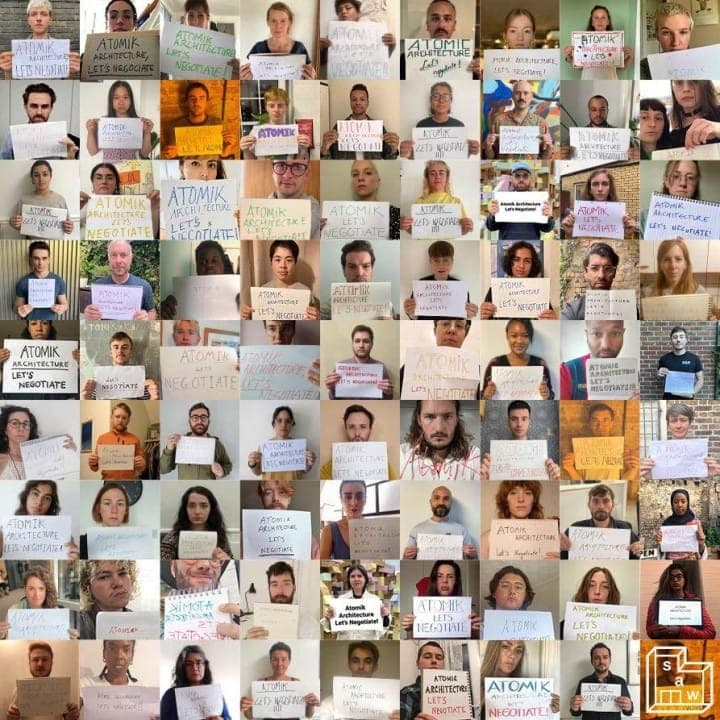
In 2022, reports said workers at Atomik Architecture were preparing to ballot for strike action following a dispute over pay and working conditions. World Architecture Community reported demands including pay, working hours, flexibility, paid training and union recognition. Read the reported background on the Atomik Architecture strike ballot.
The bigger point is not one practice alone. The story became visible because it touched a wider nerve in architecture: how much pressure people are expected to absorb because they care about the work.
Why architecture is vulnerable to this
- The profession often treats passion as a reason to tolerate poor conditions.
- Junior staff may feel replaceable, especially early in their careers.
- Salary and progression routes are often unclear.
- Overtime can become normalised during deadlines.
- People may feel they have no safe route to challenge decisions internally.
What practice leaders should learn
The practical lesson is not to wait until a dispute becomes public. A good employer wants early signals, even when they are uncomfortable.
- Make salary bands and progression expectations clearer.
- Review overtime patterns honestly, not only when people complain.
- Give employees a route to raise concerns without being labelled difficult.
- Train managers to respond to feedback without becoming defensive.
- Explain commercial constraints without hiding behind them.
What workers can take from it
For employees, collective voice can feel like the only route when individual conversations go nowhere. But before any formal dispute, it helps to gather facts, keep records and understand what outcome you are actually asking for.
- Separate pay, hours, flexibility, progression and culture into clear issues.
- Write down specific examples rather than only general frustration.
- Understand who has decision-making power.
- Know what internal process exists before escalating externally.
- Get proper advice before taking formal action.
Common mistakes
- Assuming people are fine because they are quiet.
- Treating pay questions as disloyal.
- Letting overtime become a hidden subsidy for poor planning.
- Ignoring early feedback until it becomes reputationally visible.
- Responding to organised concern as a personal attack.
Next step
If you lead a practice, review where employees can raise concerns and whether pay, progression and overtime are genuinely clear. If you are considering your next move, compare the market through Architecture Social jobs and use the wider resources section to sharpen your next step.
Keep the conversation going
What stayed with you? Join the Architecture Social community to share your experience or ask a question.