
Editorial
Belgrade Refugee Integration Project by Enes Osmani
Enes Osmani’s project explores refugee integration in Belgrade through sustainable, community-led architecture.
On this page
Enes Osmani’s Belgrade refugee integration project looks at how architecture can support people arriving in a city, while also helping local communities share space more confidently.
The useful part of the project is its civic focus. It is not only about shelter. It asks how gardens, services, housing and public programmes can reduce separation between refugees and residents.
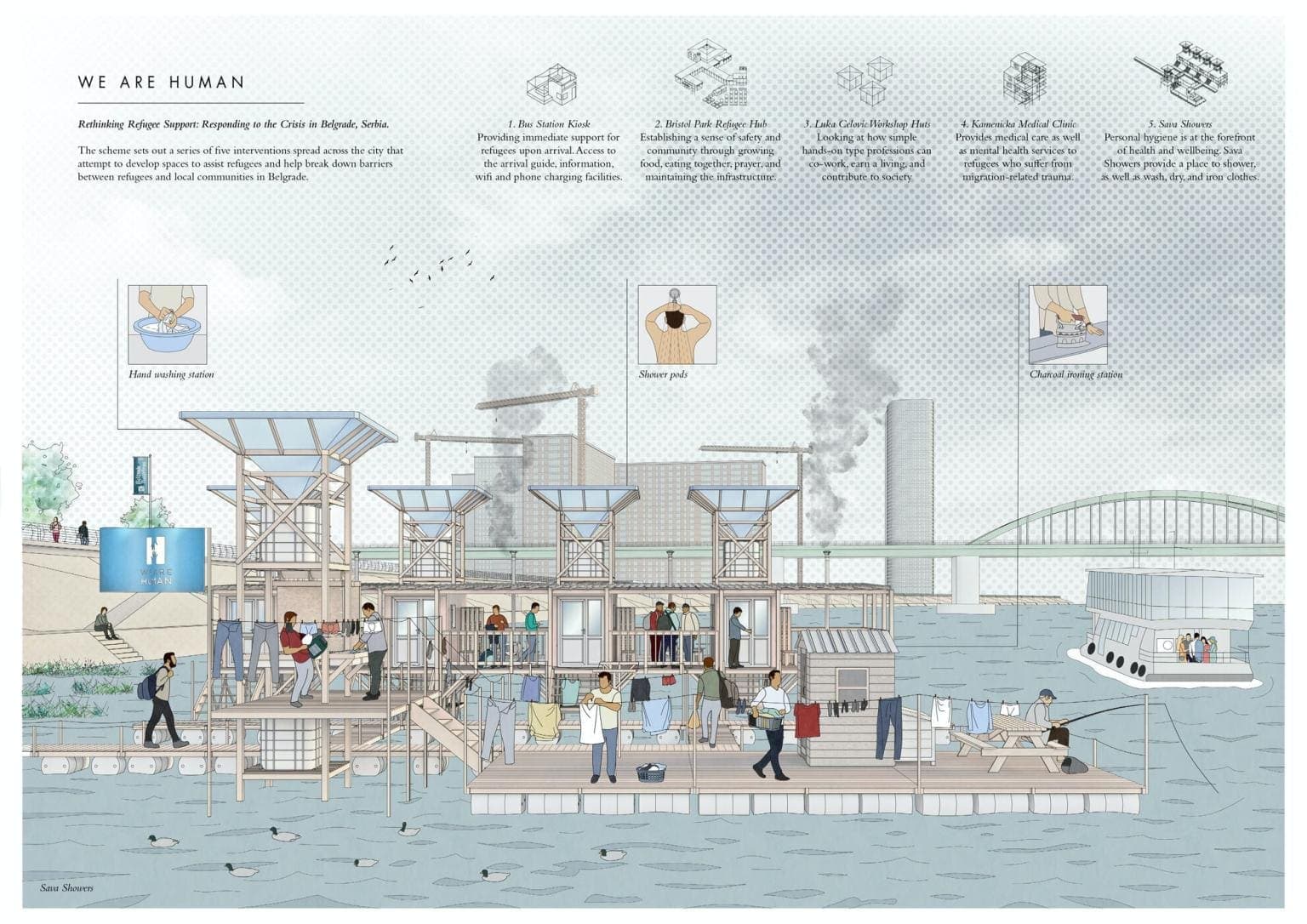
The body image supports the wider integration idea while avoiding a repeat of the page’s visible hero image.
Project overview
The original project focuses on the refugee crisis in Belgrade, Serbia. Enes proposes a series of five interventions across the city, each intended to help refugees access support while creating contact points with local communities.
The interventions include community gardens, multipurpose centres for language classes and training, affordable housing ideas and partnerships with local organisations.
Why the project is useful to study
- It treats refugee support as an urban question, not only a shelter question.
- It connects social integration with sustainable design decisions.
- It gives local residents and refugees shared spaces rather than separate worlds.
- It uses community feedback as part of the design process.
Portfolio lesson
If you include a social-impact project in a portfolio, make the mechanism clear. Say who the project helps, what the intervention changes and how the architecture supports daily life.
Next step
Explore more Architecture Social projects, read the portfolio guide, or submit your own project.
Keep the conversation going
What stayed with you? Join the Architecture Social community to share your experience or ask a question.