
Editorial
Hames Sharley on Thriving Centres
Hames Sharley shares three lessons for post-pandemic town centres: social connection, local context and flexible mixed-use design.
On this page
Hames Sharley’s post-pandemic town-centre argument is simple: successful centres need to bring people back into everyday contact, not just back into shops.
The original piece reflects on how walking, eating, shopping and casual encounters were missed during lockdowns. That social value is the useful lesson for retail and mixed-use centres now.
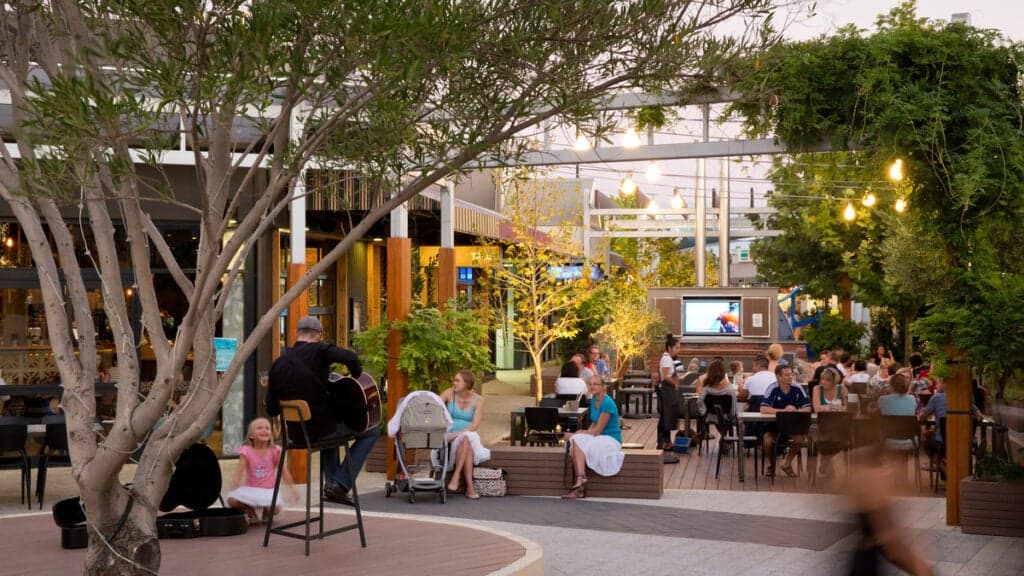
Outdoor dining, small encounters and visible public life are part of why town centres still matter after the pandemic.
The three lessons
Hames Sharley’s team describes a design process that starts with local context and then layers in commercial needs, operator aspirations, research, planning, interiors and architecture.
- Design for social connection, because town centres support mental health and everyday civic life.
- Start with local context, because a centre should reflect the people and rituals around it.
- Allow for mixed use, because retail-led places need food, work, leisure, services and public space to overlap.
Why connection comes first
The strongest point in the original article is not really about retail format. It is about people. A coffee stop, short walk, queue, meal or passing conversation can make a centre feel alive.
That matters for architects and clients because the design cannot only optimise movement and lettable area. It also has to create reasons for people to pause, meet and return.
What practices and clients can learn
- Read the local habits before deciding the architectural answer.
- Design spaces where food, services, retail and outdoor life can support each other.
- Treat social wellbeing as part of the brief, not a soft extra.
- Use phasing and flexibility so the centre can respond as tenants and communities change.
Use this as a town-centre design prompt
For a practice or client, the useful question is not only what the centre contains. It is how often people have a reason to come back.
- What daily habits does the project support?
- Where can people pause without spending money immediately?
- Which local communities already use the place?
- How can retail, food, work and public space overlap without feeling chaotic?
Next step
Browse more Architecture Social projects or explore more resources.
If this project has made you rethink your own portfolio or next move, browse current architecture jobs or contact Architecture Social for a recruiter’s view.
Keep the conversation going
What stayed with you? Join the Architecture Social community to share your experience or ask a question.