
Editorial
Part I Architectural Assistant Portfolio Example
A practical Part I portfolio lesson on showing design thinking, context and employability clearly.
On this page
A Part I architectural assistant portfolio should do more than show attractive university work. It needs to explain the project idea, the context, the decisions made and why that evidence would matter inside a practice.
A final project can become strong application evidence when it shows research, design judgement and a clear relationship between place, programme and public value.
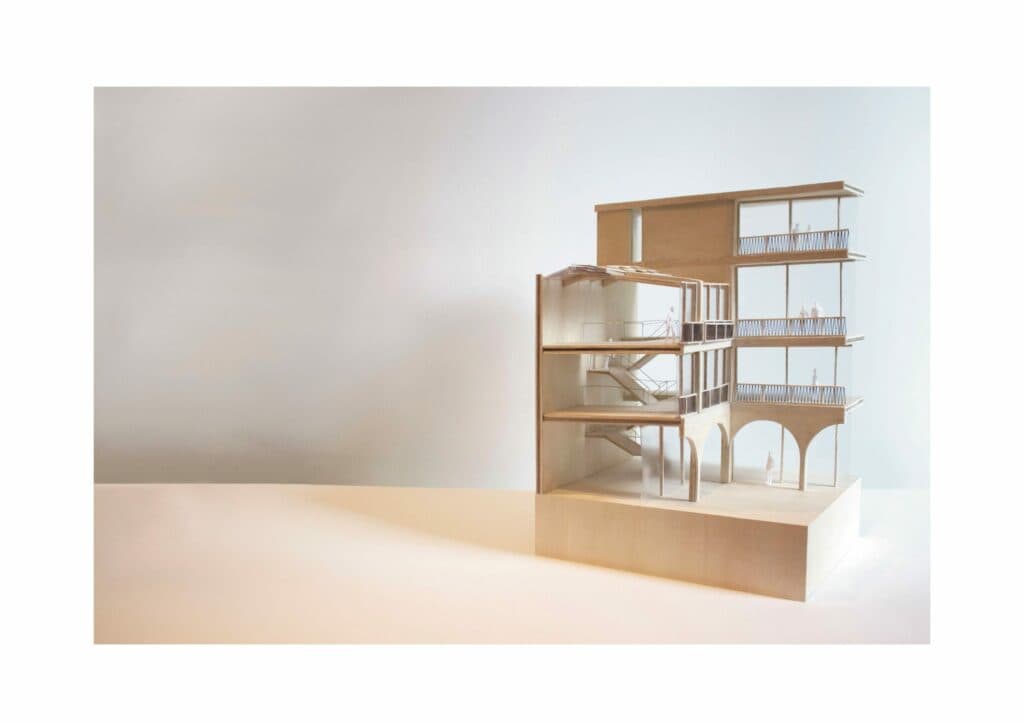
Model work helps when it explains scale, context and spatial judgement, not just presentation style.
What a Part I portfolio needs to prove
For a Part I candidate, practices are usually looking for potential, clarity and evidence of how you think. You may not have years of technical delivery behind you yet, so the portfolio has to make your academic work easy to read.
- What was the brief and why did it matter?
- What was the site or urban problem?
- How did the project develop from research into a design response?
- Which drawings, models or diagrams show your own judgement?
- What would this evidence suggest about you in a studio role?
Turn academic work into employability evidence
If a thesis project relocates civic uses, regenerates a local site or connects a town with parkland, do not hide that behind abstract portfolio language. Explain the human and urban point first, then use drawings to back it up.
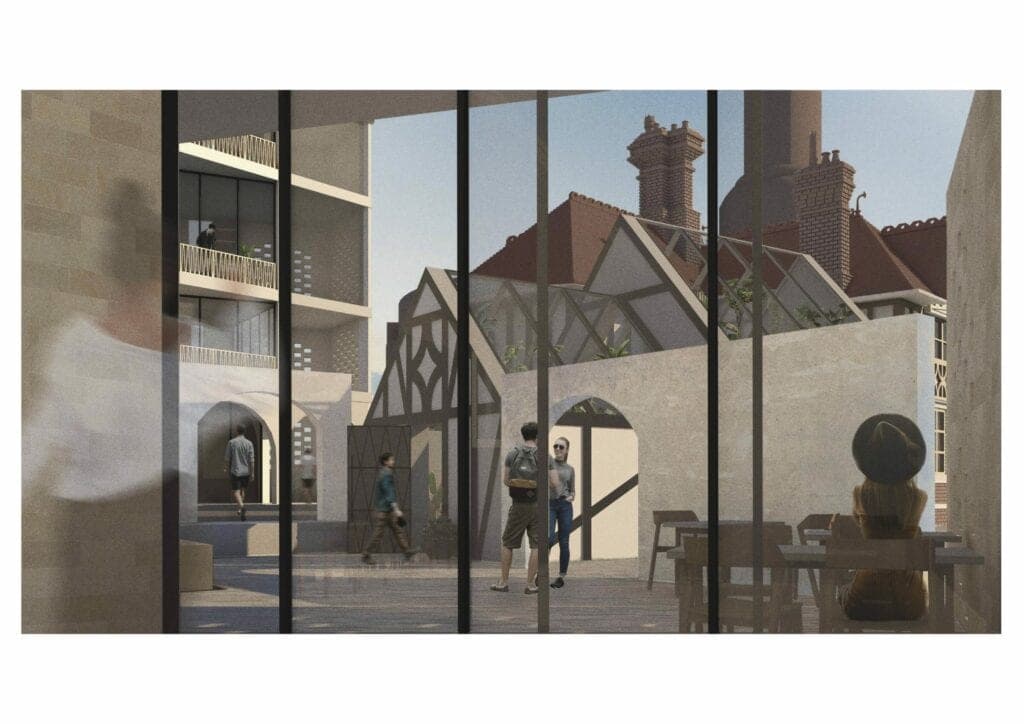
Use project views to show the relationship between concept, context and the kind of work a practice may need.
Common mistakes
- Opening with a beautiful image before the reader understands the project.
- Using long academic text that does not help a hiring manager scan the work.
- Showing every drawing instead of choosing the evidence that proves judgement.
- Leaving your role, process or design decisions unclear.
Build a stronger Part I portfolio
Before sending your portfolio to practices, check whether a busy reader can understand the project without you talking over it.
- Put the strongest project evidence in the first few pages.
- Use short captions for brief, site, idea and role.
- Keep file size sensible and the sequence easy to scan.
- Link the project evidence to the kind of practice you are applying to.
Part I portfolio questions
How should I describe group work?
Explain the shared brief, then say which research, drawings, models or decisions were yours. Keep that account consistent with the captions and the CV.
Which drawing or image should lead?
Choose evidence that makes the project idea and context understandable. Give the reader enough information to see what the image shows and why the project belongs in the application. The first-job portfolio guide helps you choose evidence for the role.
Check the opening project
Read the portfolio workshop and guide, then check whether the first project explains the brief, your contribution and one design decision. Compare that evidence with a relevant architecture vacancy. If you want to share a project publicly, use the existing share-work route.
Keep the conversation going
What stayed with you? Join the Architecture Social community to share your experience or ask a question.