Architecture Job Hunting During a Crisis
Architecture job hunting advice for uncertain markets, covering CVs, portfolios, interviews, momentum and realistic next steps.
Jump to a section
Architecture job hunting during a crisis is not solved by sending more rushed applications. It needs a calmer plan: better evidence, better targeting, better follow-up and enough resilience to keep going when replies are slow.
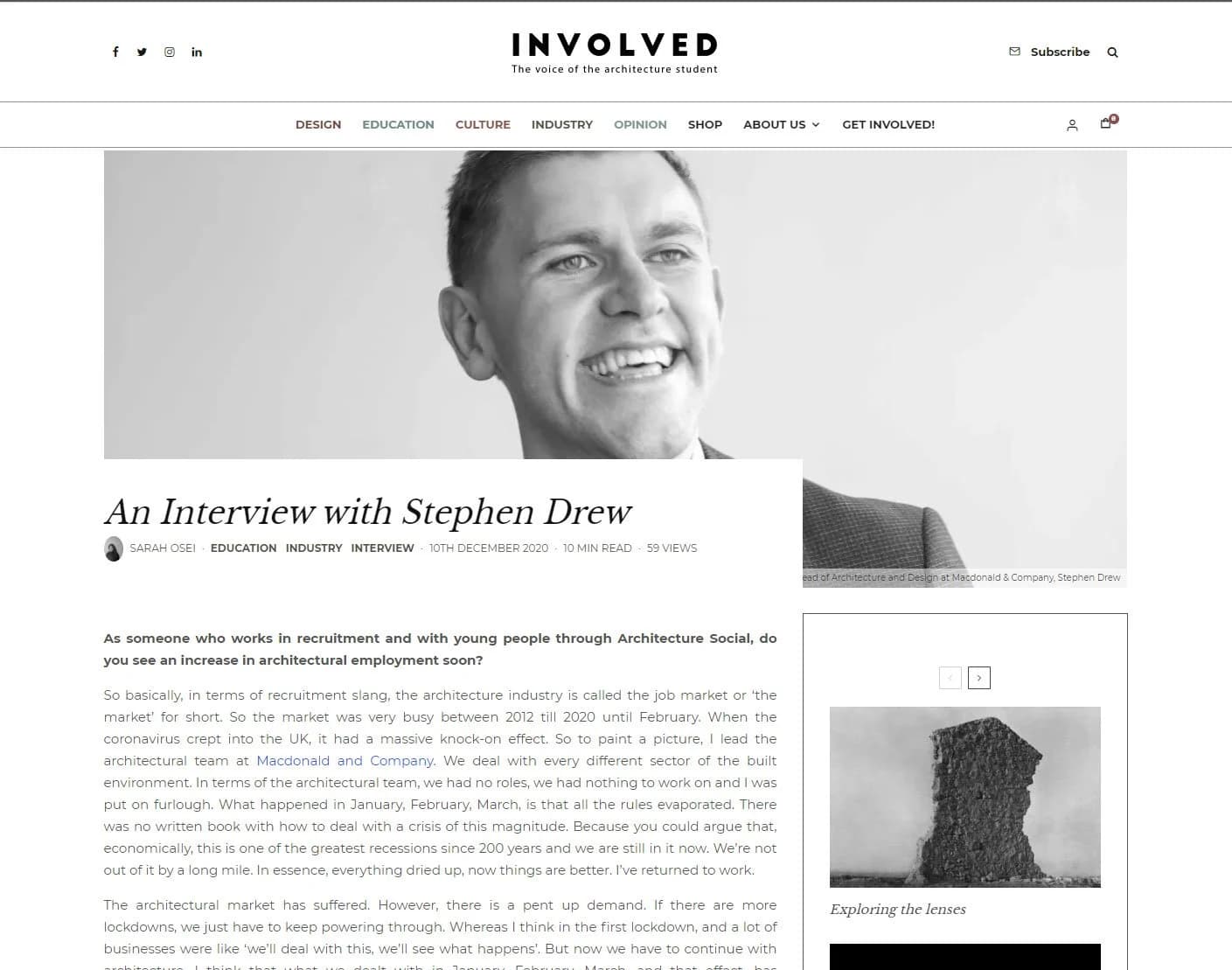
This piece began as an Involved Magazine feature with Sarah Osei, where Stephen reflected on architectural employment during the 2020 market shock and the early growth of Architecture Social. The market has changed since then, but the job-search lesson still holds.
Watch: job hunting in architecture is tough
If the market feels quiet, start here. This short Architecture Social video is useful because it says the honest bit first: job hunting can be hard, but you are not the only person finding it difficult.
This YouTube video needs media cookies to play here.Enable videos and podcasts, or accept all optional cookies.
Your choice is remembered across the site. Change it any time.
Why difficult markets feel so personal
When practices slow hiring, candidates often blame themselves immediately. Sometimes the issue is your CV or portfolio. Sometimes it is timing, budgets, project delays, hiring freezes or a practice waiting for a client decision.
The danger is reacting emotionally to every silence. A better approach is to improve the parts you can control, then keep enough structure that you do not lose momentum.
Listen: practical architecture job-search habits
This related episode gives a more structured set of job-search habits, including goals, CV and portfolio updates, organisation and how to use quieter periods properly.
This Transistor podcast needs media cookies to play here.Enable videos and podcasts, or accept all optional cookies.
Your choice is remembered across the site. Change it any time.
A practical reset for your job search
- Check whether your CV makes your level, software and project evidence obvious.
- Send a focused sample portfolio, not every page you have ever produced.
- Apply to roles where your evidence actually matches the brief.
- Track applications so follow-up is organised rather than random.
- Use slower periods to improve one weak part of your application.
What to improve before sending more applications
If you have sent plenty of applications and heard very little back, pause before sending another twenty. Look for a pattern. Are you applying too broadly? Is the first portfolio page weak? Does the CV hide the software or project experience practices are scanning for?
- Use the architecture CV guide to make your evidence easier to scan.
- Use the portfolio guide to tighten project choice and page order.
- Prepare with the interview questions guide before you get invited in.
- Browse current architecture jobs to understand what practices are actually asking for now.
How to keep momentum without burning out
A job search should not become a full-time panic spiral. Set a weekly rhythm: applications, follow-ups, portfolio improvements, conversations and learning. That gives you movement without making every day feel like a referendum on your career.
- Pick a realistic number of quality applications each week.
- Follow up politely after a sensible period, usually around a week unless the advert says otherwise.
- Keep one version of your CV as the master, then tailor copies for specific roles.
- Save strong portfolio captions so you can reuse and improve them.
- Talk to people in the industry, not only job boards.
What employers scan for when the market is tight
In a slow market, practices tend to become more selective. That does not always mean they want a perfect candidate. It often means they need the evidence to be easier to understand because they have less time, less budget and less appetite for risk.
Make the first scan simple. Your level, location, right-to-work situation, software, project types and portfolio link should not be hidden. If the hiring manager has to work too hard, a decent candidate can still get missed.
Job-search reset checklist
Before you send another application, do this quick reset. It is better to send five good applications than twenty vague ones.
- Choose one clear target role or level.
- Update the first half of your CV first.
- Cut the weakest portfolio pages.
- Write one short follow-up template.
- Track each application and response.
Common mistakes
- Sending the same CV and portfolio to every practice.
- Letting a quiet market convince you that your whole career is broken.
- Applying without checking salary, location or role level properly.
- Following up too aggressively or not at all.
- Improving the visual style of a portfolio while leaving the evidence unclear.
Next step
Browse current architecture jobs, then use the Architecture Social resources to improve your CV, portfolio and interview preparation before the next application goes out.
CONTINUE THE CONVERSATION
What’s your take?
One conversation, here and in the forum.
Add your perspective
What stayed with you? Share your experience or ask a question about this article.