
Editorial
Recollection by Flo Saunders
Flo Saunders’ Recollection explores biophilic urban design, civic thresholds and shared spaces that support wellbeing.
On this page
Recollection by Flo Saunders explores how biophilic urban design can change the way people experience overlooked civic spaces.
The project is strongest when it focuses on thresholds: tunnel entrances, voids, shared edges and the in-between spaces where the city can feel harsh, disconnected or anonymous.
Project images
The visuals show the project moving between civic occupation, landscape thinking and spatial atmosphere.
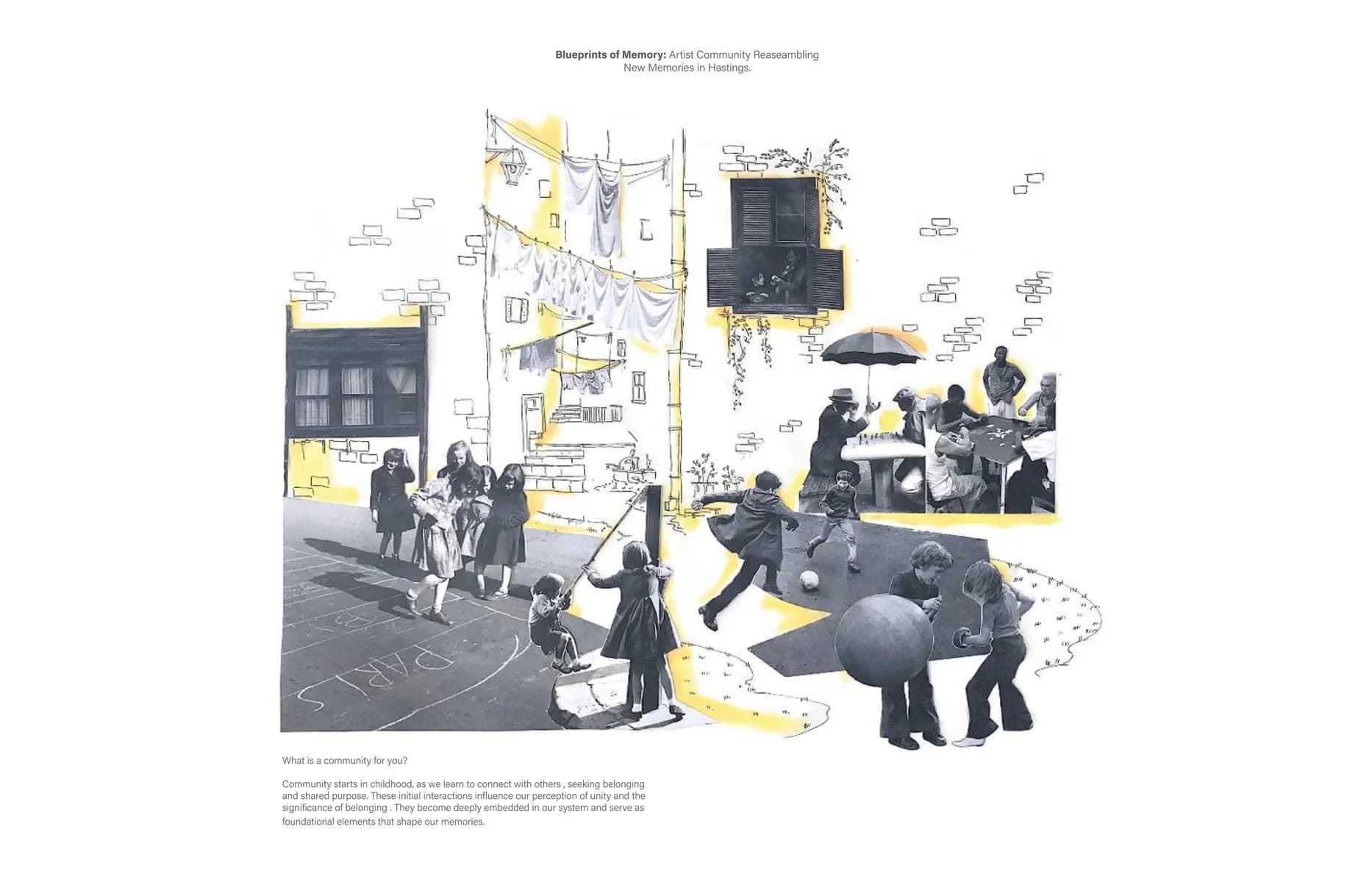
Shared space and wellbeing sit at the centre of the project idea.
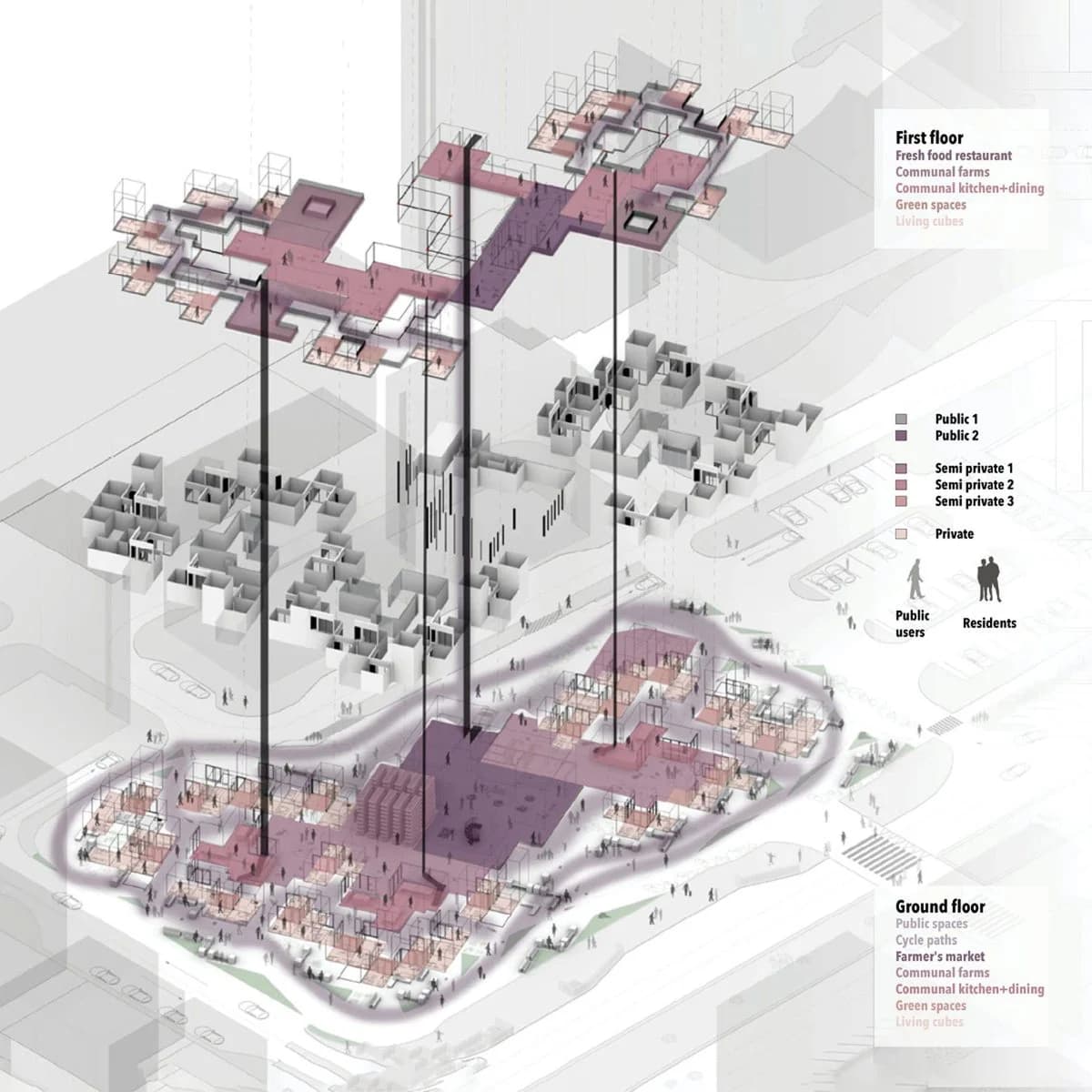
The project uses structure and landscape as part of one civic experience.
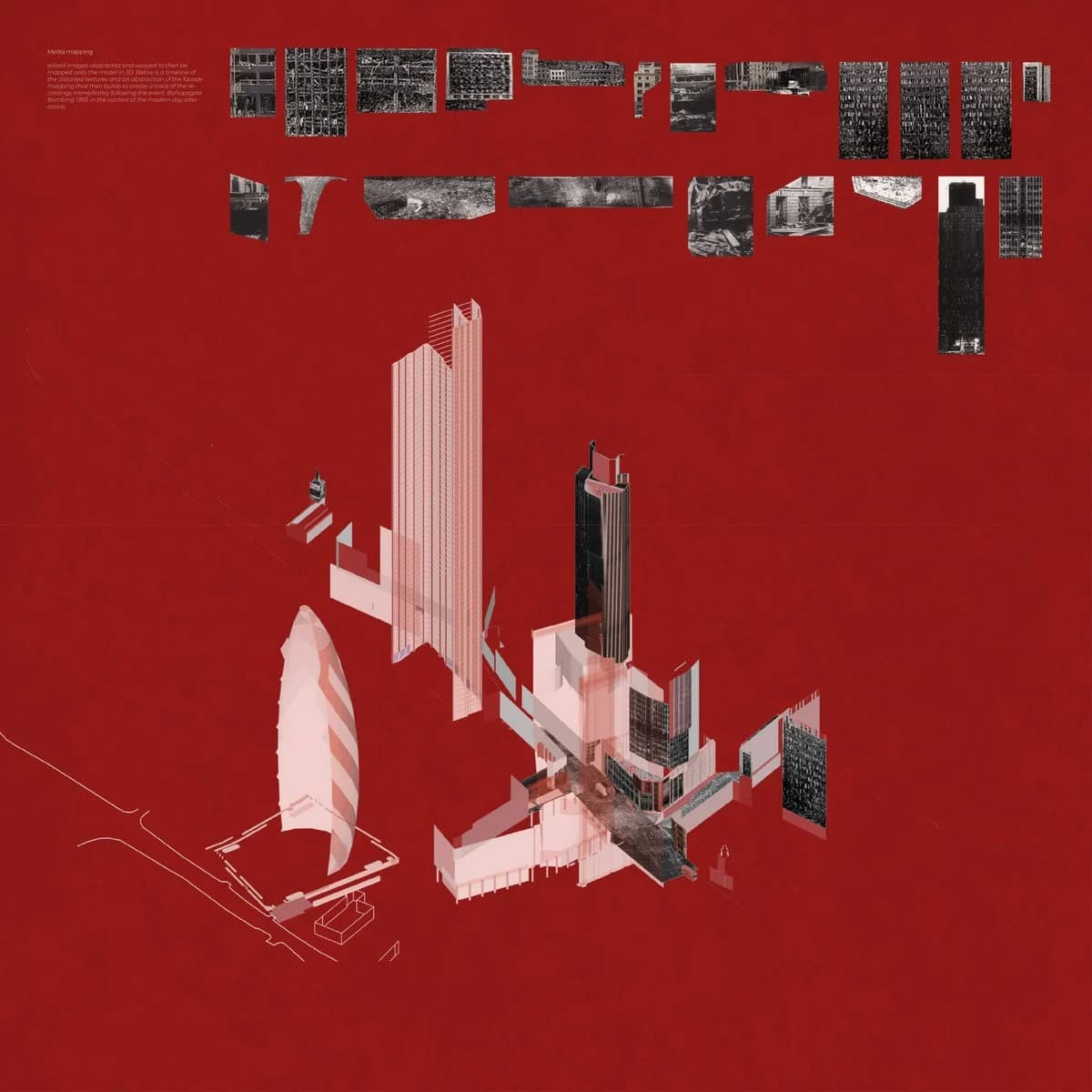
Atmosphere, colour and threshold help explain the spatial character of the proposal.
What the project is asking
A tunnel entrance can easily be treated as leftover infrastructure. Flo’s project asks whether that kind of edge can become a place of pause, connection and sensory relief.
- The tunnel entrance becomes a civic threshold rather than a dead edge.
- Void space is treated as potential, not emptiness.
- Nature is used as a spatial and wellbeing tool, not decoration.
- Movement, pause and encounter are designed together.
- The project links mental comfort with physical accessibility and social use.
Why the biophilic angle works
Biophilic design can become vague very quickly if the project only adds greenery. Recollection is more interesting because it links nature to behaviour: how people enter, pause, gather, look across a space and feel whether the city welcomes them.
That makes the project useful for students working on public space. The design argument is not just that nature is good. It is that specific spatial moves can make a difficult urban condition easier to occupy.
Portfolio lesson
If this project sat in a portfolio, the key would be sequencing. Start with the urban problem, show the threshold condition, then explain how each intervention changes use, comfort and identity.
Follow the project route
This is a student showcase, so the project should lead. Readers who want to compare similar work can move into the wider project archive.
Showcase a public-space or wellbeing project
If your project is about wellbeing, make the spatial evidence clear enough for someone outside your studio to understand.
- Name the urban condition you are improving.
- Show how people move, pause and gather.
- Explain what nature changes in the space.
- Use captions to connect visuals to human experience.
Next step
Browse more Architecture Social projects, read the portfolio guide, or submit your own project.
If this project has made you rethink your own portfolio or next move, browse current architecture jobs or contact Architecture Social for a recruiter’s view.
Keep the conversation going
What stayed with you? Join the Architecture Social community to share your experience or ask a question.