Projects / Student work

Fold me a Path: an experience of fractured flow

1 / 5

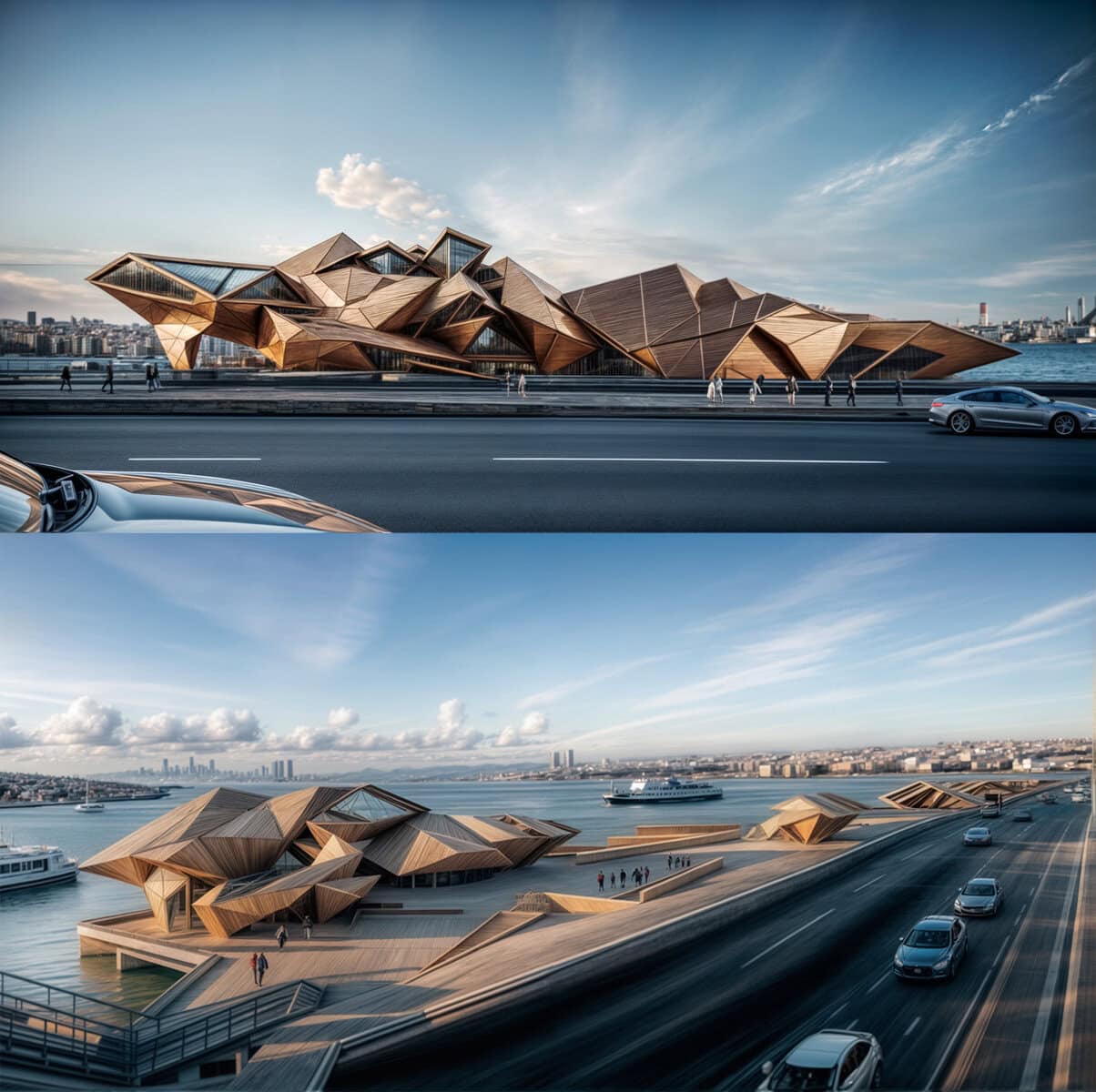
“Fold Me a Path: An Experience of Fractured Flow” is Farah Swilam’s final thesis project, a prefabricated ferry terminal designed for the waterfront of Istanbul’s Golden Horn. The project investigates how artificial intelligence can serve as a co-designer in shaping new architectural languages rooted in human behavior…

Project context
Conceptual

The brief

The question behind the work.

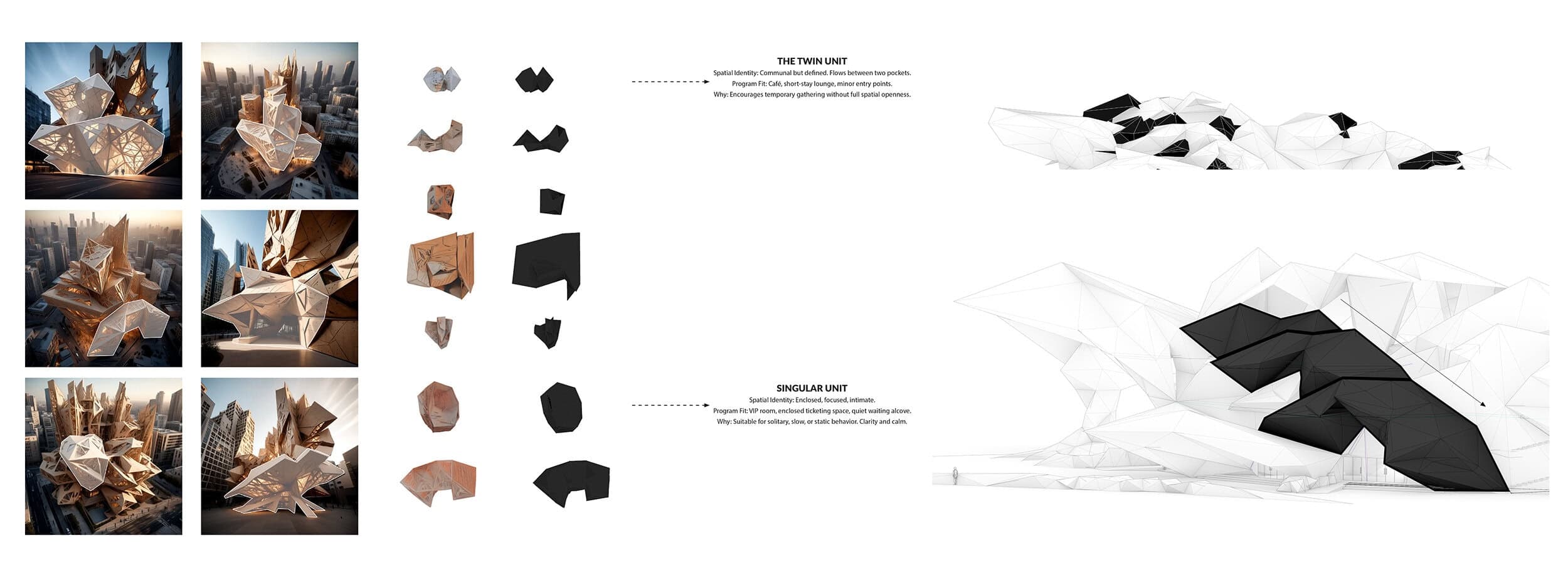
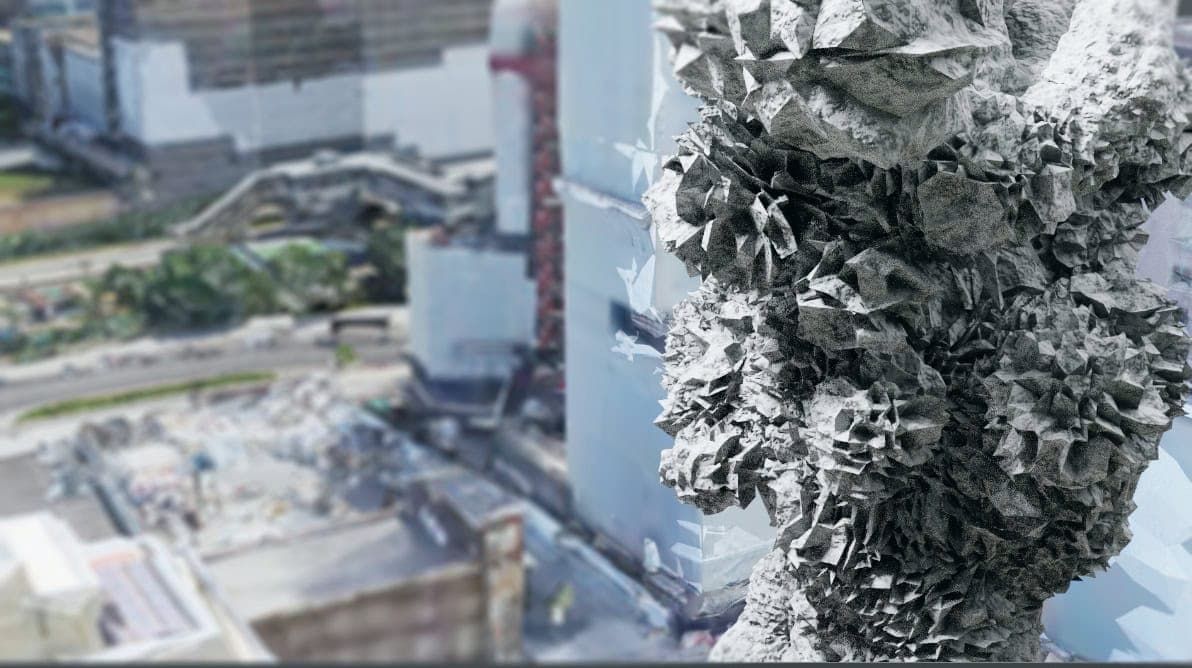
“Fold Me a Path: An Experience of Fractured Flow” is Farah Swilam’s final thesis project, a prefabricated ferry terminal designed for the waterfront of Istanbul’s Golden Horn. The project investigates how artificial intelligence can serve as a co-designer in shaping new architectural languages rooted in human behavior and perception. Through a process of iterative AI prompting and form extraction, the project reinterprets fragmented geometries and modular growth - drawing inspiration from crystallography, Islamic pattern logic, and movement studies.

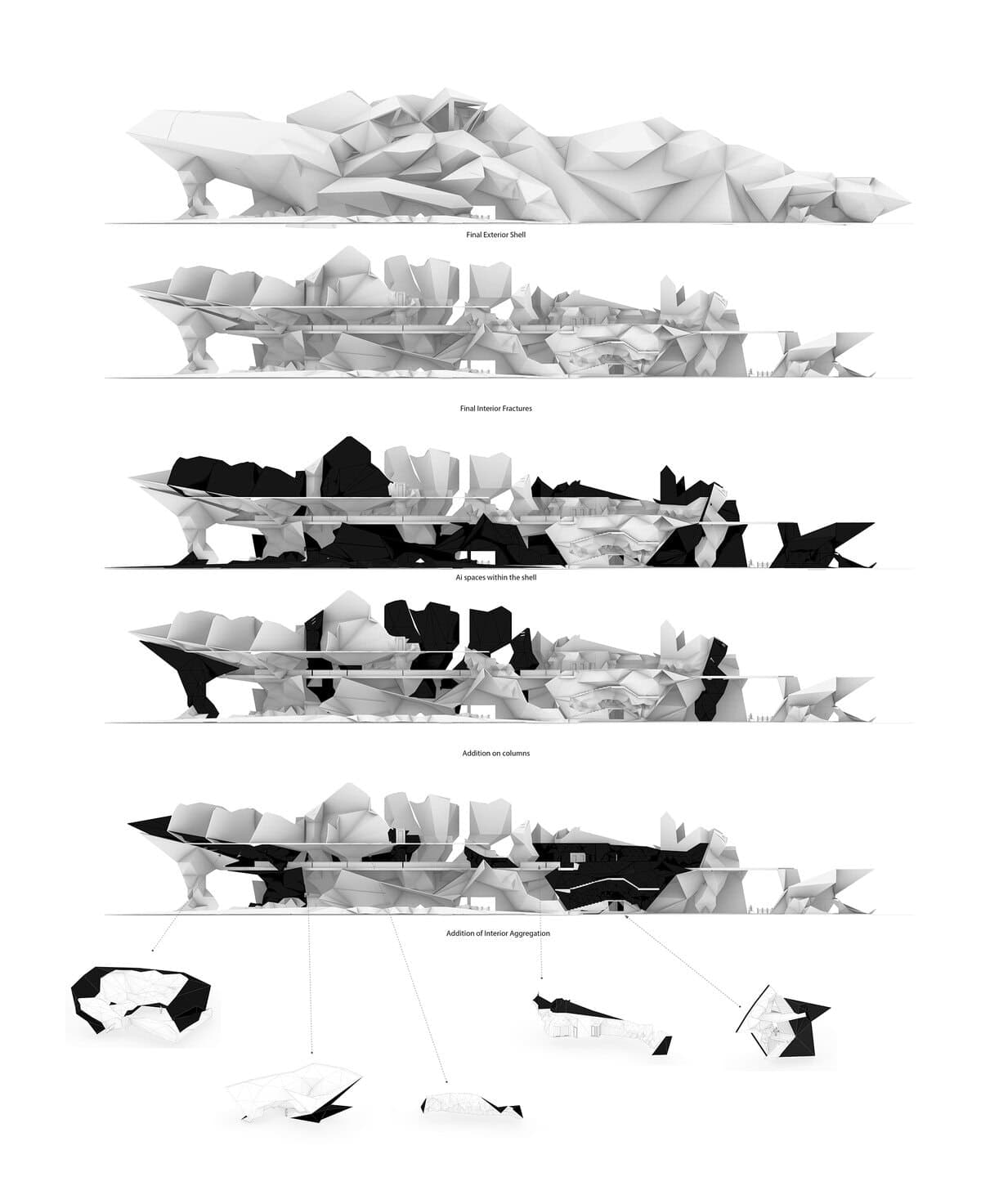
The architecture emerges through AI-generated provocations, where physical and digital models were used as input to guide the creation of unfamiliar yet intuitive forms. These forms were then decoded and reassembled to shape the spatial system of the terminal. The result is a fractured path composed of prefabricated, interlocking units that gradually shift in direction, transparency, and height - producing a dynamic spatial rhythm that responds to both users and context.

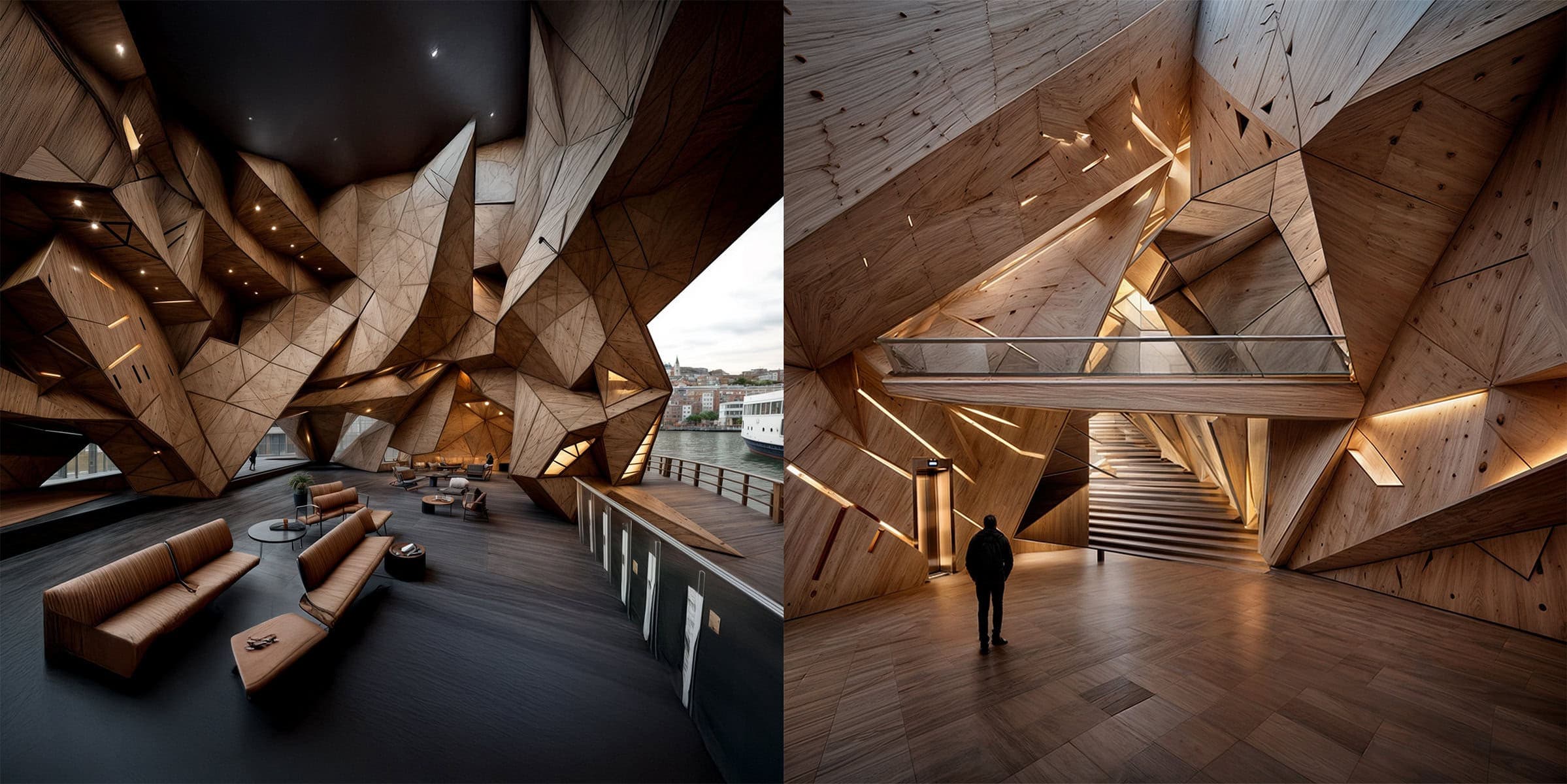
The design unfolds across three experiential levels: the ground level guides circulation with clear thresholds and openings; the mid-level directs gaze and interaction through angular divisions and filtered light; and the high level introduces layered enclosures and transitions that elevate the architectural narrative. AI played a key role not only in generating form but in challenging conventional authorship, pushing the boundaries between suggestion and decision in design.

Development

From brief to outcome.

Development view 2

Development 1

The architecture emerges through AI-generated provocations, where physical and digital models were used as input to guide the creation of unfamiliar yet intuitive forms. These forms were then decoded and reassembled to shape the spatial system of the terminal. The result is a fractured path composed of prefabricated, interlocking units that gradually shift in direction, transparency, and height - producing a dynamic spatial rhythm that responds to both users and context.

Development view 3

Development 2

The design unfolds across three experiential levels: the ground level guides circulation with clear thresholds and openings; the mid-level directs gaze and interaction through angular divisions and filtered light; and the high level introduces layered enclosures and transitions that elevate the architectural narrative. AI played a key role not only in generating form but in challenging conventional authorship, pushing the boundaries between suggestion and decision in design.
Development view 4

Development 3

Structurally, the terminal is fabricated using CNC-milled timber shells, with integrated ducting, insulation, and brass cladding panels. The entire system is modular and designed for phased deployment on piers in the water - preserving the land for public use. By blending AI, behavioral logic, and fabrication strategies, “Fold Me a Path” proposes a new way of designing infrastructural architecture: one that is co-authored, adaptive, and deeply experiential.

Outcome

The final proposal.

Structurally, the terminal is fabricated using CNC-milled timber shells, with integrated ducting, insulation, and brass cladding panels. The entire system is modular and designed for phased deployment on piers in the water - preserving the land for public use. By blending AI, behavioral logic, and fabrication strategies, “Fold Me a Path” proposes a new way of designing infrastructural architecture: one that is co-authored, adaptive, and deeply experiential.

Development view 5

Credits

Submitted by
Farah Swilam
Designer study history
Oxford Brookes University
Designer study history
Alexandria University

The author

Farah Swilam

View author

Keep exploring

More work to explore.