Projects / Student work

UNEARTH - Saltom Pit Revival Works

1 / 5

UNEARTH is a thesis project rooted in two critical texts: Marc Augé’s Non-Places and Kevin Lynch’s The Image of the City. Both explore the concept of ‘place’—its qualities, meanings, and how it is perceived and remembered. During a visit to Whitehaven, he wandered the coastline and began noticing fragments of stone st…

Project context
Conceptual

The brief

The question behind the work.

UNEARTH is a thesis project rooted in two critical texts: Marc Augé’s Non-Places and Kevin Lynch’s The Image of the City. Both explore the concept of ‘place’ - its qualities, meanings, and how it is perceived and remembered. During a visit to Whitehaven, he wandered the coastline and began noticing fragments of stone structures embedded in the landscape. These remnants hinted at a buried architectural history, prompting questions: What were these structures? What stories did they hold? How have they shaped the image of Whitehaven?

These relics, once central to community life, have become detached from memory - left to erode both physically and culturally. This raises important questions: What role can design play in reconnecting people with these forgotten places? How far can we intervene before the original identity is lost?

UNEARTH explores these questions through a series of ten site-specific installations along the coastal descent to Saltom Pit, the site of the UK’s first undersea coal mine. The project tests different scales of architectural intervention, aiming to rediscover and reinterpret industrial ruins with minimal impact on the existing site.

Development

From brief to outcome.

Development view 2

Development 1

These relics, once central to community life, have become detached from memory - left to erode both physically and culturally. This raises important questions: What role can design play in reconnecting people with these forgotten places? How far can we intervene before the original identity is lost?

Development view 3

Development 2

UNEARTH explores these questions through a series of ten site-specific installations along the coastal descent to Saltom Pit, the site of the UK’s first undersea coal mine. The project tests different scales of architectural intervention, aiming to rediscover and reinterpret industrial ruins with minimal impact on the existing site.

Development view 4

Development 3

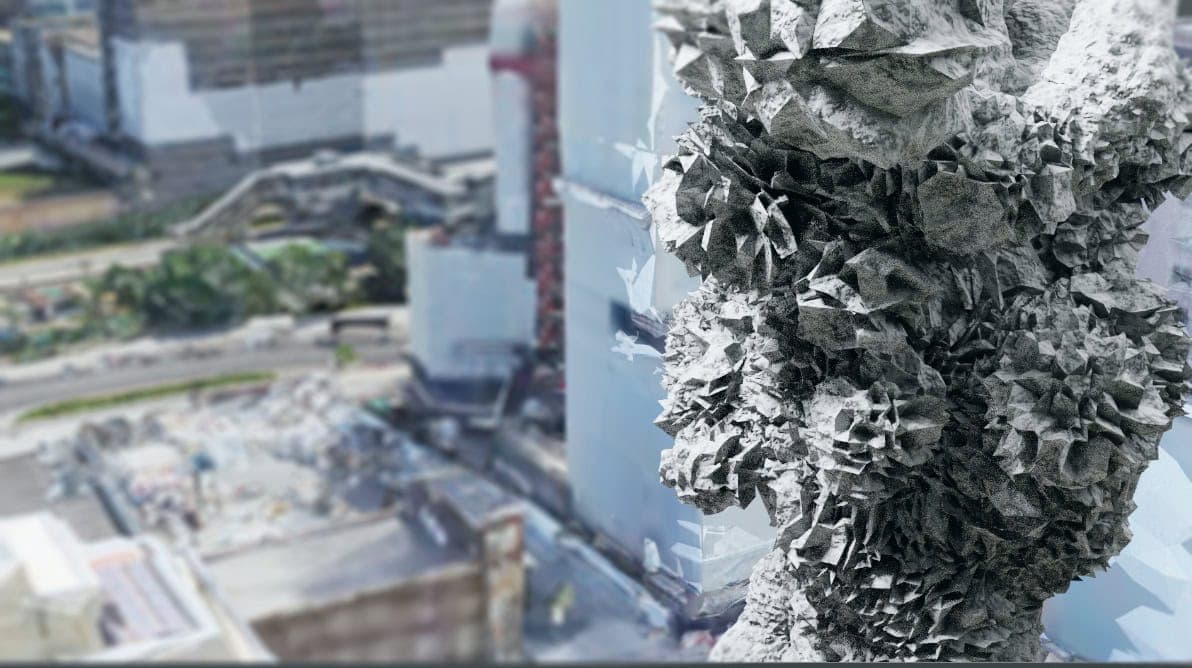
The installations follow a cautious gravel path down the cliffside, guiding visitors through a journey of memory and rediscovery. Each is constructed with recycled stone from the site and designed to “float” above the landscape, preserving its natural form. Some are intentionally dark, confined, and angular to evoke the harsh conditions of historic mining life, designed to evoke empathy.

Development view 5

Development 4

UNEARTH takes a palimpsest approach to landscape and memory, layering contemporary design over industrial remnants to provoke empathy, reflection, and restoring the once lost and buried, sense of 'place'.

Outcome

The final proposal.

The installations follow a cautious gravel path down the cliffside, guiding visitors through a journey of memory and rediscovery. Each is constructed with recycled stone from the site and designed to “float” above the landscape, preserving its natural form. Some are intentionally dark, confined, and angular to evoke the harsh conditions of historic mining life, designed to evoke empathy.

UNEARTH takes a palimpsest approach to landscape and memory, layering contemporary design over industrial remnants to provoke empathy, reflection, and restoring the once lost and buried, sense of 'place'.

Credits

Submitted by
Maxwell Kemplen
Designer study history
University of Lincoln

The author

Maxwell Kemplen

View author

Keep exploring

More work to explore.