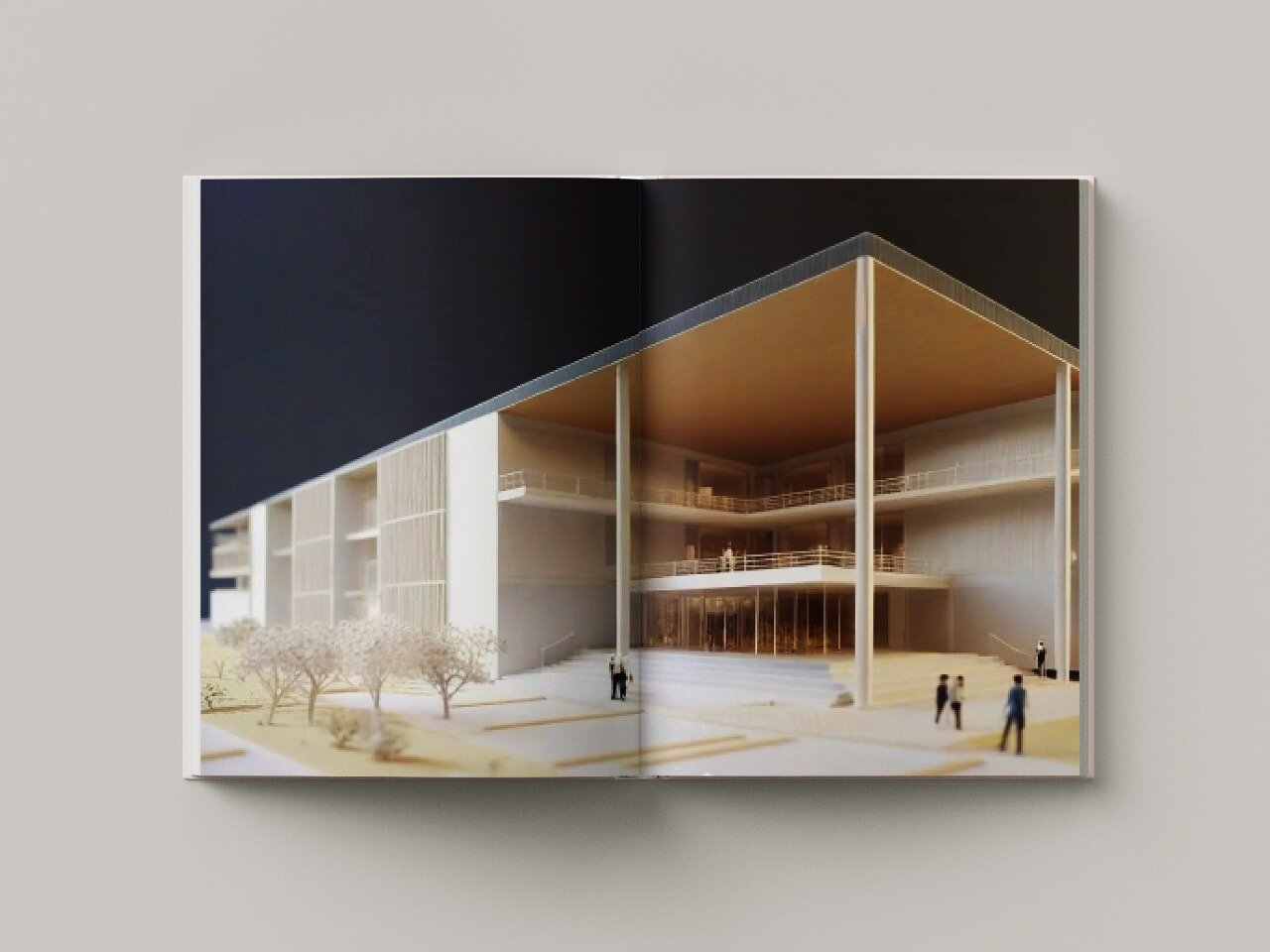
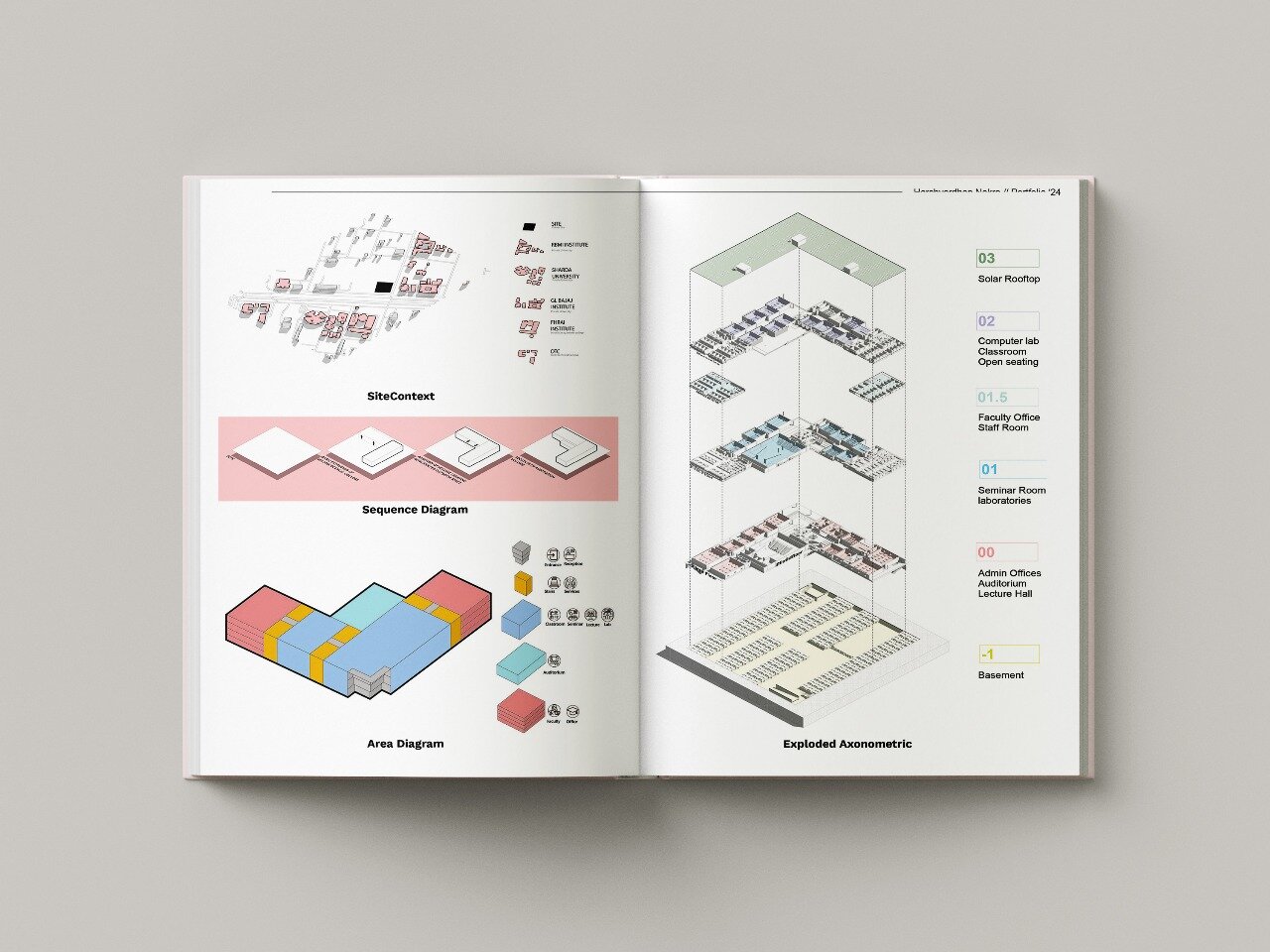
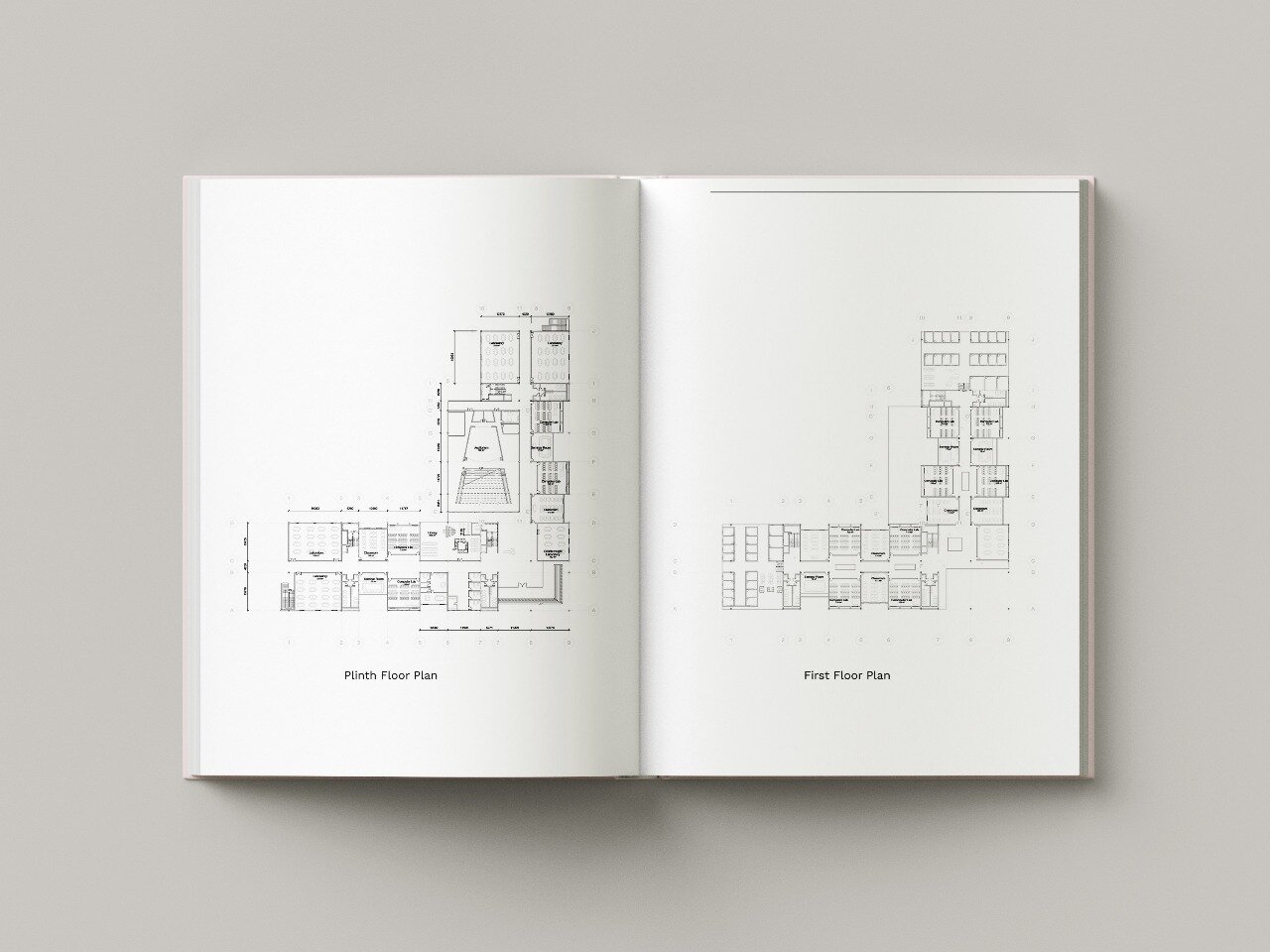
Set in the composite climatic zone of Noida India, this engineering college reimagines the conventional academic typology by grounding itself in the principles of passive design, regional identity, and spatial inclusivity. Designed not just as an institution for technical education, but as a dynamic social environment, the project explores how architecture can foster community, comfort, and curiosity beyond the confines of the classroom.
Climatic responsiveness forms the core of the design approach. The building is carefully oriented to maximize daylight while minimizing heat gain. Passive strategies—such as jaali screens that filter harsh sunlight, overhangs and shading devices that mitigate glare, and the use of thermal mass to regulate indoor temperatures—work in tandem to reduce dependency on mechanical systems. This ecological sensitivity is further enhanced through the use of locally sourced brick, celebrating vernacular materiality while reducing embodied energy. Regional craftsmanship is not only preserved but celebrated, as intricately detailed brickwork and screen designs articulate a narrative rooted in place.
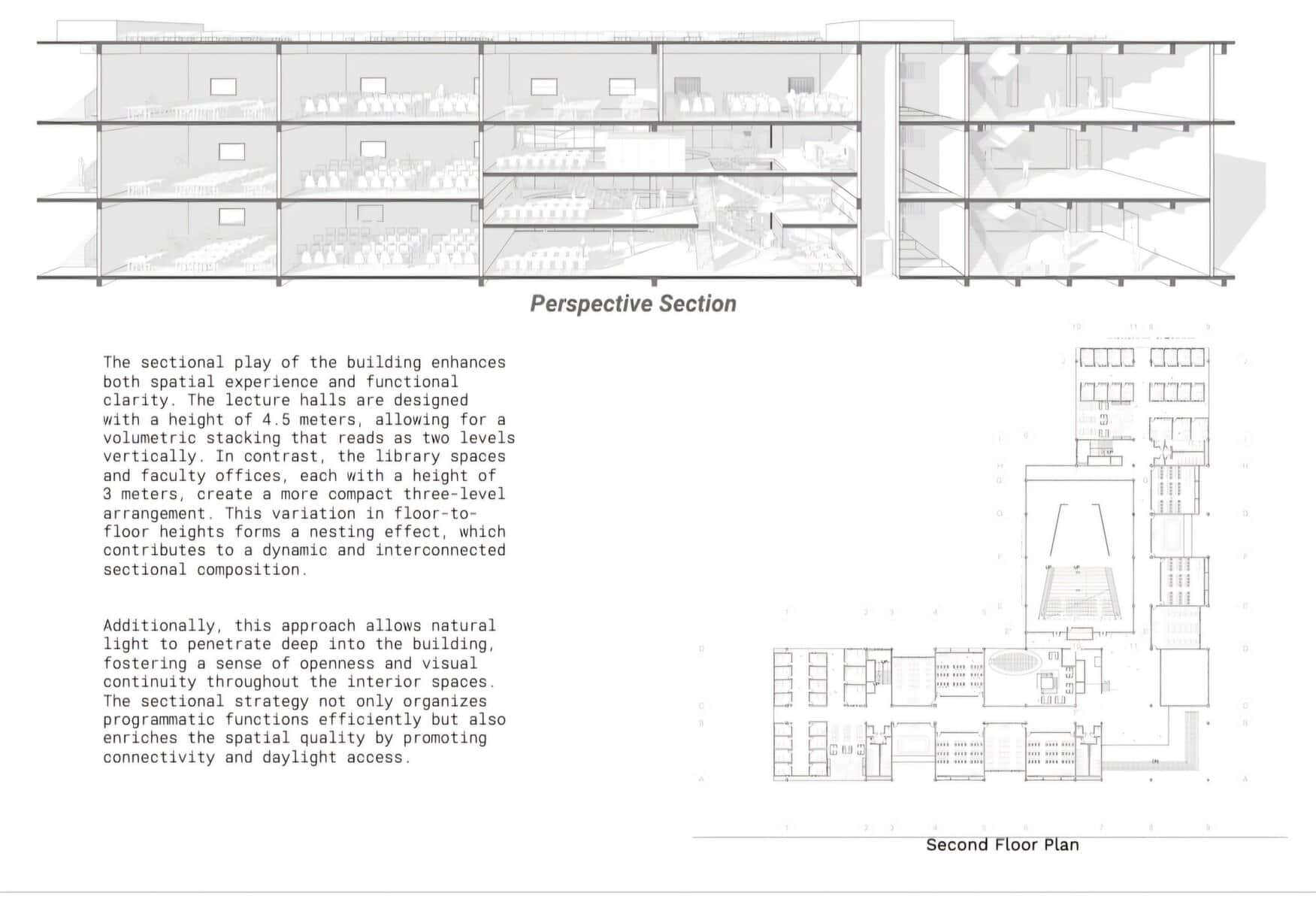
What sets this campus apart, however, is its thoughtful sectional planning. The architecture employs mezzanine levels, double-height interaction zones, and semi-open terraces to create a layered spatial experience. These sectional shifts encourage movement, engagement, and visual connectivity across levels—turning circulation corridors and stairwells into active learning zones. Informal breakout areas tucked into these interstitial spaces offer students opportunities to collaborate, relax, and interact outside structured classrooms.
The result is an educational campus that blurs the boundary between built form and human interaction. It creates a socially and culturally rich environment where learning is not restricted to timetables or lecture halls, but is continuously inspired by the space itself. As higher education institutions begin to redefine their roles in a post-digital world, this engineering college offers a compelling case for how architecture can be both climate-conscious and community-driven.