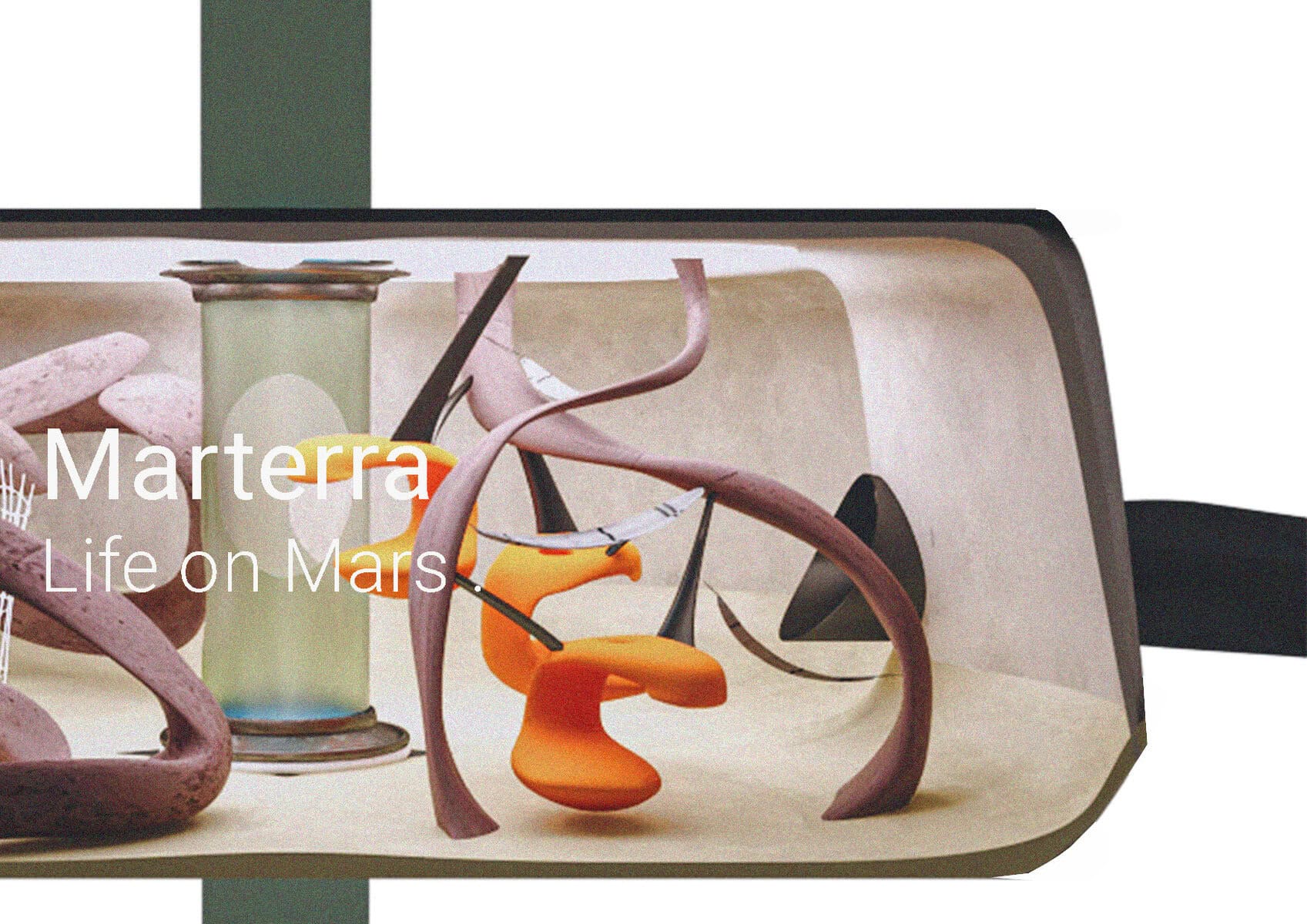
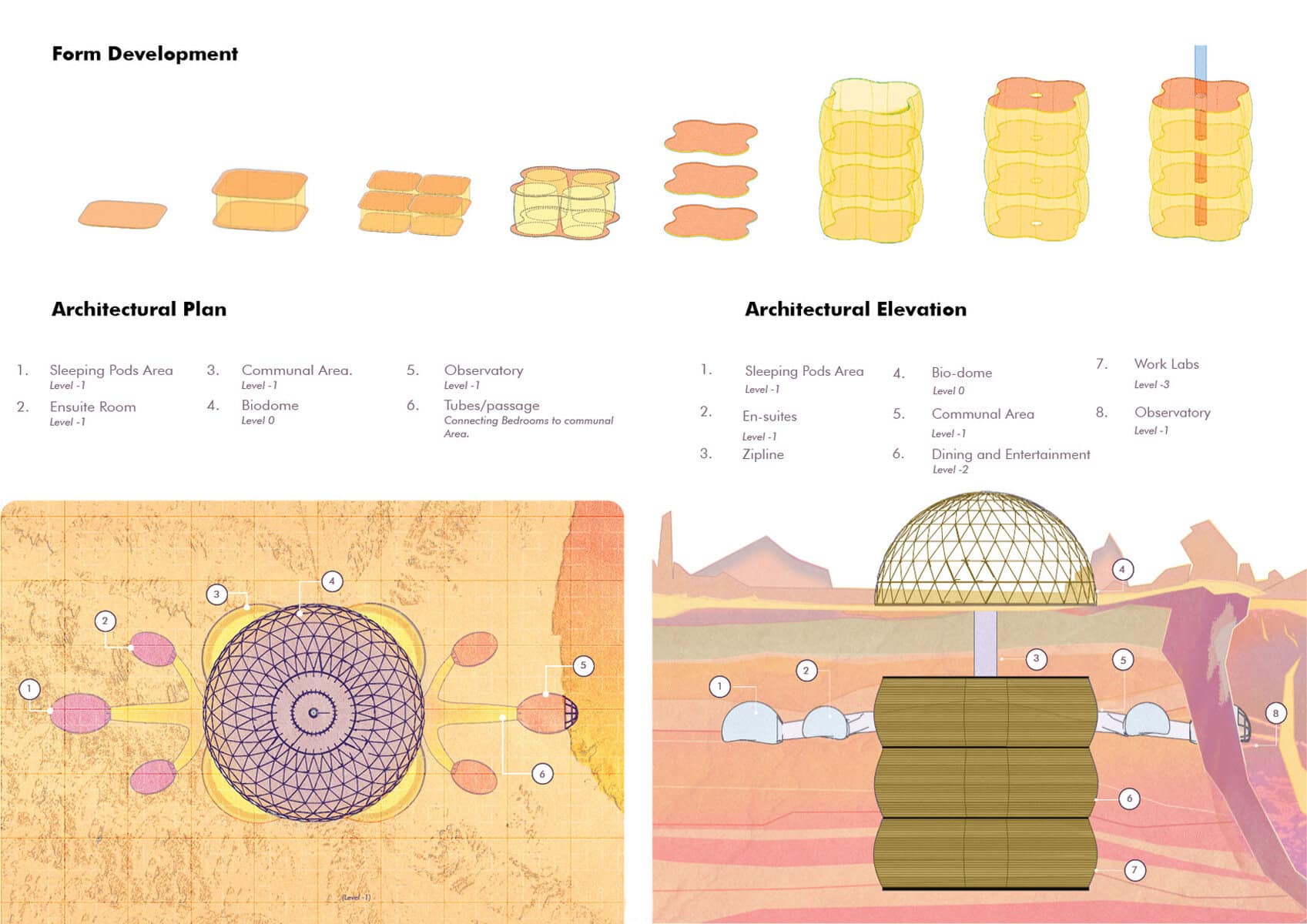
Here is Prasad’s final design thesis, MARTERRA – Life on Mars, a deeply imaginative and thoughtful response to the question: what does it mean to feel at home on another planet? Inspired by NASA’s vision for long-term missions to Mars, He explores not just how we might survive in isolated, underground environments, but how we might truly live, connect, and stay emotionally and physically well in them.
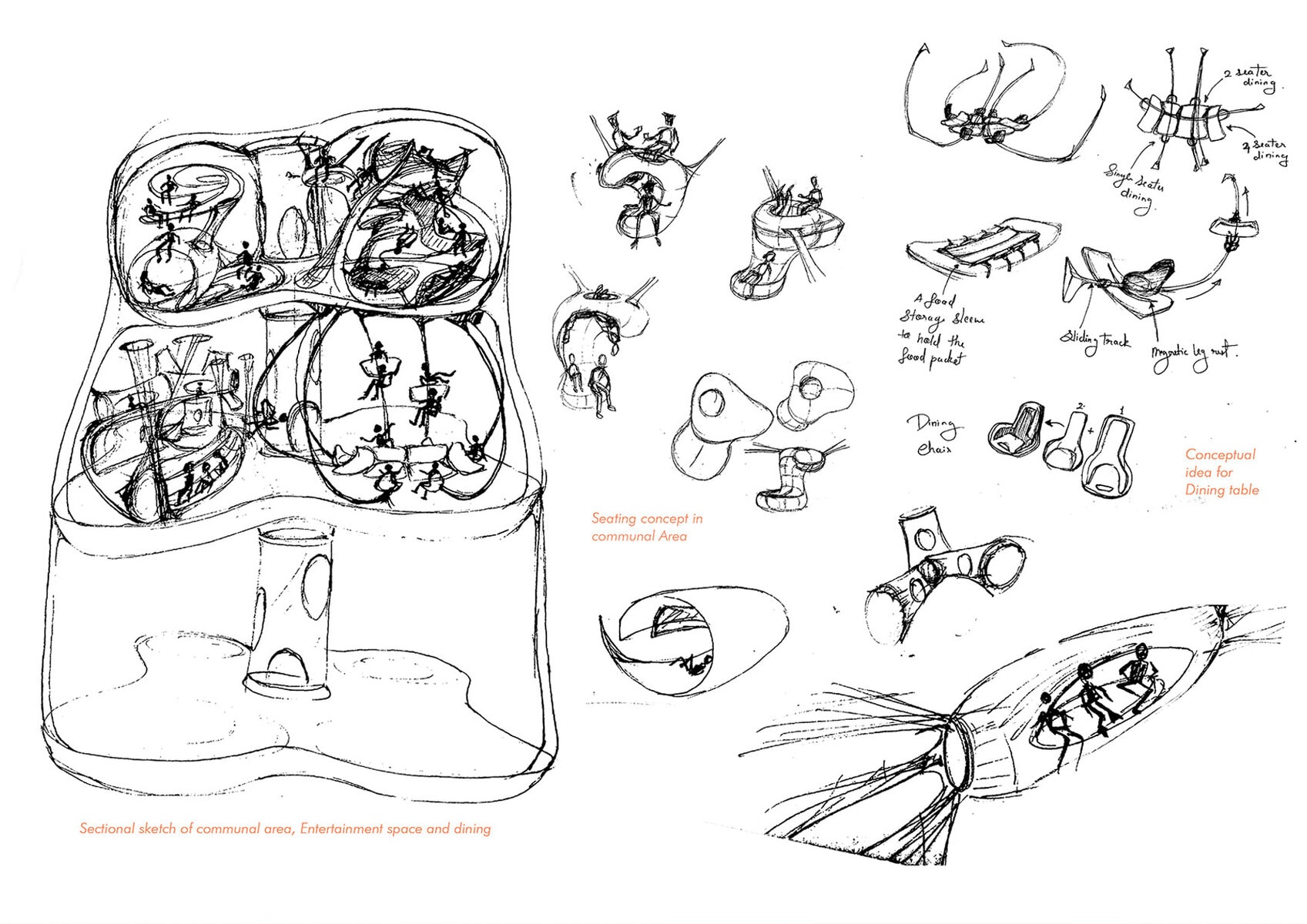
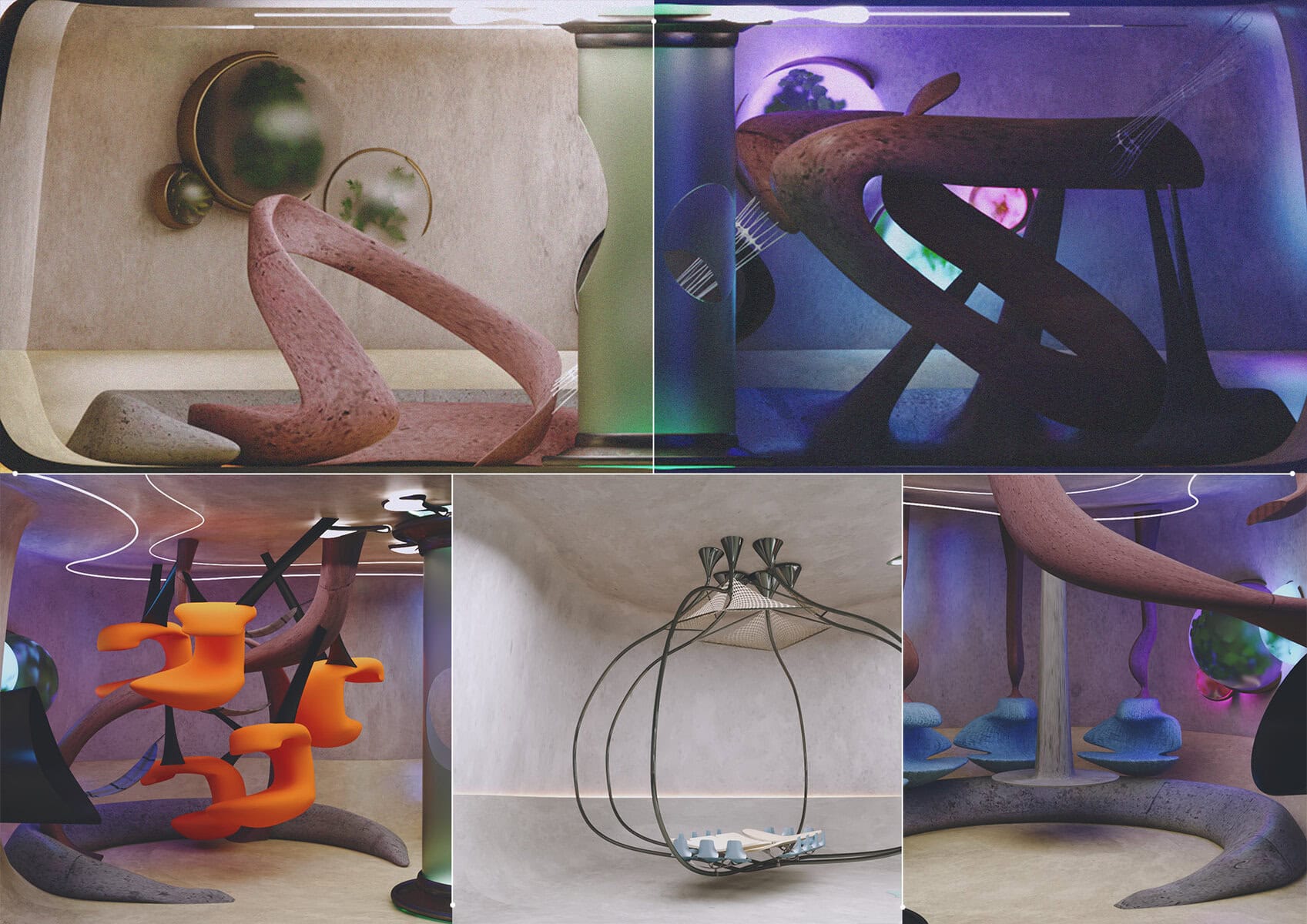
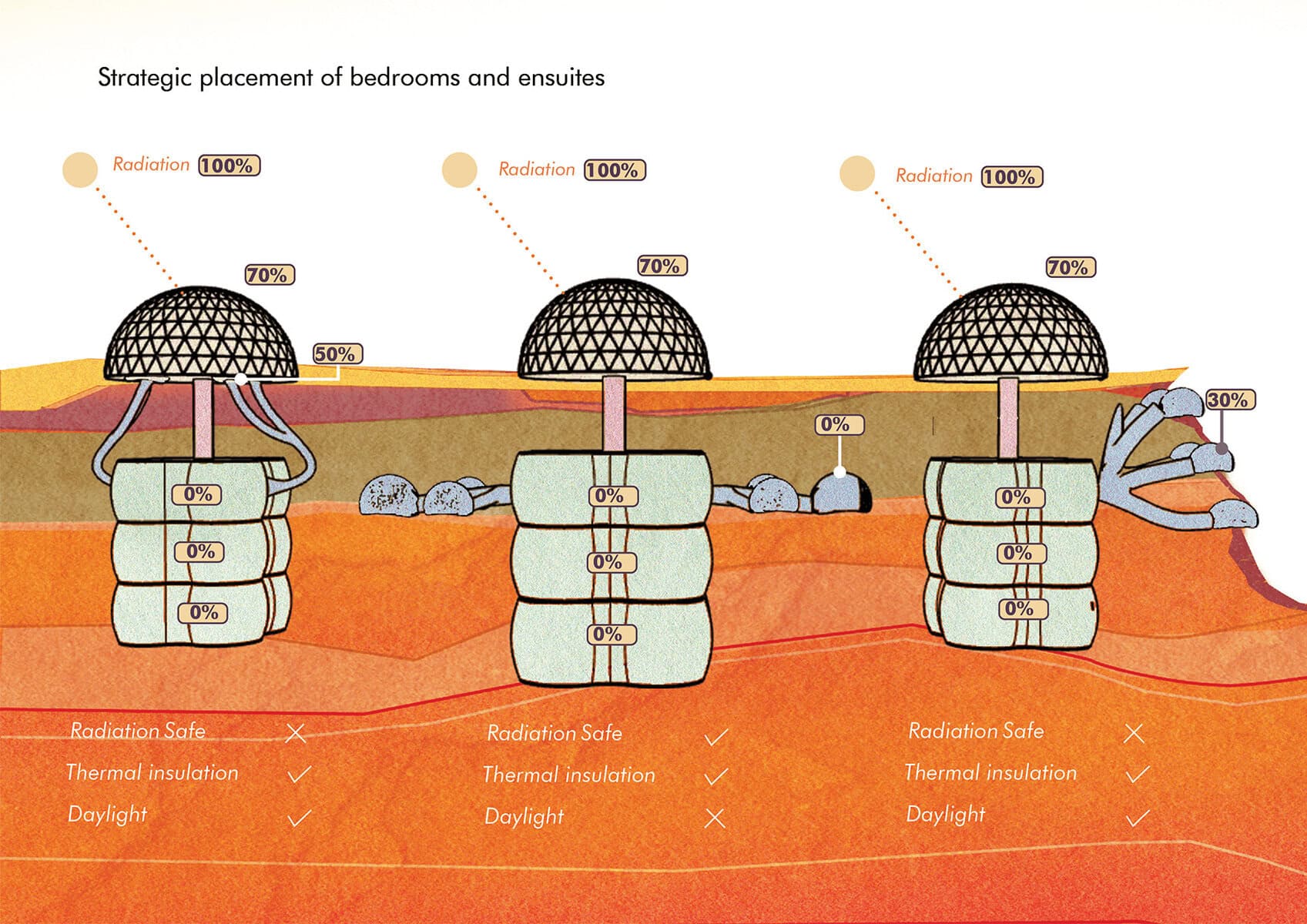
Designed for a small crew of 4–5 people, MARTERRA rethinks what interior space can do in extreme conditions. At its core is the idea of “surprise and variation” spaces that shift in shape, rhythm, and atmosphere to break routine and prevent the sensory fatigue that can come from living in a sealed environment. It also cleverly tackles the issue of “chicken leg syndrome”- muscle loss due to Mars' low gravity by embedding physical activity into everyday movement. Rather than scheduling workouts, the habitat encourages natural exercise through longer walking routes and vertical pathways.
What makes MARTERRA feel alive is its strong focus on community and emotional warmth. The shared areas like The Ring for group reflection, Circle of Hobbies for creativity, or Gossip Town for light conversation - create moments of connection that feel personal and familiar. A low-gravity entertainment zone offers a playful break from routine, while elements of nature are woven into the underground setting through biodomes, hydroponic systems, and soft, diffused lighting. In MARTERRA, Prasad isn’t just designing a space to live, he’s designing a place to belong, even millions of miles from Earth.