My project showcases an experimental concept investigating the factor of “play” in architectural design for the older generation with dementia in Hong Kong. While understanding dementia from an elderly perspective and learning about dementia care home design guidelines, I have come to realise that a lot of the existing facilities in dementia care homes are directed at putting the elderly people with dementia at ease, and helping them remember things. Through challenging design norms and questioning the requirements needed for play spaces, I went to test the boundaries of my ideal dementia-focused elderly playground to make a statement. Looking at the value of “play” from a community perspective instead of a medical one.
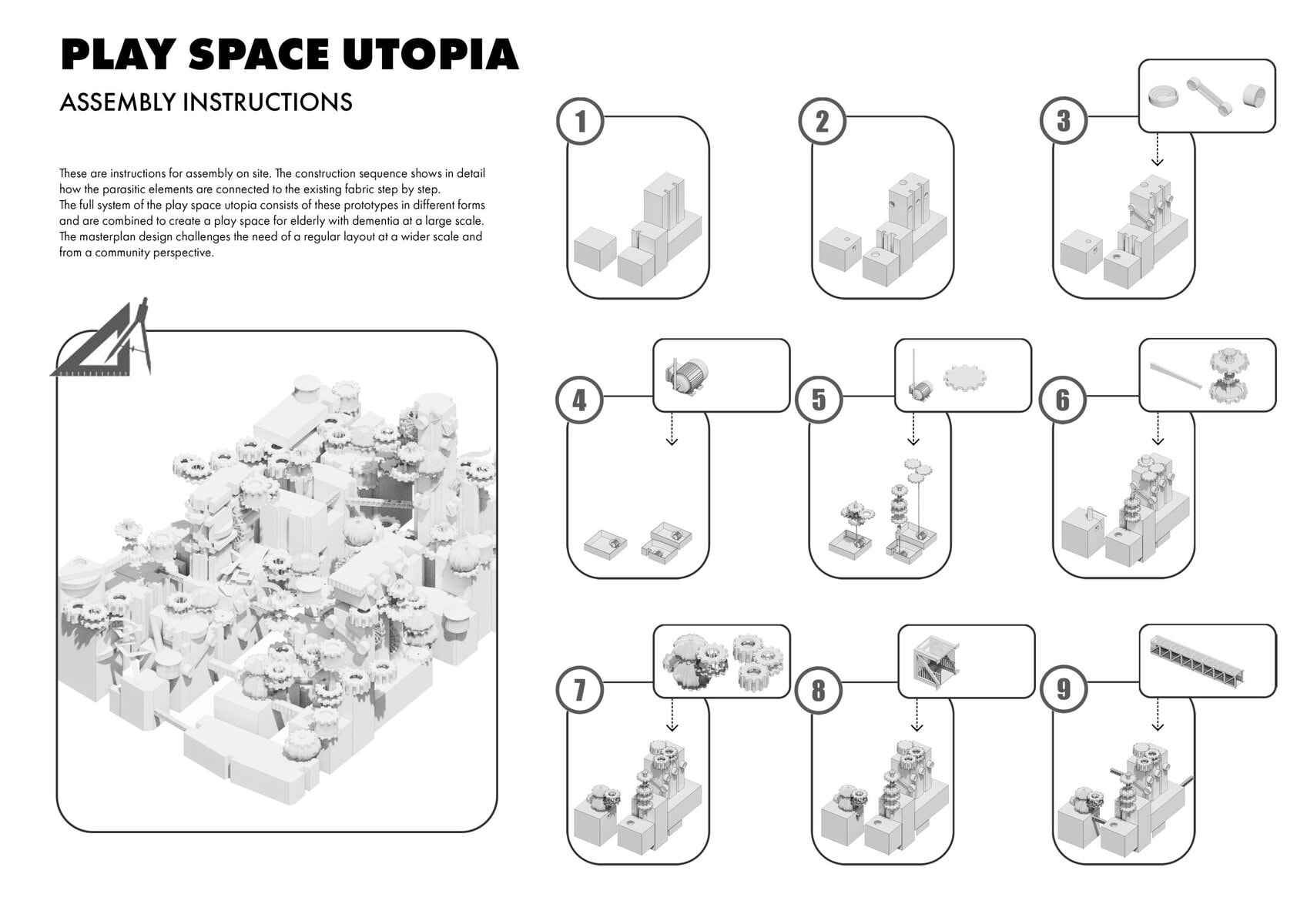
Learning from Archigram and the reversible destiny lofts, my design of the rotating parasitic pods connected to gears, motors and modular walkways move throughout the masterplan. The rotation allows the environment to change constantly playing with light and shadows, aiming to stimulate cognitive skills with an irregular environment for users with dementia and to test the limitations of elderly playgrounds. This reverses their usual routine and creates unique experiences for them to have fun and escape from reality, they do not have to remember things correctly while they’re at the Play Space Utopia.