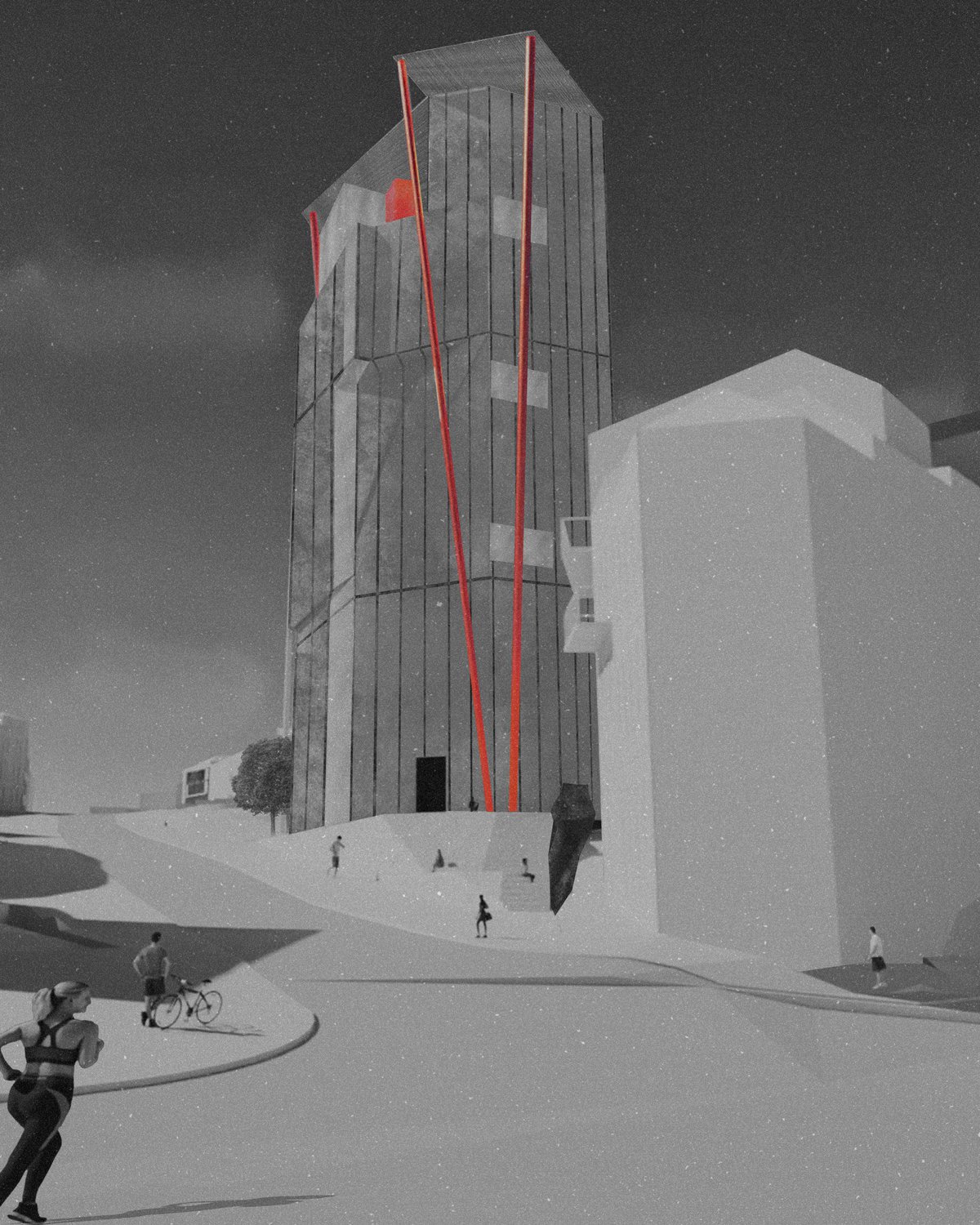
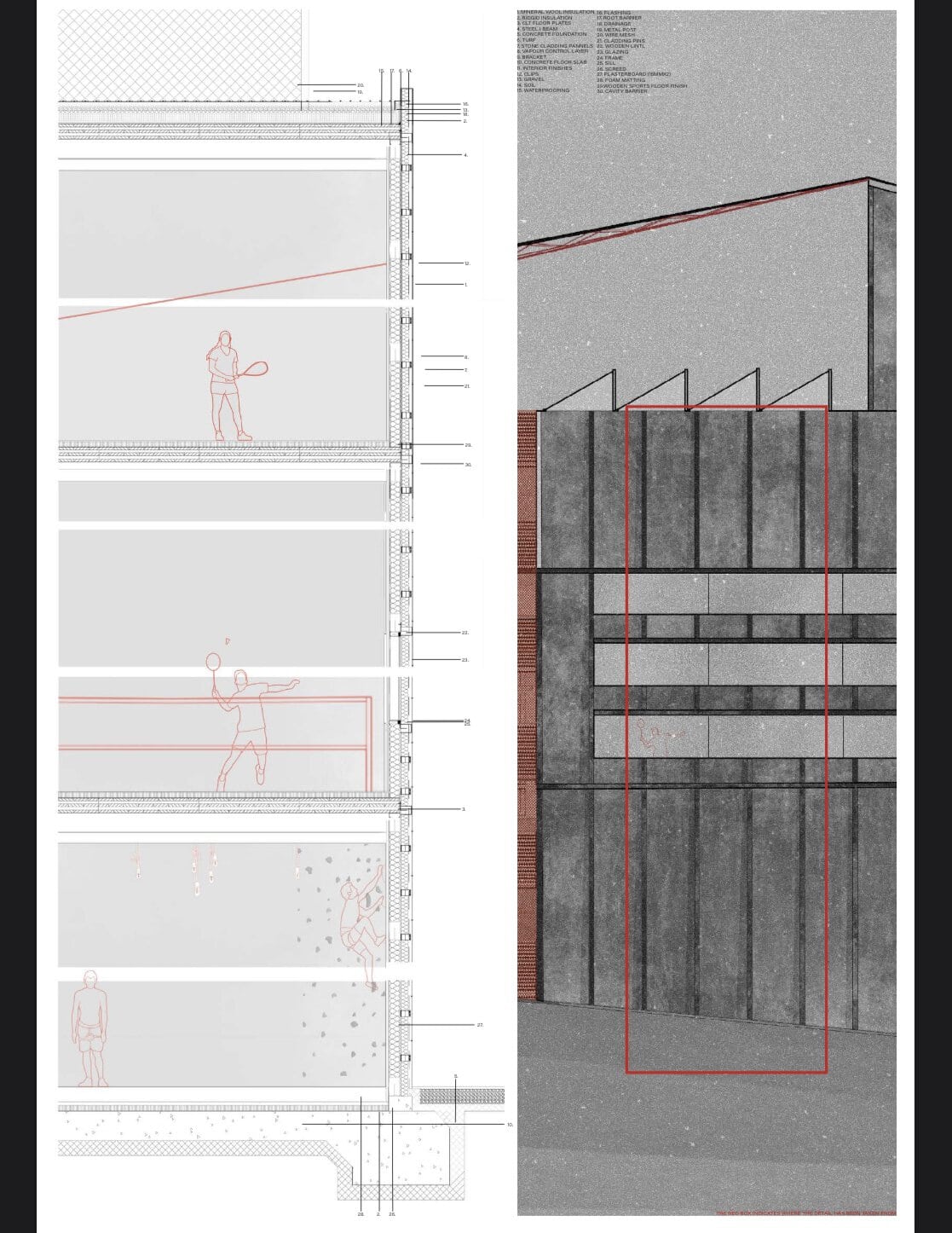
This community sports centre in Porto is a socially driven architectural response to the city’s pressing health challenges, where 65% of residents over 15 are physically inactive and cardiovascular disease remains a leading cause of death. The project seeks to promote long-term behavioural change by embedding physical activity into daily life through thoughtful spatial design.
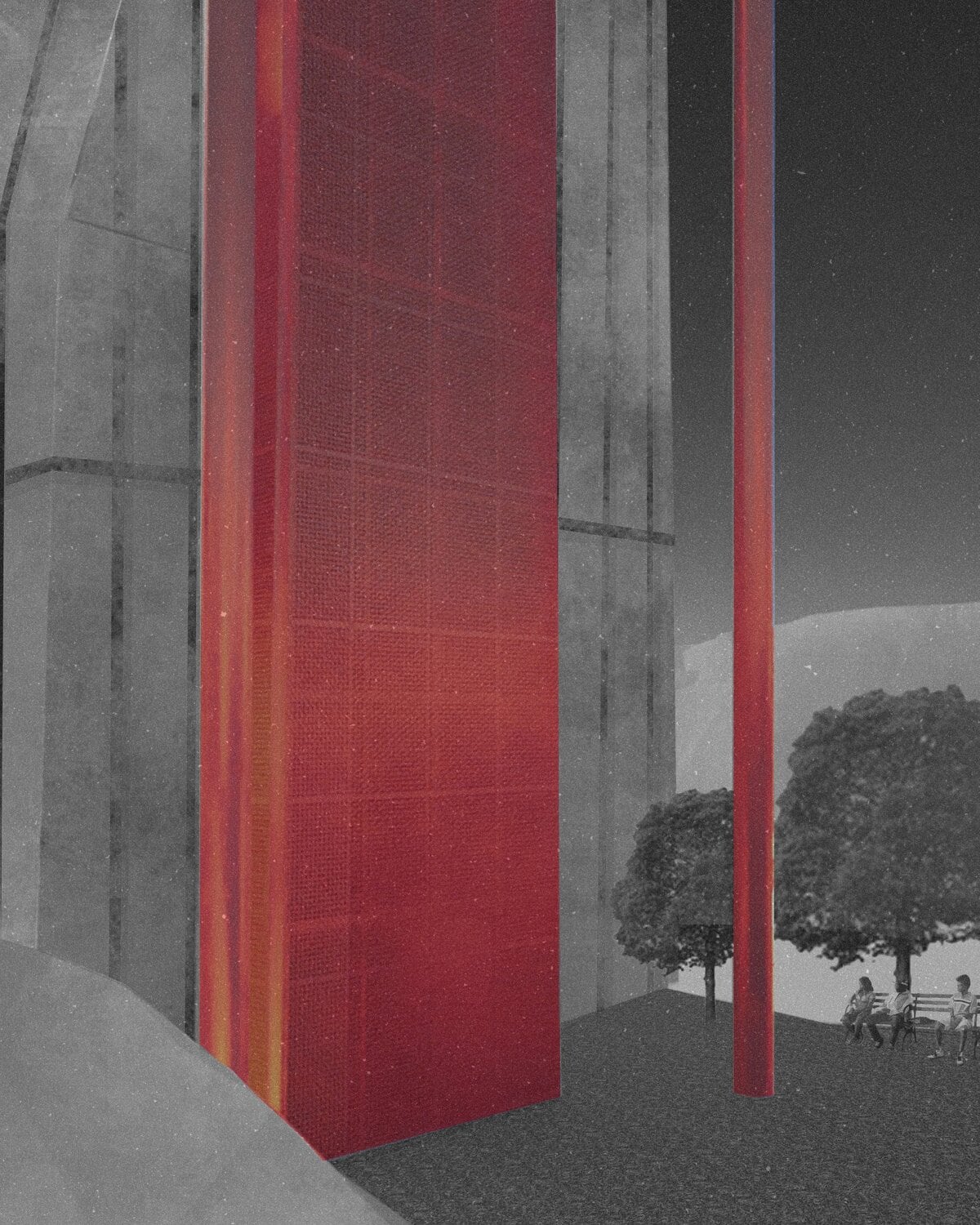
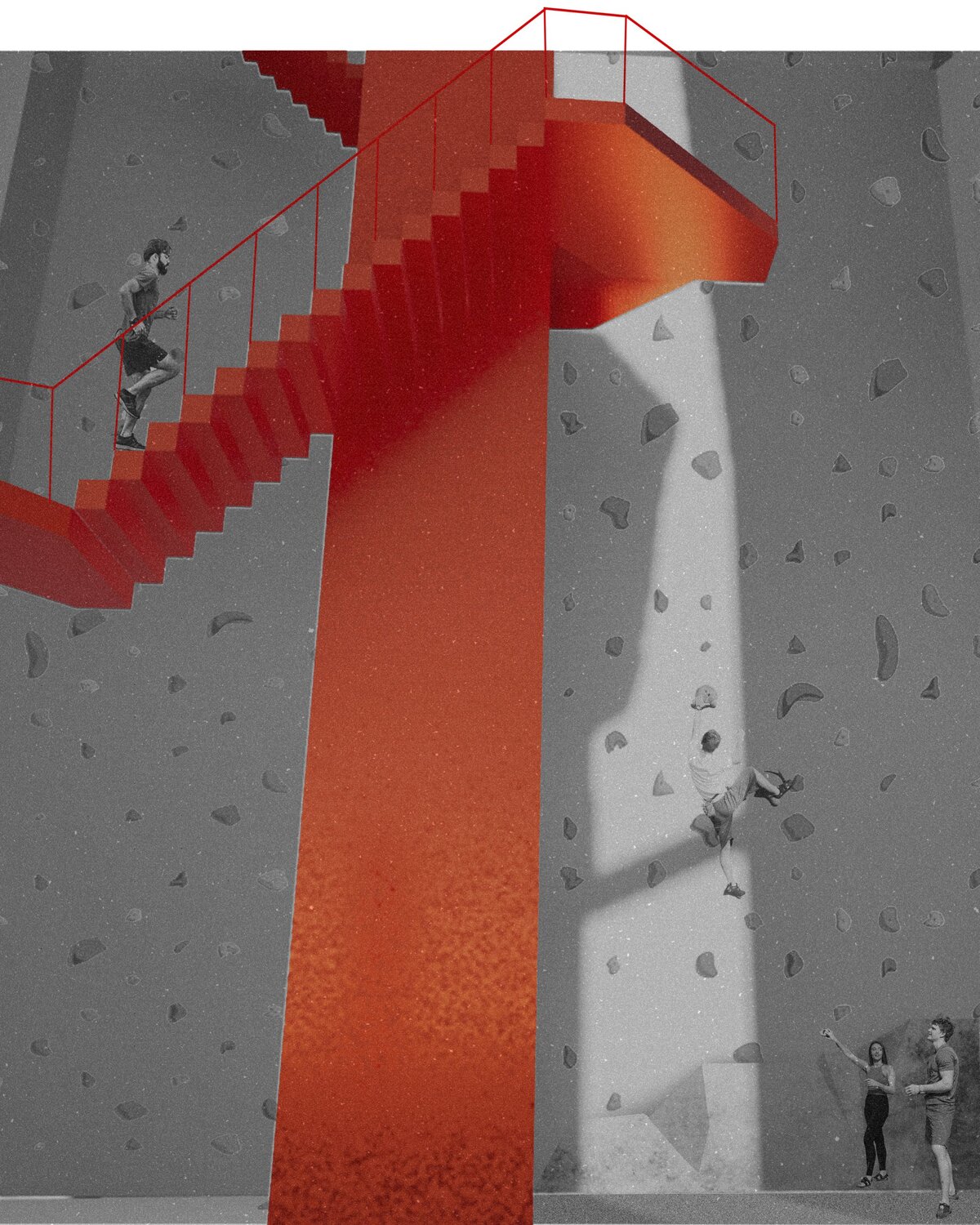
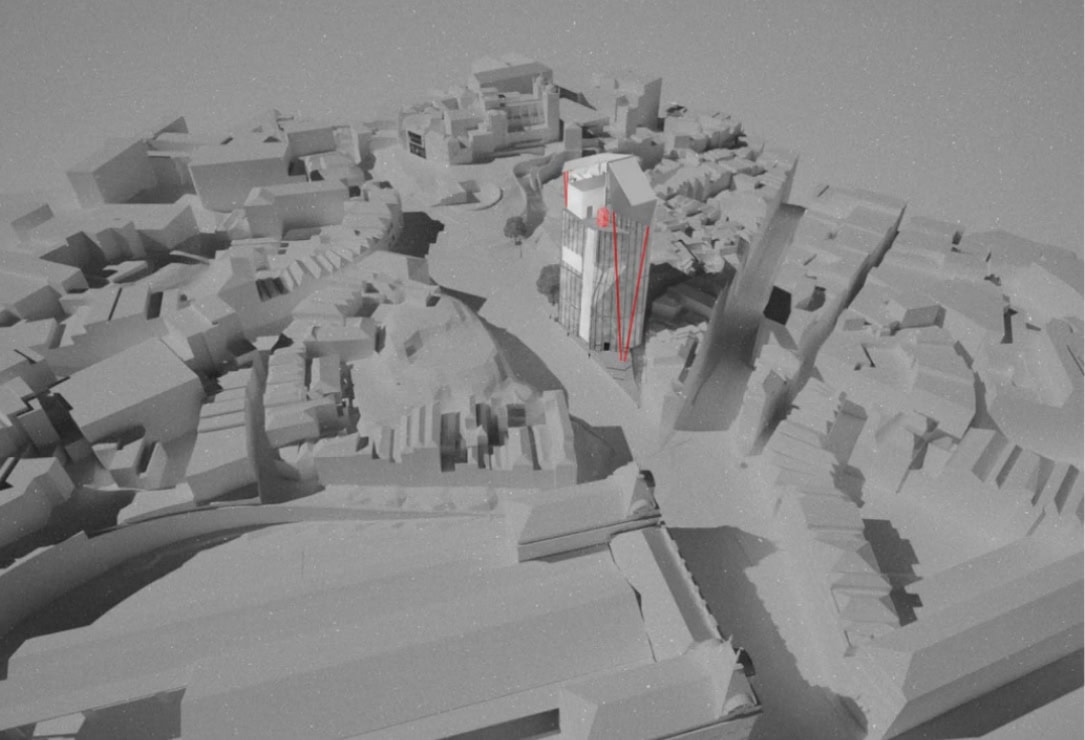
Architecturally, the scheme integrates a pre-existing rockface into the building, using it as a natural anchor point for a triple-height climbing wall that defines the main entrance space. The building navigates a complex level change on site, using terracing, voids, and carefully composed circulation routes to create dynamic spatial relationships between programmes. Visitors are drawn through the building via a sequential journey that reveals each sport — climbing, squash, badminton, and paddle — allowing for layered visual and spatial connections between active zones.
These specific sports were selected due to their inaccessibility in the surrounding area, positioning the centre not only as a place for exercise, but as a catalyst for discovery and personal engagement. The architectural strategy supports this by fostering transparency, overlap, and interactivity between programmes, breaking down psychological and physical barriers to participation.
The design is rooted in principles of accessibility, openness, and social engagement. It encourages exploration, supports community wellbeing, and repositions sport as a shared, inclusive experience. More than a collection of sports facilities, the building is conceived as a civic anchor — a place that empowers users to take ownership of their health through architecture that is responsive, contextual, and purpose-driven.