

GlobalHub Liverpool by James Williams reimagines the historic Fruit Exchange on Victoria Street as a 24/7 work, living and collaboration hub.
The project is interesting because it does not treat adaptive reuse as a cosmetic exercise. It asks how an old commercial building could support global employees, local industry and temporary city living at the same time.
As an adaptive reuse office project, the main question is how the Fruit Exchange can keep its Liverpool identity while taking on a new work-live role.
Project views
The visual material helps explain the workplace atmosphere, technology-led setting and mixed programme behind the GlobalHub proposal.


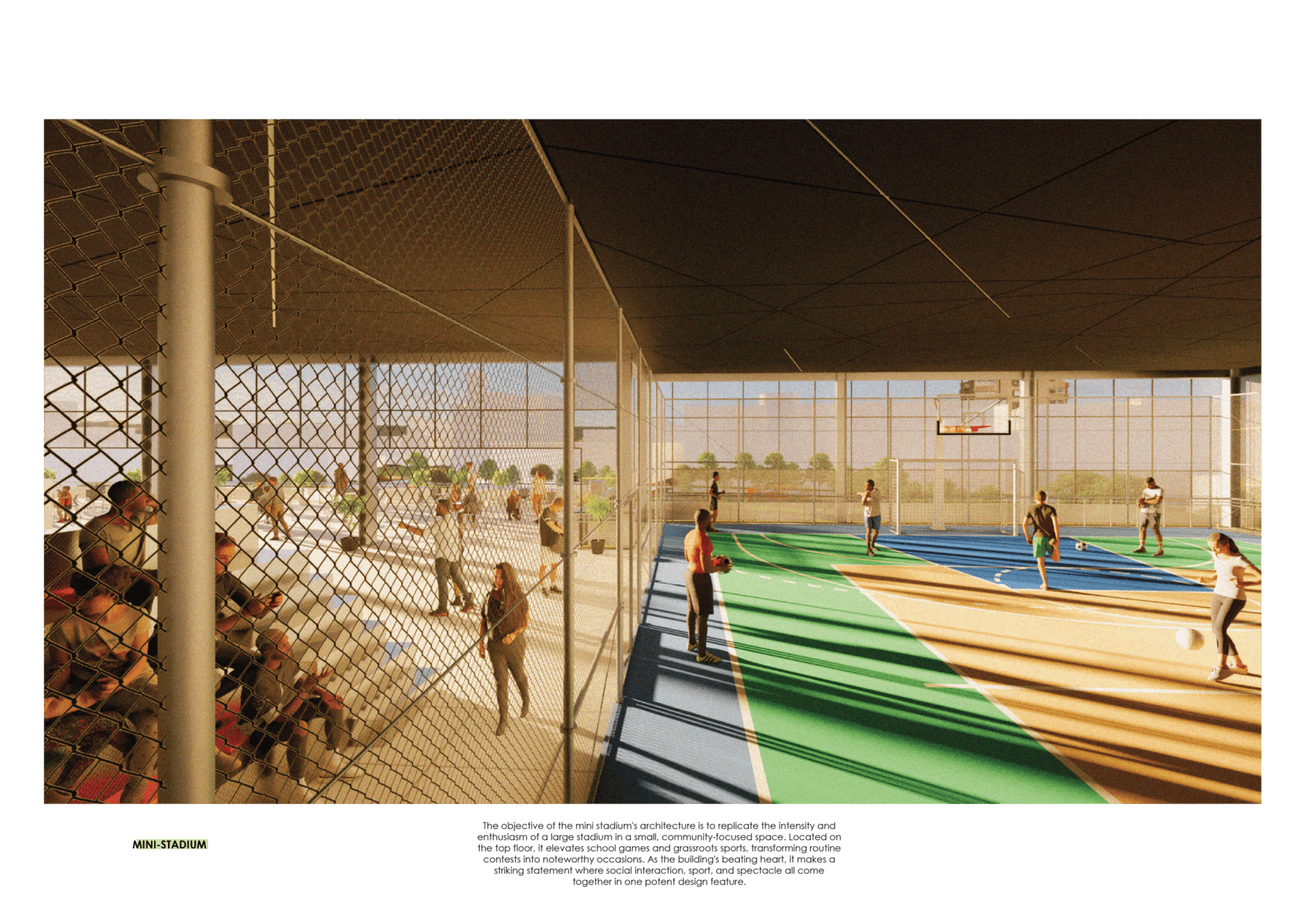
Why the Fruit Exchange matters
The Fruit Exchange gives the project a strong starting point. It already carries Liverpool’s trading history, so the design challenge is not only to make it usable again, but to connect that history with contemporary work patterns.
James’ proposal turns the building into a headquarters and collaboration hub for John West and Princes Foods, both with strong Liverpool connections. That makes the brief more credible than a generic office conversion.
A work-live brief with a clear user
The project combines flexible workspaces, private offices, open collaborative zones and furnished apartments for international staff. The residential element gives the building a clearer social purpose: it helps people arrive, work and settle into the city.
- Flexible workspace for visiting and local teams.
- Residential accommodation for global employees.
- Concierge support for people arriving in Liverpool.
- High-speed technology for collaboration across time zones.
- A heritage setting that keeps the project connected to the city.
Portfolio lesson
For students, the useful lesson is that a project like this needs a tight explanation. Show the existing building, the user group, the programme and the operational logic. If the examiner or employer has to guess why the scheme belongs on that site, the story is not doing enough.
Connect with James and the project
Use these routes to follow James’ work or get in touch about the project.
Architecture Social view
Stephen’s recruiter view is that adaptive reuse projects stand out when they prove judgement. Do not only show a strong render. Explain the building you inherited, the constraints you respected and the new life you are proposing.
Showcase an adaptive reuse project
If your project brings an existing building back into use, make the site, programme and decision-making easy to follow.
- Show the existing condition and why it matters.
- Explain the new user group and daily use.
- Use plans, sections and images to prove the idea.
- Credit your university, collaborators and project context clearly.
Next step
Browse more student and project showcases, read the portfolio guide, or submit your own project to Architecture Social.
If this project has made you rethink your own portfolio or next move, browse current architecture jobs or get in touch for a recruiter’s view.



Add a comment