
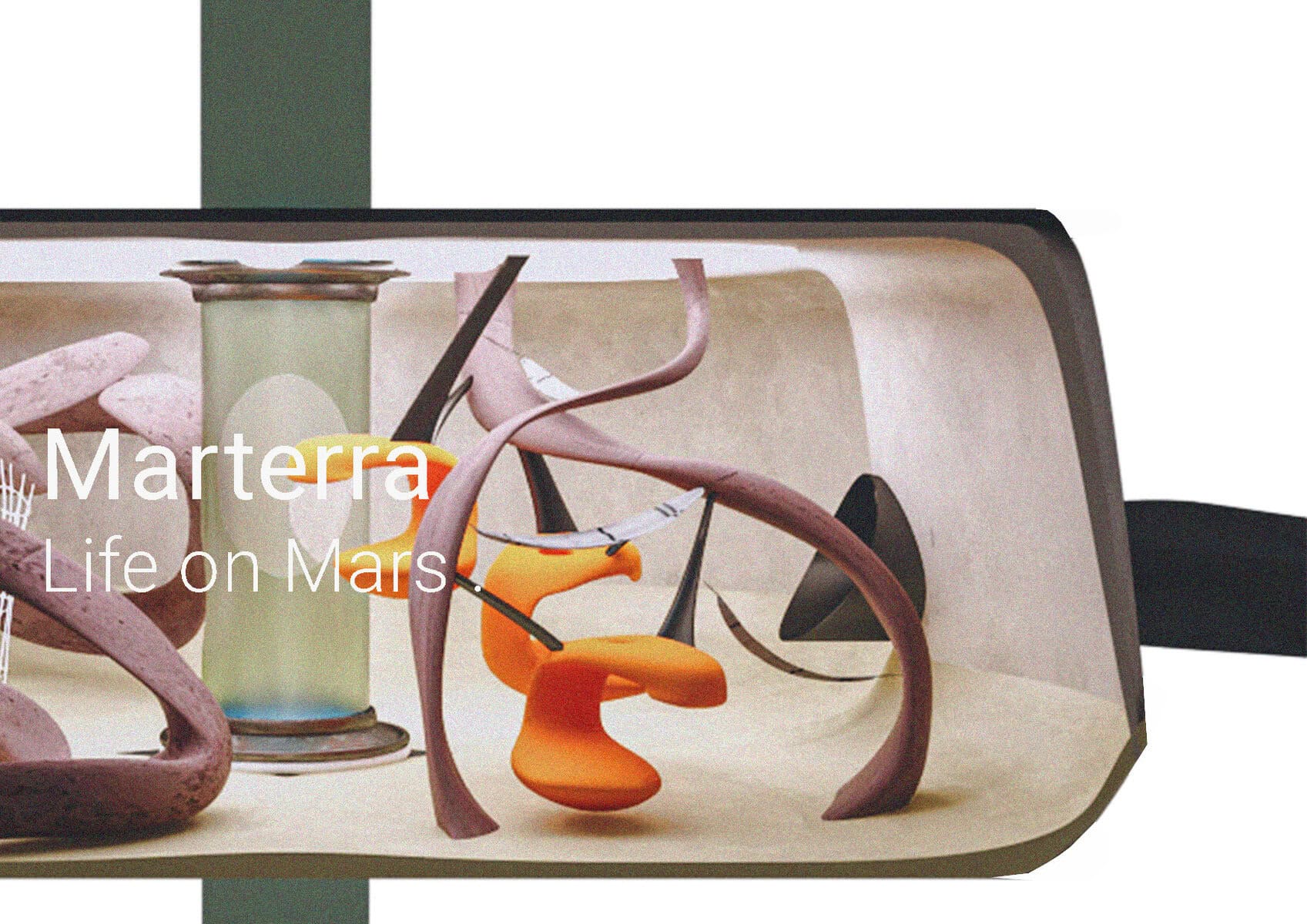
Marterra, Life on Mars by Prasad Bauskar is a Mars habitat design thesis about wellbeing, movement and belonging beyond survival.
The project is useful because it asks what a home on Mars would need to do emotionally, socially and physically, not just technically.
Project gallery
The project visuals show the speculative habitat language, spatial atmosphere and wider settlement thinking behind the thesis.


Project overview
Prasad graduated with distinction from the MA Interior Architecture and Design course at the University of Hertfordshire. His experience spans studios in India and the UK, with interests across interiors, furniture design, speculative scenarios and sketching.
Marterra asks what it would mean to feel at home on Mars. Rather than treating the habitat as a sterile survival module, the thesis explores emotional wellness, routine, movement and shared life for a small crew.
How the habitat supports life
- Variation in colour, light and form helps counter sensory fatigue.
- Longer routes and vertical movement build physical activity into daily life.
- Shared spaces support ritual, conversation and spontaneous community.
- Adaptable rooms allow mood and function to change over time.
- The project treats belonging as a design issue, not a soft extra.
Why the thesis has portfolio value
Speculative architecture can easily become only a dramatic image. Marterra is stronger because the concept is tied to a human question: how do people stay physically active, emotionally grounded and socially connected in an extreme environment?
Showcase a speculative design project
Architecture Social can feature speculative student work where the future scenario is backed up by clear human needs, spatial evidence and design logic.
- Explain the human problem first.
- Show how the space responds to that problem.
- Use drawings or images that prove daily life, not only atmosphere.
- Connect the concept to wellbeing, use and movement.
Architecture Social view
Stephen’s recruiter view is that speculative projects are strongest when the imagination is disciplined. Practices may enjoy the big idea, but they still need to see the brief, user, spatial logic and design decisions.
Next step
Explore more student projects, read the portfolio guide, or submit a speculative design project.
If this project has made you rethink your own portfolio or next move, browse current architecture jobs or contact Architecture Social for a recruiter’s view.





Add a comment