
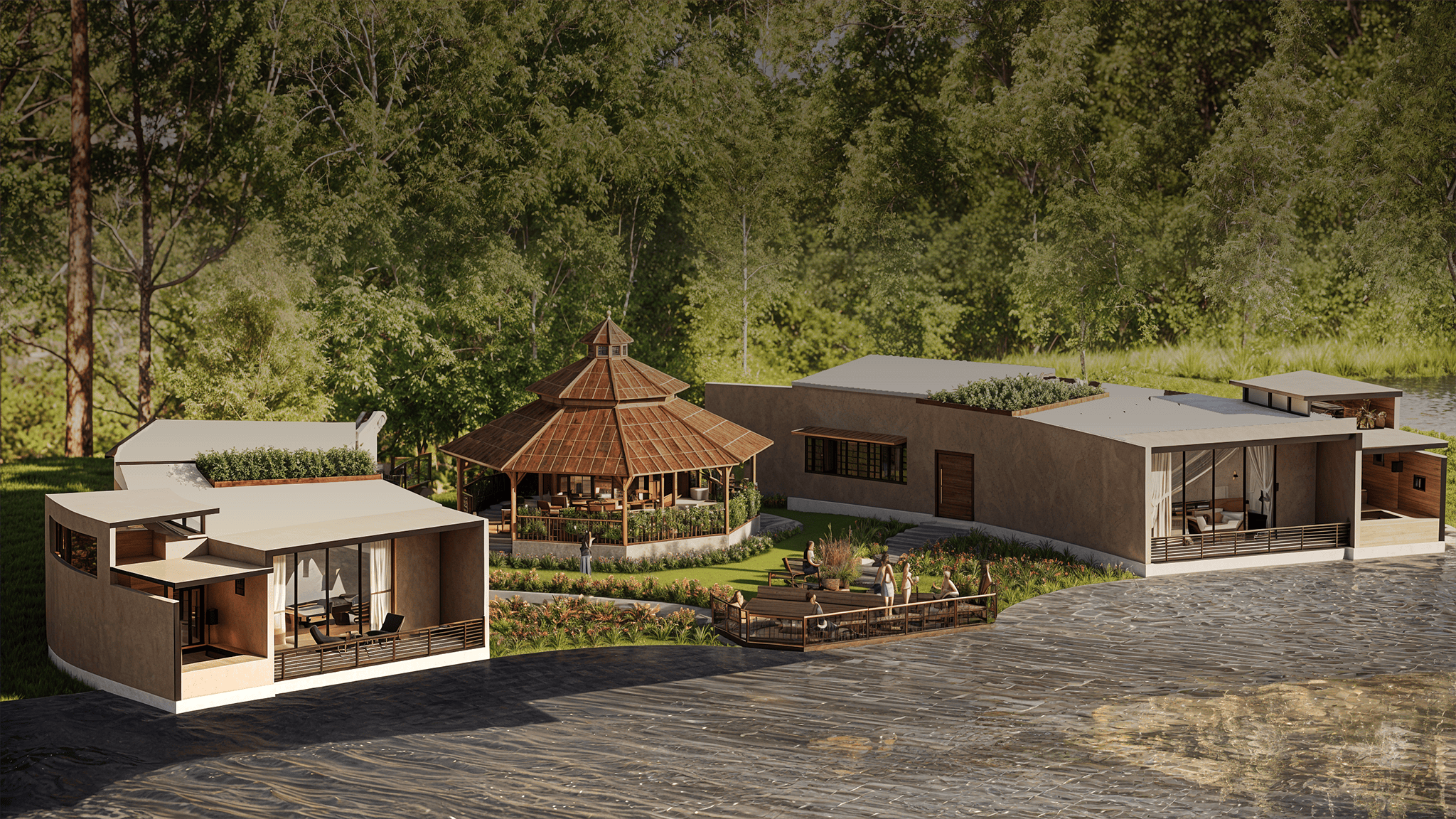
Neerangana Villa by Hammad Hameed is a resort architecture project shaped by terrain, light, local materiality and a slower relationship with landscape.
The project is useful because it does not treat a resort as a collection of rooms. It explores how courtyards, shade, water, views and movement can create a more grounded visitor experience.
Student project visuals
The project imagery shows the retreat as a sequence of landscape, structure and atmosphere, with material choices doing much of the design work.


A resort shaped by terrain and climate
Neerangana Villa draws on undulating terrain, private lakeside conditions and climate-sensitive thinking. The design uses courtyards, jali screens and shaded thresholds to make the resort feel rooted in place.
The material strategy is important too. Compressed mud walls, bamboo and local textures give the project a clear language, while modular room clusters help organise the visitor experience.
Design ideas worth noticing
- Courtyards create shade, orientation and social pockets.
- Jali screens filter light and support privacy.
- Local materials give the retreat a more specific identity.
- Room clusters help the resort feel connected to the landscape.
- The project balances atmosphere with a clear spatial system.
Portfolio lesson from Neerangana Villa
A resort project can become vague if it only talks about atmosphere. The stronger move is to show exactly how atmosphere is made: through section, shade, materials, movement, threshold and climate response.
Follow Hammad’s work
For more context on Hammad Hameed’s architecture work and visual practice, use the profile link connected to the project.
Architecture Social view
Stephen’s recruiter view is that atmospheric projects need clear evidence. If the reader can see how the mood is built through structure, material and climate logic, the project becomes much more convincing.
Submit your architecture project
If your student project has a clear spatial idea, material strategy or strong visual story, Architecture Social Showcase can help more people discover it.
- Lead with the project concept.
- Show the strongest drawings or images.
- Explain how the design responds to site and climate.
- Add a short note on what the project taught you.
If this project has made you rethink your own portfolio or next move, browse current architecture jobs or contact Architecture Social for a recruiter’s view.




Add a comment