
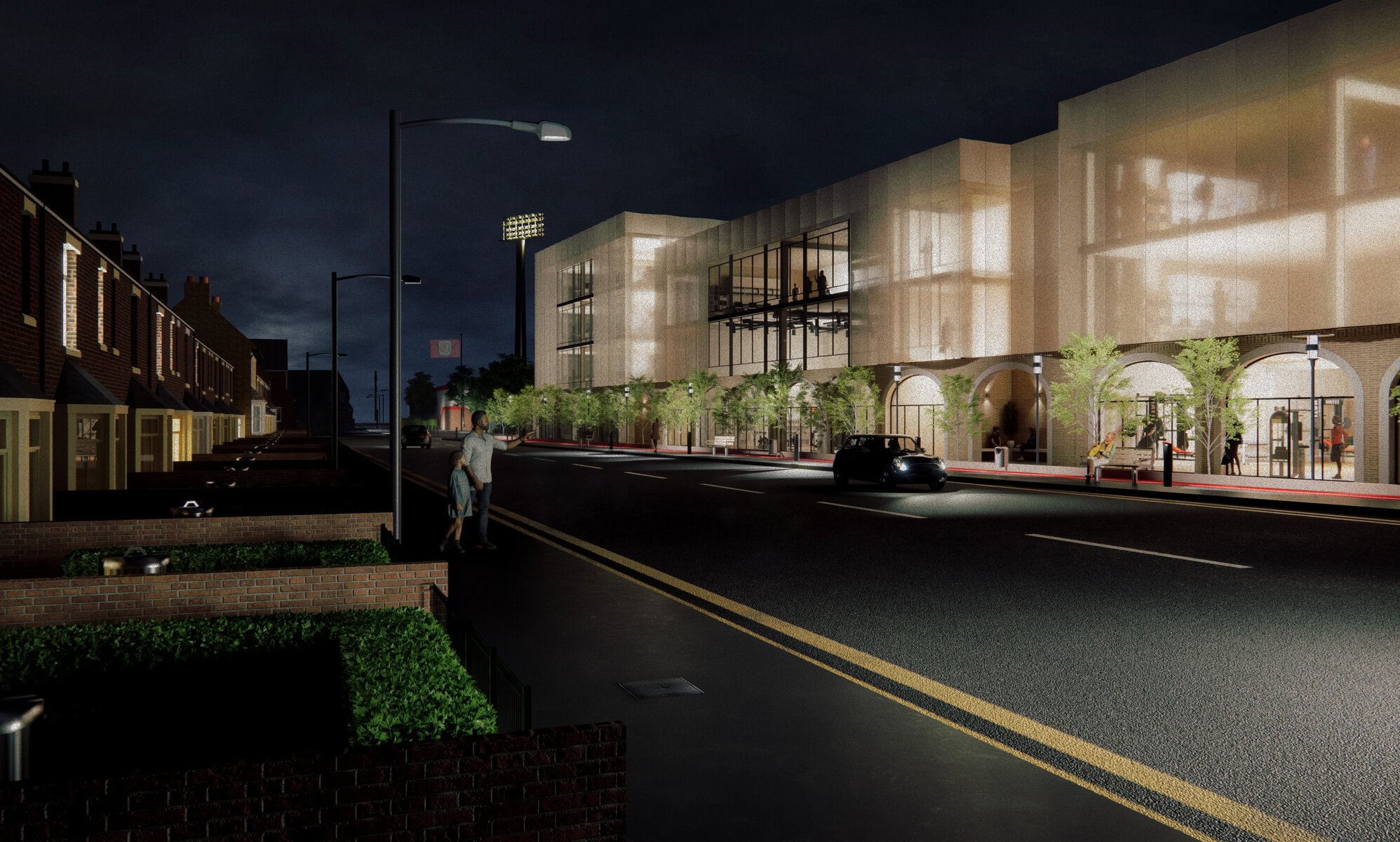
The Sporting Factory by Yinka Malik Fashola is a cultural and sports community hub beside Mornflake Stadium in Crewe.
The project is powerful because it treats a football ground as more than a match-day object. It asks how Crewe Alexandra FC, public space and community facilities could work together throughout the week.
Project gallery
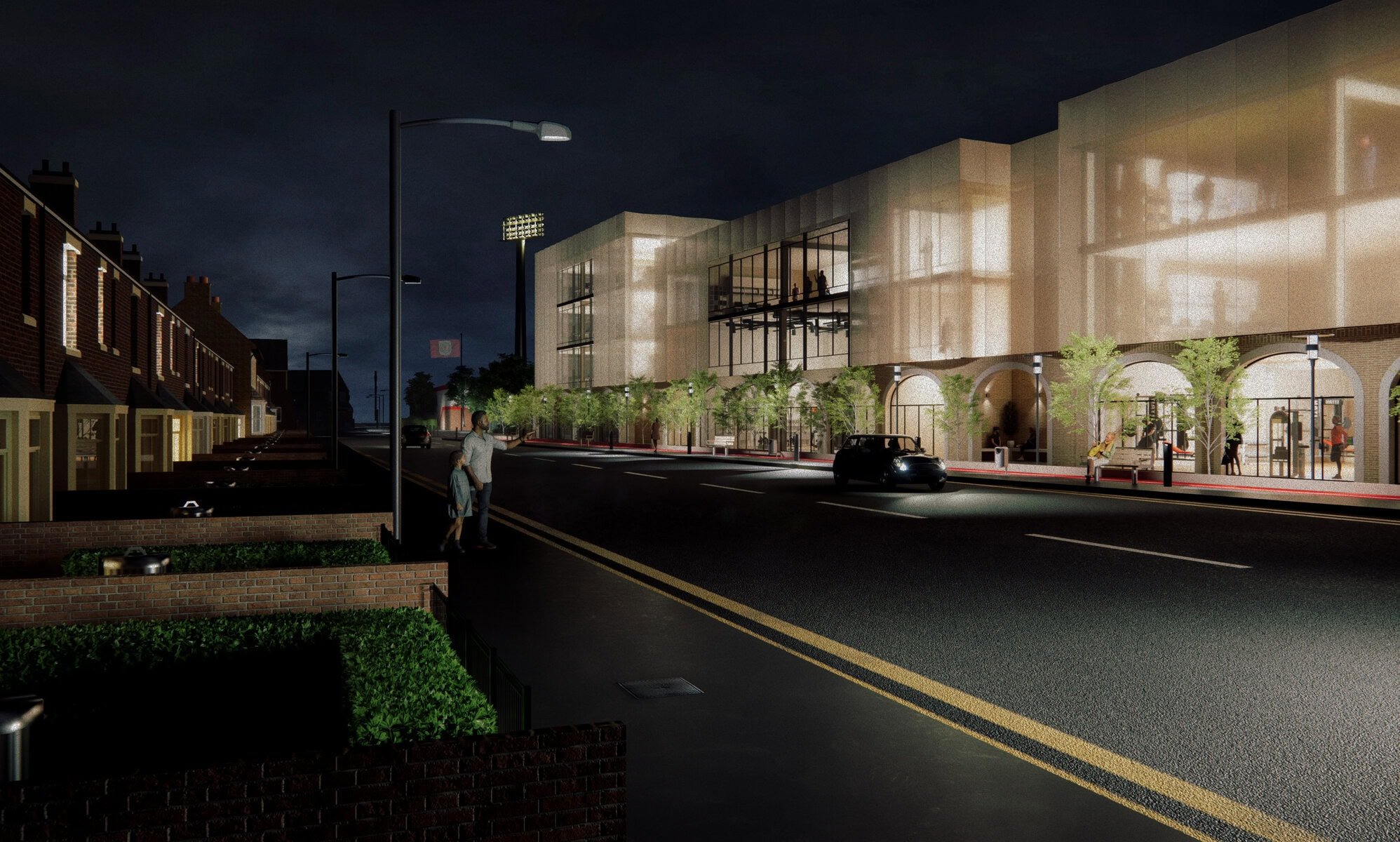
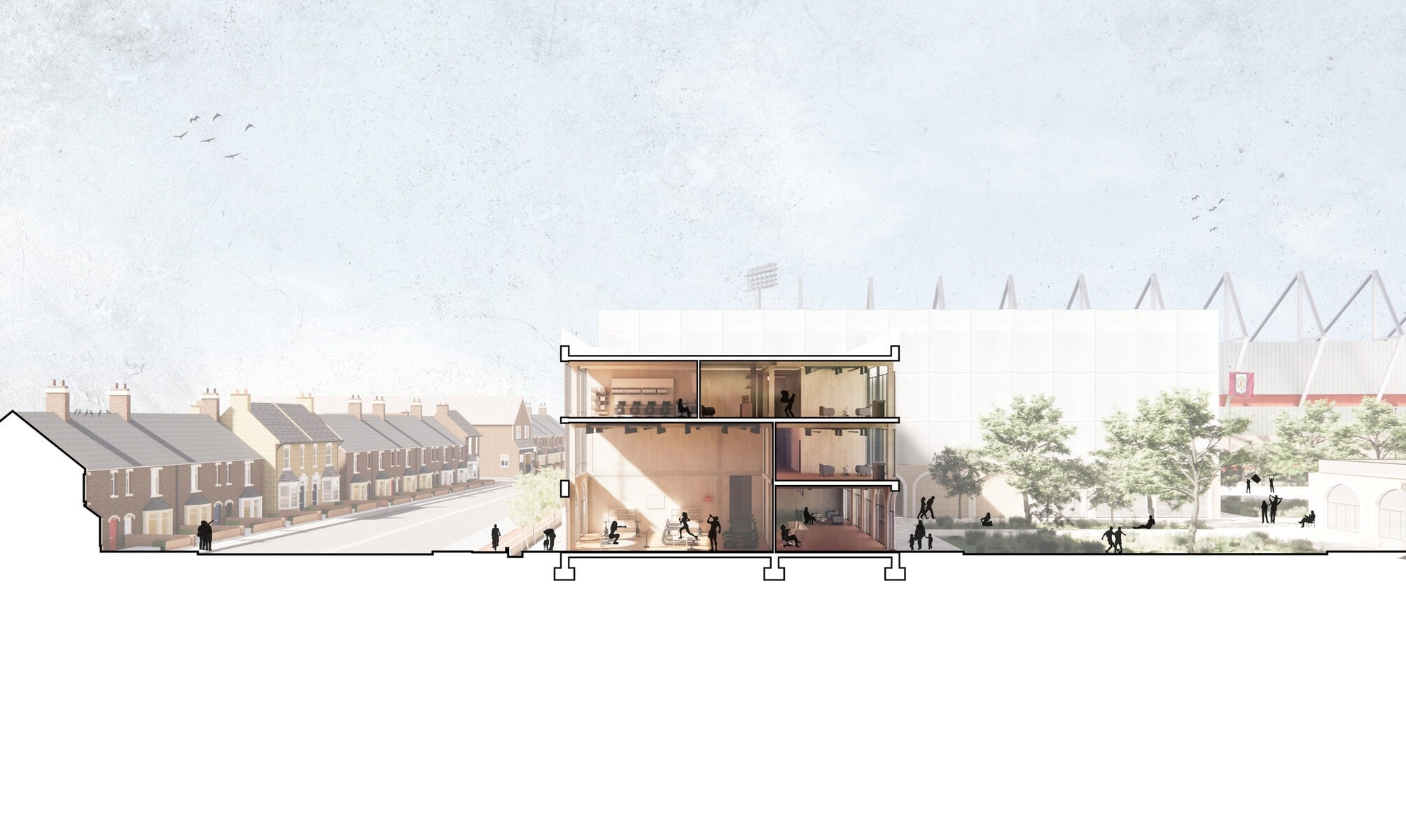
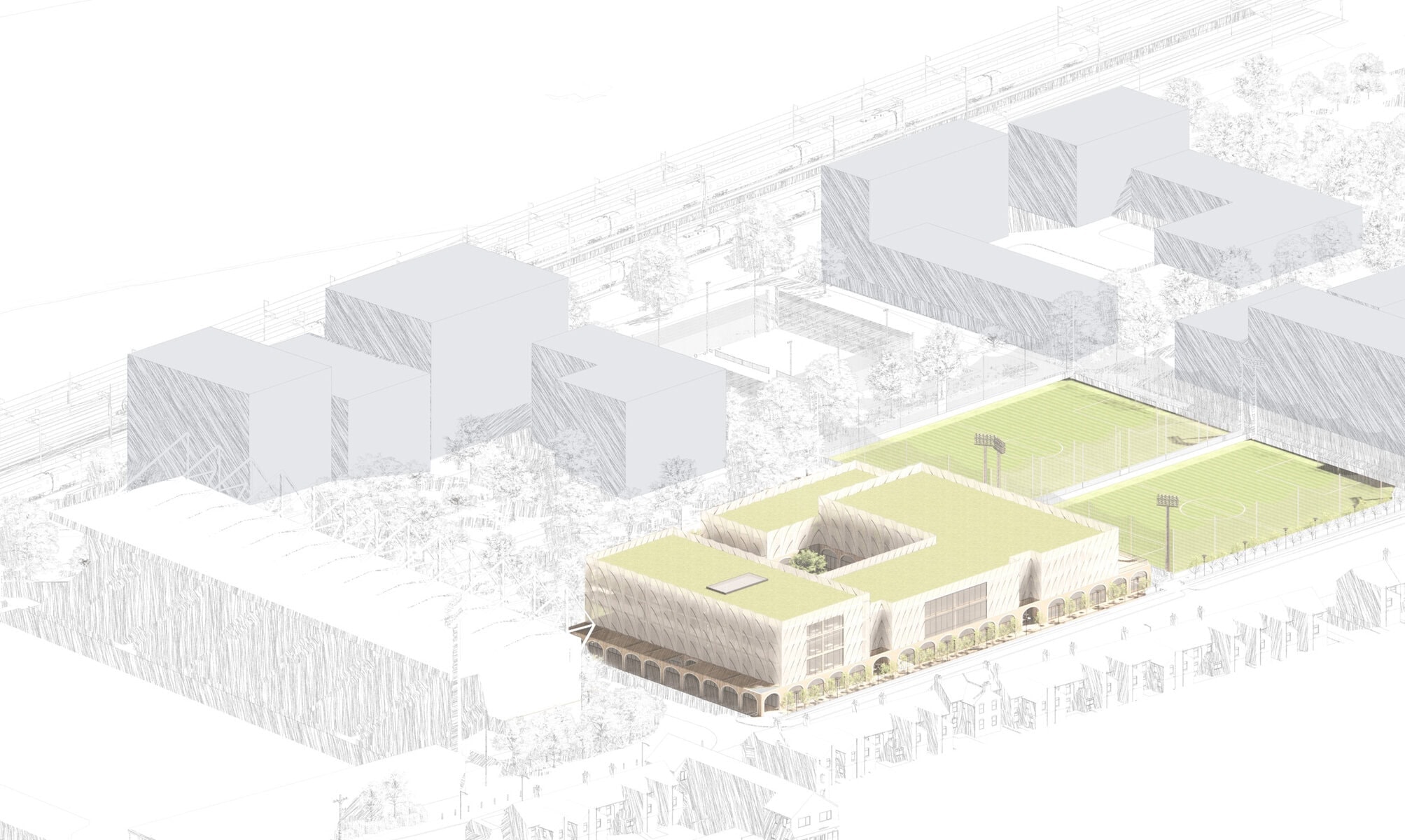
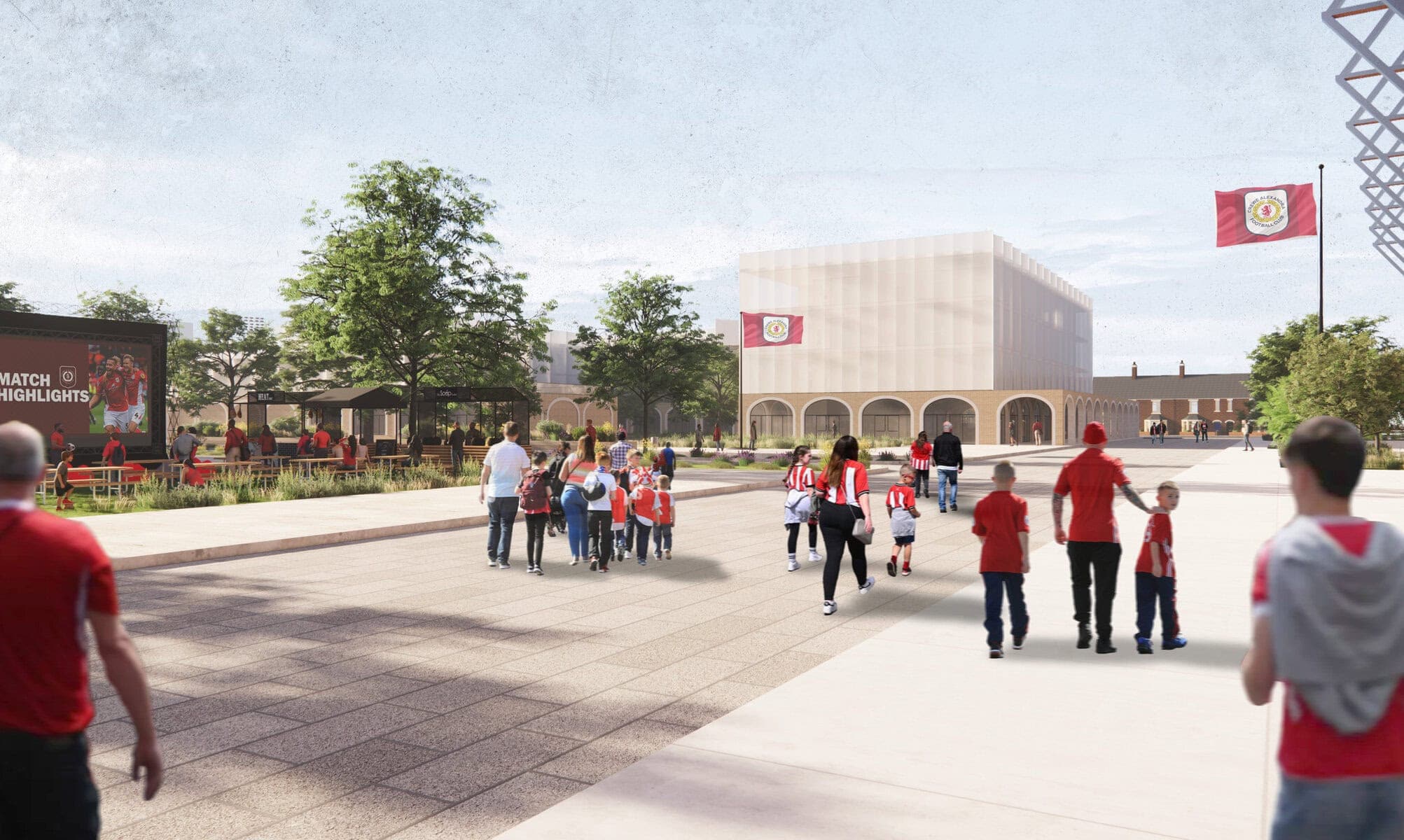
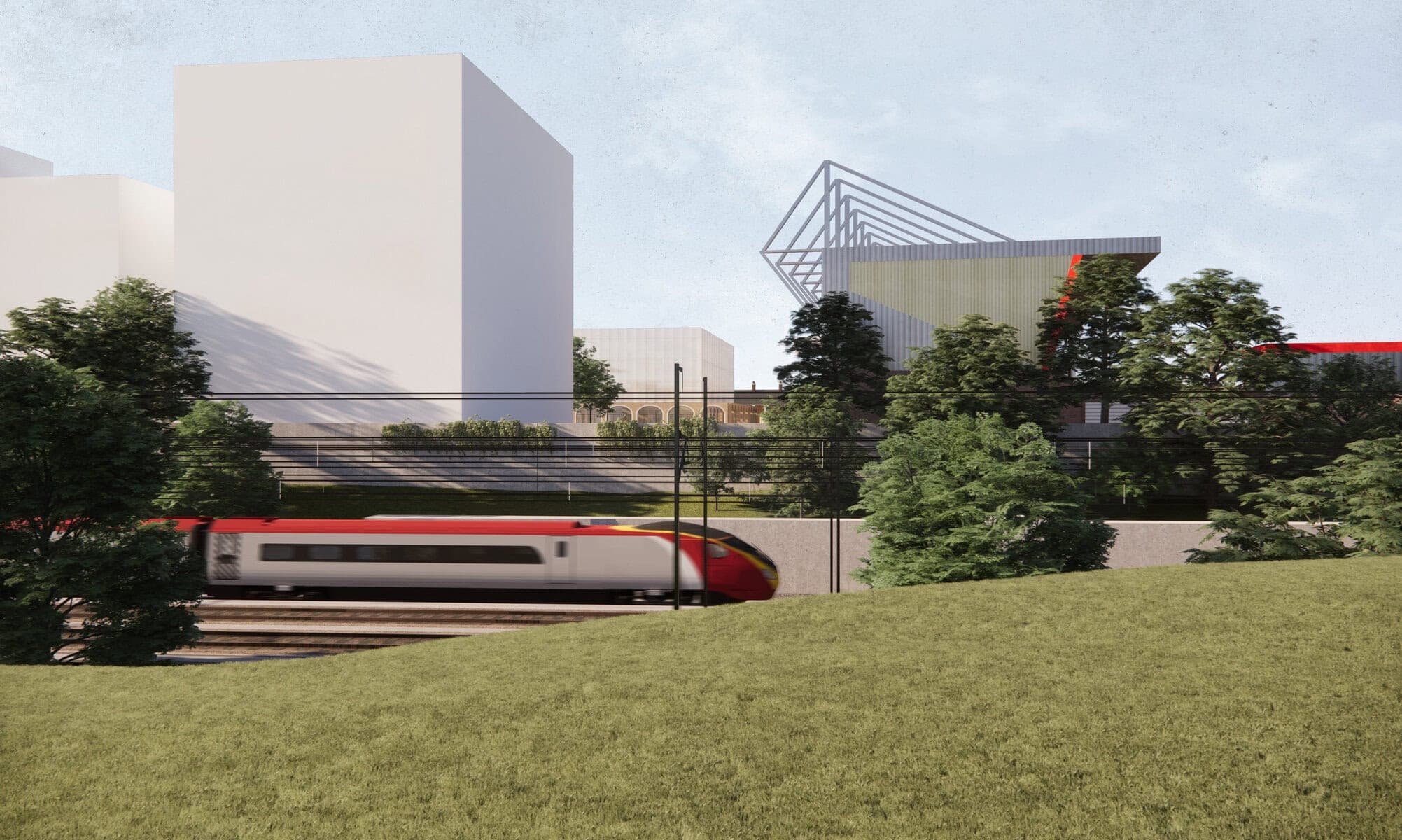
The gallery shows Yinka Malik Fashola’s Sporting Factory proposal, including the stadium, section, aerial and public-realm views.
Project overview
Yinka Malik Fashola is a Part II Architectural Assistant and Manchester School of Architecture graduate. His thesis proposes a Cultural and Sports Hub that reconnects Crewe Alexandra FC with the town around it.
The project sits beside Mornflake Stadium and uses a mix of sports, rehabilitation, youth training, public courts and open space to create a more generous civic edge.
Research-led design around the stadium
The original project is strongest where it describes research and crowd mapping. Watching how fans, families and local people move, pause and gather gives the proposal a more grounded reason to exist.
- Crowd movement around the stadium informs the public realm.
- Youth training supports local talent and everyday use.
- Rehabilitation facilities broaden the building’s audience.
- Public courts give the hub life beyond match day.
- The plaza creates a social threshold between club and town.
Why sport and culture belong together
A stadium can be isolated from its town if it only functions during fixtures. The Sporting Factory looks at the club as a civic anchor, with sport, learning, activity and public life layered together.
Showcase your own community project
Architecture Social can showcase community-led student work when the project has strong visuals, evidence and a clear public purpose.
- Explain the users beyond the headline client.
- Show what happens on non-event days.
- Use mapping to support design decisions.
- Connect public space, movement and programme.
Common mistakes
- Designing a stadium-edge project that only thinks about match day.
- Talking about community without showing the programme that supports it.
- Using mapping as decoration rather than evidence.
- Forgetting maintenance, access and everyday use.
- Leaving the project’s social value too vague.
Architecture Social view
Stephen’s recruiter view is that community-led projects are strongest when they prove the candidate understands people, place and programme. The idea needs to survive beyond a single strong image.
Next step
Explore more Architecture Social projects, contact Yinka at yinkafash0@gmail.com, use the portfolio guide to sharpen your own community project story, or submit your own project.
If this project has made you rethink your own portfolio or next move, browse current architecture jobs or contact Architecture Social for a recruiter’s view.


Add a comment