
Urban Mosaic: Revitalising Cardiff’s Post-Industrial Heart for Multigenerational Urban Living
Divya Vura’s Vision for a Connected, Sustainable Community Through Adaptive Reuse
Cardiff’s history is written in brick and steel, its industrial districts echoing the legacy of a bygone era. Yet in the imagination of Divya Vura, RIBA Part II Architectural and Urban Designer, these echoes are not a requiem, but an overture to a new kind of urban vibrancy. Through her acclaimed project—Urban Mosaic: Adaptive Reuse as a Catalyst for Multi-Generational Living in Cardiff—Divya invites us to re-envision the city’s neglected industrial heart as a thriving, inclusive, and sustainable community for all ages. Awarded the Certificate of Recognition for Sustainability and Adaptive Reuse from Oxford Brookes University, this scheme exemplifies both her academic excellence and design ingenuity.
A New Tapestry for Cardiff
As cities across the UK grapple with economic shifts and pressing environmental demands, the adaptive reuse of the built environment has emerged as a vital architectural strategy. In Urban Mosaic, Divya tackles the challenging question: how can we transform underutilized industrial spaces into neighbourhoods that foster social connection, ecological resilience, and intergenerational belonging?
Set in a former industrial district of Cardiff, her proposal is not simply a conversion—it is a radical reimagining. Rather than erasing the area’s character, Urban Mosaic stitches aged steel sheds and weathered facades into a new urban tapestry. The result is a multi-layered development where old and new coexist seamlessly and meaningfully.
Adaptive Reuse as Urban Regeneration
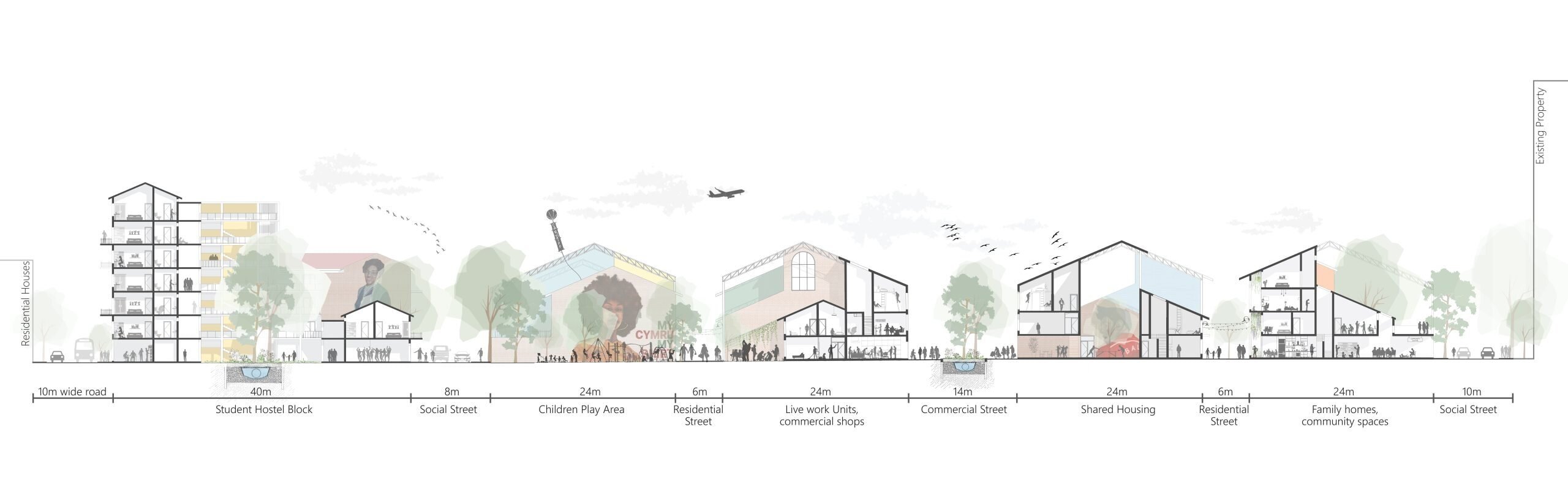
Central to Divya’s project is the belief that architecture should serve as a bridge—not a barrier—between history and contemporary urban life. Urban Mosaic transforms redundant industrial sheds into a network of mixed-use spaces, expertly blending workshop studios, family housing, communal gardens, and social nodes under a shared sustainable vision.
This approach honours the district’s industrial heritage while addressing modern needs. Strikingly, the retained engineering structures become “urban anchors,” preserving a sense of place and memory even as the site’s purpose evolves. Transparent interventions—such as glazed link corridors and light-filled atria—pay homage to the original buildings while inviting daylight, ventilation, and visual permeability.
Designing for All Generations
What sets Urban Mosaic apart is its strong focus on multi-generational living. Instead of siloing different age groups, Divya’s masterplan intentionally layers spaces for children, working adults, and seniors in a thoughtfully woven urban fabric. Housing typologies range from accessible apartments to flexible co-living units and family homes, with adaptable layouts that can change as residents’ needs shift.
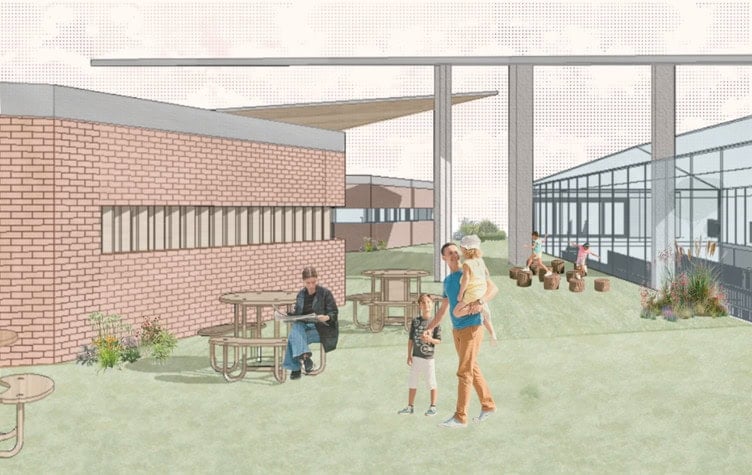
Communal amenities—playgrounds, shared gardens, craft workshops, and cultural spaces—are interspersed throughout. These facilities become informal touchpoints, fostering daily interaction between age groups and nurturing enduring bonds across generations. In a time when social isolation is a mounting concern, Urban Mosaic’s ethos of connectivity feels especially urgent and inspiring.
Sustainability Rooted in Place
Achieving environmental resilience in an urban context requires more than green roofs or solar panels. Divya’s proposal weaves sustainability into every dimension, using strategies tailored to Cardiff’s unique climate and cultural context.
Pockets of green infrastructure punctuate the site, encouraging biodiversity and offering residents restorative encounters with nature. Rain gardens and permeable surfaces support sustainable urban drainage systems (SUDs), mitigating flood risks and enhancing microclimate cooling. The project’s heritage-led retrofit strategy dramatically reduces embedded carbon compared to demolition and new construction—a reflection of Divya’s commitment to circular design principles.
Beyond the physical interventions, Urban Mosaic also anticipates broader socio-ecological benefits. By cultivating walkable streets and community-driven initiatives, the scheme lays the foundation for health, wellbeing, and long-term stewardship.
Recognising Excellence in Adaptive Reuse
Urban Mosaic’s innovative approach did not go unnoticed. Oxford Brookes University recognised Divya with a Certificate of Recognition for Sustainability and Adaptive Reuse, applauding the project’s rigorous analysis, imaginative detailing, and capacity to inspire transformation in cities struggling to reconcile past and future.
Colleagues and tutors noted that Divya’s sensibility—balancing reverence for heritage with bold design thinking—set a new benchmark for adaptive reuse within the Master’s programme.
Leading the Way in Resilient Urban Design
Divya Vura’s passion for community-centred, ecological design did not conclude with her degree. She continues to deepen her expertise in sustainable architecture and urbanism, working at the intersection of design practice and research. Her focus on bridging generations and fostering resilient urban ecologies positions her as a thought-leader in a rapidly evolving discipline.
In an era when cities must do more with less—and with greater compassion—Divya’s Urban Mosaic demonstrates how underutilised spaces can be revived not just physically, but socially and environmentally. Her work urges architects everywhere to look beyond building envelopes and specifications, toward the lived experience of diverse urban communities.
Connect With Divya Vura
For those inspired by Urban Mosaic or interested in exploring collaborations at the nexus of adaptive reuse and resilient community design, Divya Vura is eager to connect. She can be reached via LinkedIn at www.linkedin.com/in/divya-vura-558653115 or by email at divya.vura18@gmail.com.
Images and further details about Divya’s work will soon be available within the Architecture Social’s student and emerging professional showcase.




Add a comment