Description
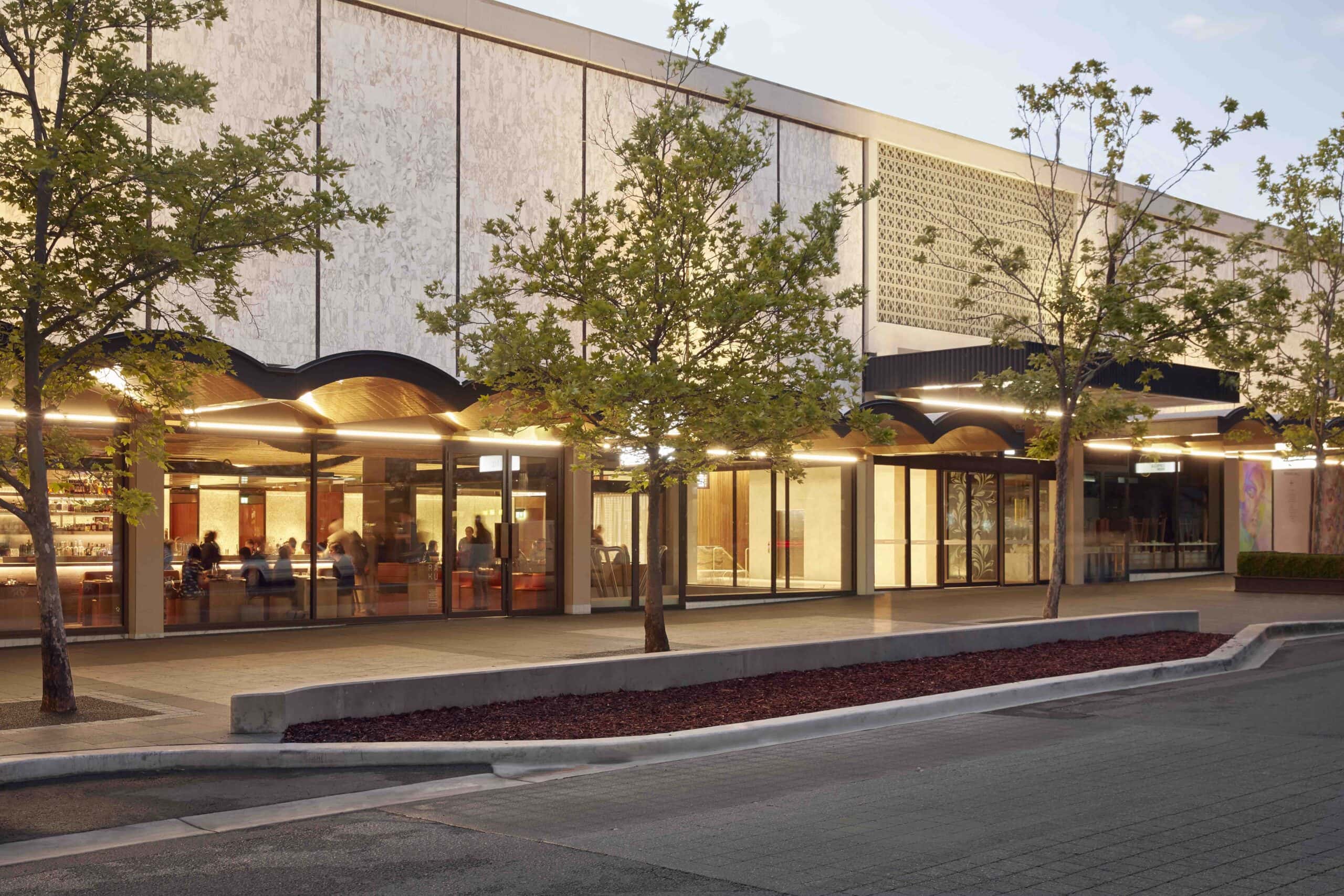
Monaro Mall, the oldest part of the Canberra Centre, has been renewed and repositioned as a luxury retail destination, restoring its standing as an admired city landmark. The mall first opened in 1963 and was significant in the development of Canberra, though successive alterations had left little of the original interior intact. Rather than start again, the project deliberately retained the existing building structure and carefully restored the marble and mosaic-tile facades.
The design looks back to Canberra's post-war modernist influences and reinterprets them in a contemporary but timeless manner. The most prominent move is the reinstatement of the iconic arched awnings, now finished with reflective gold soffits and uplighting that lend a new sense of luxury. With retail itself changing, the brief called for the traditional mall to be redefined as a civic space that merges the commercial and the cultural.
Through iterative market testing and close client collaboration, a mix of retail typologies was explored, with a strong focus on experience and on distinct precincts that can be branded individually and host regular themed events. Street-focused retail with consistent hamper signs and large-format shopfronts in bronze frames forms a cohesive streetscape that reactivates the public realm outside. A new double-height entry to Petrie Plaza, with proportions of civic generosity, has been carved out of the building.
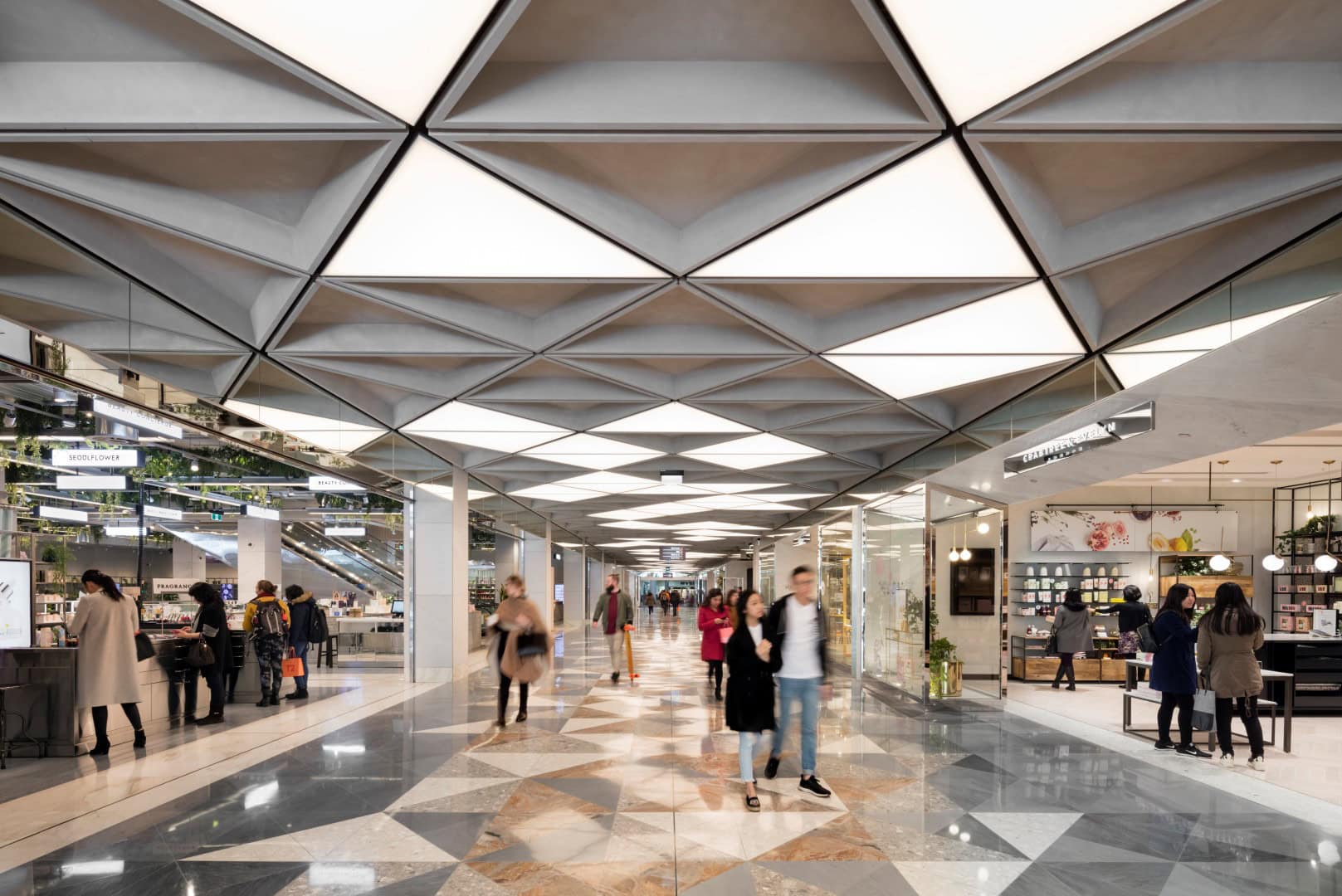
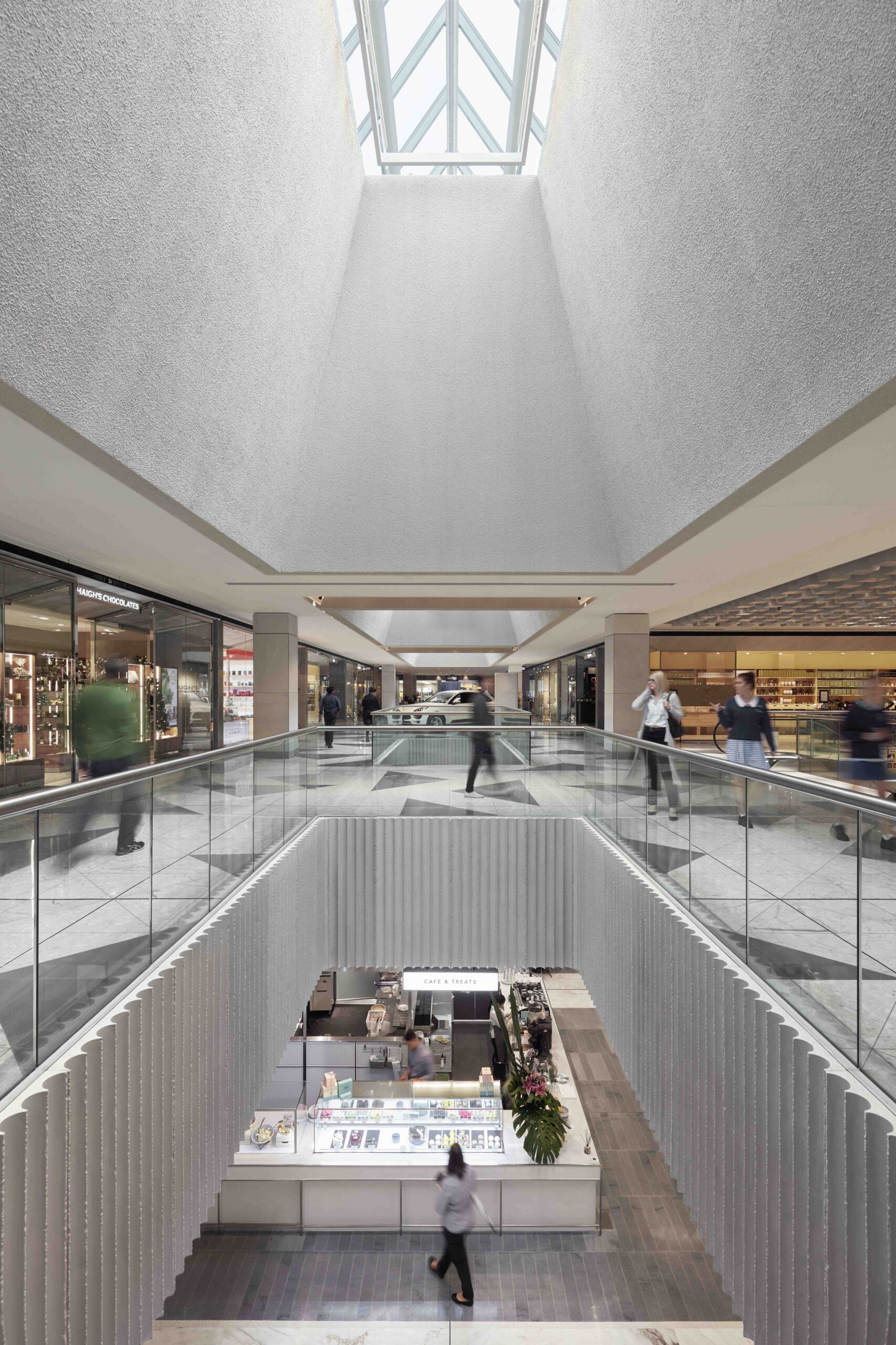
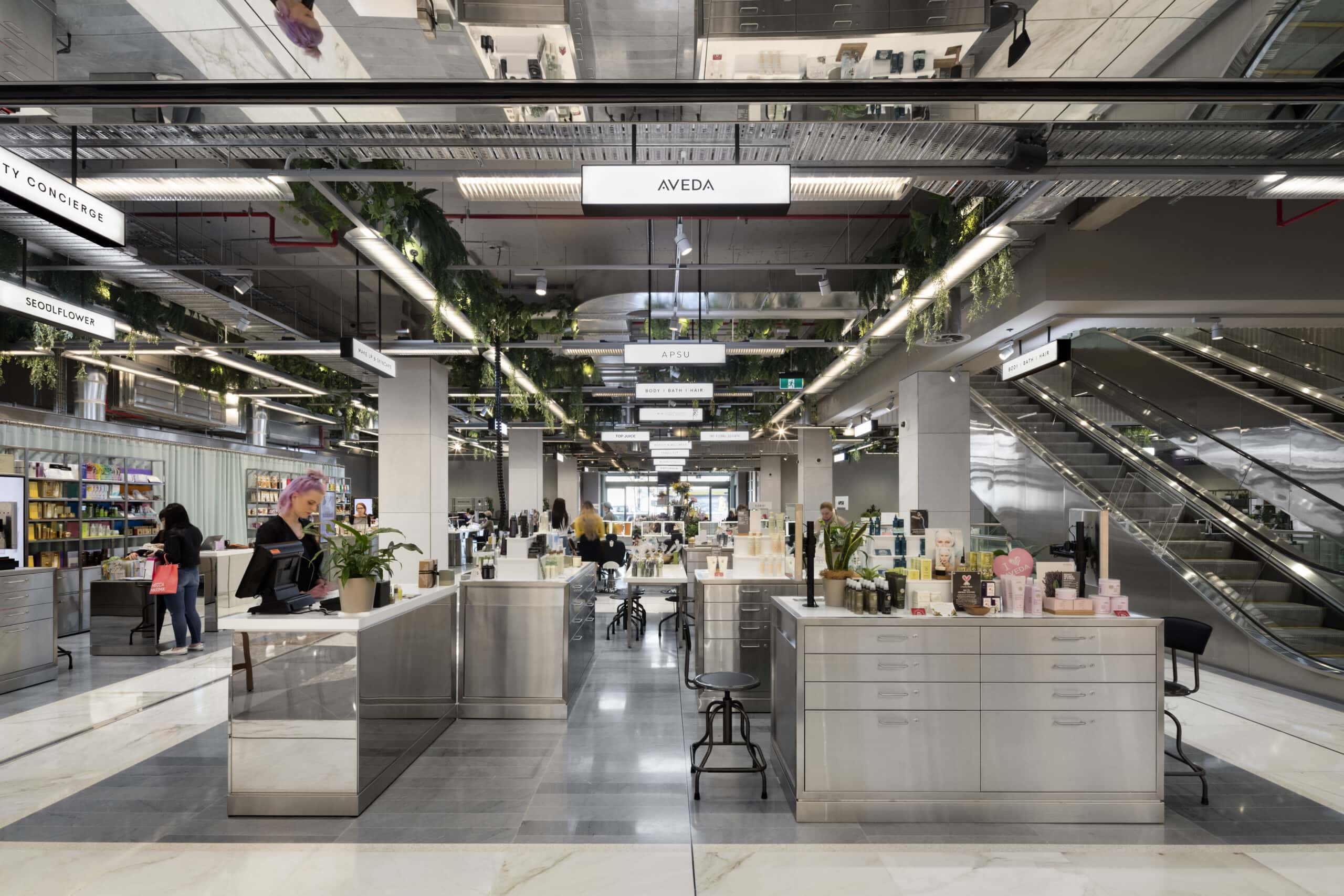
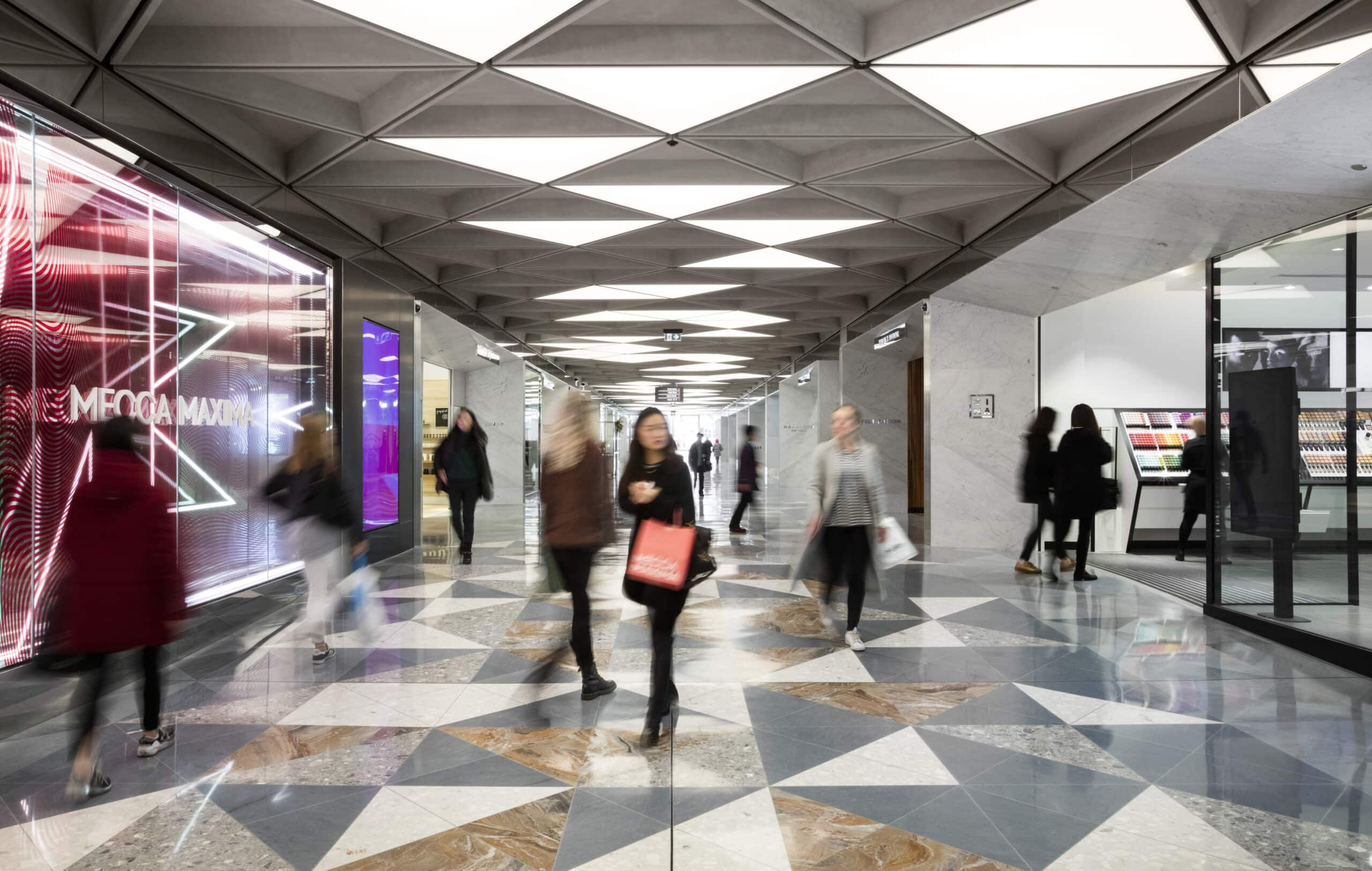
Internally, the layout has been reconfigured and the arcades straightened and aligned for better flow, vertical circulation and mid-block connections between Ainslie Mall, Petrie Plaza and Bunda Street. The arcades work at two scales: the level-one arcade is wider, with kiosks, dramatic voids and skylights, while the ground-floor arcade is more intimate beneath a feature coffered ceiling. Stone portals and display cases, variable in size to suit each tenant, give visual consistency and focus to every open shopfront. The Beauty Garden follows a market typology, where small-format tenancies take short-term leases to encourage new businesses and allow the mix to evolve, with modular stainless-steel joinery designed to make change easy.
Working to a demanding programme, documentation was completed alongside construction, absorbing regular changes that responded to evolving retail positioning. A substantial investment in the city, the project balances commercial viability with a significant civic contribution, setting a new benchmark for quality and detail and showing the potential for private leadership in heritage custodianship and city revitalisation.
The renewed mall spans roughly 2,400 square metres across two levels and completed in 2017.
Concept design by Universal Design Studio with project architecture by Mather Architecture. Photography by Tom Ross and Dianna Snape.
Gallery
Industry
Sector
Details
- Project Size: 2400 m2
- Building Levels: 2
- Completion Date: 2017
- Photographer: Tom Ross and Dianna Snape
Region
Discuss