
Description
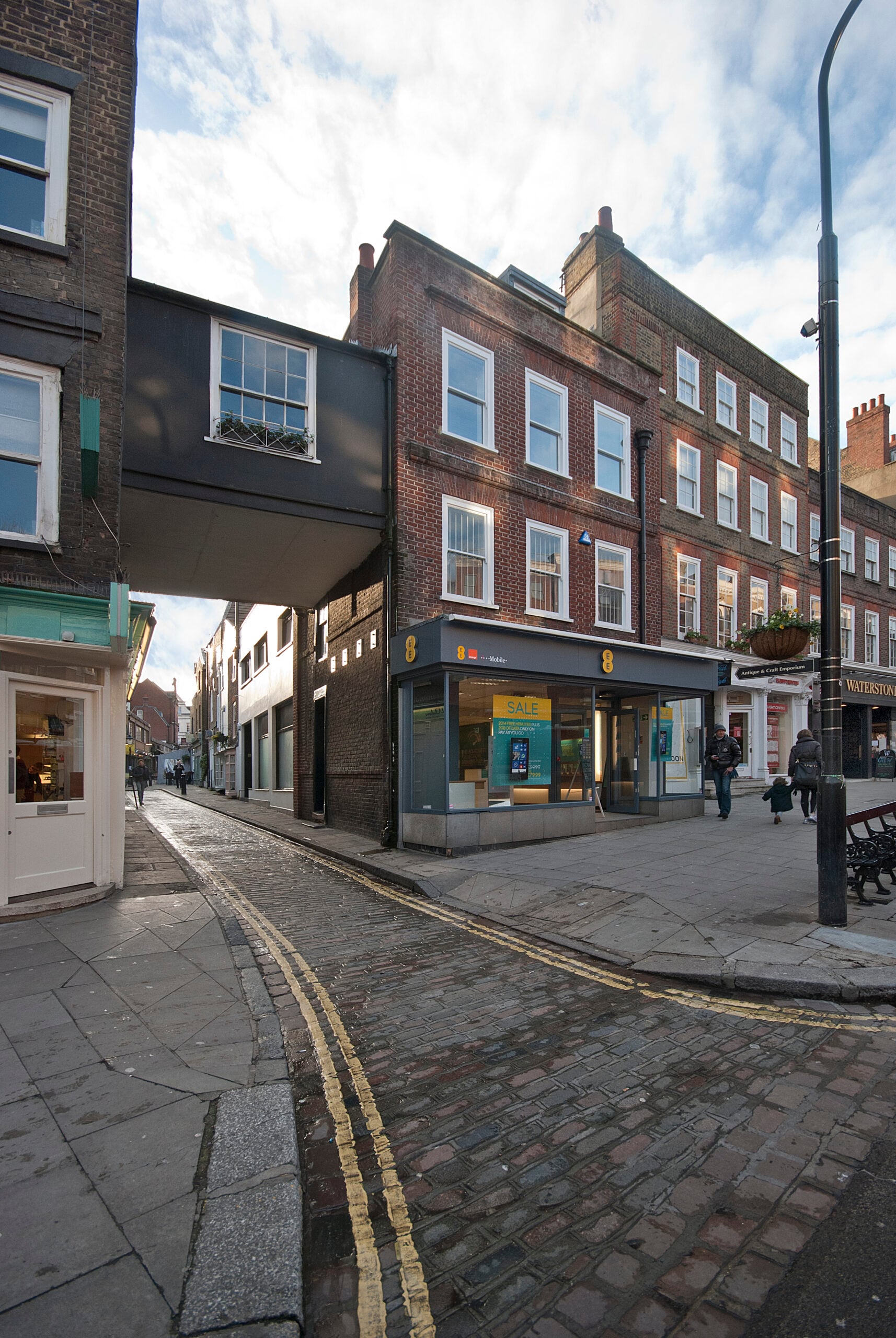
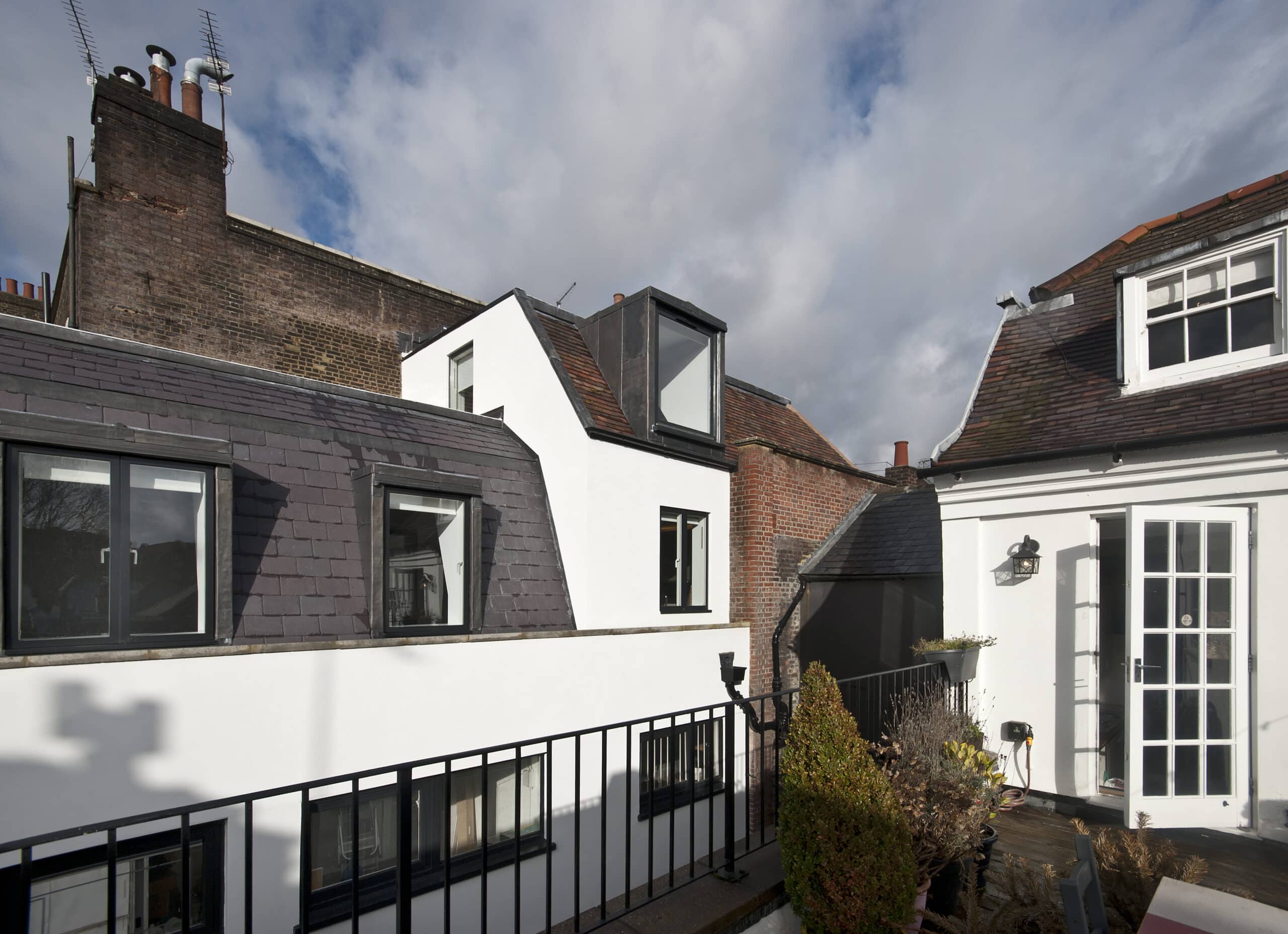
Cascade House occupies an early 18th-century Grade II listed building in the heart of Hampstead village, London. Existing retail premises remain over the ground and first floors, while a generous new two-bedroom dwelling sits above, spanning four floors in total. Part of the home is held within a new rooftop extension developed in close consultation with the local planning and conservation authorities.
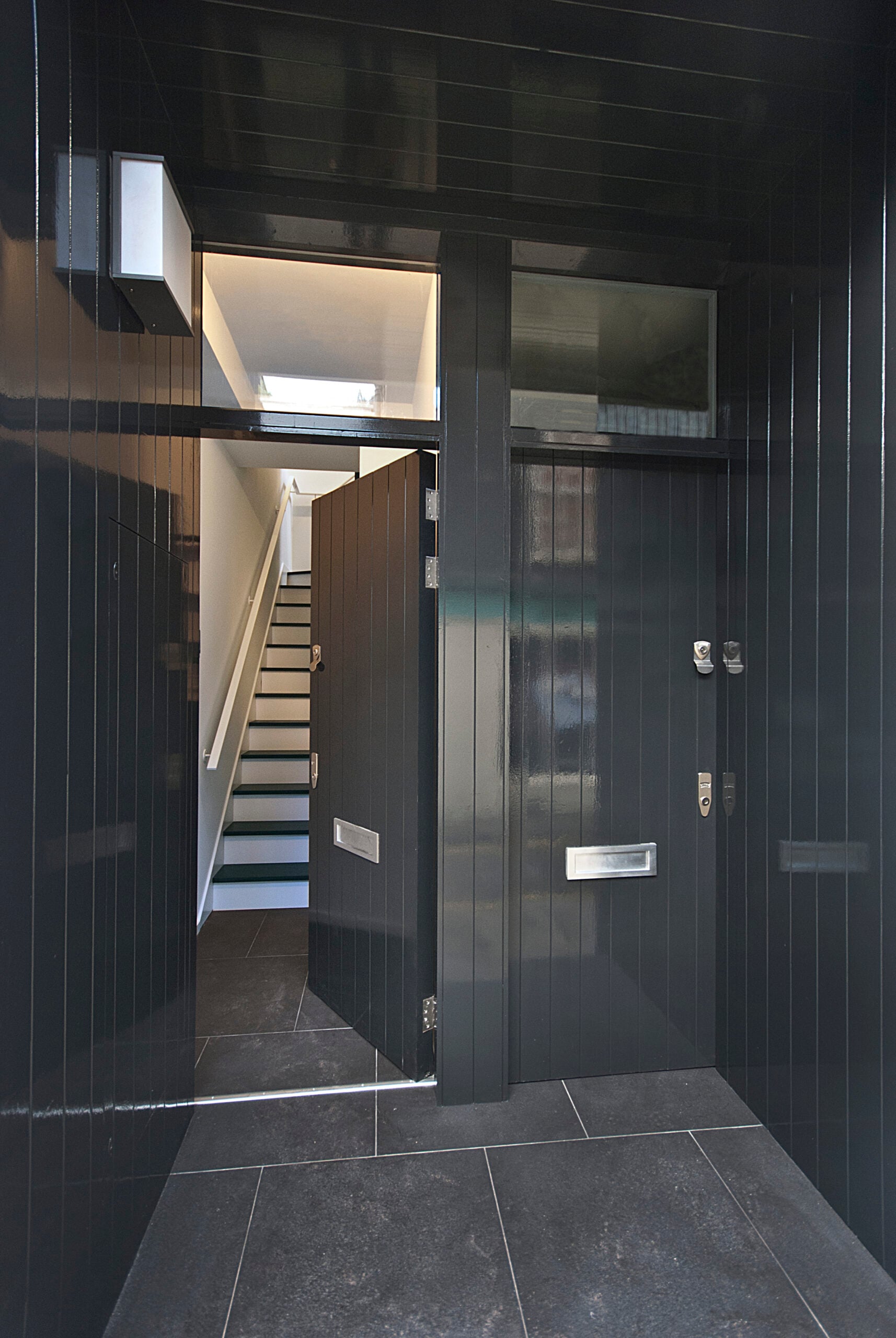
Externally the building keeps to its historic setting. Inside, Patalab Architects created a series of bright, contemporary spaces. Within the confined footprint of the listed building, the design sets up an intense and striking spatial sequence, flooded with natural light, that makes the dwelling feel considerably larger than it is.
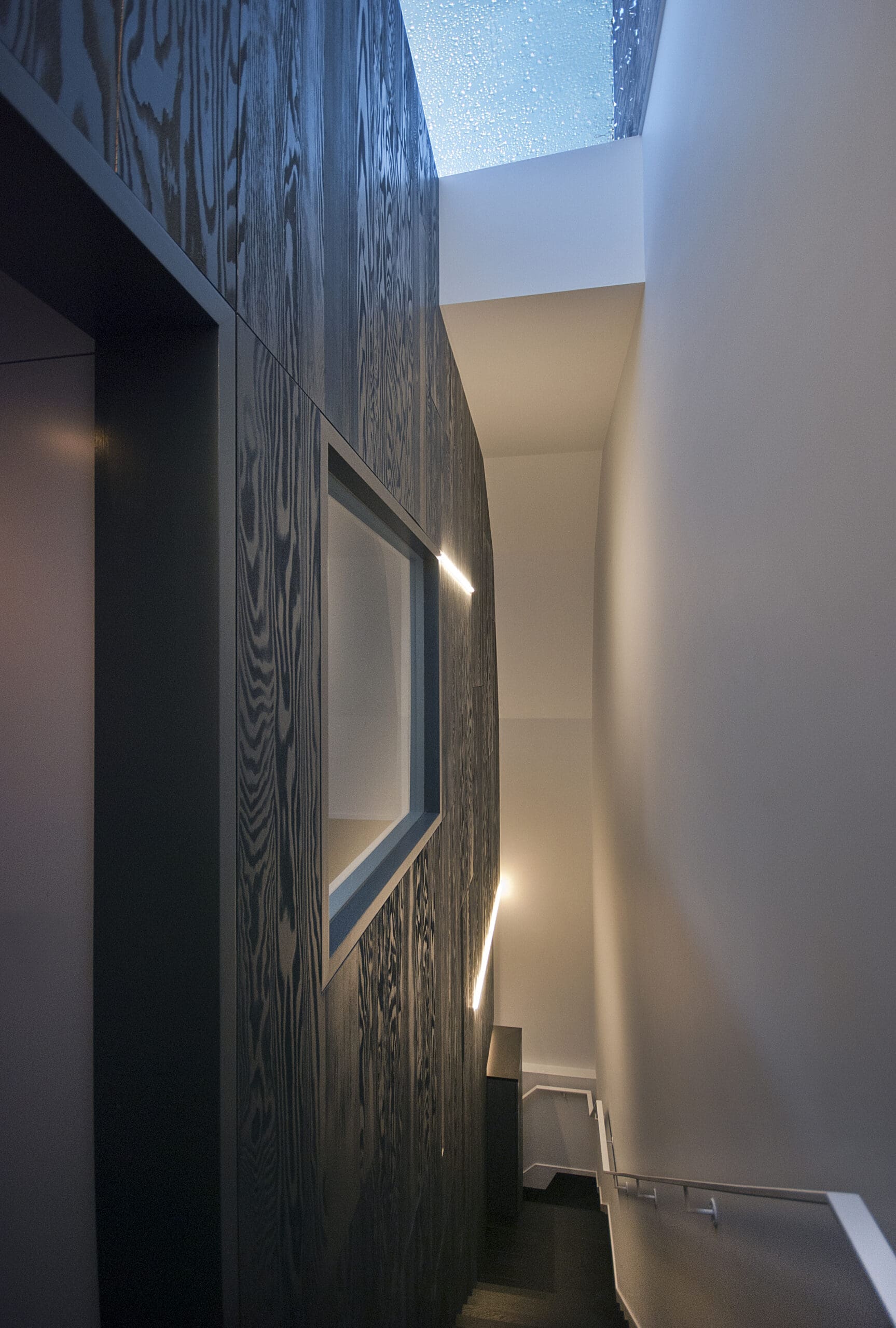
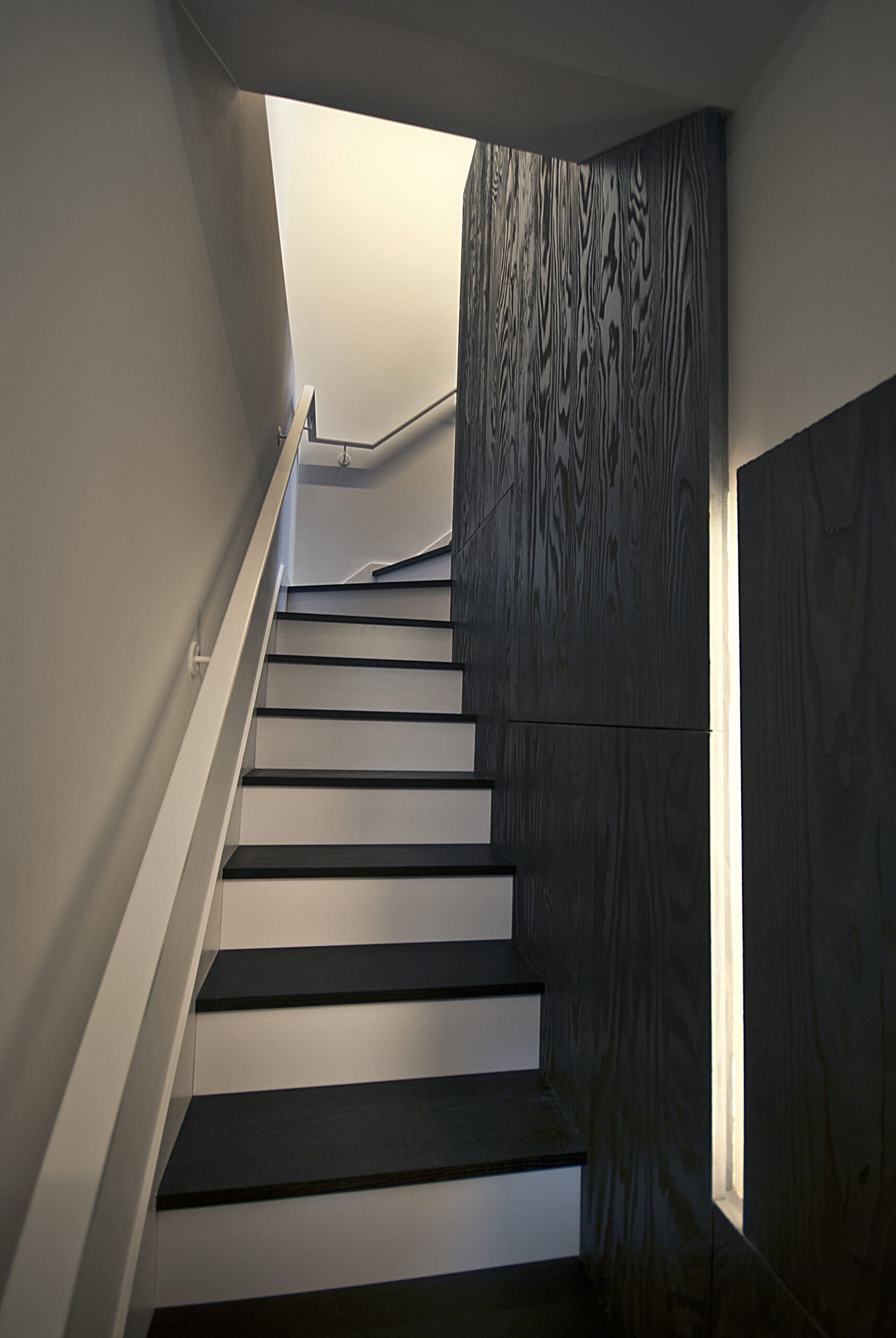
The staircase is the major new intervention. Set within a triple-height space that runs for most of the building's depth, it reorganises the house around a central focus. The continuous fall of its black-stained treads through the dramatically tall void gives the dwelling its name. Skylights light the stair, and its internal facade of timber panels has been sandblasted to bring out the grain and stained black for graphic effect, so that daylight catches the timber and reads as a continuous feature.
Internal windows and wide door openings open up the double-height living, kitchen and dining area, a degree of connectivity rarely found within a listed building.
Architecture by Patalab Architects, with Jordan Thompson as project architect. Photography by Lyndon Douglas.
Gallery
Company

Industry
Sector
Details
- Project Size: 85 sq m
- Building Levels: 4
- Completion Date: 2014
- Photographer: Lyndon Douglas
Region
Discuss


