Description
Lower Tullochgrue is a refurbishment and extension of a traditional house in the heart of the Cairngorms National Park, designed by Brown & Brown Architects for an extended family that wanted a single home capable of serving both collective gatherings and quieter individual use.
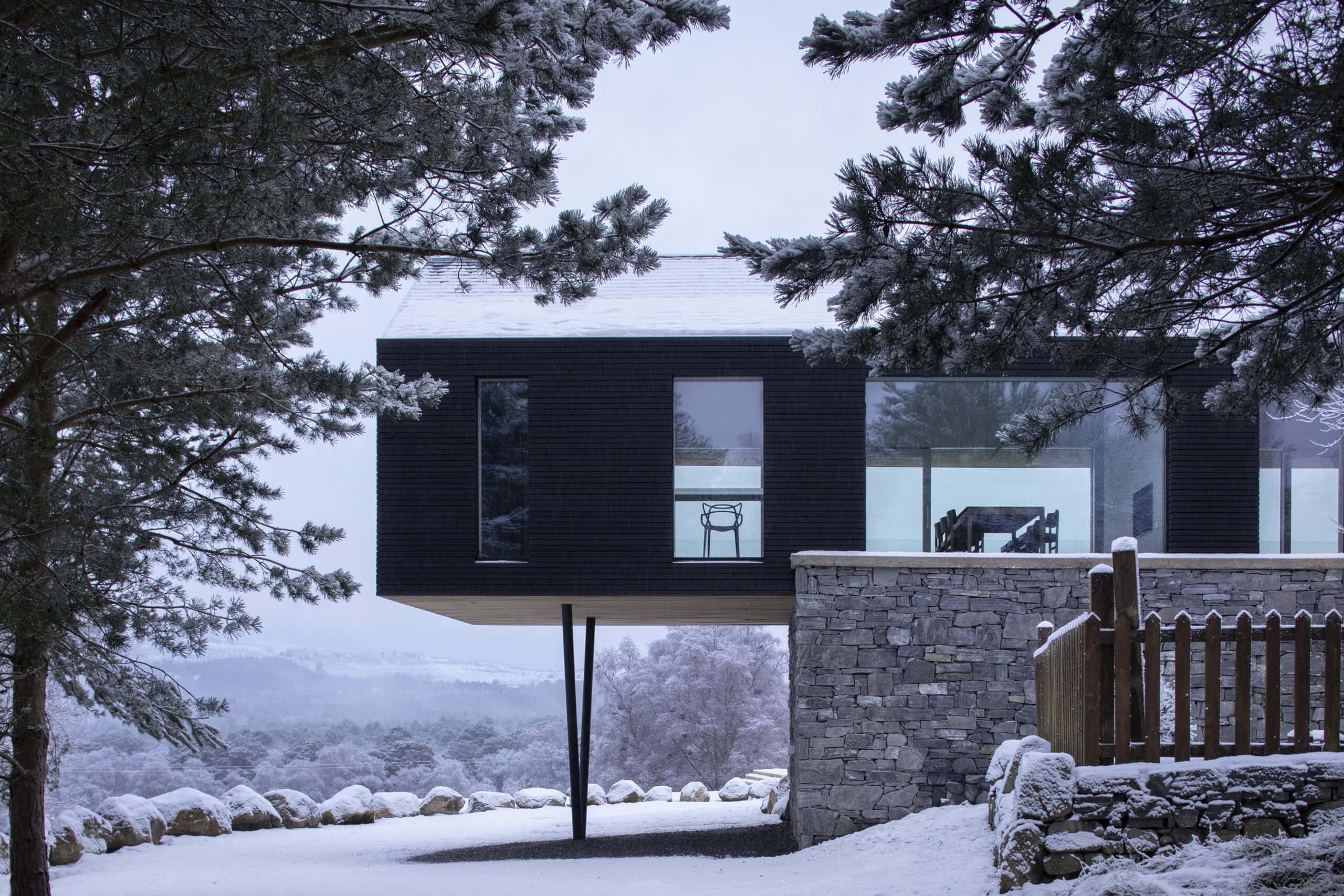
The existing house was paired with a dilapidated steading sitting 3 metres lower than the main building and 6 metres away on an irregular angle. Rather than extend into the steading, Brown & Brown took it down and reused the original stone. The reclaimed material became a new plinth at house-floor level, providing a consistent datum between the historic and contemporary elements while preserving the site's topography.
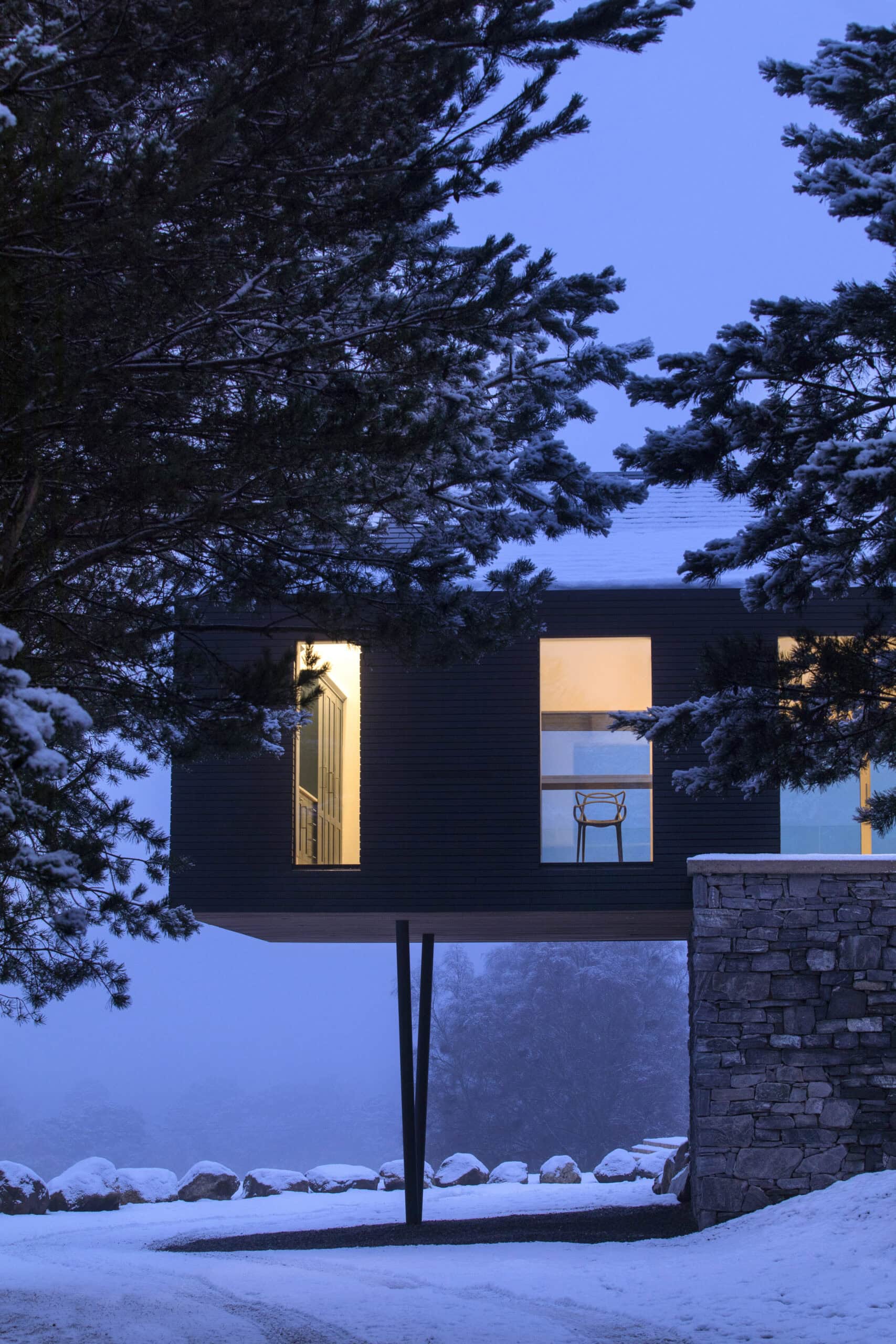
Above the plinth sits a timber and glass upper volume. The footprint widens at first floor, cantilevering over a retained access track that previously bounded the site. Detailing of the exposed steel column supporting that cantilever was driven by the client's grandparent's 1960s Ford Falcon, kept on site, so the spacing leaves room for the car to pass beneath.
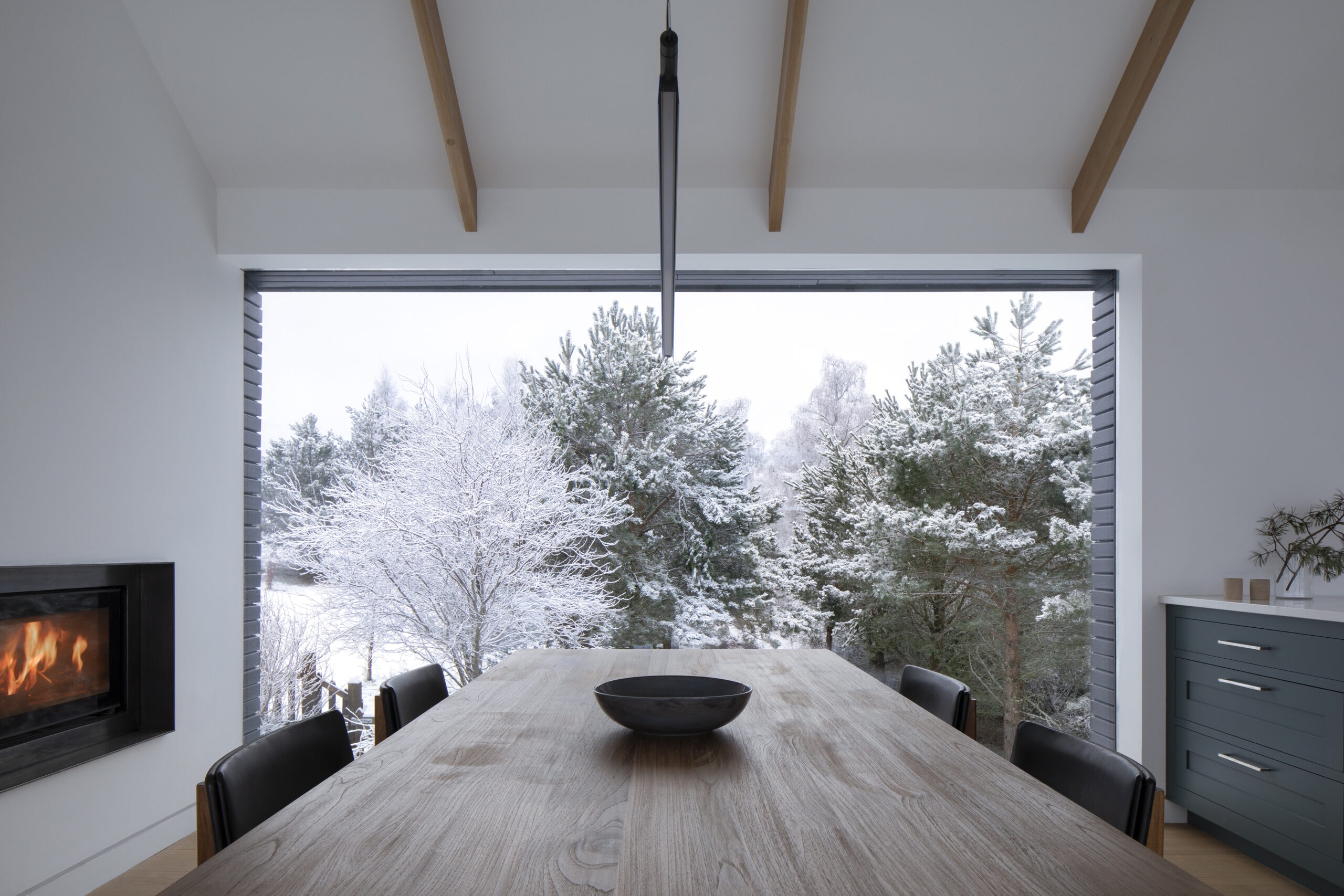
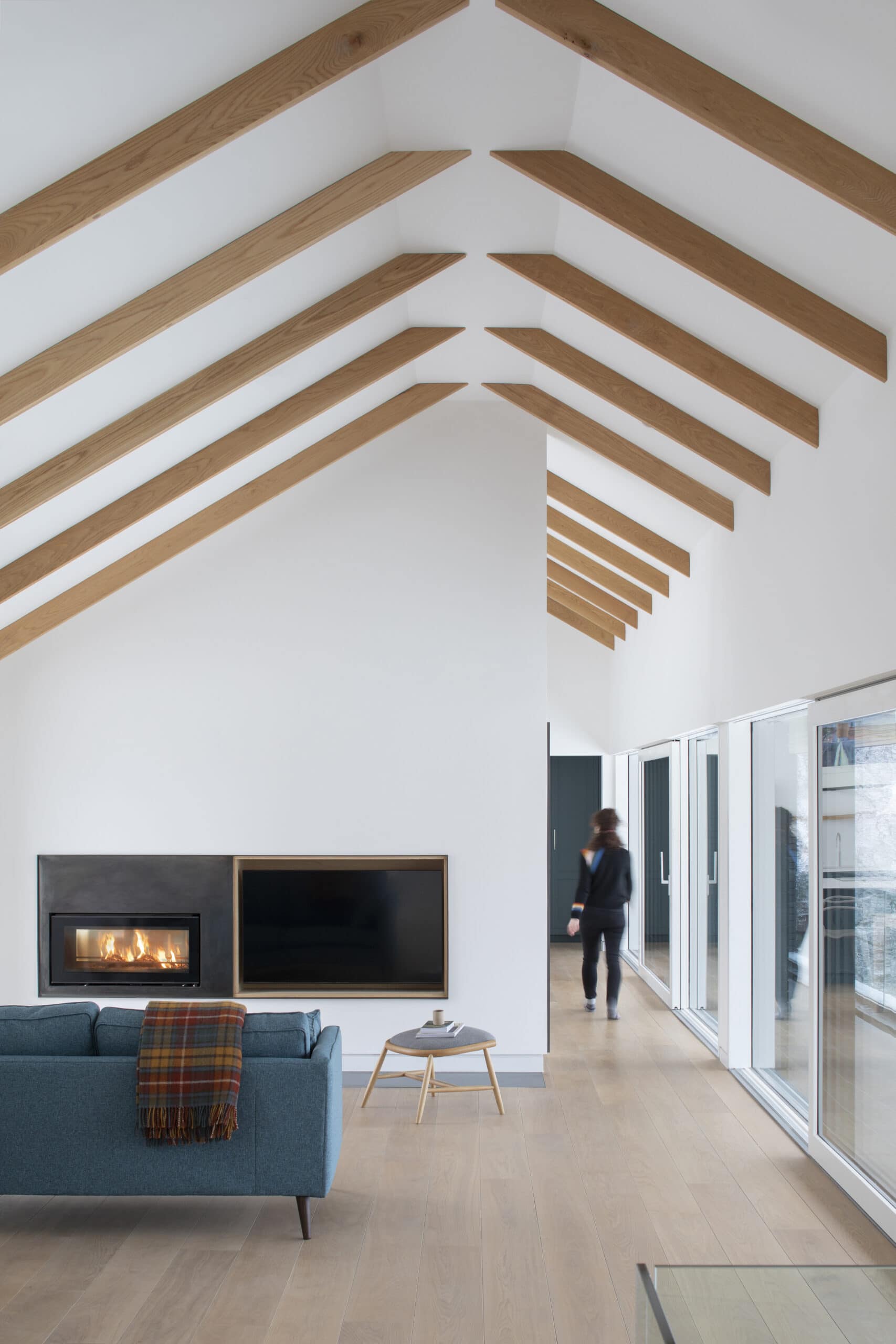
Internally the project balances scale and intimacy. Large social spaces sit alongside a separate guest block, with the original house refurbished to provide bedrooms that suit different generations and varying mobility. A games block, an accessible guest suite for elderly relatives, and a small spill-out space all emerged from an ongoing collaborative design process with the family.
Project size 370 m2 on a 5,315 m2 site, completed 2020 across three building levels. Sustainability is handled by a cascade air-source heat pump system.
Architect: Andrew Brown, Brown & Brown Architects. Structural engineer: Design Engineering Workshop. Contractor: Spey Building & Joinery. Photography: Gillian Hayes.
Questions & Answers
What was the brief?
To create a large family home in the heart of the Cairngorms National Park, by extending a traditional house, for use by extended family.
What were the key challenges?
The extension was to replace a steading (or barn) building, which was 3m below the existing house, and 6m away.
What were the solutions?
To remove the steading building, and create a 'heavy' stone plinth for the lower floor, with a 'lighter' floor of timber and glass cantilevering above it.
What building methods were used?
Masonry with natural stacked stone to the lower floor, steel frame with timber frame between for the first floor, and natural slate for the roof.
What are the sustainability features?
The extension is insulated to far in excess of building regulations, and is heated by a cascade air-source heat pump system, which allows only part of the system to run when the house is only partially occupied.
Gallery
Company

Industry
Sector
Details
- Project Size: 370 m2
- Building Levels: 3
- Completion Date: 2020
- Photographer: Gillian Hayes
Location
-
Aviemore, United Kingdom
Discuss