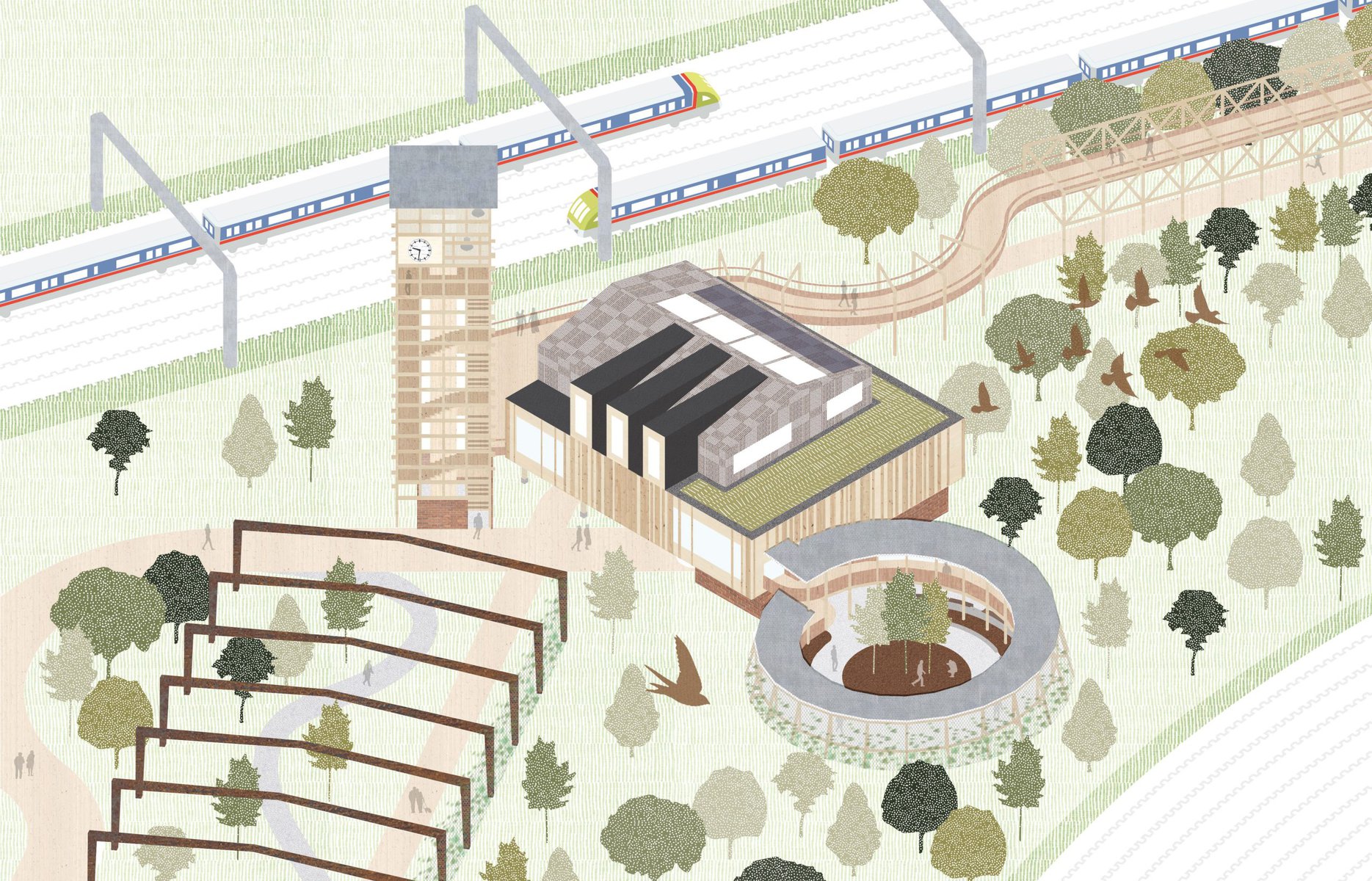
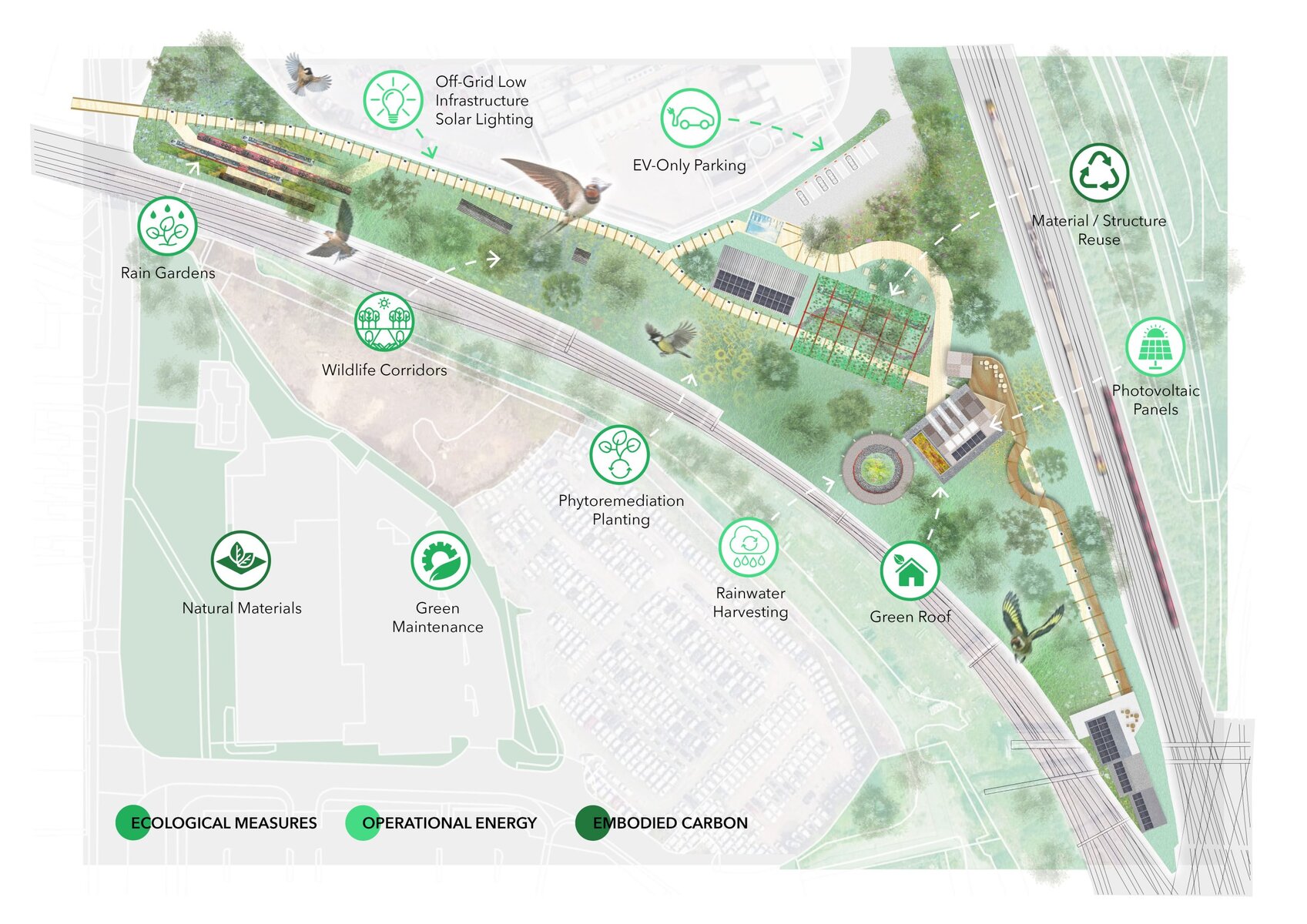
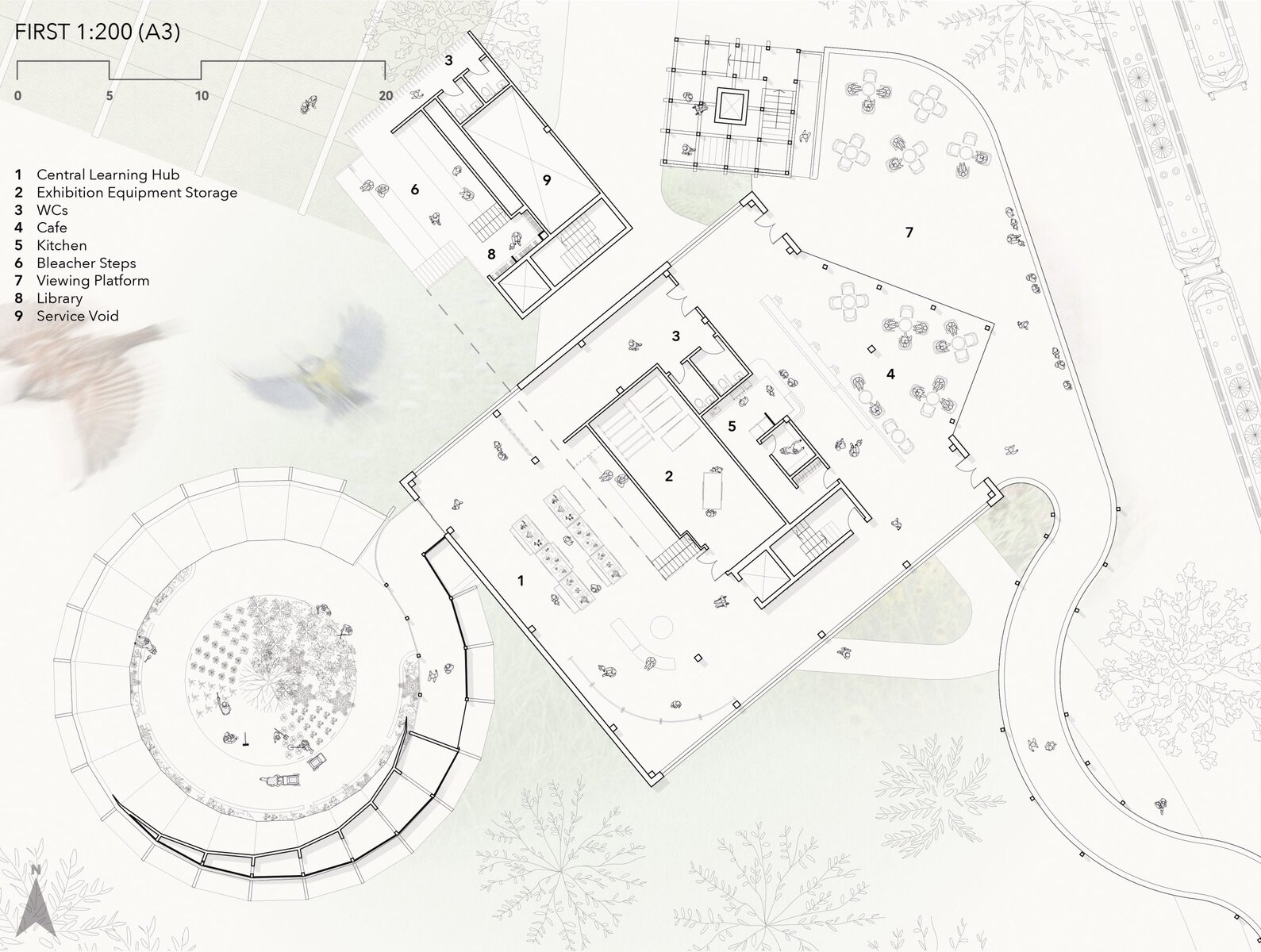
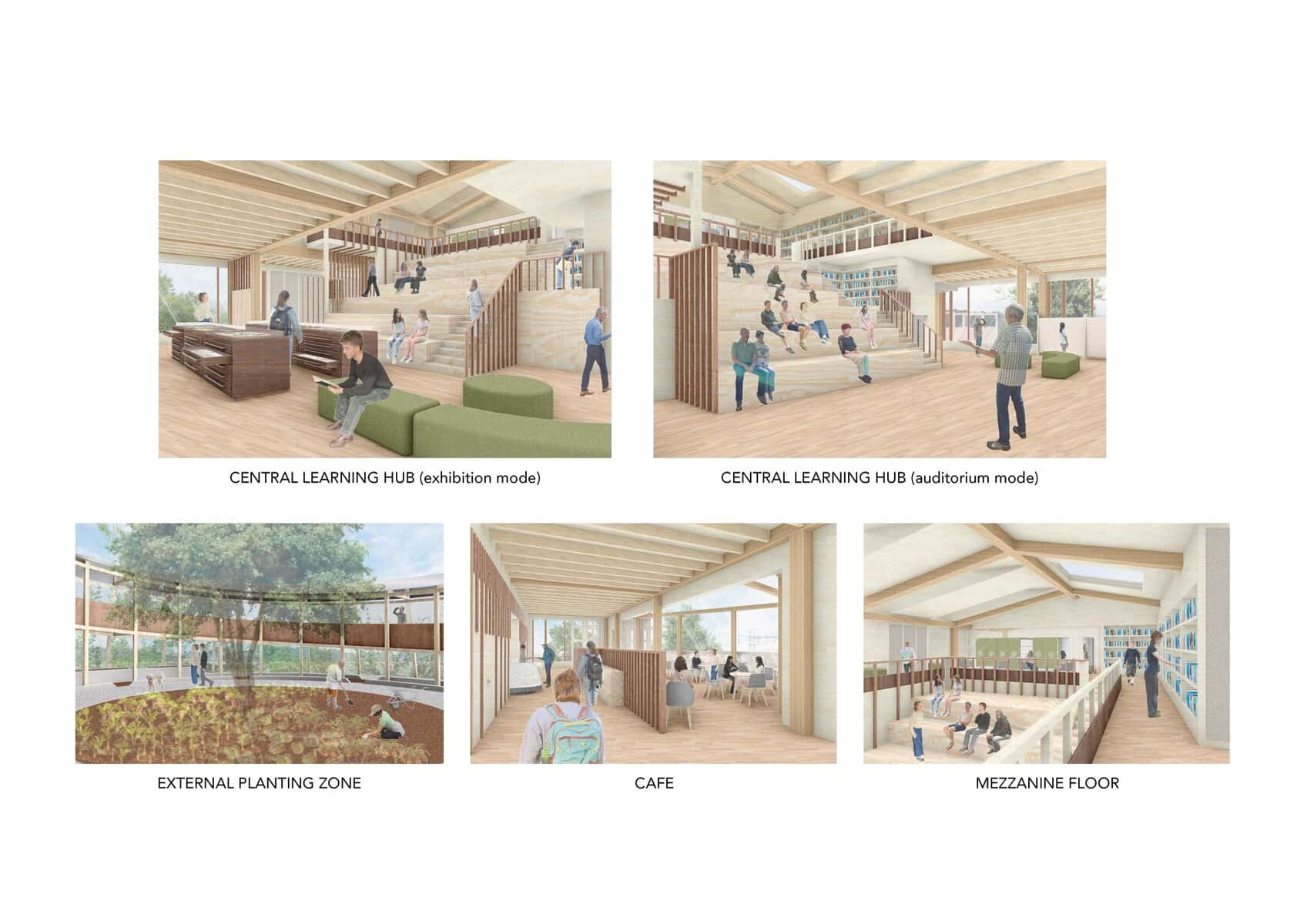
Jamie's final year project, 'The Centre for Post-Industrial Ecology', draws upon nature's resilient inhabitation of industrial space to inform a lasting and greener site use for both human and non-human visitors. A scheme of multiple purposes, the wider site aims to increase local biodiversity by minimising disturbance to emerging habitats, whilst simultaneously encouraging natural regeneration through phytoremediation strategies. With the wider site flourishing, the Centre becomes a place of collective ecological learning through both practical and theoretical channels, the building encouraging a celebratory experience in which curated and self-directed education are treated not as distinct but intertwined.
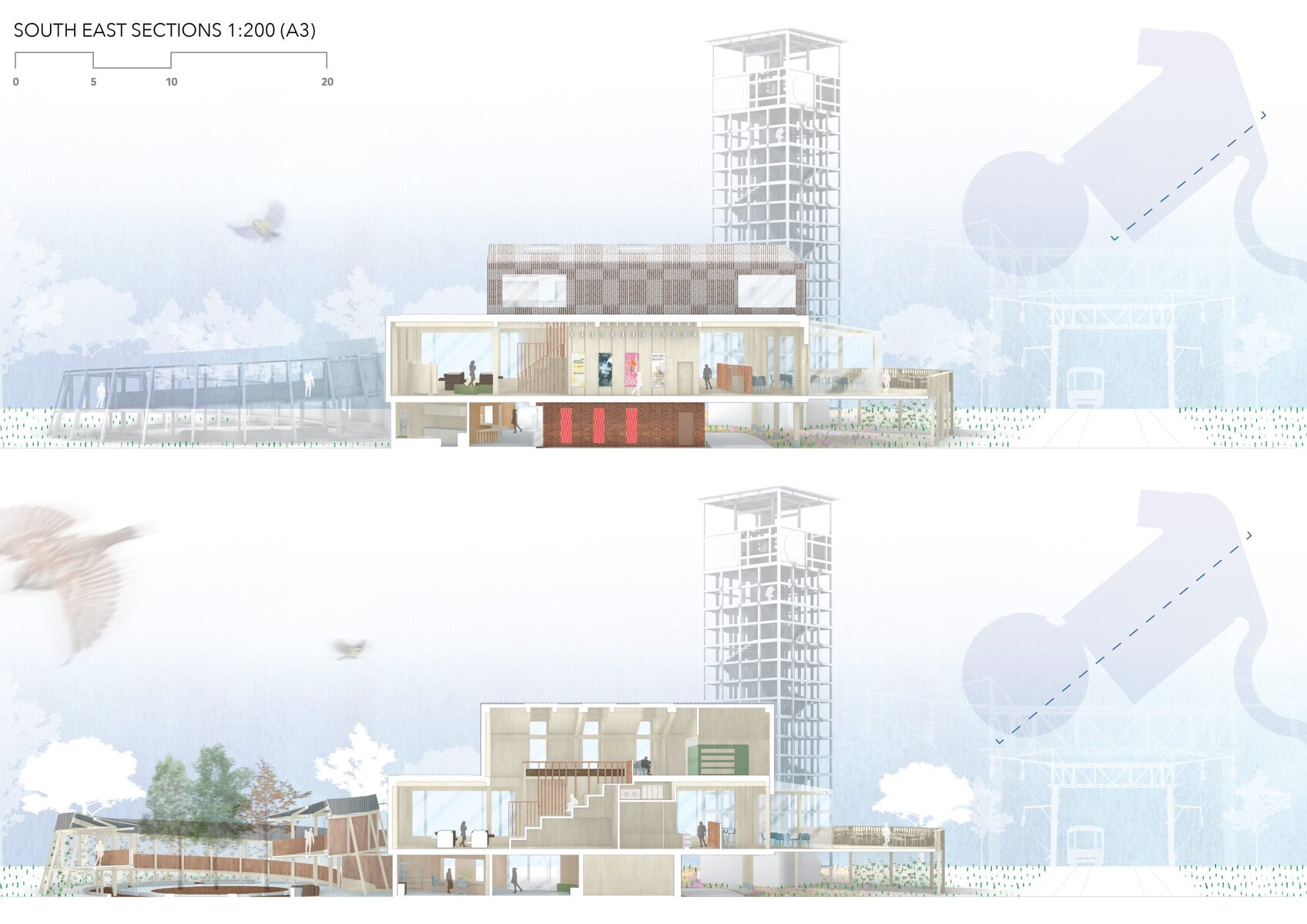
The scheme also responds to Crewe’s lost architectural heritage, doing so through both a sustainable materiality and a contextual sensitivity. A timber observation tower recalls the town’s demolished ‘Big Bill’, with original bells and clock faces reinstalled, whilst locally-produced faience ornamentation between the reclaimed red brick reflects the now-destroyed post-war reliefs. Natural materials are integral to the building’s construction, with a glulam and CLT structure partially clad with locally-sourced corrugated hemp board, utilised as a natural rainscreen system. Expressed within the interior, a variety of exposed natural materials allow the building itself to act as an artefact for curious exploration.
Through encompassing a future-focussed yet contextually considered approach, the Centre for Post-Industrial Ecology hopes to provide Crewe with a lasting environmentally, ecologically and socially beneficial regeneration and educational proposal.