
Description
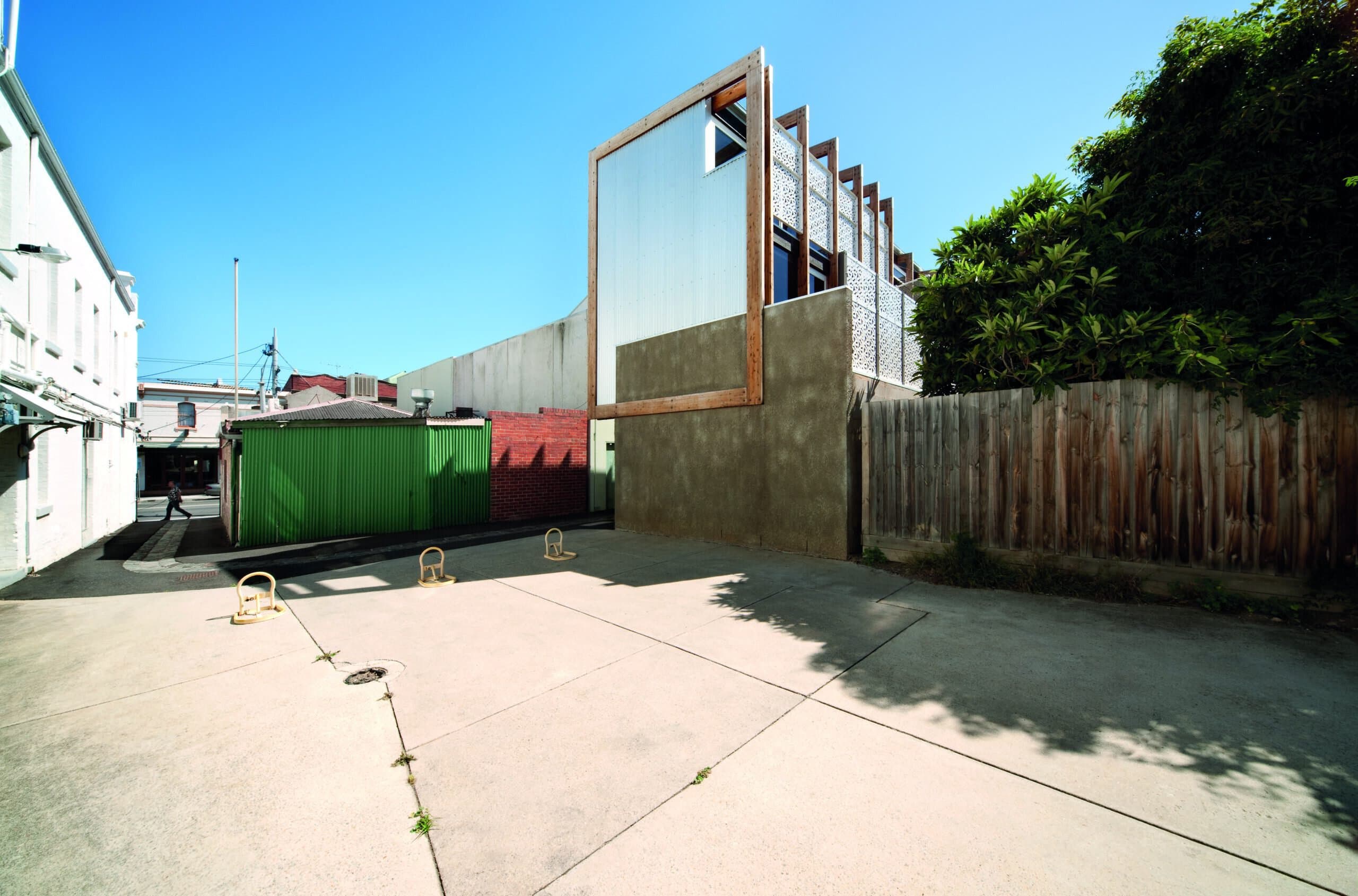
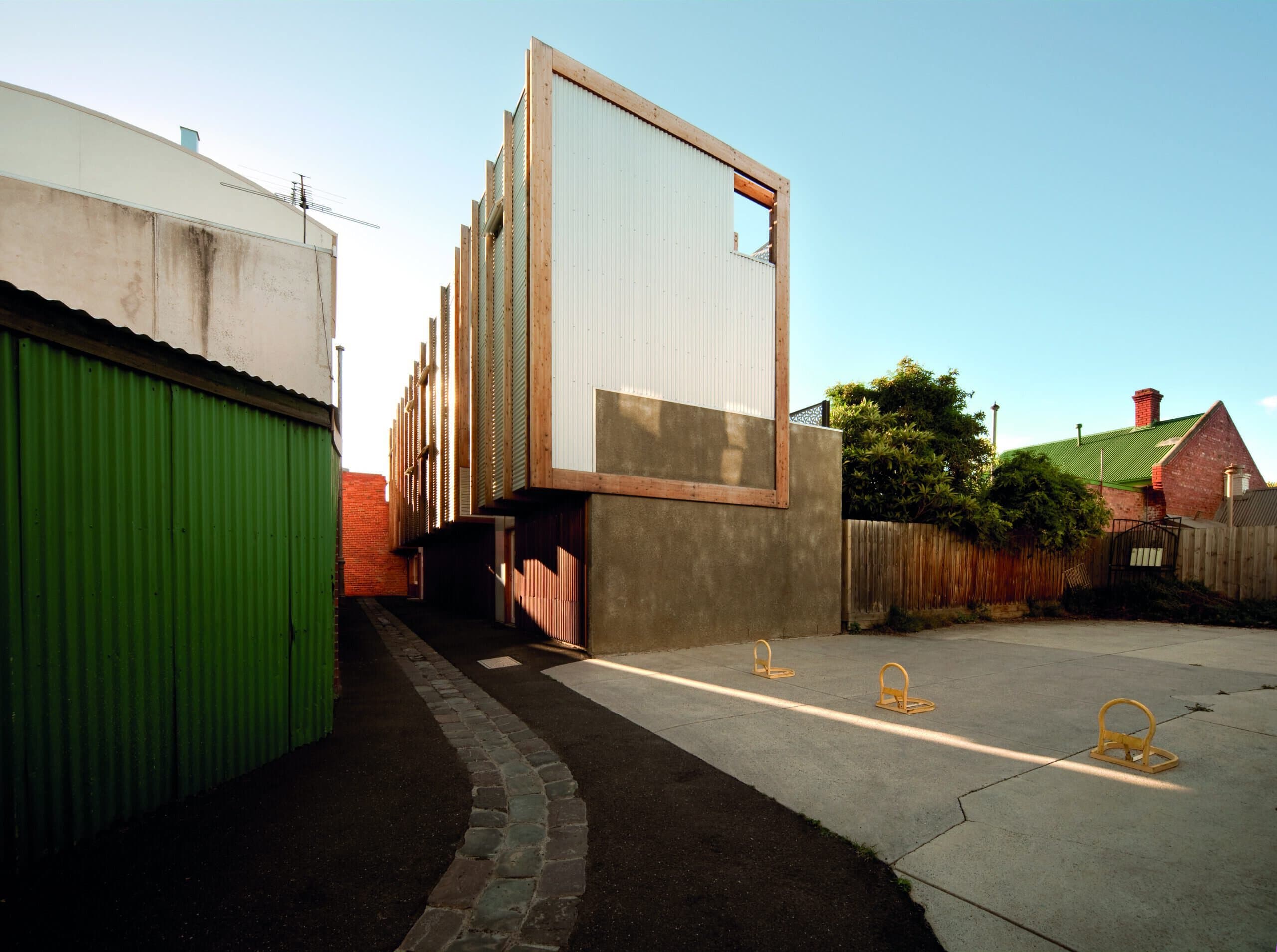
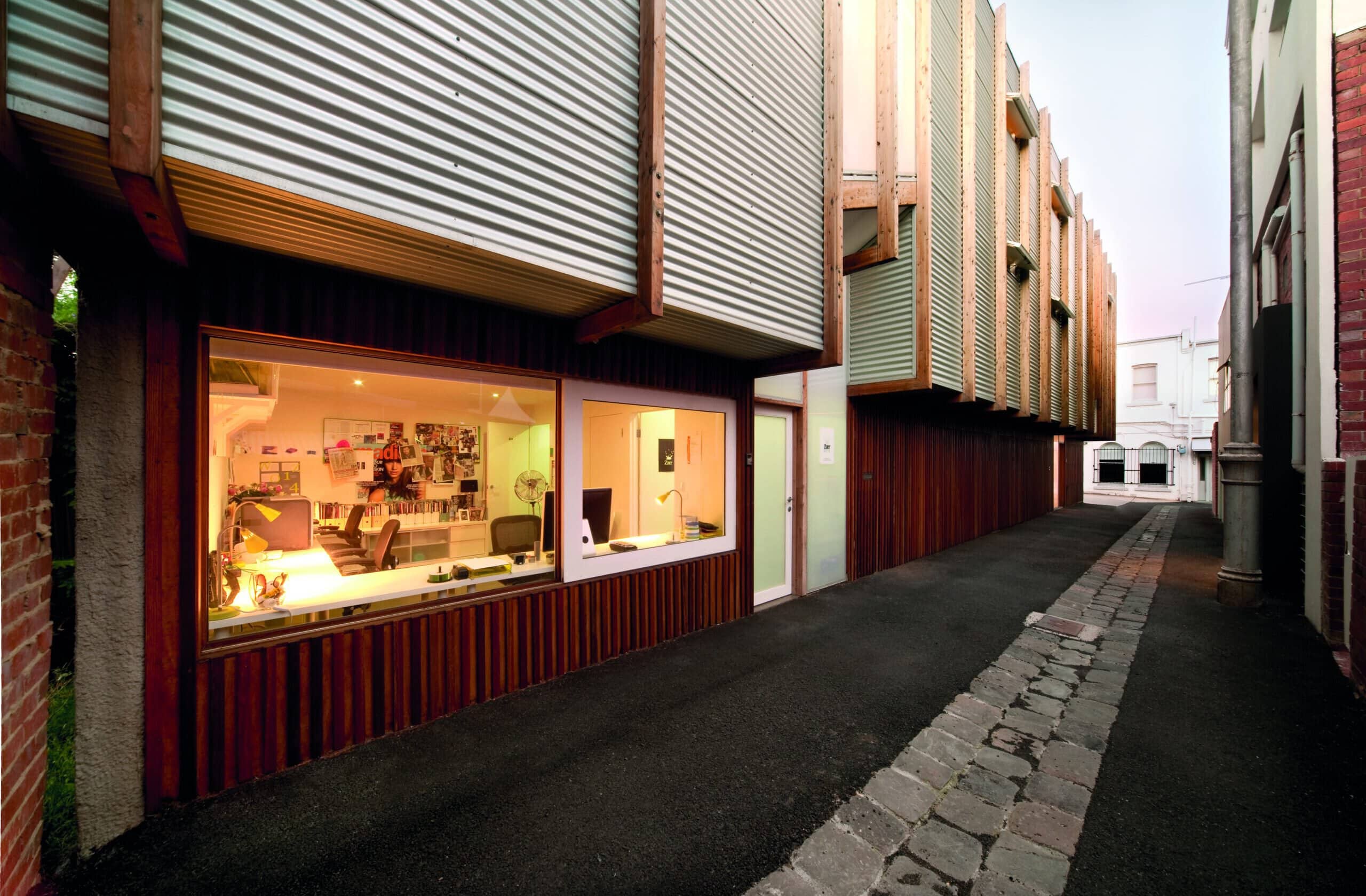
Yan Lane is a new street in Richmond, Melbourne, built on a tight budget as a study in how architectural thinking can turn a neglected pocket of land into something both liveable and commercially viable. The site was a narrow sliver with no street frontage, tucked between the rear walls of shops to the south and the back fences and sheds of houses to the north. Rather than a single dwelling, the scheme delivers a new building containing two houses, and it reaches beyond the site itself to extend services from the main road and reinstate a right of way, creating a genuinely new street where there had been disused, forgotten ground.
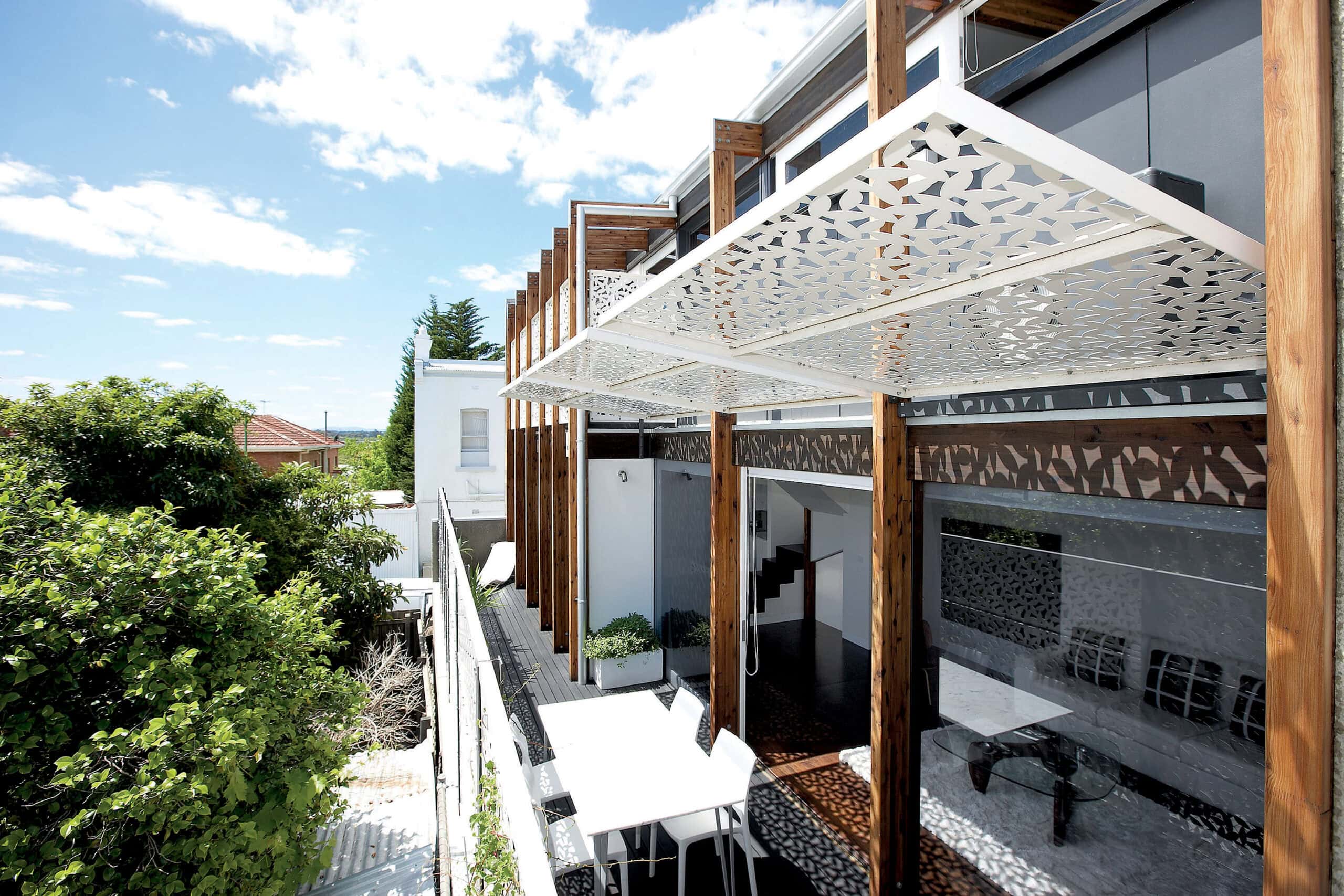
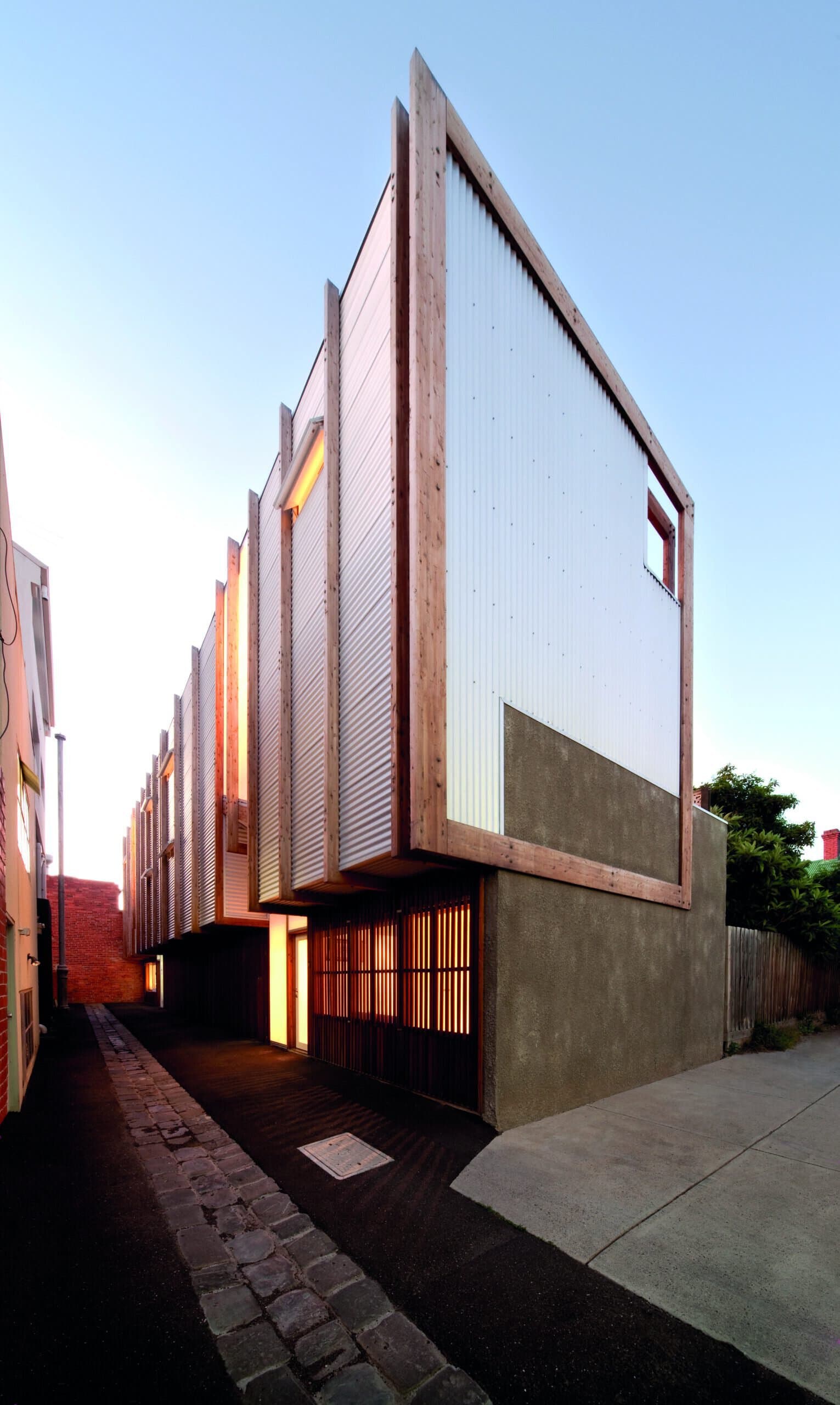
Faced with a complex set of neighbours, the two houses read as one building. To remain accessible and occupiable on such a constrained plot, the form steps through a shifting sectional profile. Each face is built from different materials and behaves differently, mediating between the conditions outside and the rooms within. A repetitive timber structural frame runs throughout as the organising idea, stitching the elevations into a coherent whole. To the south, towards the clutter behind the shops, the elevation is calm and unified: expressed timber columns set against a solid zincalume backing, able to open up to the laneway or close down to a seamless face. To the north, towards light, tree canopies and a residential character, the envelope is pulled back from the frame so it can open with wide sliding doors and deepen into an occupiable layer of customised screens, terraces and planting. The facades are deliberately flexible, letting the houses adjust their permeability to the weather and to how the spaces are used. The result is energy efficient, carefully detailed and tactile, a surprising moment of light and calm in an otherwise gritty urban setting.
The project covers 360 m2 and was completed in 2011.
Architecture by Justin Mallia Architecture. Photography by Emma Cross and Paul Cadenhead.
Gallery
Industry
Sector
Details
- Project Size: 360 m2
- Completion Date: 2011
- Photographer: Emma Cross, Paul Cadenhead
Region
Discuss


