Crafting Community Space by Priyanshi Jain

Reworking Heritage for Public Life: Priyanshi Jain’s Community Café in Kingston

Reframing a Civic Fragment

Priyanshi Jain, a recent M.Arch graduate from Kingston University with a Distinction and recipient of the RIBA London Student Award 2025, uses her final thesis to question how heritage buildings can regain civic purpose. With eight years of professional experience spanning India and the UK, Jain’s interest in community-led design and found materials grounds her approach in practicality rather than nostalgia. Her project, set in Kingston upon Thames, proposes a community café that ties together the Kingston Museum, Library, and their adjoining garden into a coherent public space.

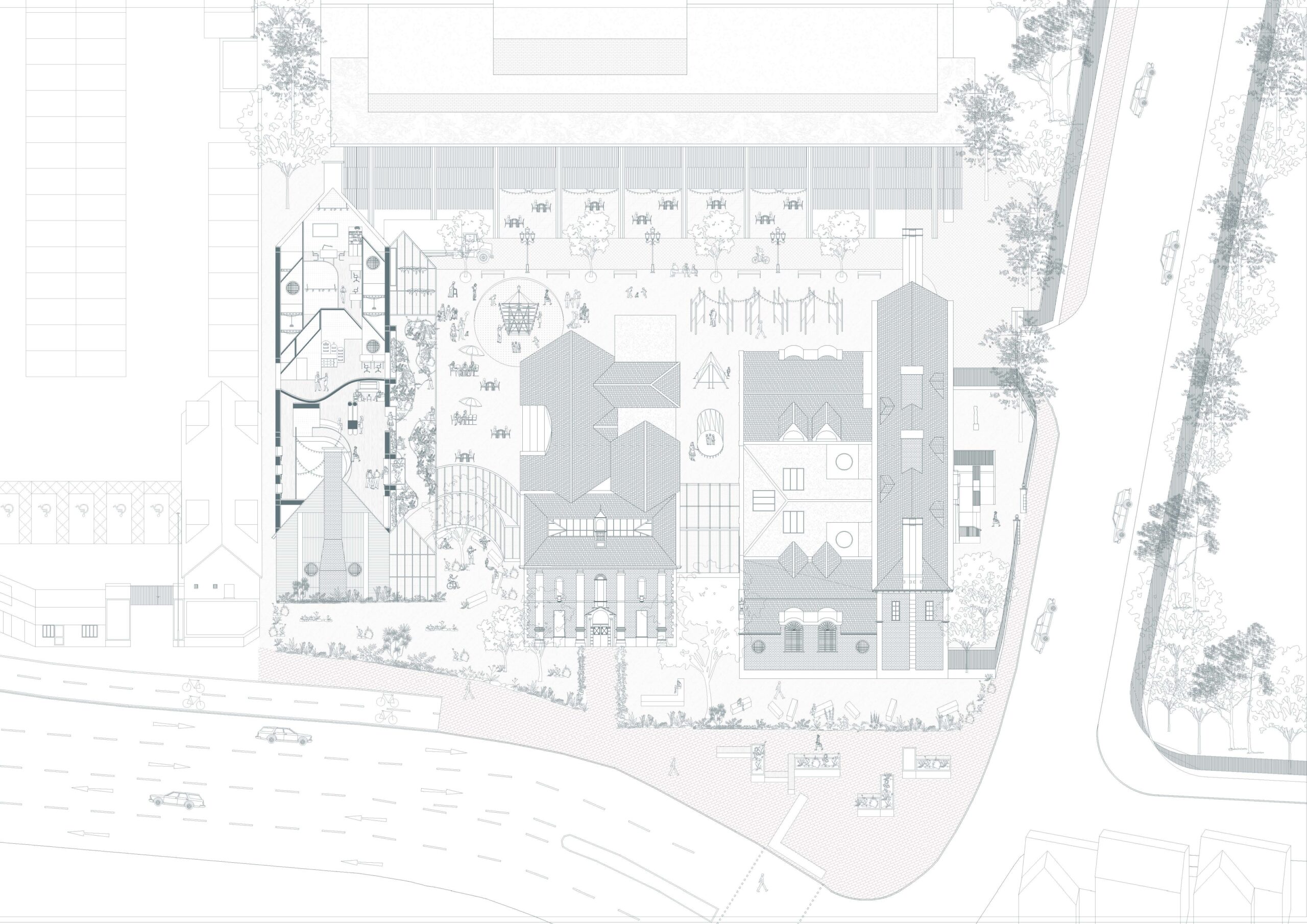
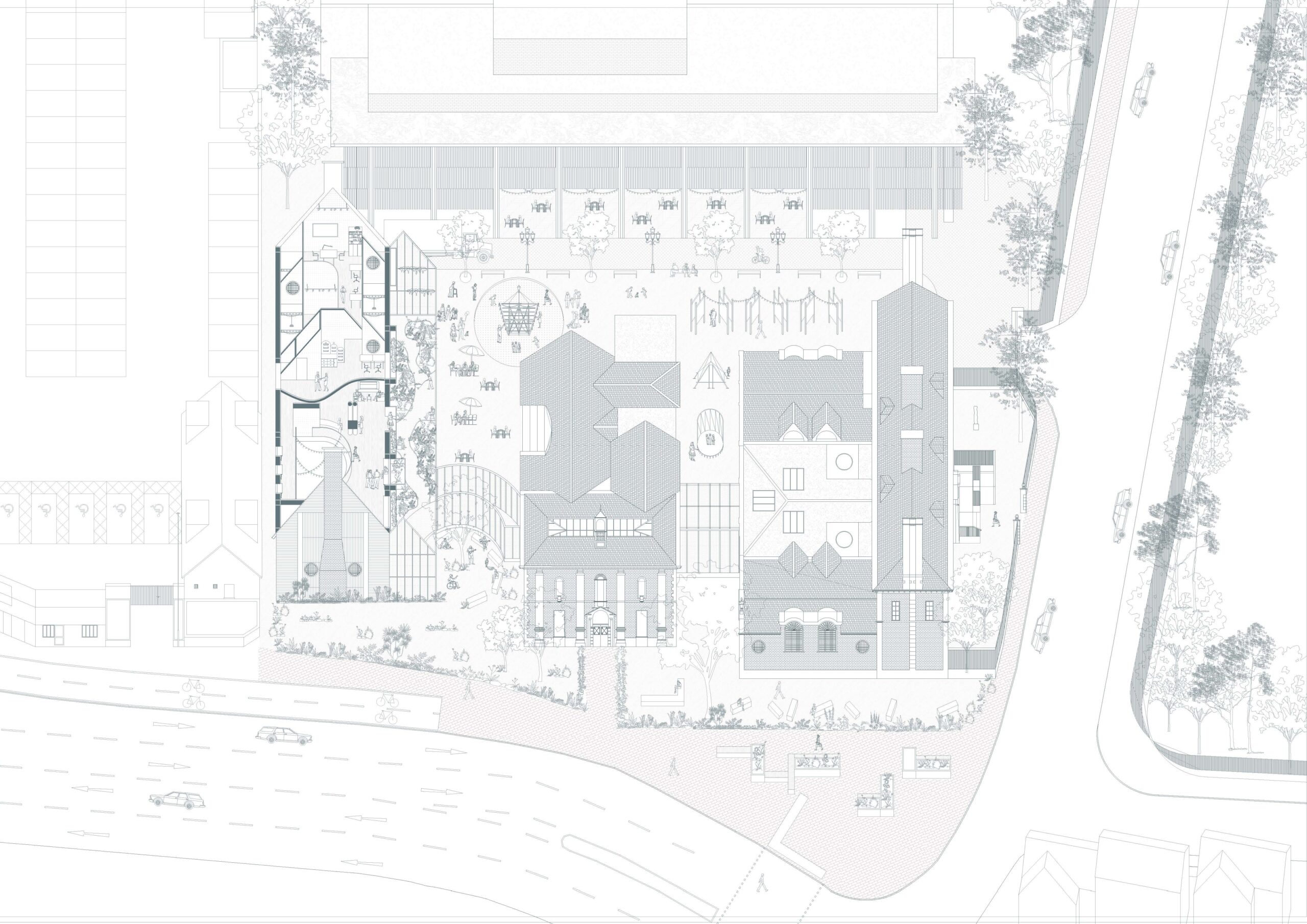
The site, though rich in architectural heritage, has long suffered from fragmented use. Both the Grade II listed museum and library hold significance as civic anchors, yet their internal conditions and accessibility no longer meet contemporary standards. The Museum Garden, positioned between the two, holds potential for public engagement but lacks definition and activity. The recent demolition of the adjacent Leisure Centre opens a rare urban opportunity: a void in the town’s fabric that could reconnect these civic buildings through shared use, new routes, and public space. Jain’s proposal treats this as a chance to test how adaptive reuse and small-scale interventions can reinvigorate local identity.

A Brief Rooted in Everyday Participation

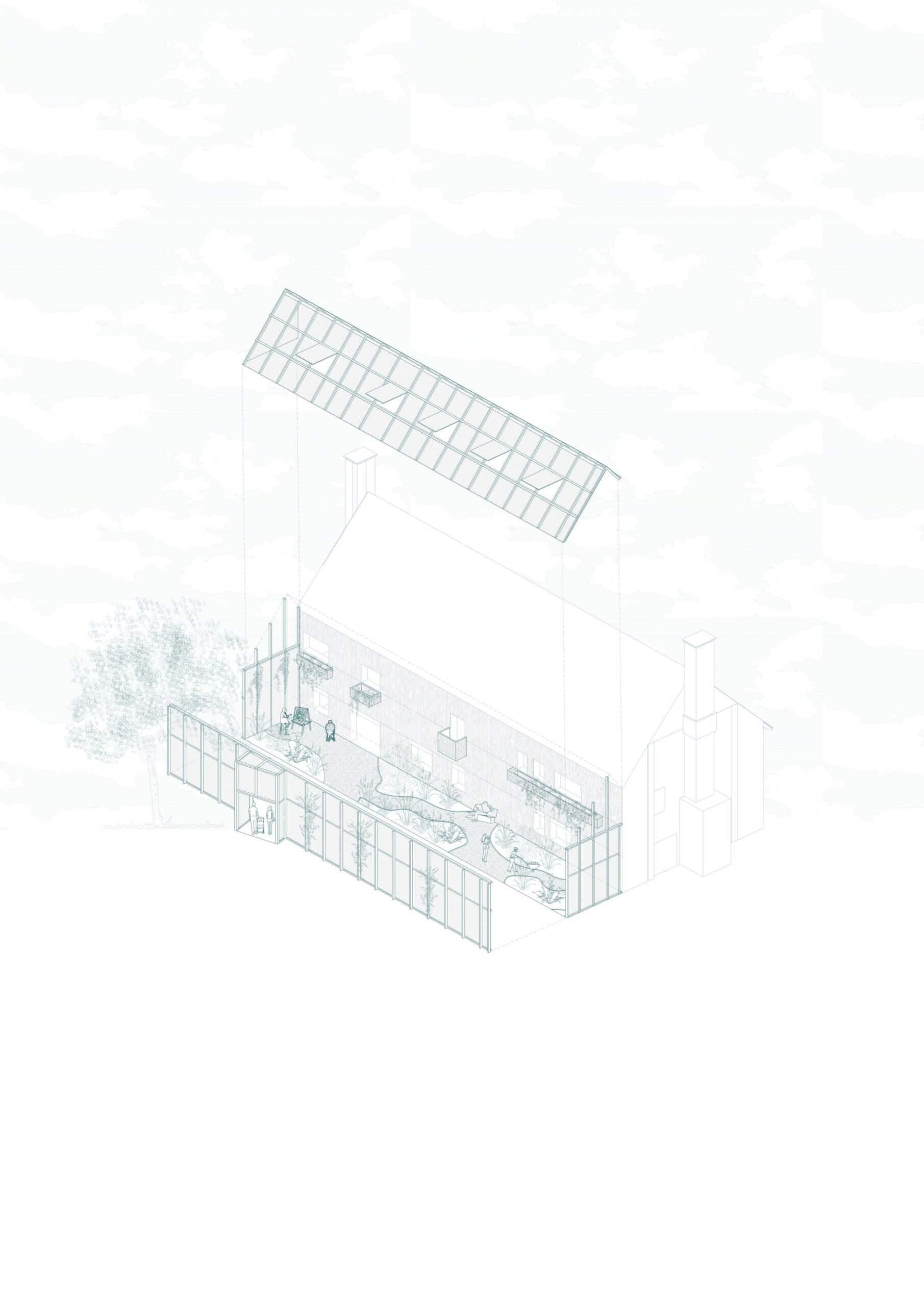
Rather than a conventional museum extension or public café, Jain’s brief centres on community engagement through making and cooking. The idea is drawn from the ethos of the Forest School, where learning happens through participation and physical experience. A wood-fired pizza oven becomes both a literal and symbolic hearth for the town, positioned as a gathering point within the new civic square. Around it, a greenhouse and exhibition space extend from the existing buildings, creating a continuous sequence between culture, food, and craft.

The design treats cooking not as a hospitality function but as a social act that redefines how people occupy heritage space. By framing the café as an open workshop and the garden as a shared kitchen, Jain repositions the museum and library as living institutions rather than static repositories. This approach acknowledges that heritage value is sustained through use, not preservation alone.

Material Strategy and Spatial Logic

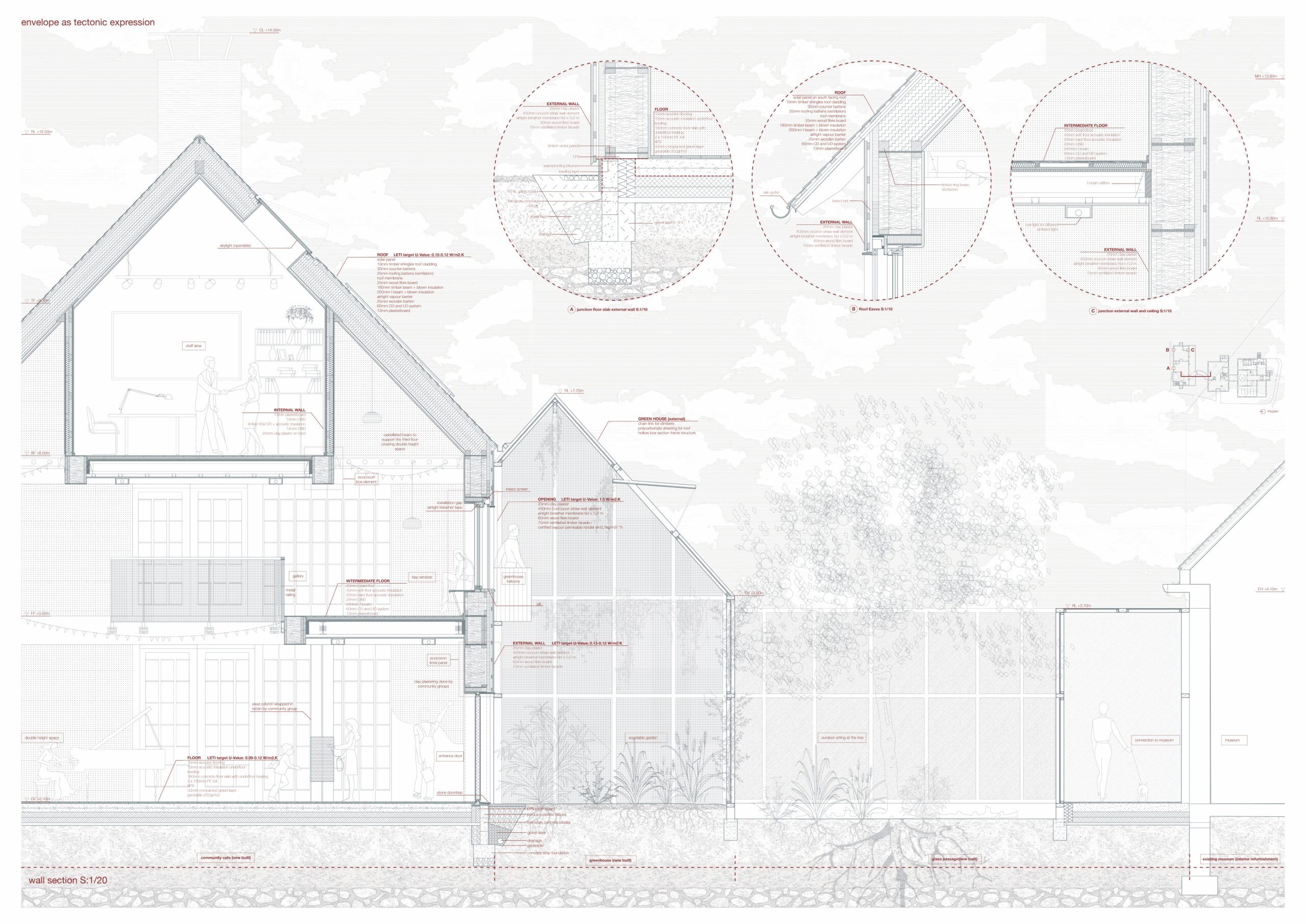
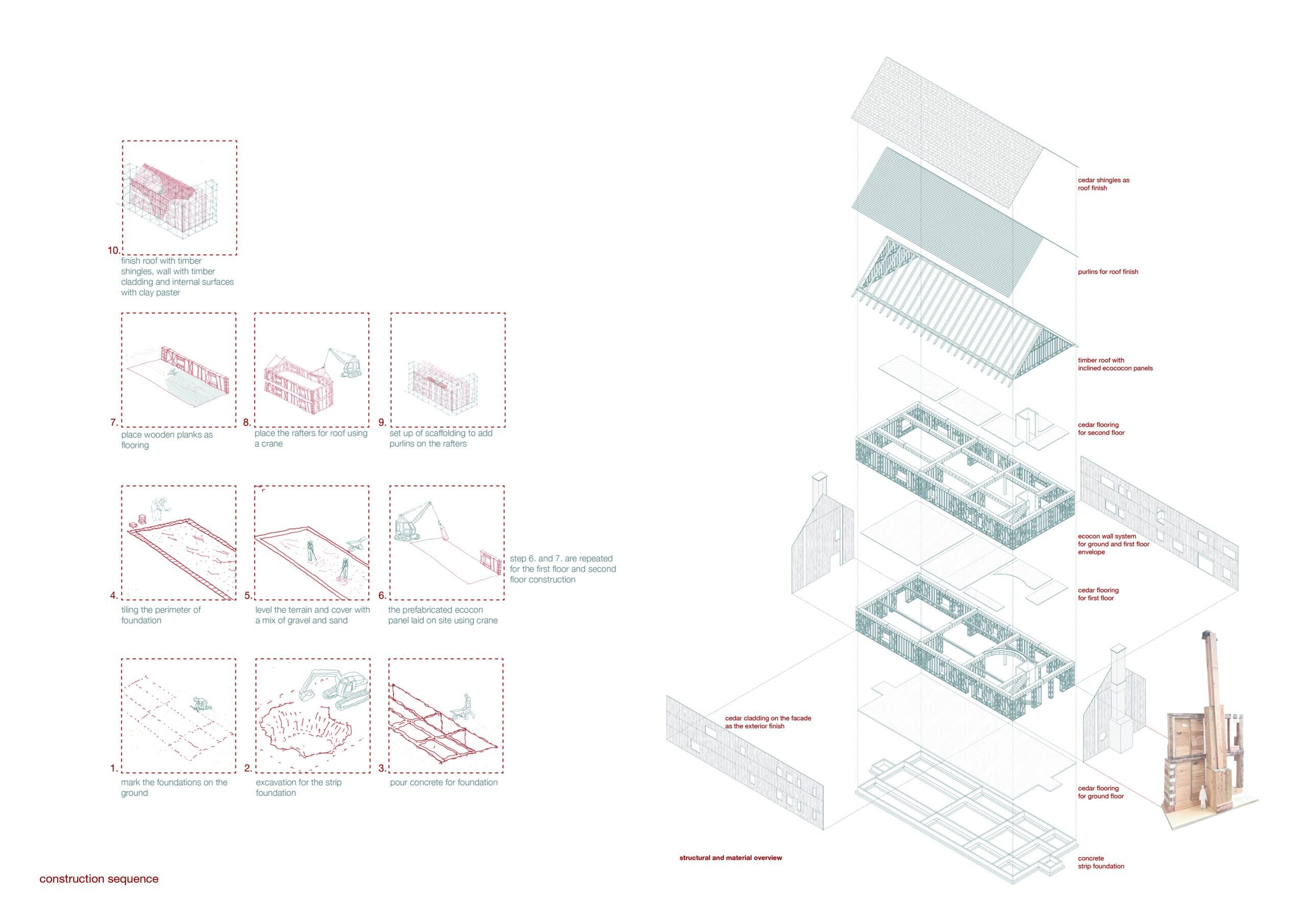
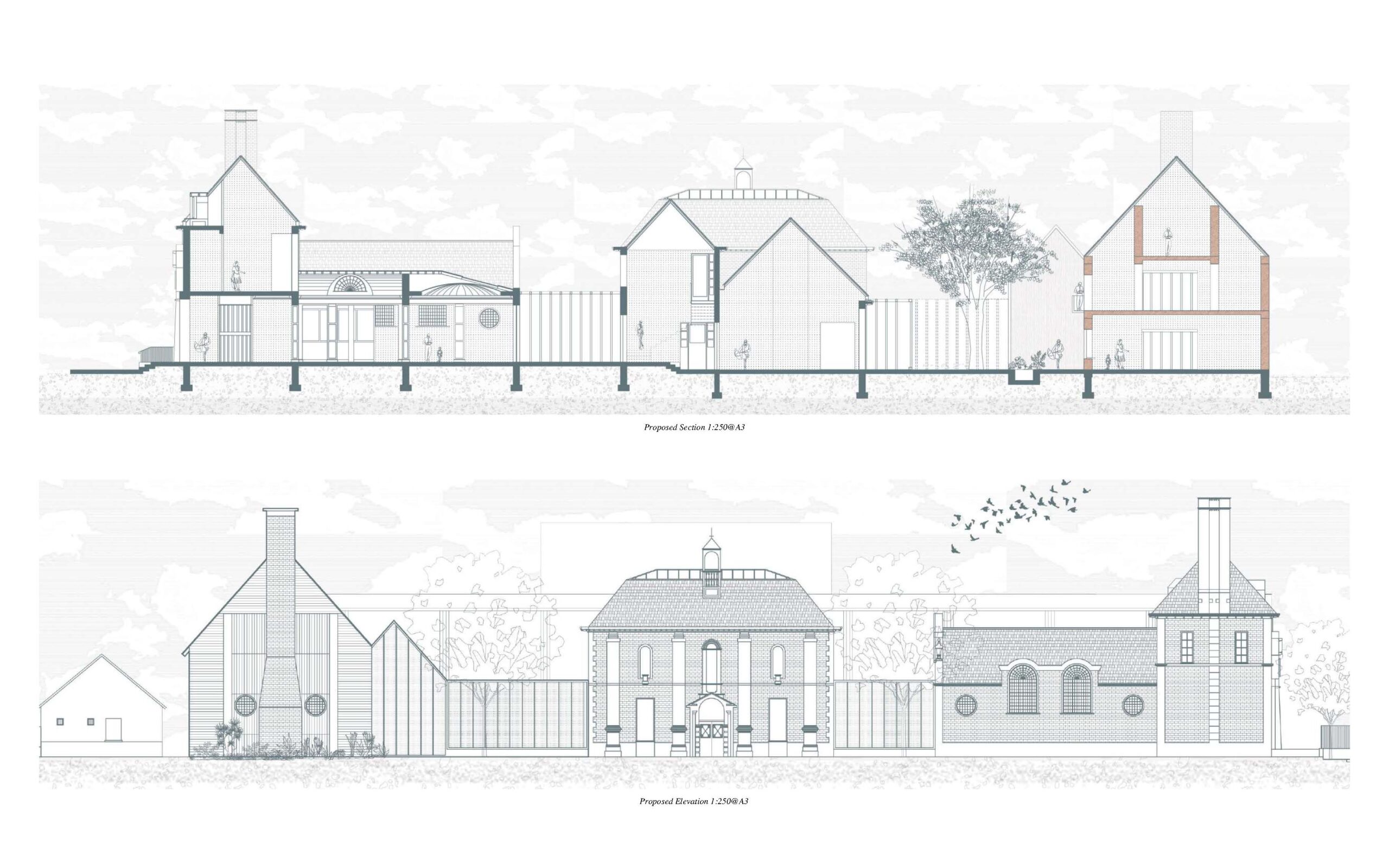
Architecturally, Jain’s proposal respects the listed facades of both buildings, focusing instead on internal reconfiguration and a sensitive extension. The new addition sits within the scale and material palette of the existing structures, using brick and timber detailing that aligns with the museum’s Victorian character while remaining clearly contemporary. The roofline is kept low to avoid competing with the historic cornices, and large glazed openings face the garden, ensuring visual continuity between interior spaces and the public realm.

Internally, circulation is rationalised through a new lift and a series of reconnected floor levels that address accessibility issues. The introduction of a continuous mosaic floor across the entire site becomes a unifying device, referencing the original finishes while guiding movement from the library through to the café and garden. This tactile surface subtly directs users without resorting to signage, and its hand-laid quality reflects Jain’s ongoing interest in craft and found materials.

Environmental considerations are embedded through passive strategies rather than technology-led gestures. The greenhouse operates as a thermal buffer, moderating temperature between the interior and exterior spaces. Openable roof vents and cross ventilation reduce mechanical dependency, while the use of reclaimed materials in finishes and furniture minimises embodied carbon. The project demonstrates how low-tech sustainability can align with heritage constraints when guided by spatial intelligence rather than aesthetic mimicry.

Reactivating the Museum Garden

One of the project’s key achievements lies in rethinking the Museum Garden as a civic square rather than a residual green. Jain’s plan introduces a series of outdoor rooms defined by planting beds, seating, and the oven’s brick plinth. These spaces are flexible enough to host school groups, evening food markets, or informal gatherings. The garden becomes an active threshold between the street and the museum, encouraging permeability and casual use.

The demolition of the Leisure Centre, often seen as a loss in civic provision, is reframed here as an opportunity to re-stitch the public realm. Jain’s design proposes new pedestrian connections to the river and surrounding streets, allowing the museum and library to operate as part of a wider urban sequence. This form of incremental urban repair reflects a growing awareness among younger practitioners that meaningful public space in the UK often emerges from re-use rather than new build.

Relevance to Practice and the Profession

Jain’s thesis sits within a broader conversation about the future of local heritage assets. Across the UK, councils are struggling to maintain listed libraries and museums, leading to partial closures or commercial conversions. Her project presents an alternative model where community use becomes the mechanism for preservation. By linking food, learning, and making, she demonstrates how civic buildings can evolve without losing their identity.

The project also reflects a shift in architectural education, where representation and social engagement hold equal weight with form-making. Jain’s drawings, built models, and material experiments show a process that values dialogue with users as much as formal resolution. This attitude, combined with her cross-continental experience, positions her well for practices working at the intersection of heritage and community infrastructure.

For hiring directors seeking graduates who combine design sensitivity with pragmatic understanding of reuse, Jain’s work offers a grounded example of how architecture can reassert its civic role within existing contexts. She can be contacted via LinkedIn or by email at jain24priyanshi@gmail.com.

Architecture Social invites other students and emerging professionals to share their projects that address real conditions in the built environment. Submissions can be sent through the Architecture Social website, continuing the conversation about how the next generation of architects can shape meaningful public spaces.

Word count: 972

Comments:

  • No comments yet.
  • Add a comment

    You may also be interested in:

    Latest Jobs

    A private and exclusive forum for Architecture & Design professionals and students.

    Backed by industry specialists, it’s where you can engage in meaningful conversation, make connections, showcase your work, gain expert insights, and tap into curated opportunities to advance your career or strengthen your studio.