
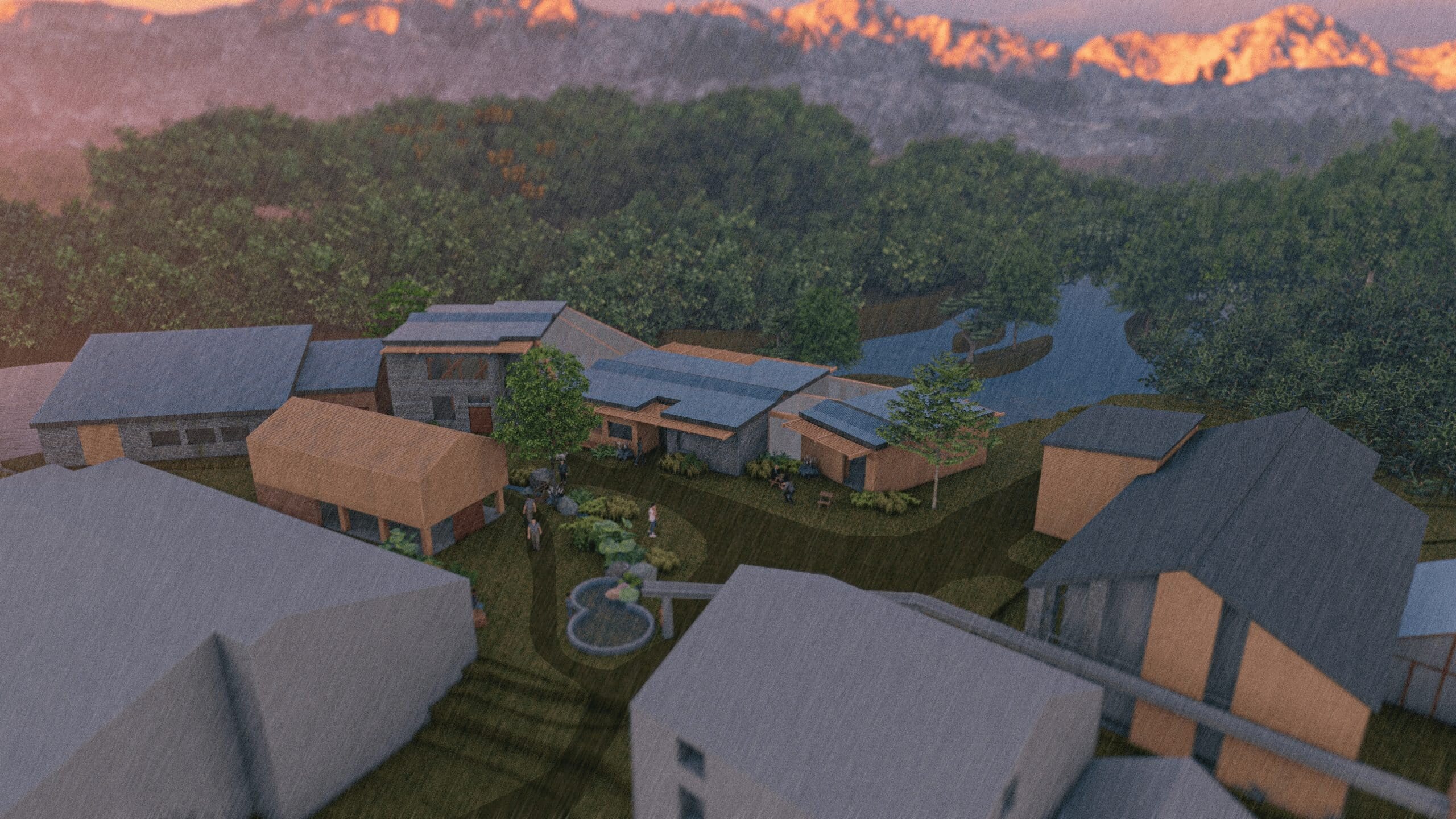
Form Follows Forestry by Andrew Chatten transforms a derelict Lake District mill into a sustainable timber furniture hub.
The project is useful because it connects heritage, making, local material culture and low-carbon construction. The mill is not treated as a relic. It becomes productive again.
Project images


What the thesis proposes
Andrew graduated from Lancaster School of Architecture with first-class honours and won the Third Year prize for Professional Practice. His final-year project proposes a contemporary centre for sustainable timber furniture production inside a long-dormant Lake District mill.
The design keeps the historic shell legible while adding new timber interventions. Stone, timber, craft and landscape all become part of the project’s identity.
Why the adaptive reuse idea works
- The existing mill gives the project cultural weight.
- Timber is used as a structural, environmental and narrative material.
- Workshops and exhibition spaces connect making with public learning.
- Technical detail supports the sustainability argument rather than sitting separately from it.
Portfolio lesson
Adaptive reuse portfolios should show the relationship between the existing fabric and the new intervention. Sections, junctions and material strategy matter as much as the final render.
Showcase an adaptive reuse project
Architecture Social Showcase is useful for student work that deals with heritage, timber, craft, sustainability and technical design.
- Show what is retained.
- Explain the new use and production logic.
- Make the material strategy visible.
Architecture Social view
Stephen’s recruiter view is that adaptive reuse and timber experience become more valuable when candidates can explain both the idea and the buildability. This project gives both sides something to read.
Connect with Andrew
Andrew’s public profile route gives more context for the work and future collaboration.
If this project has made you rethink your own portfolio or next move, browse current architecture jobs or contact Architecture Social for a recruiter’s view.


Add a comment