

Desislava Cholakova’s civic parliament architecture project asks how Parliament could become more open, inclusive and participatory.
The proposal matters because it does not treat civic space as a fixed room for passive spectators. It imagines a place where people can listen, react and take part through a blend of physical and virtual presence.
Watch: Architecture Social video
This Architecture Social video adds useful context before the practical guidance below.
Project visual
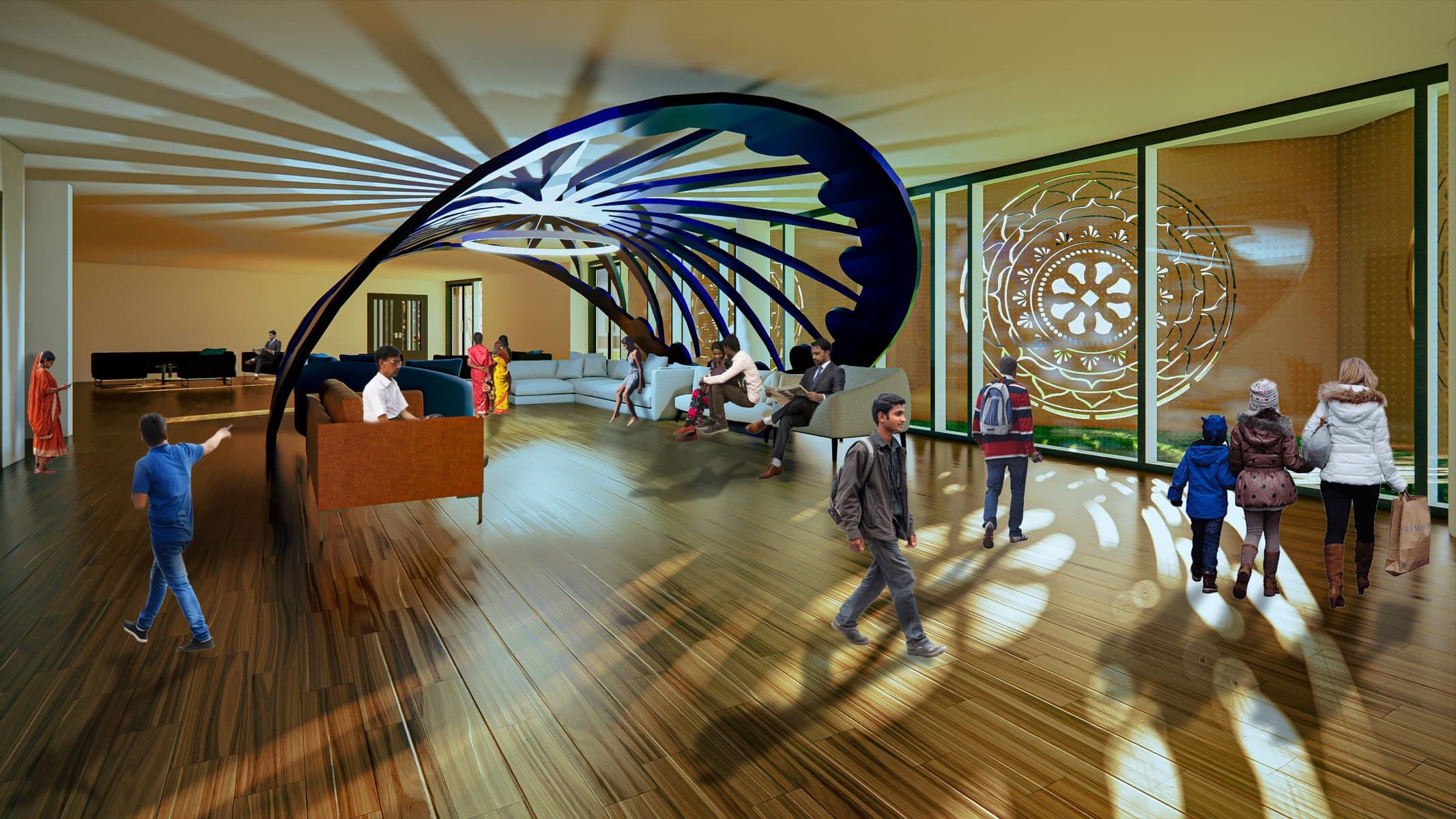
The project image helps show how the proposal moves beyond a symbolic idea and starts to become a spatial system.

Project overview
Desislava is an RIBA Part I graduate from London South Bank University. Her work was recognised through the RIBAJ EyeLine Competition in 2020, where she was named second winner, and she was also nominated for the RIBA London Student Awards.
The project reimagines Parliament as a civic environment rather than a closed political stage. The layout refers to the British Parliament, but the point is not just mimicry. The space can change to suit participants and create a more direct relationship between public voices and decision making.
How digital participation changes the brief
- Virtual reality becomes part of the civic experience, not a novelty attached to the side.
- The public is treated as an active participant rather than a distant audience.
- The physical Parliament layout is used as a familiar starting point, then challenged.
- Adaptability gives the space a democratic role because the room can respond to its users.
- The project connects digital culture with the longstanding question of who civic buildings are for.
What to notice in the project
The useful lesson is that Desislava starts from a recognised civic typology, then changes the relationship between people and institution. That makes the project easier to understand than a purely speculative digital proposal.
For a portfolio, the strongest move would be to show the chain between civic problem, participation method and spatial layout. The reader should be able to see who is in the room, who joins virtually and what that changes about the decision-making process.
Portfolio lesson
A political or civic project needs a clear position. Desislava’s idea is strongest when it is explained as participation through space, not just a visual interpretation of Parliament.
Showcase a civic architecture project
If your project deals with public buildings, civic identity, digital participation or social infrastructure, make the public value easy to understand.
- State the civic problem in plain English.
- Show who uses the space and how they take part.
- Explain what changes because of the design.
- Use images that make the idea readable beyond a studio crit.
Architecture Social view
Stephen’s recruiter view is that competition and student work lands better when the idea can be repeated clearly. A memorable project is not only visually strong. It gives the reader a sentence they can carry with them.
Next step
Browse more project showcases, read the portfolio guide, submit your own project, or join the Architecture Social Club.
If this project has made you rethink your own portfolio or next move, browse current architecture jobs or contact Architecture Social for a recruiter’s view.




Add a comment