

Dischronia by Raluca Scheusan is an urban memory architecture project set around a decaying ruin in Bucharest.
The thesis turns the building into a city incubator: a recycling plant for construction debris, an urban archive and a museum. It treats the ruin as evidence, resource and civic memory rather than a problem to erase.
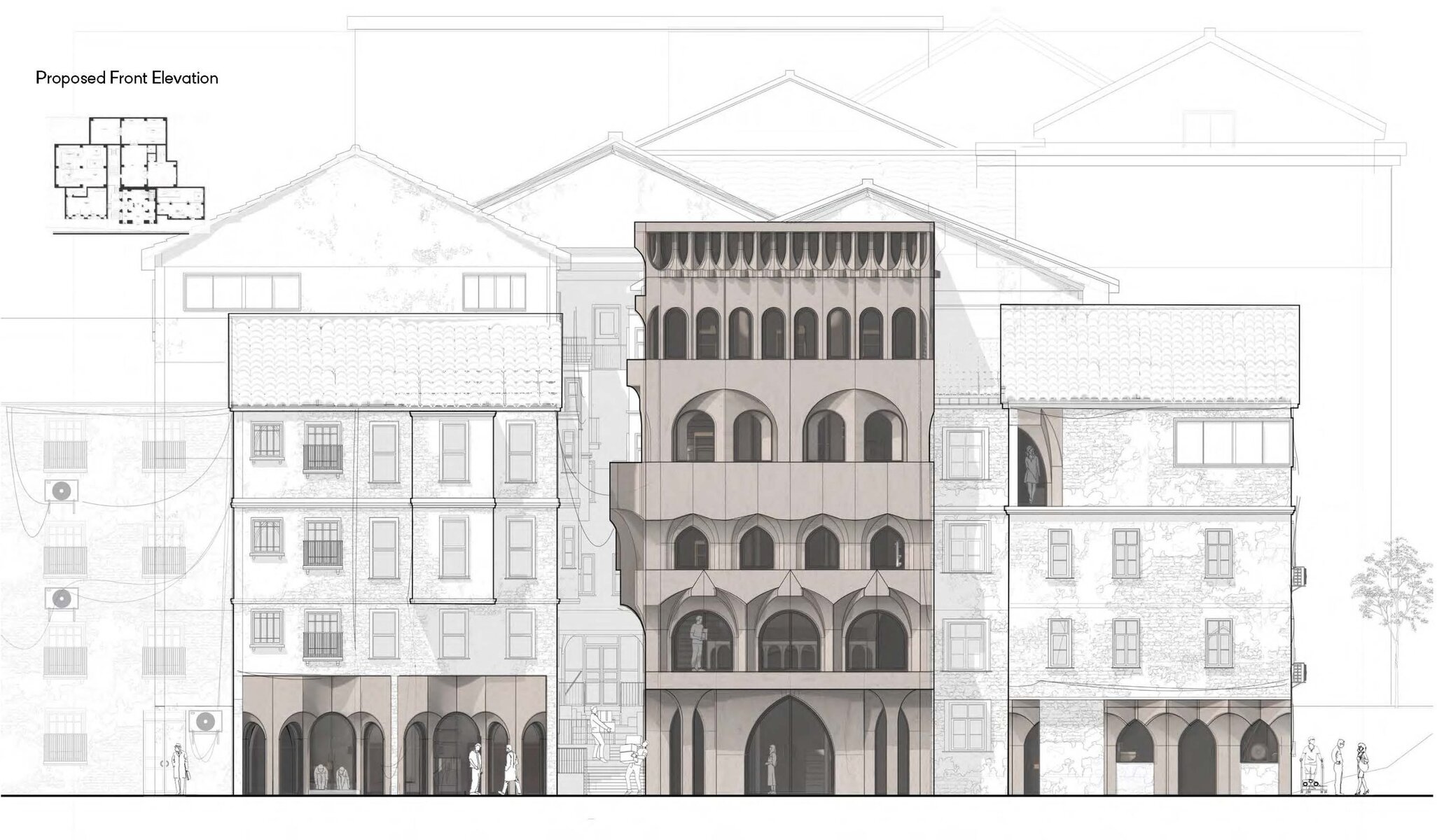
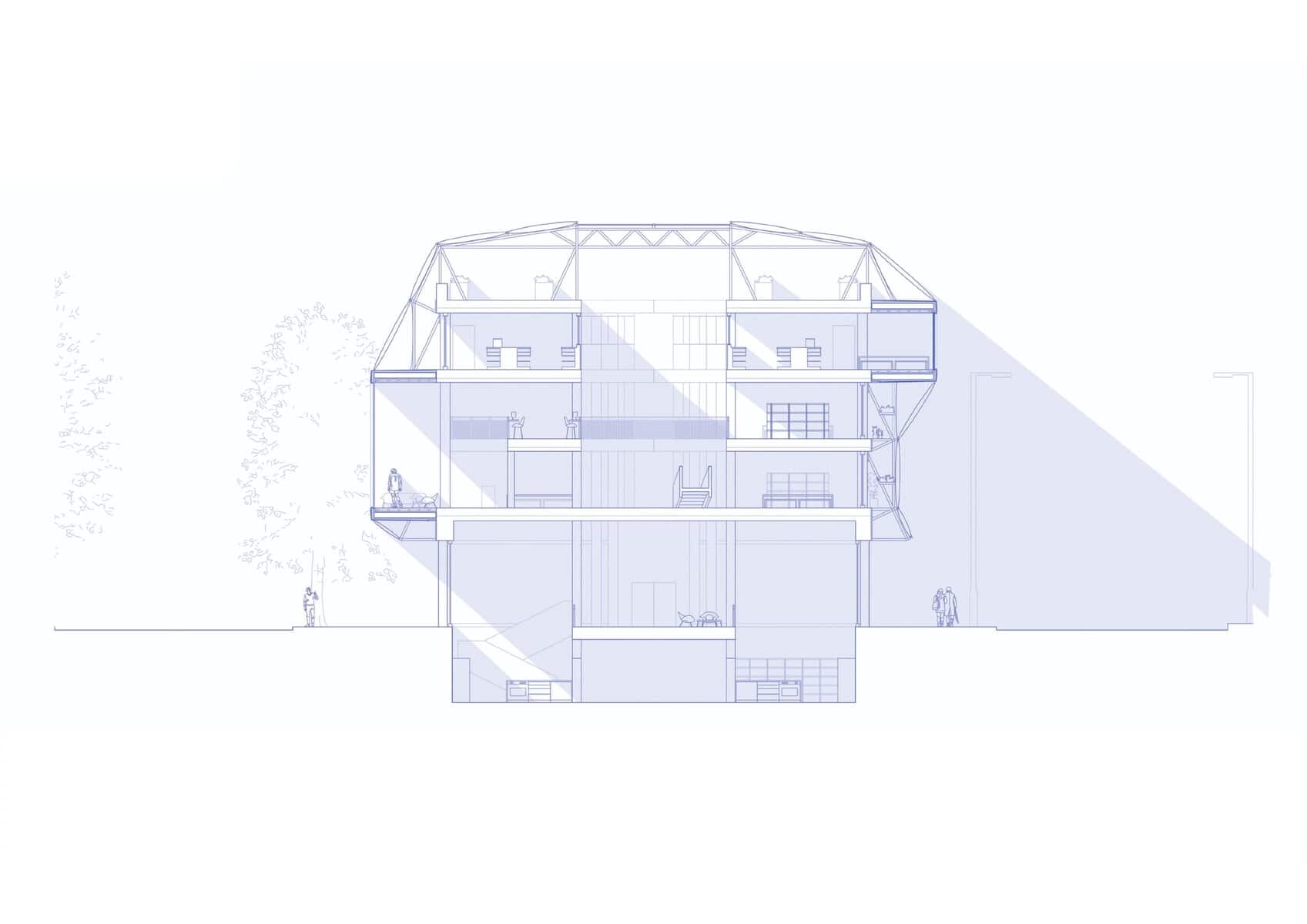

Project focus
The proposal starts by redesigning the building cores, then uses the structure to process construction material from both the city and the ruin itself. The top floors hold archive and museum space, so the building stores memory while physically reworking urban debris.
Design ideas to notice
- The ruin is treated as a living urban resource, not a static monument.
- The recycling plant gives the thesis a working programme as well as a symbolic one.
- The archive and museum make memory public, spatial and layered.
- The idea of lightness helps the project add new narratives without flattening the existing city.
Portfolio lesson from this project
Conceptual projects need strong sequencing. Raluca’s work is most legible when the reader can follow the route from ruin, to material processing, to archive, to public interpretation.
Showcase a research-led urban project
If your thesis works with ruins, memory, repair or city infrastructure, help the reader follow the project sequence.
- Name the existing condition clearly.
- Show the new programme and who uses it.
- Use drawings to connect the concept to movement, structure and material.
Next step
Explore more project work in the Architecture Social Projects directory, or submit your own project for the showcase.



Add a comment