
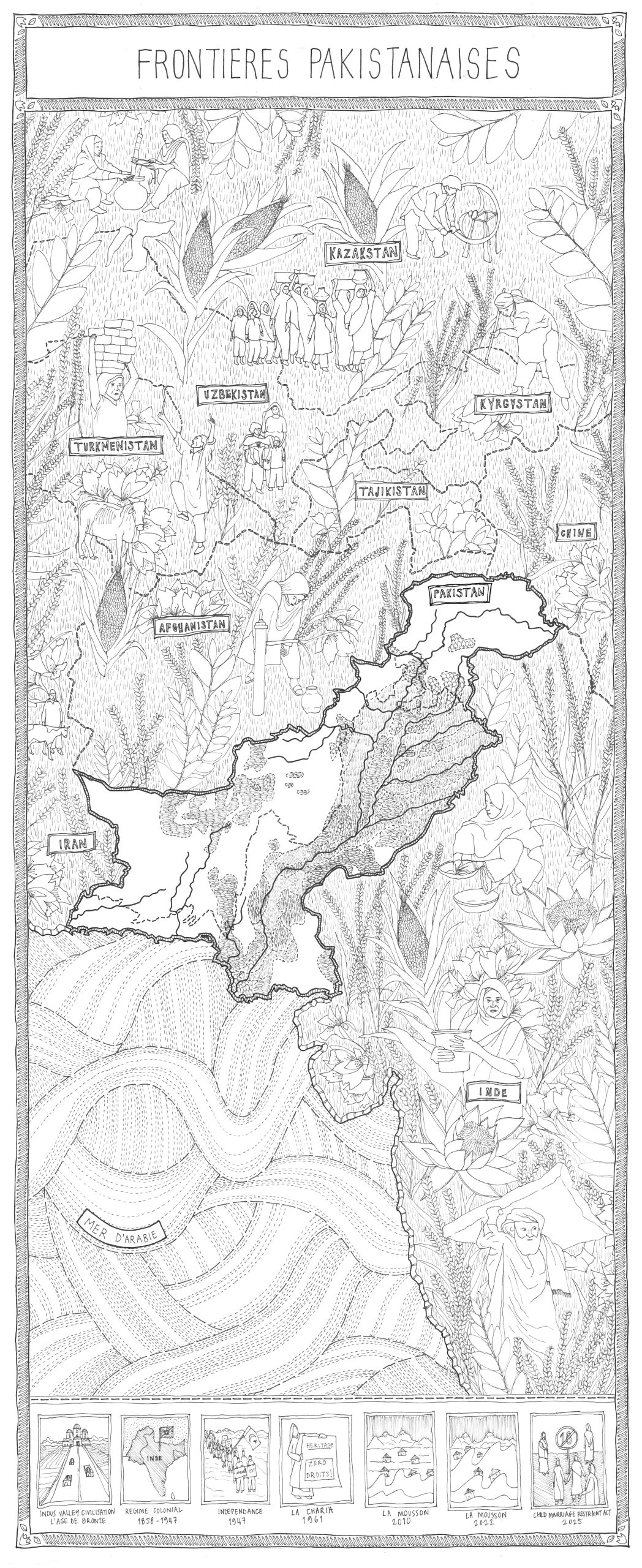
Monsoon Brides by Elise Serre-Simpson is a flood resilient architecture thesis about women, craft and community infrastructure in Sindh.
The project is careful because it treats climate pressure and social vulnerability as connected design questions. The architecture is modest in material, but serious in purpose.
Project gallery
The project visuals show landscape, public space and interior thinking around the support structures proposed for women and communities.


Project overview
Elise’s thesis responds to the impact of flooding in Sindh, Pakistan. The project looks at how environmental crisis can intensify social pressures, especially for women and girls, and asks what small-scale architecture can do within that reality.
Rather than proposing a large institutional solution, Monsoon Brides works through modular bamboo structures, rope, handmade textiles and construction methods that can be understood and adapted locally.
How the design supports women and community
- Water-pump routes are treated as important social points, not just utilities.
- Bamboo and rope give the structures a low-tech and locally legible construction logic.
- Textiles and craft connect the architecture to cultural identity.
- Modular parts allow the spaces to adapt to different village needs.
- Construction manuals help shift the project from object design to community capability.
Why the thesis needs careful language
Projects about climate, poverty and gender can easily become too dramatic from a distance. This page should keep the focus on design evidence: what was researched, what was proposed, how people might use it, and why the material choices matter.
Showcase a climate and community project
Architecture Social can feature student work where climate, gender, craft or community questions are handled with clear research and respectful design evidence.
- Explain the community context carefully.
- Show how the design responds through material, route and use.
- Avoid sensational language around vulnerable groups.
- Make the drawings and images prove the social idea.
Architecture Social view
Stephen’s recruiter view is that social-impact projects are strongest when they avoid grand claims and show specific judgement. The reader should be able to see the research, the design decision and the human reason for the proposal.
Next step
Explore more student project showcases, read the portfolio guide, or submit a climate or community project.
If this project has made you rethink your own portfolio or next move, browse current architecture jobs or contact Architecture Social for a recruiter’s view.


Add a comment