
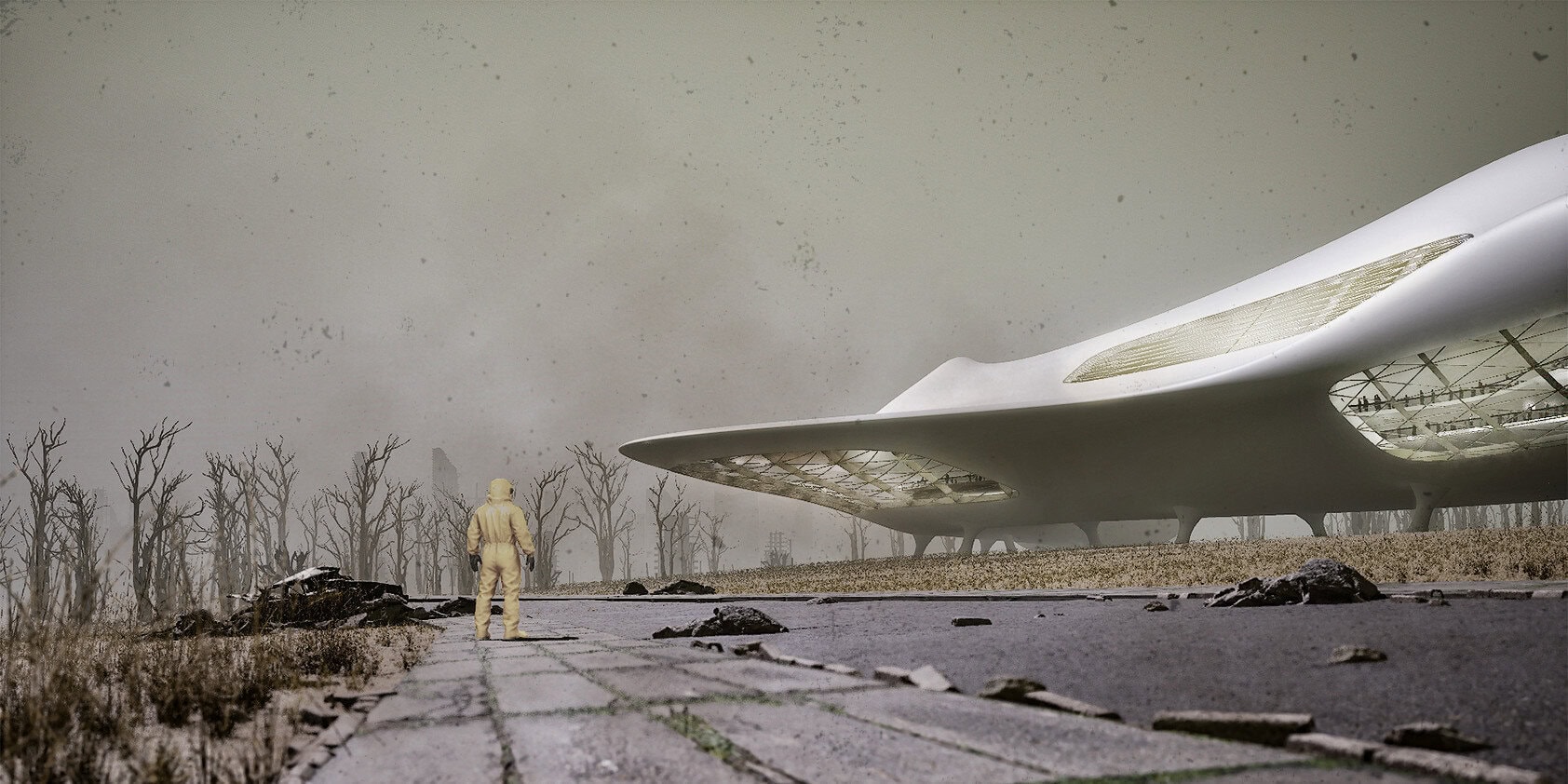
Nexus Tomorrow by Winston Leung imagines post-apocalyptic architecture in Manchester, where elevated walkways help people move, reconnect and rebuild civic life after disaster.
The project is speculative, but the useful architectural question is practical: what kind of infrastructure helps a city survive without losing dignity, memory or social connection?


Project focus
The imagined setting is Manchester after nuclear fallout. People emerge from bunkers into a damaged city, and the elevated walkway becomes a protected route for movement, gathering and essential daily life.
The walkway is more than circulation. It can hold food distribution, healthcare, learning spaces, rest points and moments of public memory, turning survival infrastructure into a social spine.
Design ideas to notice
- The elevated route gives the project a clear urban structure.
- The speculative setting makes resilience, connection and public dignity visible.
- Computational design can help the proposal respond to changing risk and city conditions.
- The strongest drawings should show both the big city move and the human-scale moments.
Portfolio lesson from this project
Speculative projects need rules. The clearer the disaster logic, movement system, programme and section are, the easier it is for the reader to trust the world you have built.
Showcase a speculative architecture project
If your project is future-facing, dystopian or scenario-led, make the design rules clear enough that the reader can follow the world.
- Name the scenario and its consequences.
- Show how people move and survive.
- Use diagrams to connect the narrative to architecture.
Next step
Explore more project work in the Architecture Social Projects directory, or submit your own project for the showcase.
If this project has made you rethink your own portfolio or next move, browse current architecture jobs or contact Architecture Social for a recruiter’s view.


Add a comment