

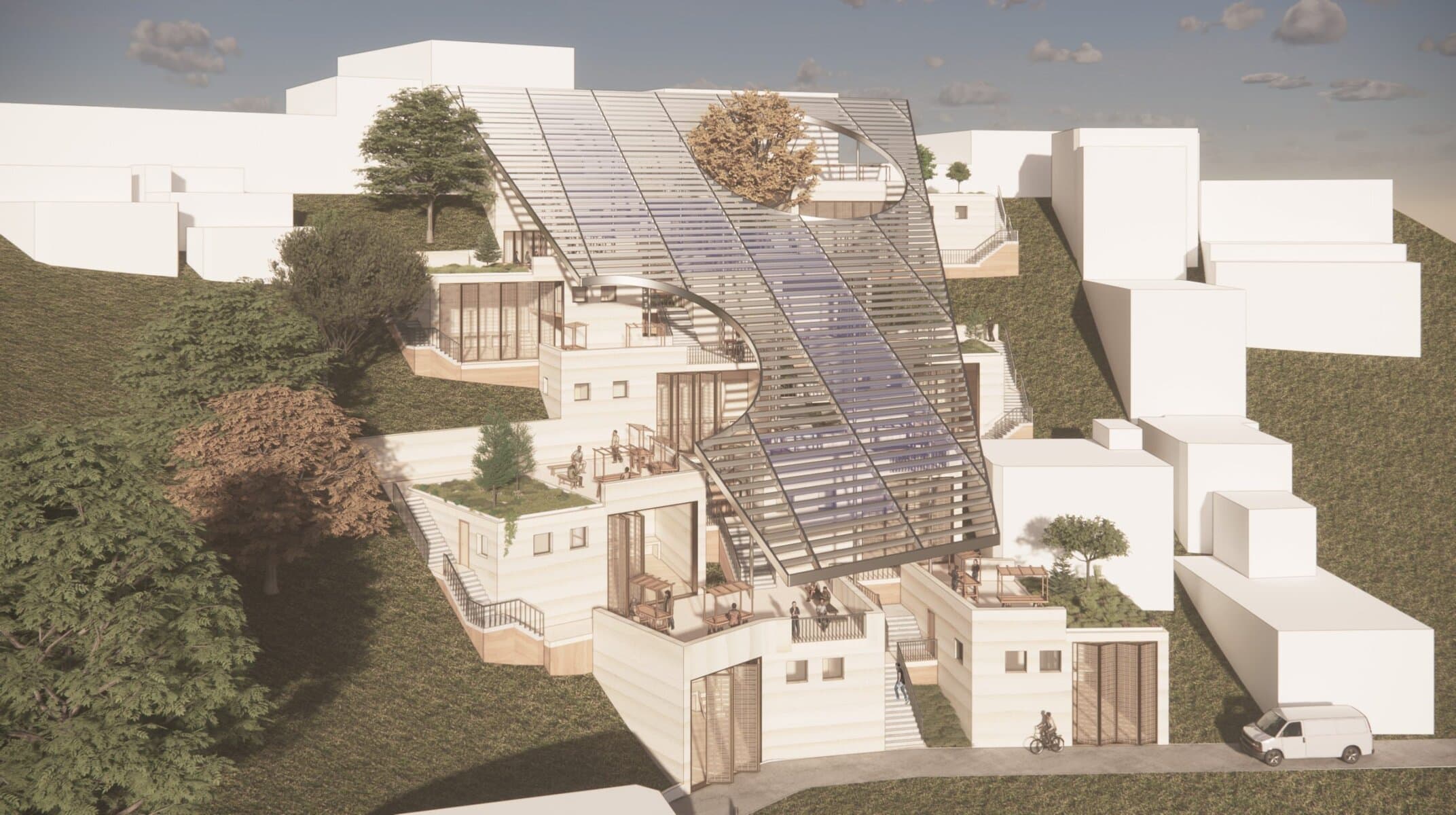
Sanctuary of Bricks by Temiloluwa John Olowe explores sustainable brick architecture through production, public learning and material culture. The proposal is not just about making bricks. It asks how the process of making can become part of the civic experience.
The strongest idea is the shift from hidden industry to visible education. Visitors are invited to understand how eco-bricks are made, why materials matter and how heritage can shape a more responsible construction future.
A material-led civic brief
The project draws on brick production, Stoke pottery heritage and the industrial confidence of large cultural buildings. That gives the scheme a clear architectural tension: it has to operate as a place of production, but it also has to welcome people in.
- Eco-brick production gives the project a practical environmental purpose.
- Visitor routes turn the making process into a learning experience.
- Workshops make the material story participatory rather than passive.
- Kilns, production lines and observation spaces become part of the architectural narrative.
Why the public route matters
A production building can easily become closed, technical and difficult to read. Sanctuary of Bricks works because it uses public engagement as part of the brief. The visitor is not treated as an afterthought.
For students, that is a useful portfolio lesson. If the project depends on process, show the process. A tutor, practice or reviewer should be able to understand how the building teaches, produces and welcomes at the same time.
What the project teaches
- Material research is stronger when it affects the plan, section and visitor experience.
- Heritage references need to do more than decorate the concept.
- Sustainability reads better when the reader can see the operational logic.
- Public education can make an industrial brief feel generous and civic.
Architecture Social view
Stephen often sees students undersell material projects by hiding the practical idea behind abstract language. This project has a clearer route: start with the brick, explain the making process, then show why people should be invited into it.
Make the material idea easy to follow
If you submit a material-led project, help the reader understand the material, the process and the public value quickly.
- Name the material problem in plain language.
- Show how production affects the architecture.
- Explain the visitor or user journey.
- Keep the project idea ahead of the biography.
Next step
Submit your student, graduate or practice project to Architecture Social Showcase if it has a clear architectural idea and useful evidence behind it.
If this project has made you rethink your own portfolio or next move, browse current architecture jobs or contact Architecture Social for a recruiter’s view.


Add a comment