
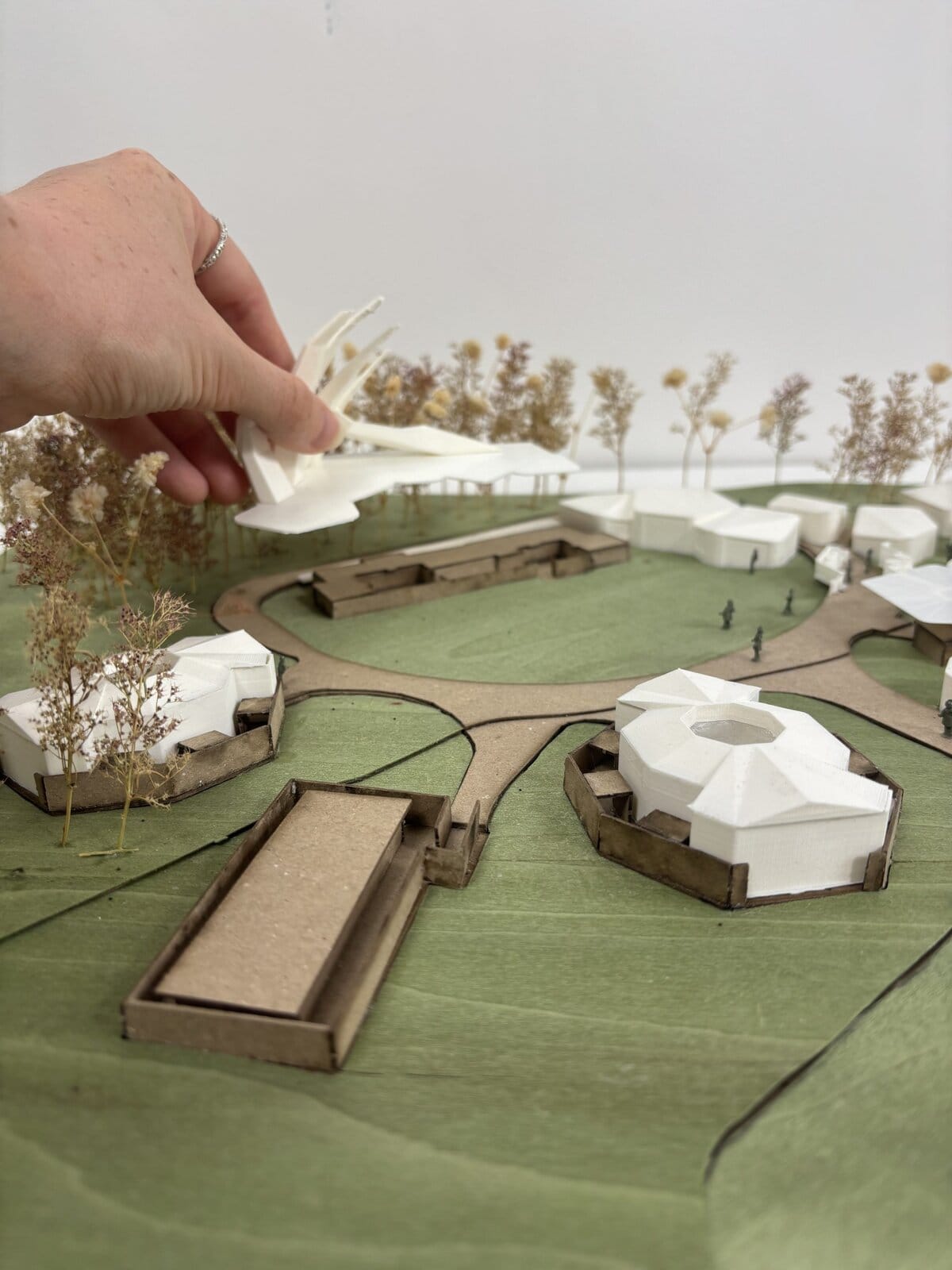
SignScape by Rebecca Stinchcombe is a student project about inclusive design, Deaf culture and how temporary architecture can make a historic coastal site feel welcoming to more people.
The proposal reimagines Lavernock Battery in Wales as a British Sign Language Festival landscape, using pavilions, routes, sensory rest spaces and workshops to support communication through body, movement and shared space.
Project gallery
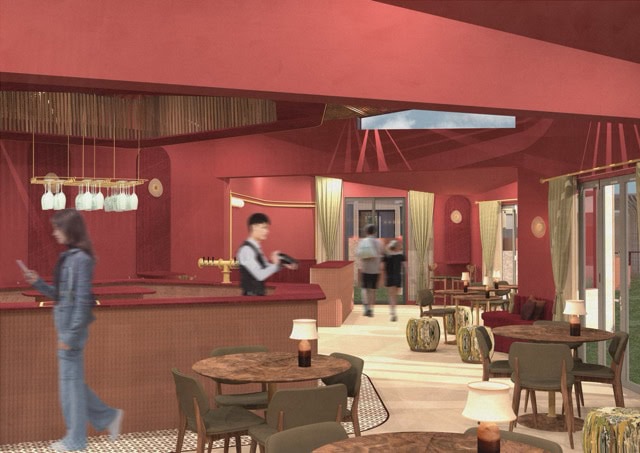
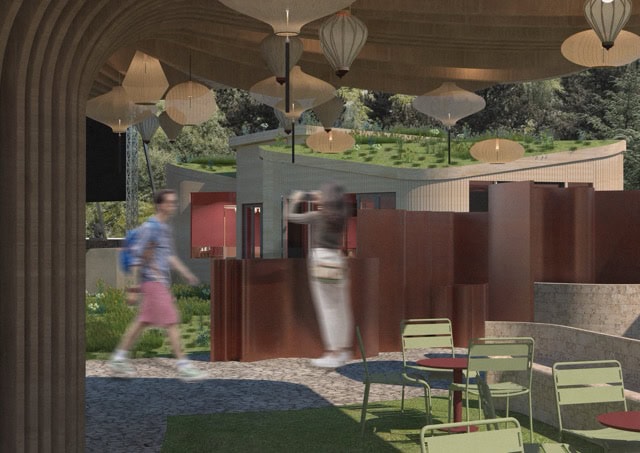
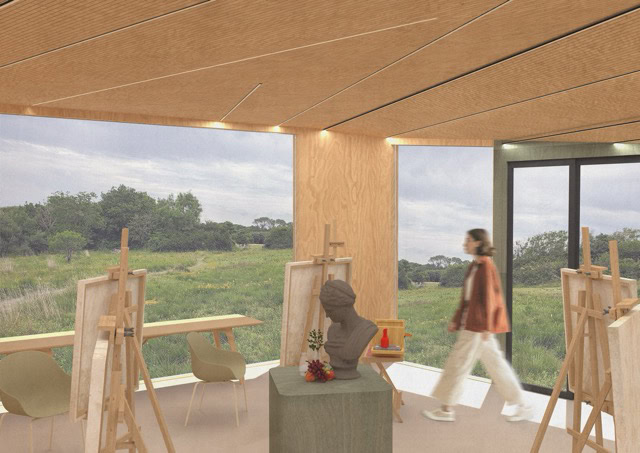
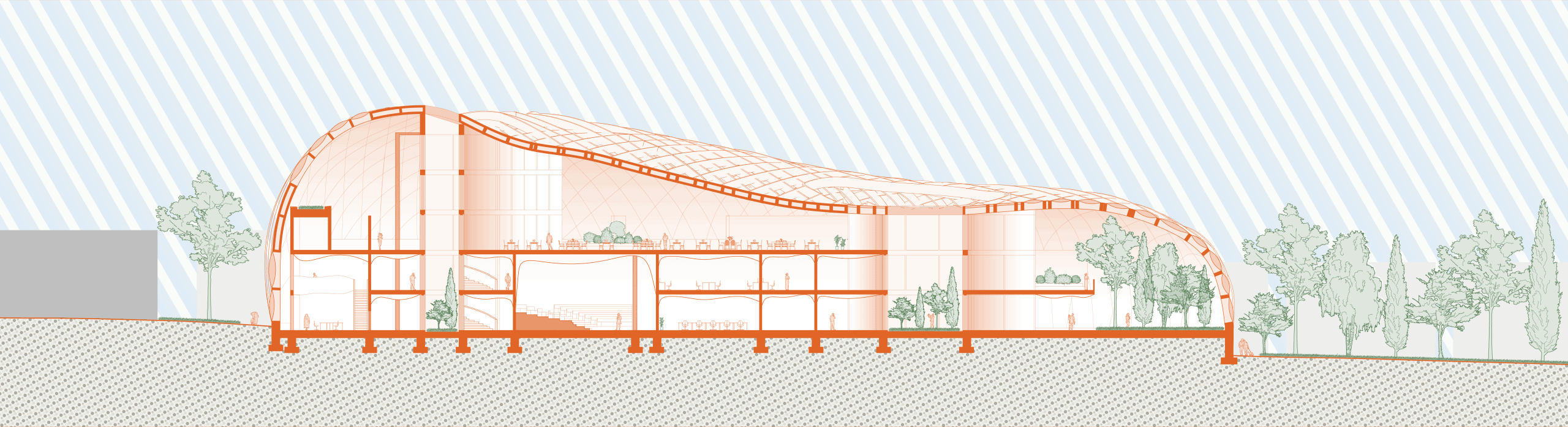
The selected project images show the festival interiors, workshop spaces and performance setting beyond the main site model.

Project overview
Rebecca’s project connects Lavernock Battery’s history of communication with a new civic role. The site is known for Marconi’s early wireless transmission, and the proposal turns that idea of connection towards British Sign Language, performance and participation.
At the centre of the scheme are temporary biodegradable structures made with materials such as bamboo, bioplastic sheeting and textile membranes. They are designed to be dismantled, reused and light on the historic landscape.
Inclusive design moves
- Wide, level routes make movement through the festival easier.
- Visual cues and contrasting textures support wayfinding.
- Sensory rest zones give people space to regulate away from crowds.
- Performance spaces are arranged to support visual communication.
- Tactile workshops and art installations make the festival participatory.
What makes the project useful to study
Inclusive design can become vague if the drawings only show atmosphere. This project is strongest when it shows what the visitor can actually do: arrive, orientate, rest, watch, participate and connect with others.
Showcase an inclusive design project
Architecture Social can feature student work that explores access, sensory design, neuroarchitecture, Deaf culture or community-led public space.
- Explain who the project is designed for.
- Show the routes, thresholds and sensory choices.
- Make the cultural idea visible in the plan, section and experience.
- Use captions that help people understand the design judgement.
Architecture Social view
Stephen’s recruiter view is that inclusive design is strongest when the evidence is visible. A good project should help the reader understand the people, the behaviour and the spatial decisions behind the idea.
Next step
Explore more Architecture Social projects, read the portfolio guide, or submit your own project.
If this project has made you rethink your own portfolio or next move, browse current architecture jobs or contact Architecture Social for a recruiter’s view.




Add a comment