
Sports Activated Community Regeneration by Isaac Jemitola uses sports facilities, shared space and careful technical thinking to support dignity in underserved urban communities.
The project is strongest when read as social infrastructure. Sport is not only an activity here. It becomes a way to create routine, support, visibility and community life.
Project gallery
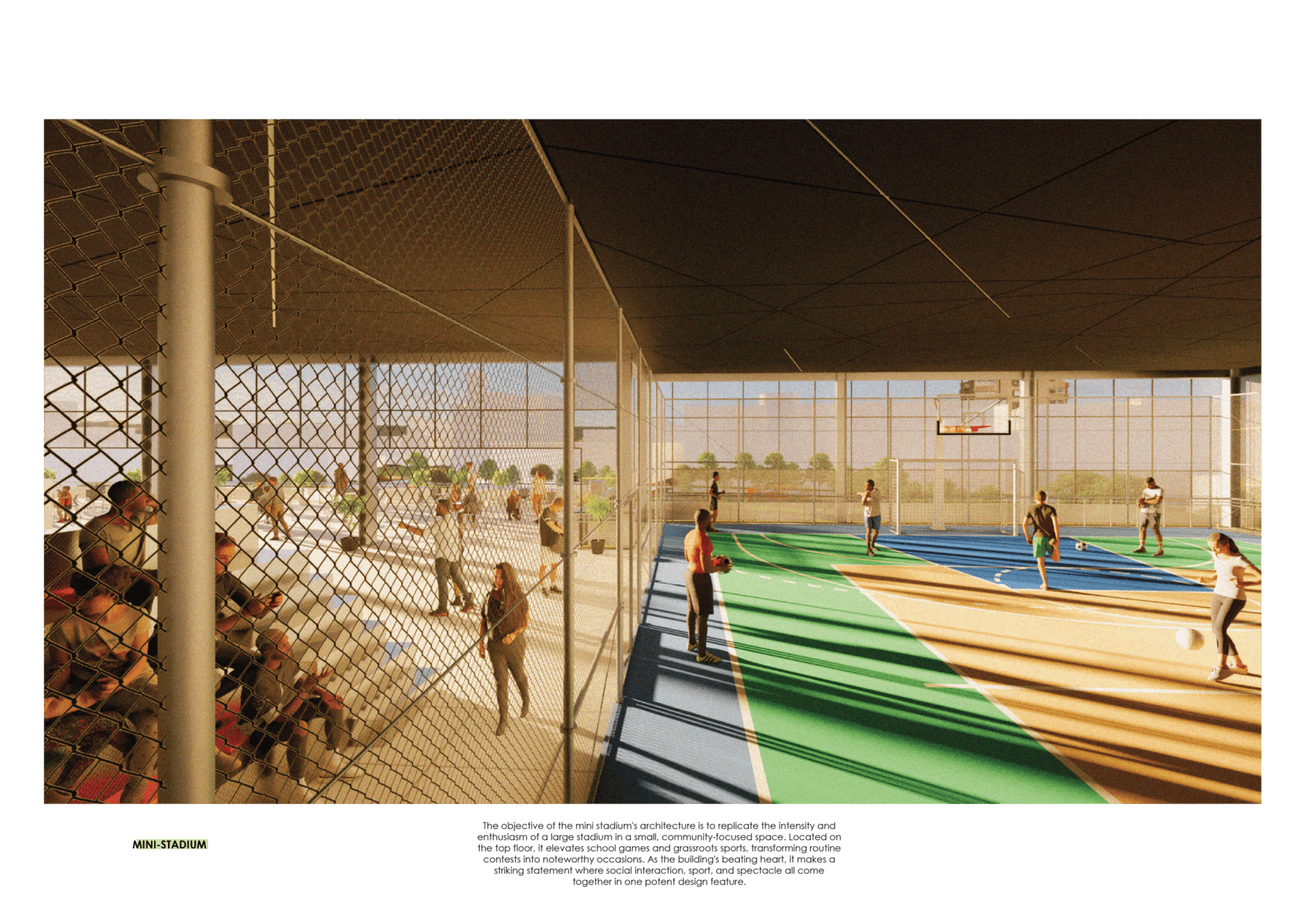
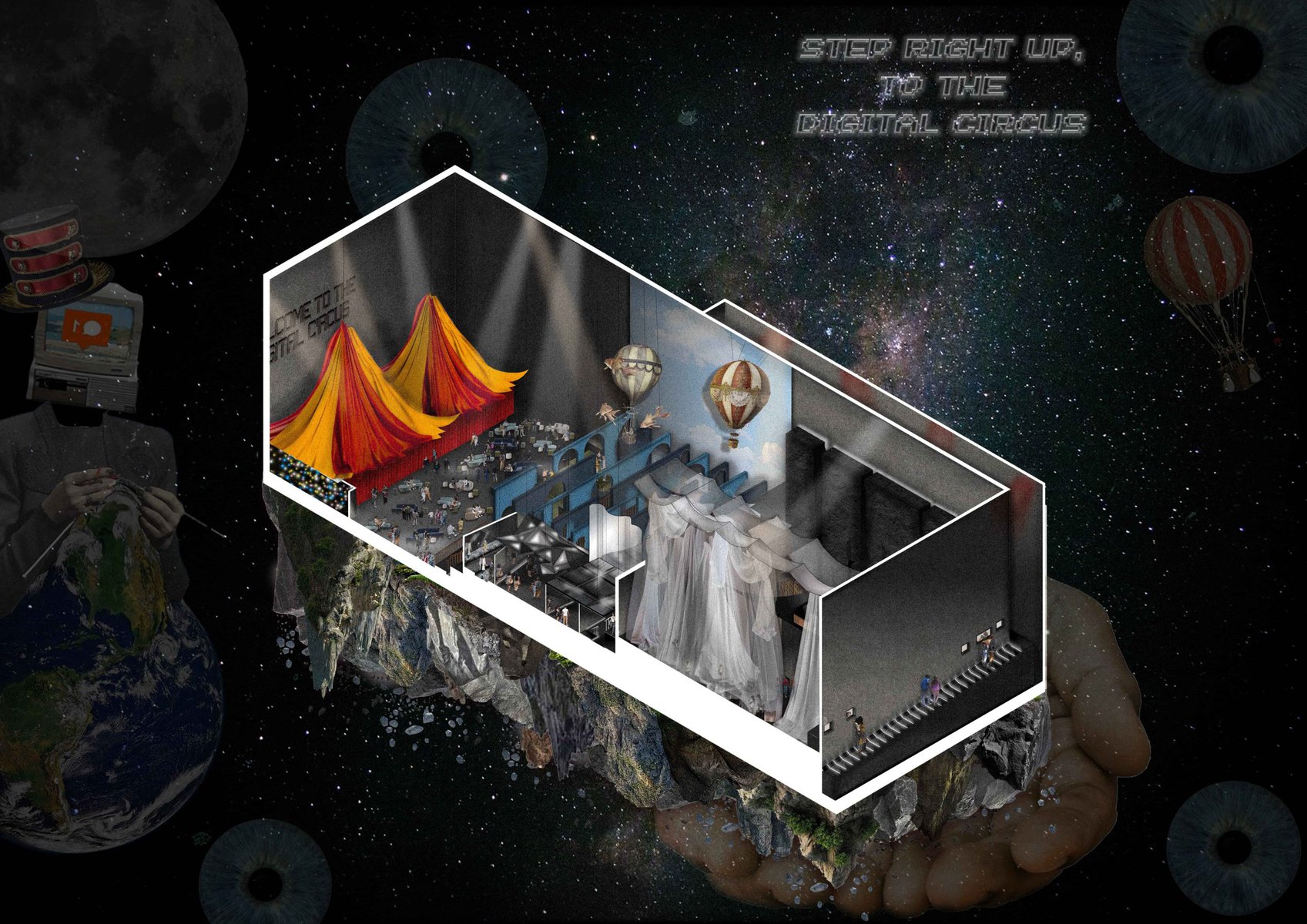
The project visuals show the relationship between sports activity, shared civic space, technical studies and atmosphere.


Project overview
Isaac graduated from Manchester School of Architecture with a Master of Architecture and received the LADSEC U+I Award for this thesis work.
The project combines multi-use sports facilities with secure, dignified communal spaces for gathering, learning and informal support. It is less about a single sports hall and more about architecture as a framework for everyday resilience.
What makes the regeneration idea useful
- Sports facilities create a clear reason for people to arrive and return.
- Communal space supports informal care, learning and connection.
- Indoor and outdoor activity are treated as part of one civic system.
- Material restraint keeps the proposal grounded rather than overdesigned.
- Technical diagrams help translate the social idea into a buildable project.
Technical evidence matters
The project evidence highlights Isaac’s use of detailed isometric diagrams and RIBA Plan of Work thinking. That matters because social-impact projects can become vague if they do not show how the architecture would be delivered.
His experience at Glancy Nicholls Architects also gives the work a practical edge, especially around construction process, client thinking and project stages.
Showcase a community regeneration project
Architecture Social can feature student work where social purpose, public space, sport, care or civic infrastructure are backed up by clear project evidence.
- Explain who the project serves.
- Show the programme and movement clearly.
- Prove the social idea with drawings, not only language.
- Include technical or delivery thinking where it strengthens the work.
Portfolio lesson
For Part II candidates, this is a useful reminder that social purpose has to be legible. A portfolio should make the community need, spatial response and technical method easy to follow.
Architecture Social view
Stephen’s recruiter view is that practices take socially minded work more seriously when it is specific. Name the user, show the evidence and explain how the design would actually support people.
Next step
Explore more student projects, browse Part II roles, or submit a community regeneration project.
If this project has made you rethink your own portfolio or next move, browse current architecture jobs or contact Architecture Social for a recruiter’s view.


Add a comment