
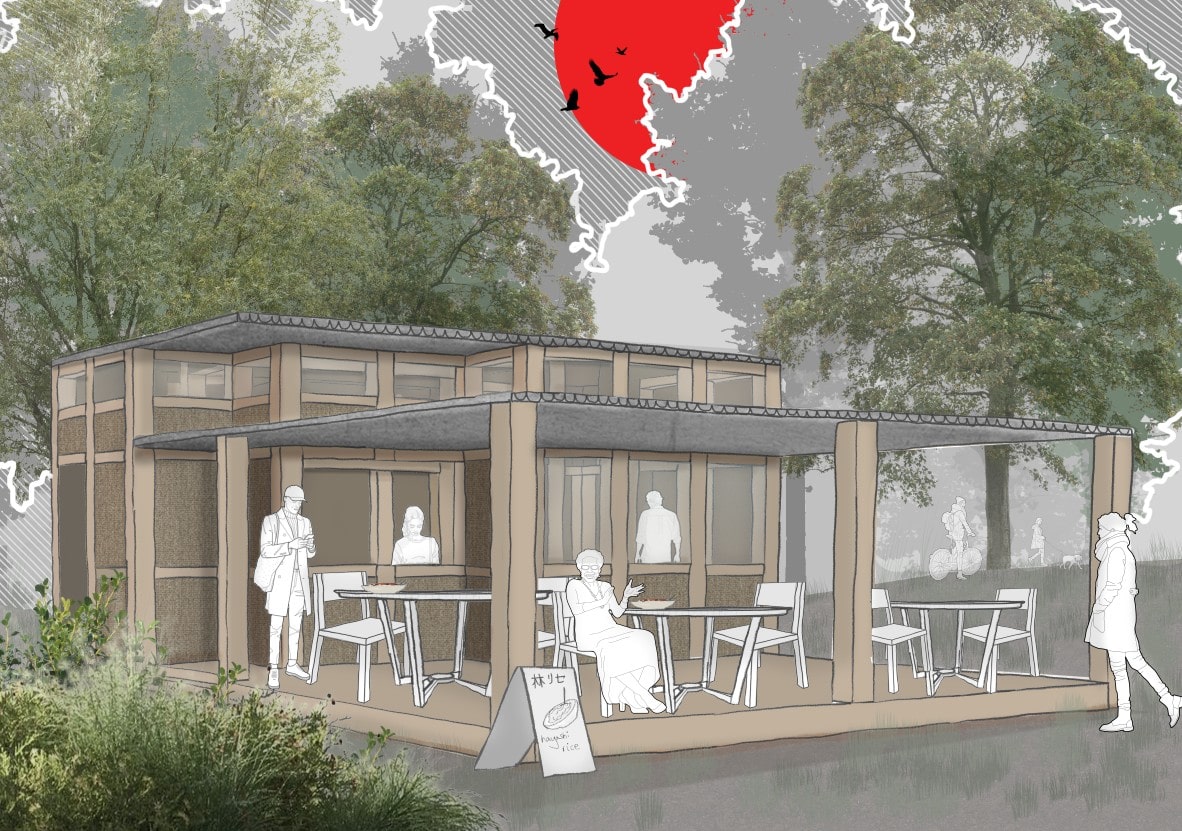
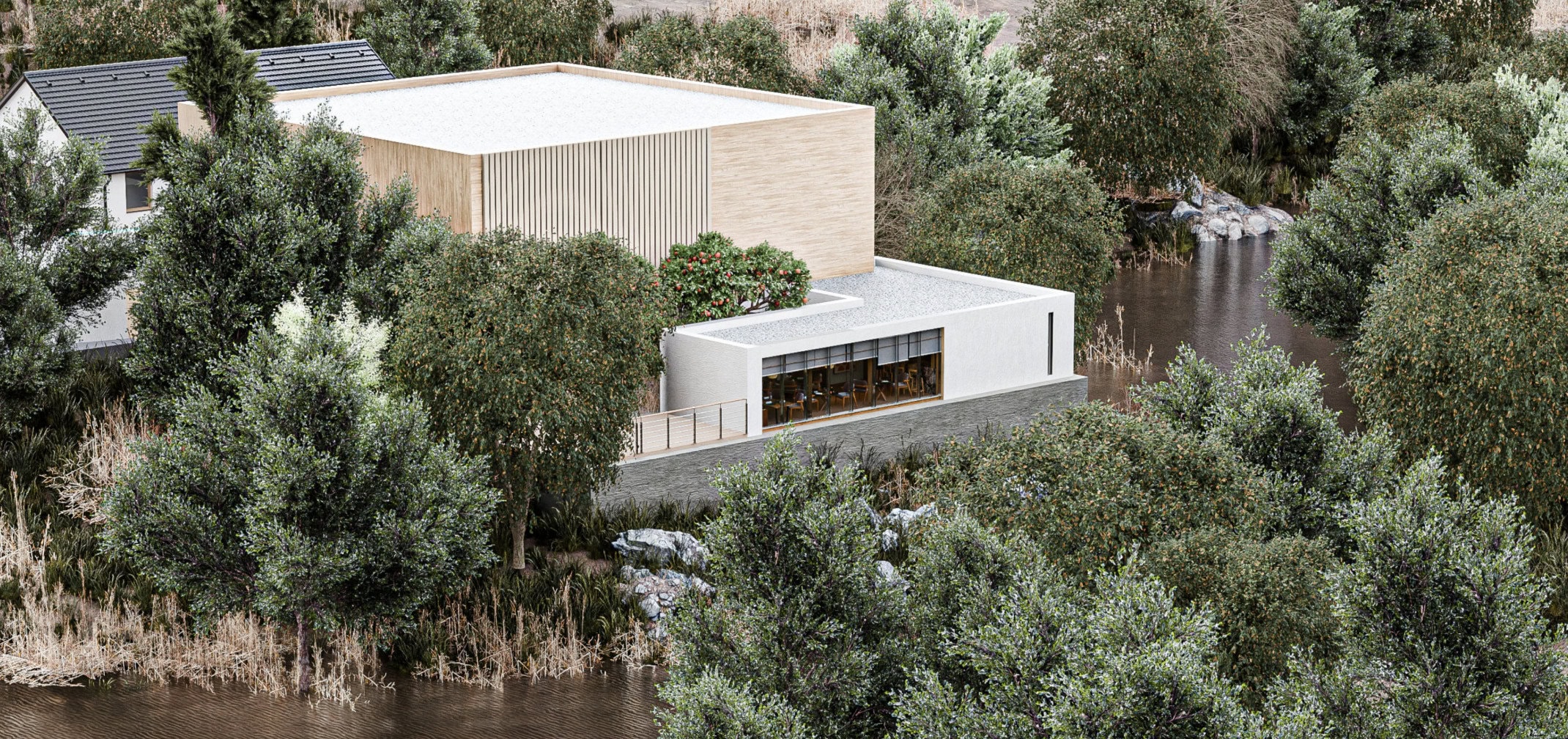
Sustainabowl Pavilion by Leilou Walmsley is a small sustainable timber pavilion built around Japanese joinery, biodegradable materials and the simple social act of sharing food.
The project works because the construction idea and the programme support one another. It is not sustainability as a label. It is a pavilion designed to be assembled, used, understood and eventually dismantled with care.
Japanese joinery as a sustainability idea
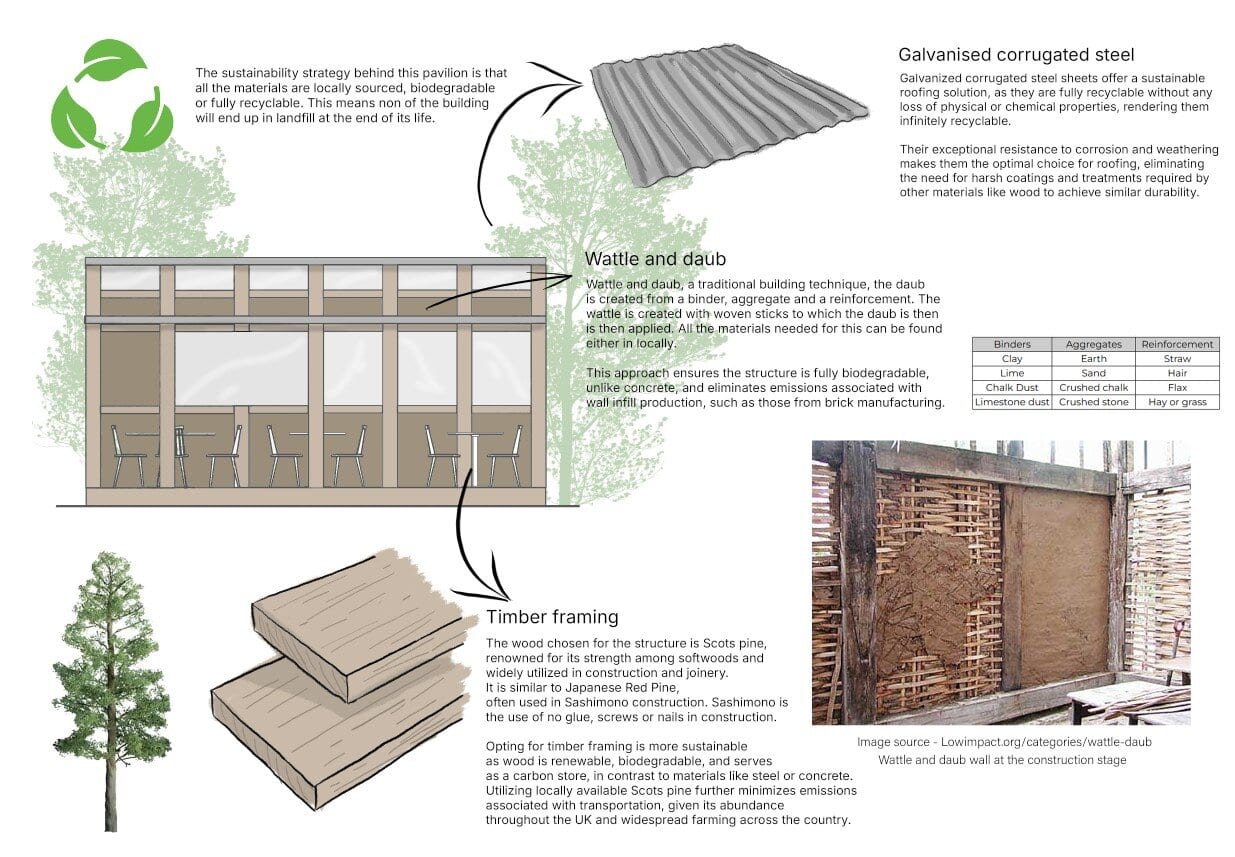
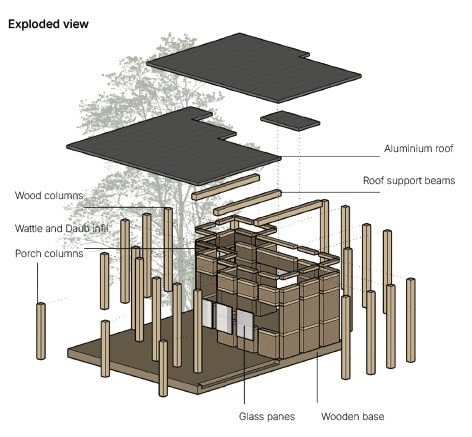
The project uses the Miyadaiku method, a Japanese craft tradition based on precise interlocking timber joints rather than glue, nails or screws. That matters because the building can be read through its assembly.
- Timber structure is expressed rather than hidden.
- Wattle and daub connects the project to earth-based construction.
- An aluminium roof introduces a recyclable contemporary layer.
- The pavilion is designed around food, gathering and temporary use.
Why the scale is useful
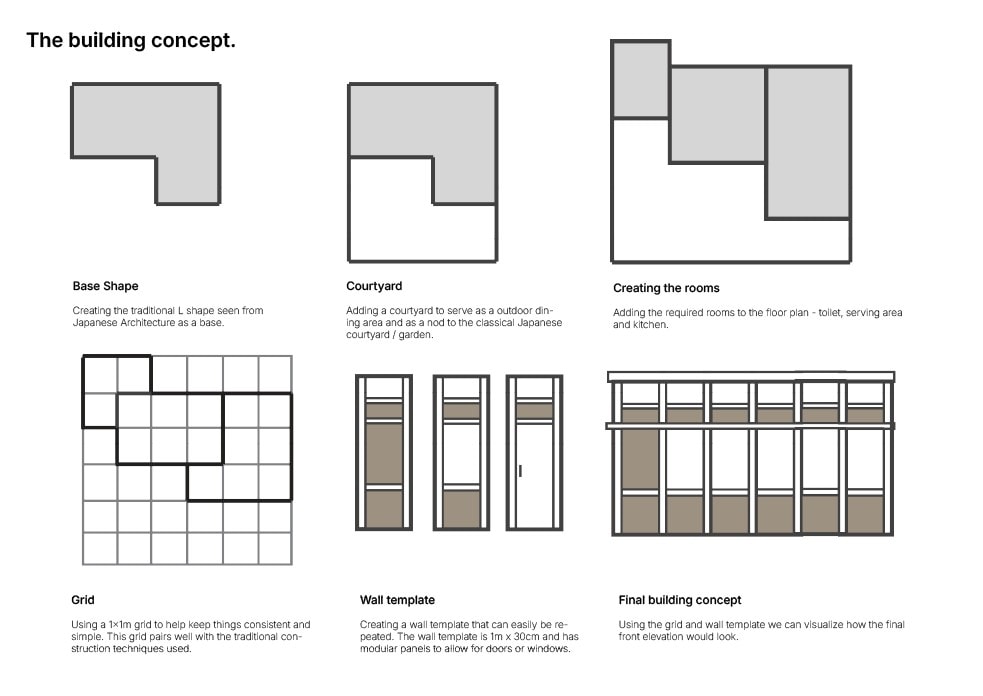
Small projects can be powerful because every decision is visible. In Sustainabowl, the joinery, wall build-up, roof and food programme all help the reader understand the same question: how can a temporary pavilion still feel careful and enduring?
Portfolio lesson
For students, this is a useful example of making sustainability specific. Instead of saying the project is sustainable, show the joint, the material, the lifecycle and the human use.
Show the construction idea clearly
If your project is about sustainability, make the evidence visible. Materials, details and assembly diagrams often say more than a broad statement.
- Name the construction method.
- Show how materials can be reused, recycled or returned to the earth.
- Explain the programme in simple terms.
- Use diagrams that make the assembly legible.
Next step
Submit your pavilion, material research or sustainable architecture project to Architecture Social Showcase if it has a clear design lesson.


Add a comment