
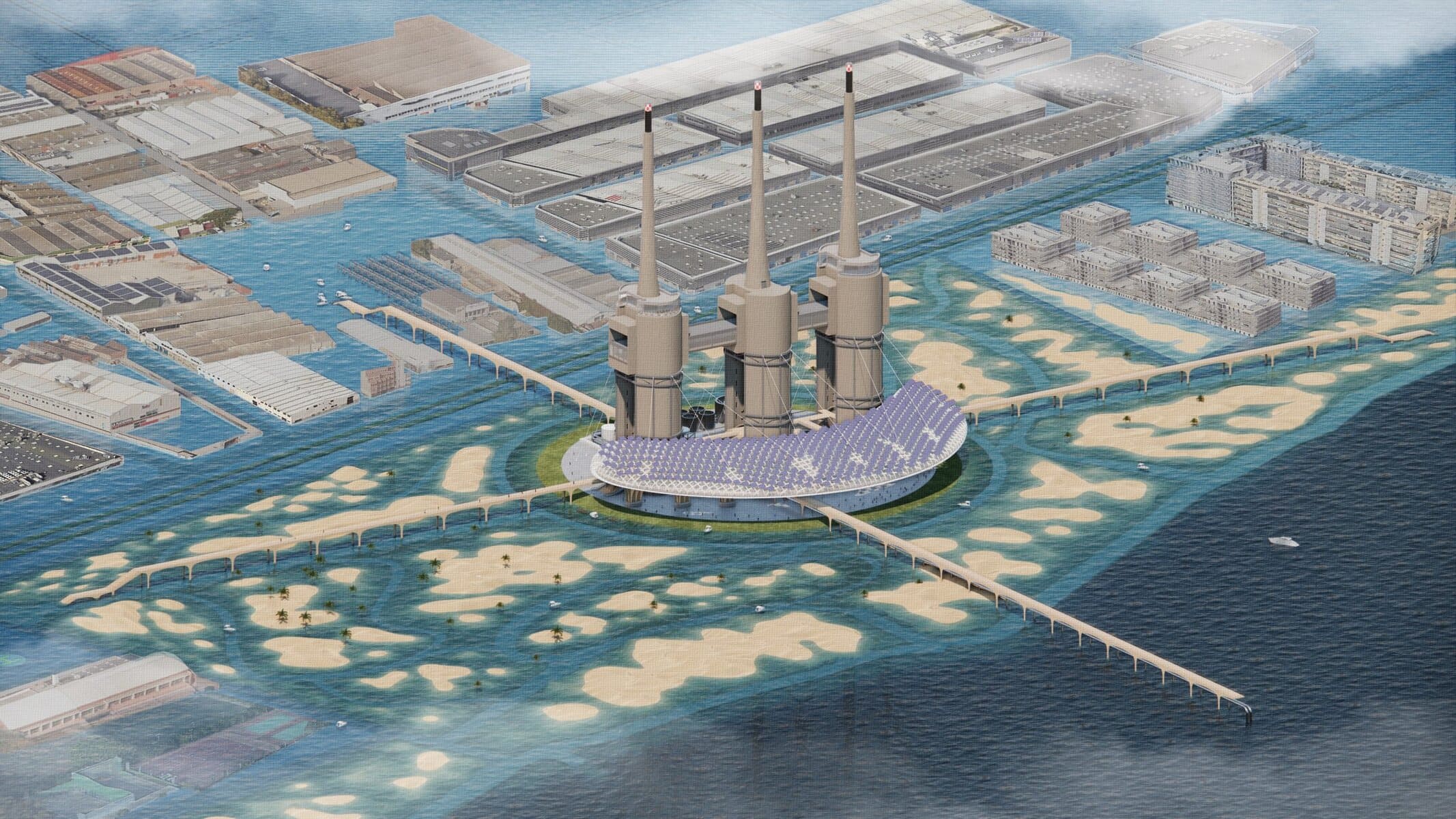
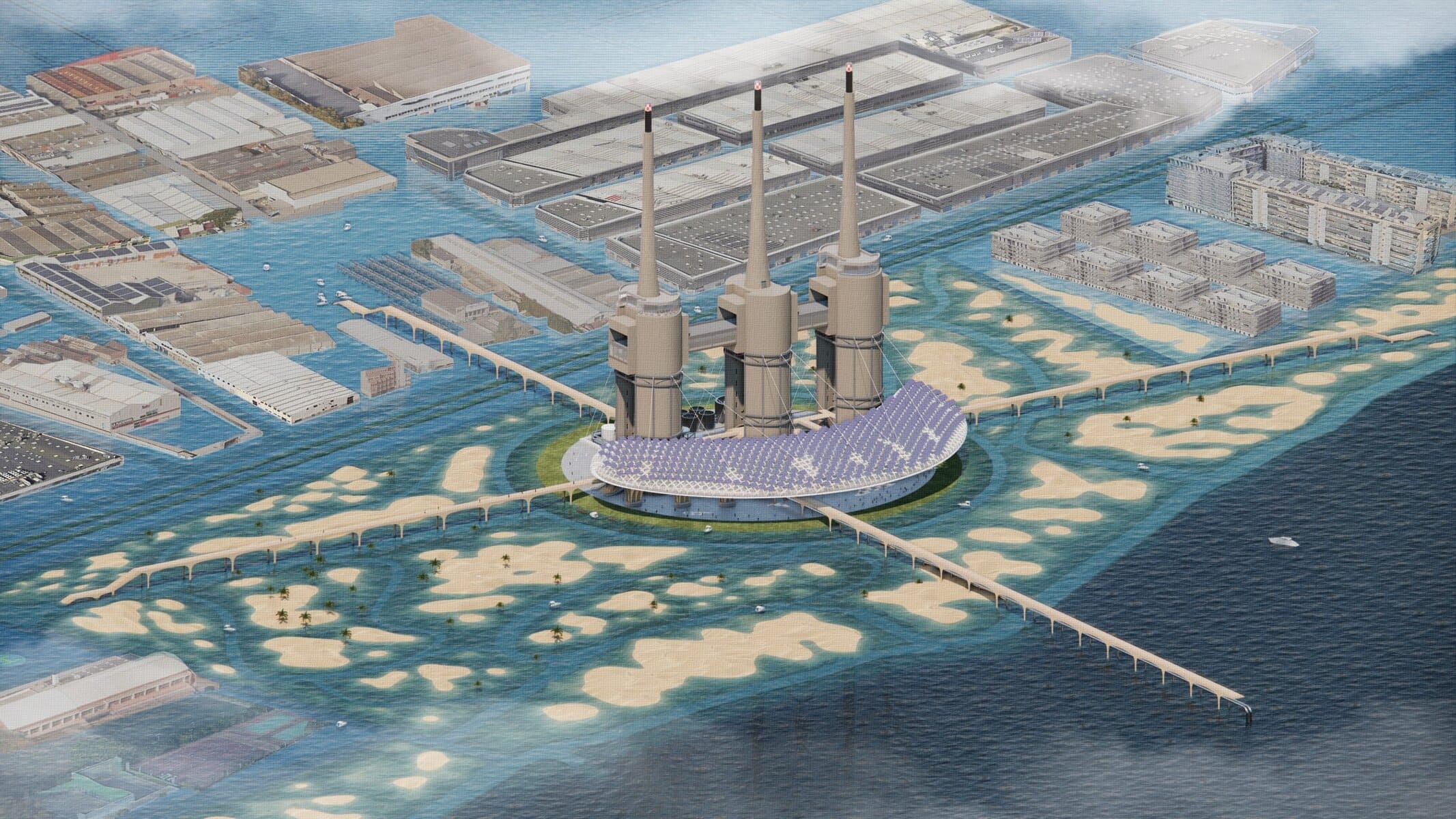
The Power Oasis by Harry Haodong Wu is an adaptive reuse project for Barcelona’s Tres Xemeneies, reimagining industrial heritage as ecological infrastructure.
The project is strong because it does not treat the existing chimneys as a nostalgic backdrop. It uses them as anchors for a future-facing botanical garden, solar desalination system and climate-resilience proposal.
Project gallery
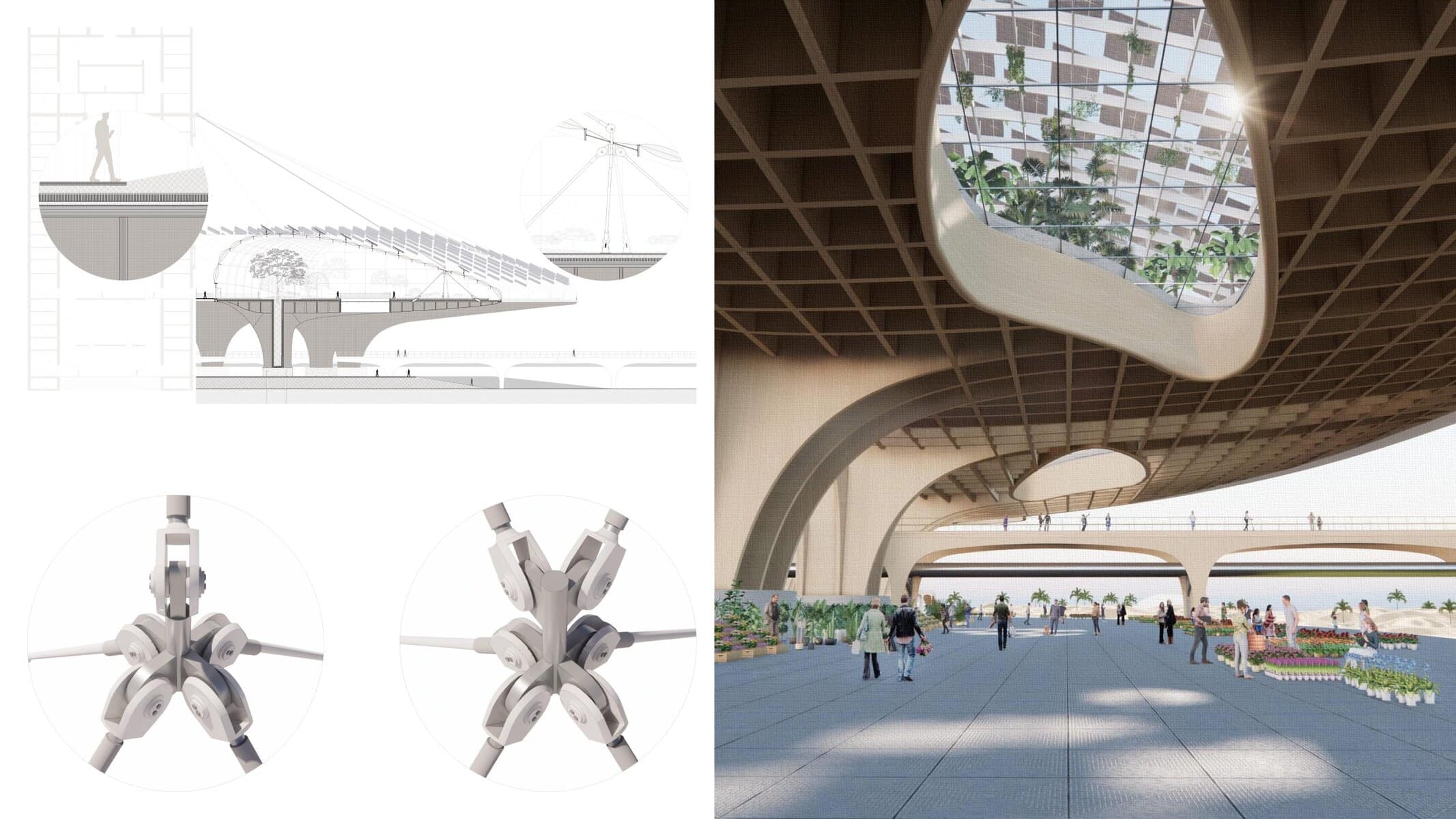
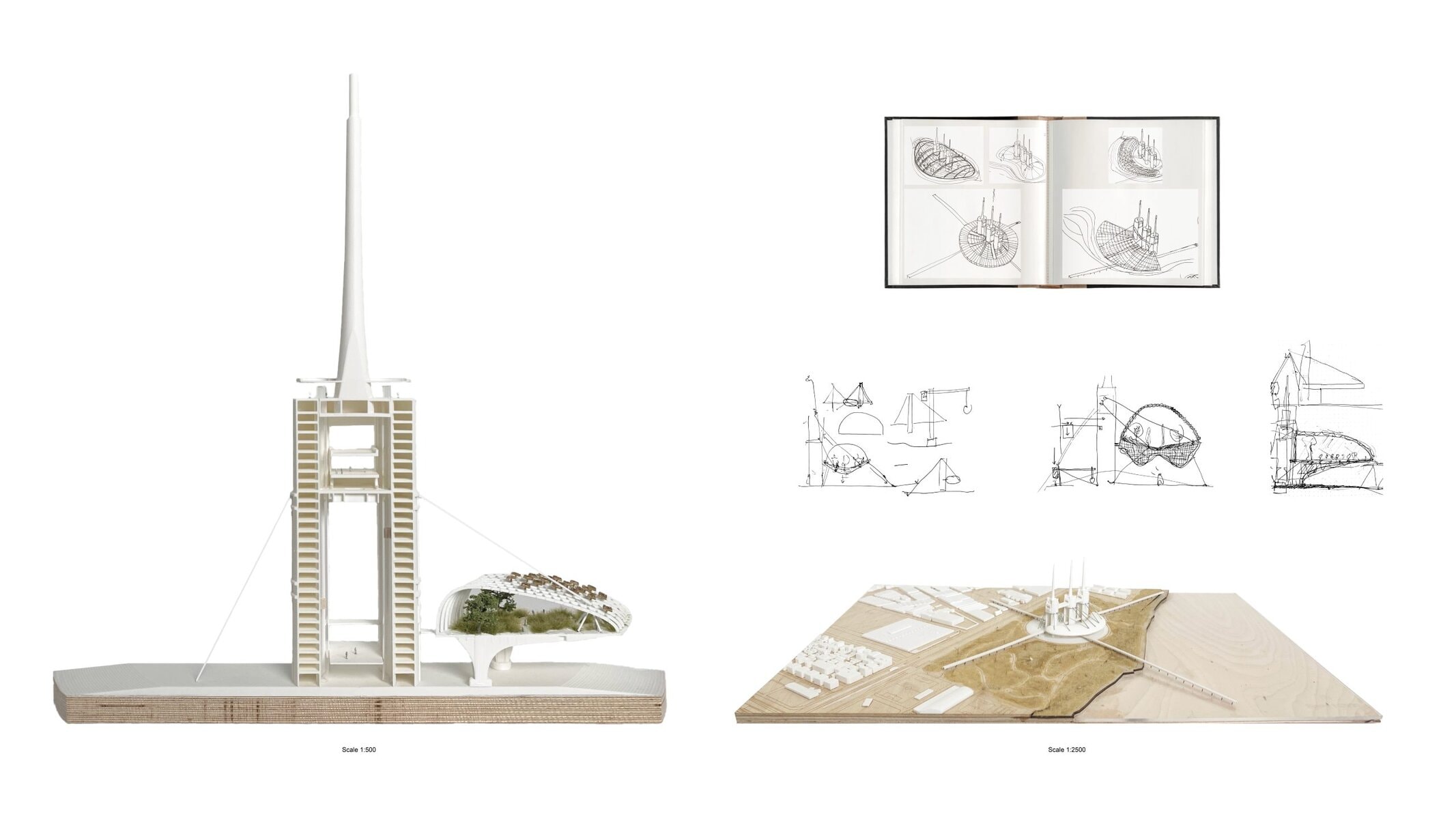
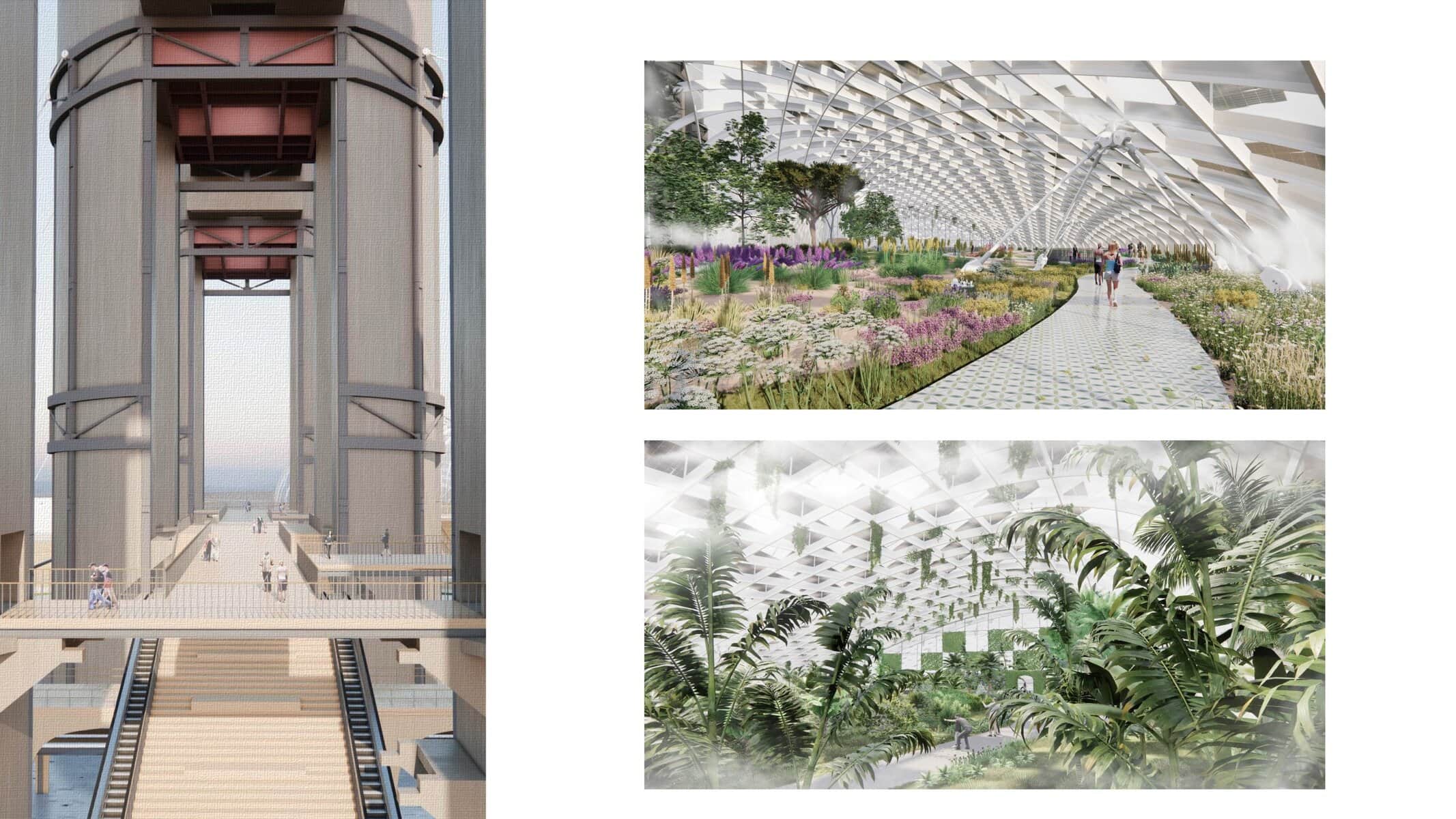
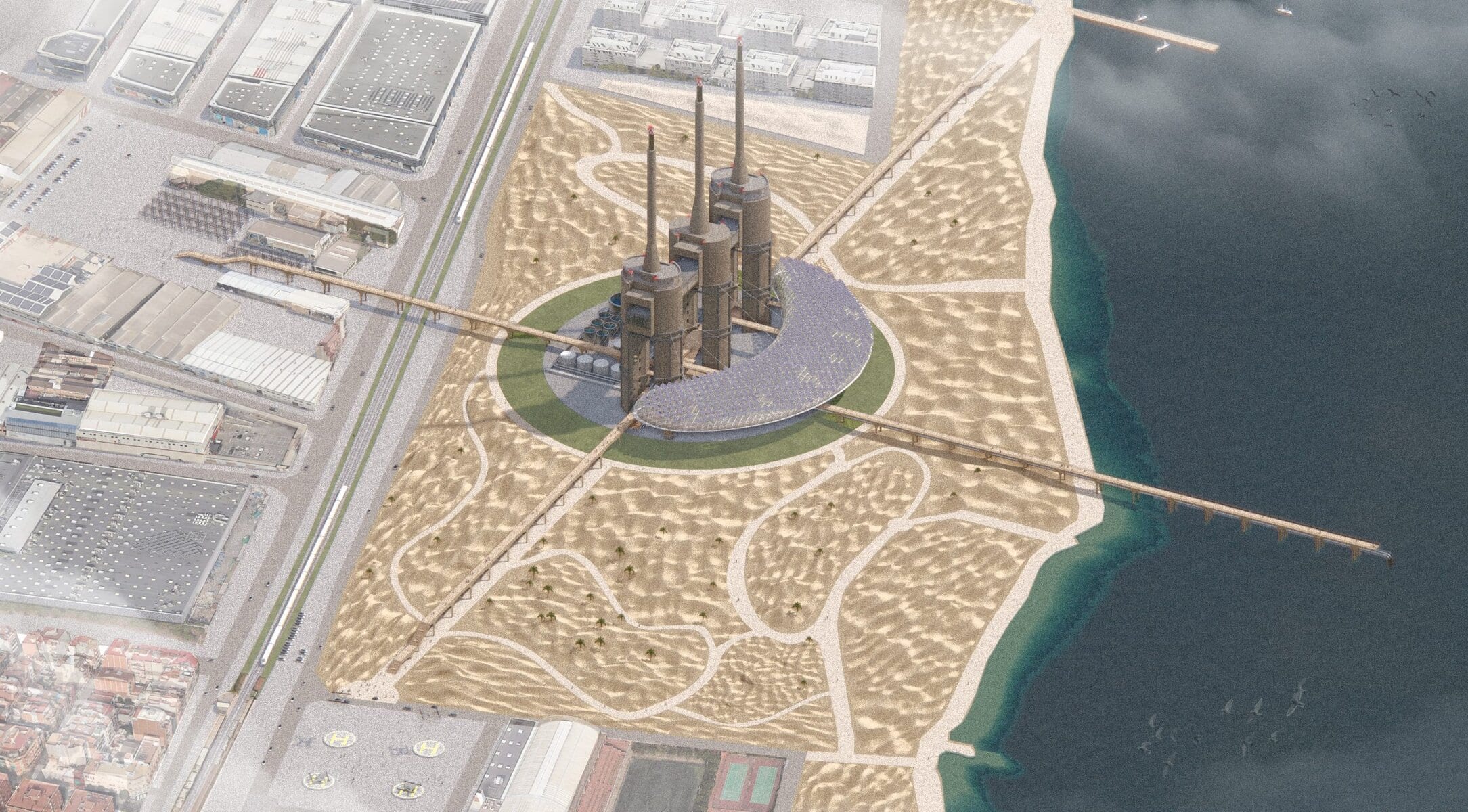
The gallery shows Harry Haodong Wu’s Power Oasis proposal, including the coastal power plant, civic plaza, model studies, gardens and aerial view.
Project overview
The original article describes The Power Oasis as Harry’s Part II thesis at the University of Westminster. The proposal works with the Tres Xemeneies, the Three Chimneys, a post-industrial landmark on Barcelona’s coastline.
Rather than erasing the site’s industrial past, the project imagines a new civic and ecological role: a botanical sanctuary powered by the sun, irrigated through desalinated seawater and focused on endangered native plant species.
Why adaptive reuse matters here
Adaptive reuse architecture is not just about saving old structures. In this project, reuse becomes a way to hold memory, reduce waste and create a new public role for infrastructure that might otherwise be left behind.
- The chimneys keep the industrial memory visible.
- New programme gives the site a future civic use.
- Solar desalination links energy, water and ecology.
- The botanical garden turns climate pressure into a public learning space.
Climate resilience as programme
The project imagines a near future shaped by drought, sea-level pressure and ecological loss. Its strength is that climate resilience is not a diagram sitting beside the building. It becomes the reason for the programme.
Showcase your adaptive reuse project
Architecture Social can showcase adaptive reuse projects when the existing building, new use and environmental value are clear.
- Explain the original building or infrastructure.
- State what value is being preserved.
- Show what new programme the site can support.
- Connect environmental benefit to actual design decisions.
Common mistakes
- Using heritage as scenery rather than a design driver.
- Ignoring the technical challenge of changing use.
- Talking about sustainability without explaining the mechanism.
- Forgetting public access and civic value.
- Overloading the project with systems the reader cannot understand.
Architecture Social view
Stephen’s recruiter view is that adaptive reuse is commercially and culturally important, but candidates need to explain the balance. What did you keep, what did you alter and what new value did the project create?
Next step
Explore more Architecture Social projects, connect with Harry Haodong Wu on LinkedIn or Instagram, use the portfolio guide to sharpen your adaptive reuse project story, or submit your own project.
If this project has made you rethink your own portfolio or next move, browse current architecture jobs or contact Architecture Social for a recruiter’s view.


Add a comment