

The Septet by Gregory Williamson explores a Jewish cemetery and memorial route through seven pavilions, procession, orientation and landscape.
The project is strongest when read as a journey. The architecture is not only a collection of objects, but a sequence of pauses, movement and reflection.
Project image

What the project proposes
Greg graduated from the University of Liverpool with First-Class Honours and developed The Septet as his final undergraduate project. The scheme is a Jewish cemetery and memorial spread over two sites across the River Mersey.
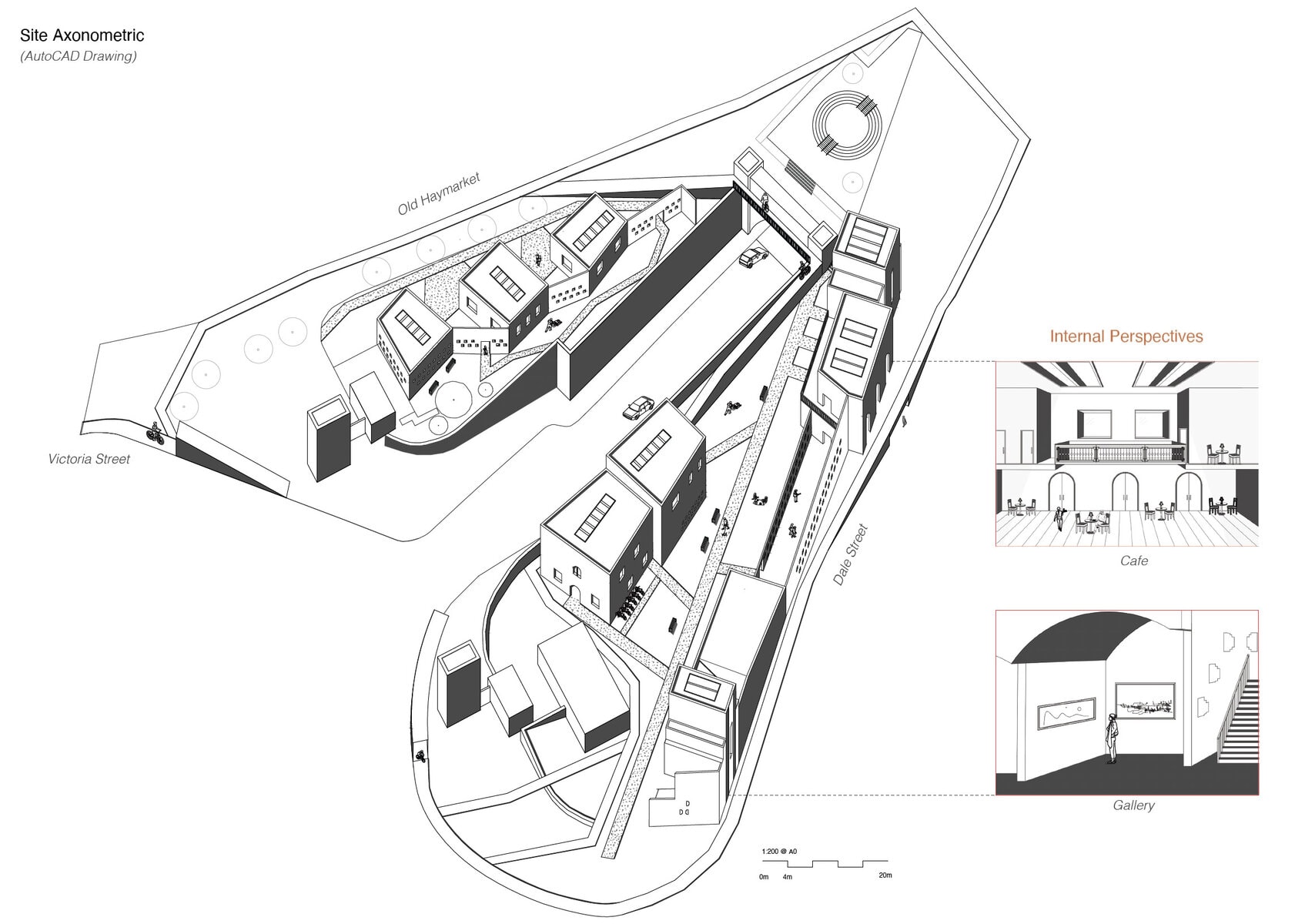
The project draws on the Jewish burial process, including easterly orientation towards Jerusalem and a processional route of seven stages. The pavilions become moments of pause where mourners can reflect, gather and move through the landscape.
Why the sequence matters
- Seven pavilions give the journey a clear rhythm.
- The landscape becomes part of the ritual, not just a setting.
- Material and light can support reflection without becoming theatrical.
- The project shows how research into practice and belief can shape spatial order.
Portfolio lesson
A procession-led project needs a clear map of experience. The portfolio should show the route, the pauses, the threshold moments and the emotional change between one stage and the next.
Showcase a narrative project
Architecture Social Showcase is useful for student projects built around ritual, movement, landscape or a strong spatial story.
- Explain the sequence before the detail.
- Show what each stage does for the user.
- Use drawings that make movement easy to follow.
Architecture Social view
Stephen’s recruiter view is that conceptual projects become more employable when the reader can follow the idea quickly. If the narrative is clear, the ambition feels controlled rather than abstract.
If this project has made you rethink your own portfolio or next move, browse current architecture jobs or contact Architecture Social for a recruiter’s view.




Add a comment