
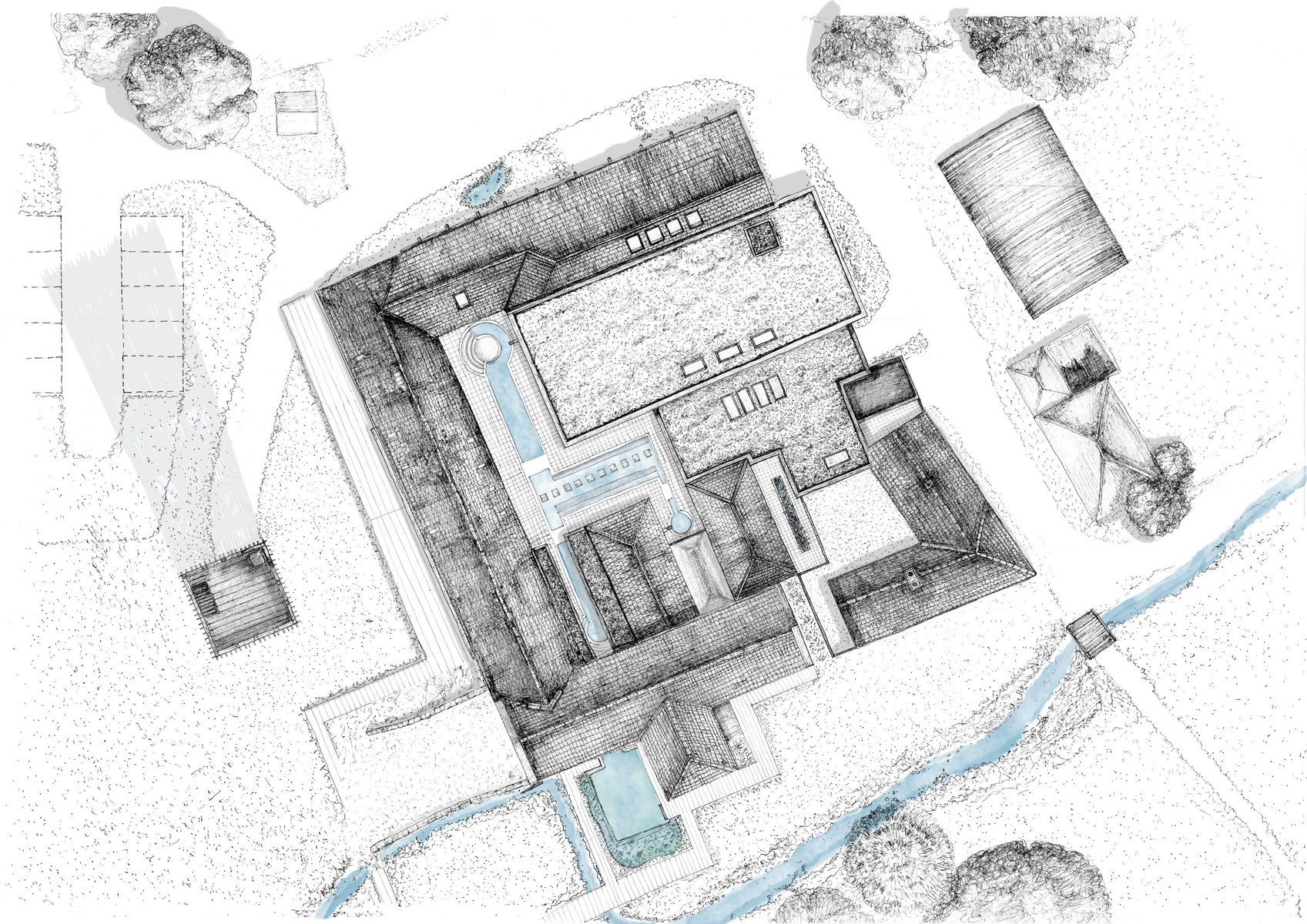
The Watershed Collective by Jasmin Solaymantash turns a historic Fife farm steading into a centre for water stewardship, learning and wellbeing.
The project is strongest when read through water. It treats water as infrastructure, landscape, education, atmosphere and public responsibility, rather than a hidden service pipe.
Project images

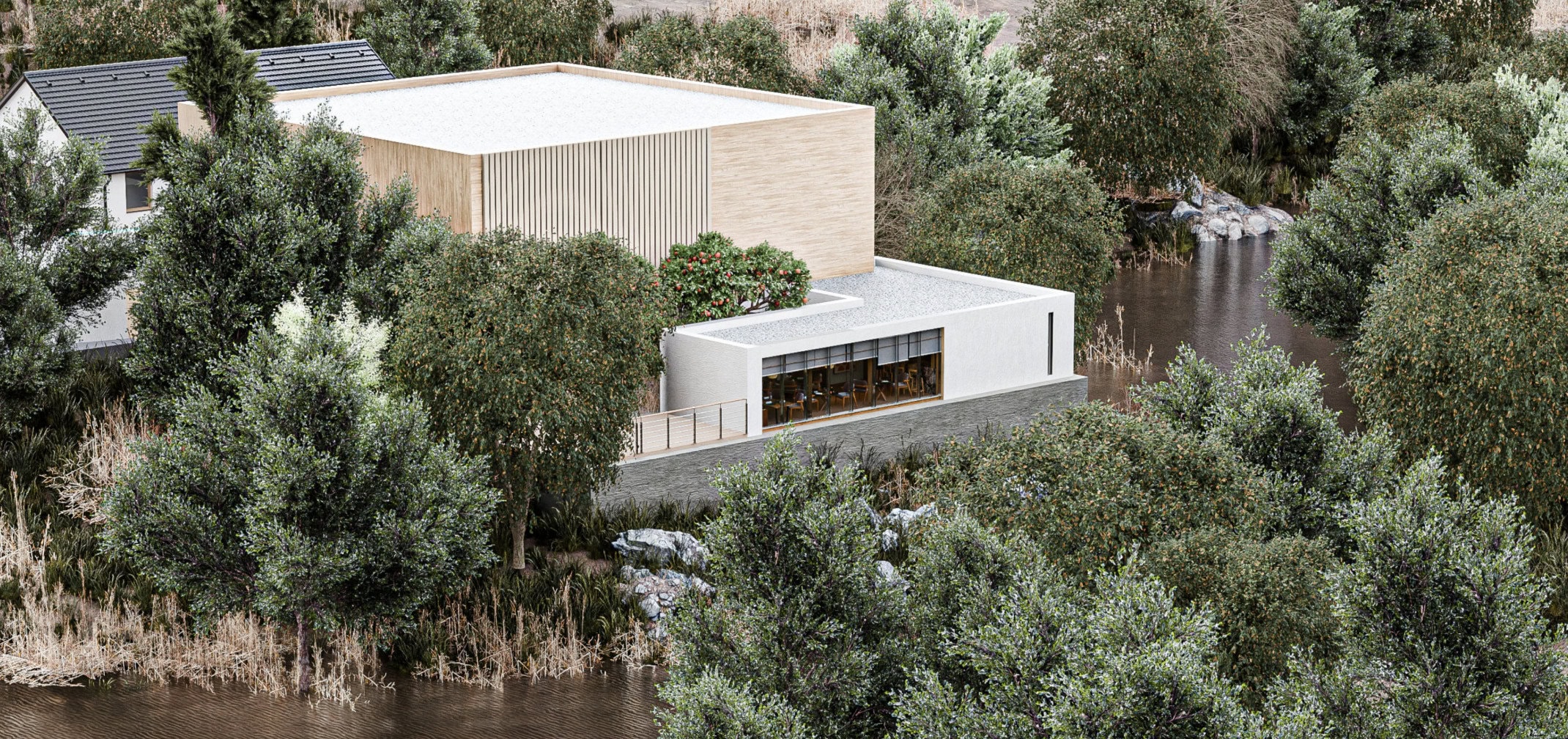

What the project proposes
Jasmin is an MArch graduate from Oxford Brookes University with professional experience in the built environment. Her thesis works with Kilgour farm steading near the headwaters of the River Eden, using the existing rural fabric as a base for a multidisciplinary centre.
The programme combines water stewardship, education, research, community activity and nature-integrated wellness. Instead of hiding environmental systems, the project makes water visible through courtyards, rills, drainage, cooling and landscape routes.
Why the design idea matters
- It reuses rural buildings instead of treating the site as blank land.
- It makes water a public learning tool.
- It connects climate adaptation with wellbeing and community use.
- It gives the thesis a clear environmental argument that can be shown through drawings.
Portfolio lesson
Regenerative projects need clear evidence. A portfolio page should show the site condition, water movement, material strategy, user journey and the practical reason each environmental move exists.
Showcase a regenerative project
Architecture Social Showcase is a useful place for student work that links climate, reuse, community and environmental systems.
- Explain the environmental system simply.
- Show the human experience as well as the technical logic.
- Use drawings that prove the project can be understood beyond the studio.
Architecture Social view
Stephen’s recruiter view is that regenerative design is more convincing when the candidate can explain the system without overcomplicating it. The reader should leave knowing what the project does and why it matters.
If this project has made you rethink your own portfolio or next move, browse current architecture jobs or contact Architecture Social for a recruiter’s view.


Add a comment