
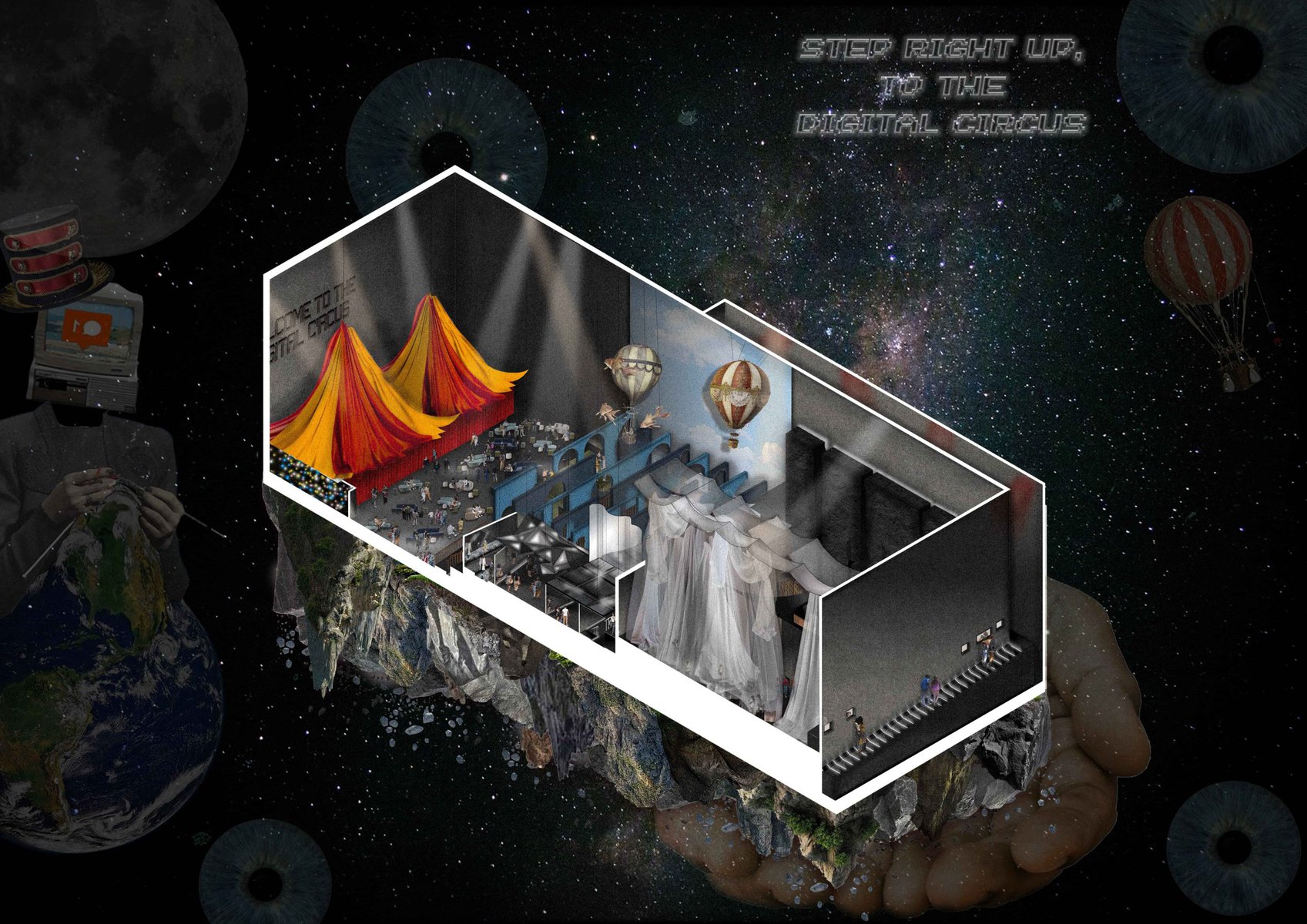
Samantha Cutler’s The Digital Circus explores how social media turns identity into performance, and how architecture can make that performance physical.
The project is useful because it does not treat digital culture as a flat screen issue. It turns the anxiety, theatre and distortion of online life into spaces that people move through.
Watch: Architecture Social video
This Architecture Social video adds useful context before the practical guidance below.
As digital identity architecture, The Digital Circus is less about technology as equipment and more about how online behaviour changes the way people perform themselves.
A spatial critique of digital identity
The Digital Circus uses the language of spectacle to ask a serious question: when we are constantly seen, scored and mirrored online, who is performing and who is watching?
- The Ringmaster represents attention-seeking personas and control.
- The Contortionist reflects shifting online identities.
- The Juggler captures the pressure of balancing digital and physical life.
- Reflective materials and distorted surfaces make the visitor part of the critique.
- The circus setting turns social media behaviour into something theatrical and uncomfortable.
Why the idea is memorable
Samantha describes the ambition as breaking the barrier between observer and performer. That is the sentence that makes the project easy to grasp. The visitor is not outside the spectacle. They are implicated in it.
That clarity matters in a portfolio. Speculative projects can become hard to read when the concept stays too private. Here, the circus metaphor gives the reader a way into the work.
Making the digital physical
The project uses polished metals, reflective acrylics, partitions, light, projection and sound to translate digital behaviour into a physical environment.
Samantha’s model-making recognition also matters because this kind of project depends on craft. The proposal has to persuade through atmosphere, material testing and the physical experience of the installation.
Follow the project and designer
The project has a strong visual and portfolio angle, so the external routes are useful if you want to see more of Samantha’s work.
Architecture Social view
Stephen’s recruiter view is that abstract work still needs a clean explanation. If the idea is unusual, the portfolio has to work harder to give the reader a handle: the theme, the experience and the evidence.
Showcase a speculative architecture project
If your project deals with identity, digital culture, installation or performance, make the concept readable without draining the work of its edge.
- Give the reader one clear sentence that explains the idea.
- Show how the concept becomes space, material and sequence.
- Use captions to explain unusual imagery.
- Keep the craft visible, especially models, tests and physical details.
Next step
Browse more project showcases, read the portfolio guide, or submit your own architecture project.



Add a comment