
Description
Third Avenue is a medium-density urban infill development of 27 two and three storey townhouses in Adelaide, South Australia. It was named Best Medium Density Development in South Australia at the 2020 UDIA Awards and received a Commendation for Residential Architecture (Multiple Housing) at the 2021 SA Architecture Awards.
Studio Nine Architects were engaged to prepare a staged masterplan and yield study after an amalgamated site was rezoned to lift density in a metropolitan area. The site itself was the central challenge. Its boundaries met a major arterial road, a character residential zone, commercial tenancies with car parking, and an overgrown culvert, so the context shifted in both scale and nature around the perimeter. Bulk was concentrated on Anzac Highway as two apartment buildings that screen the lower-scale homes within the centre and edges of the site from traffic and noise. A large central gum tree was retained as a focal point that threads the scheme together.
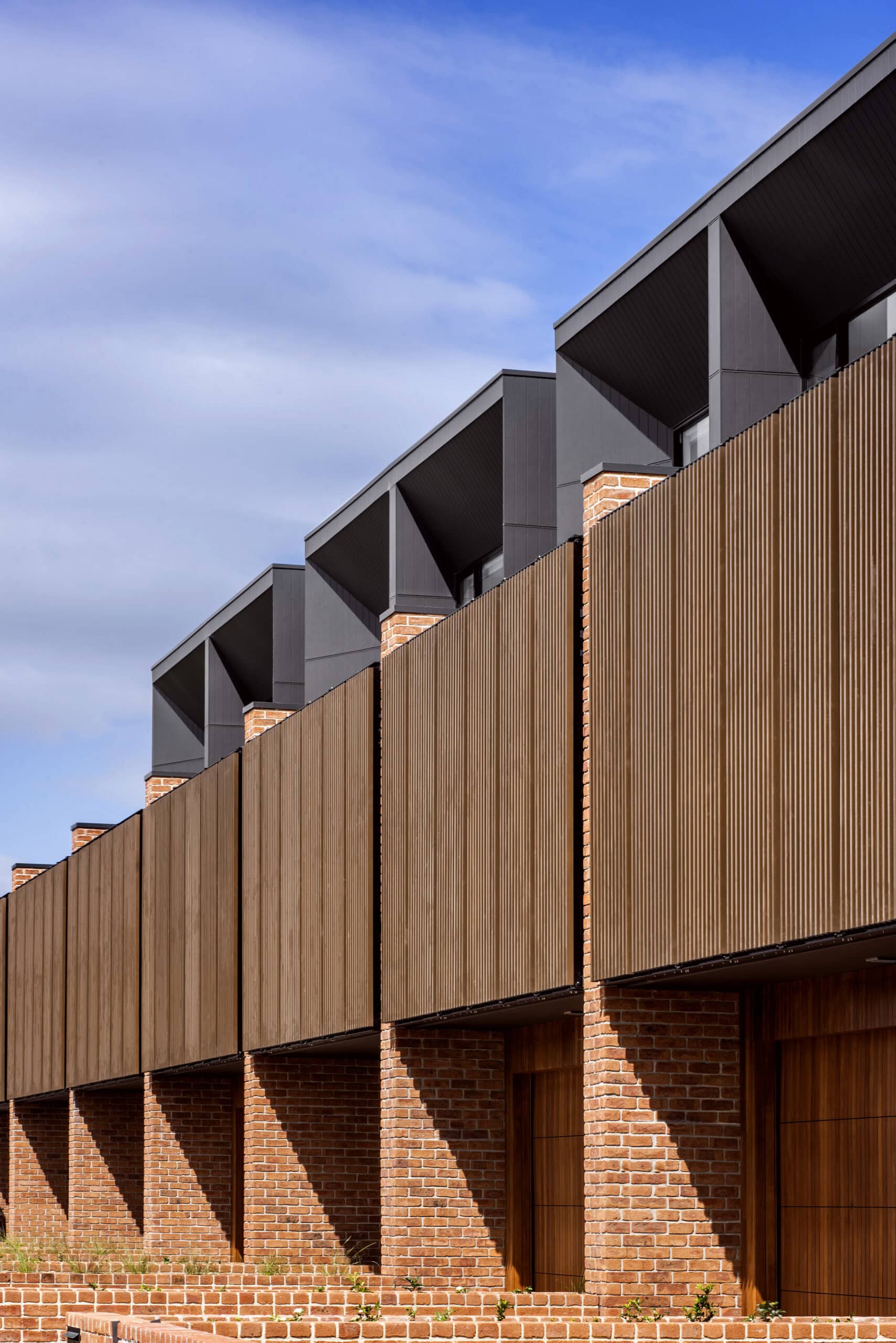
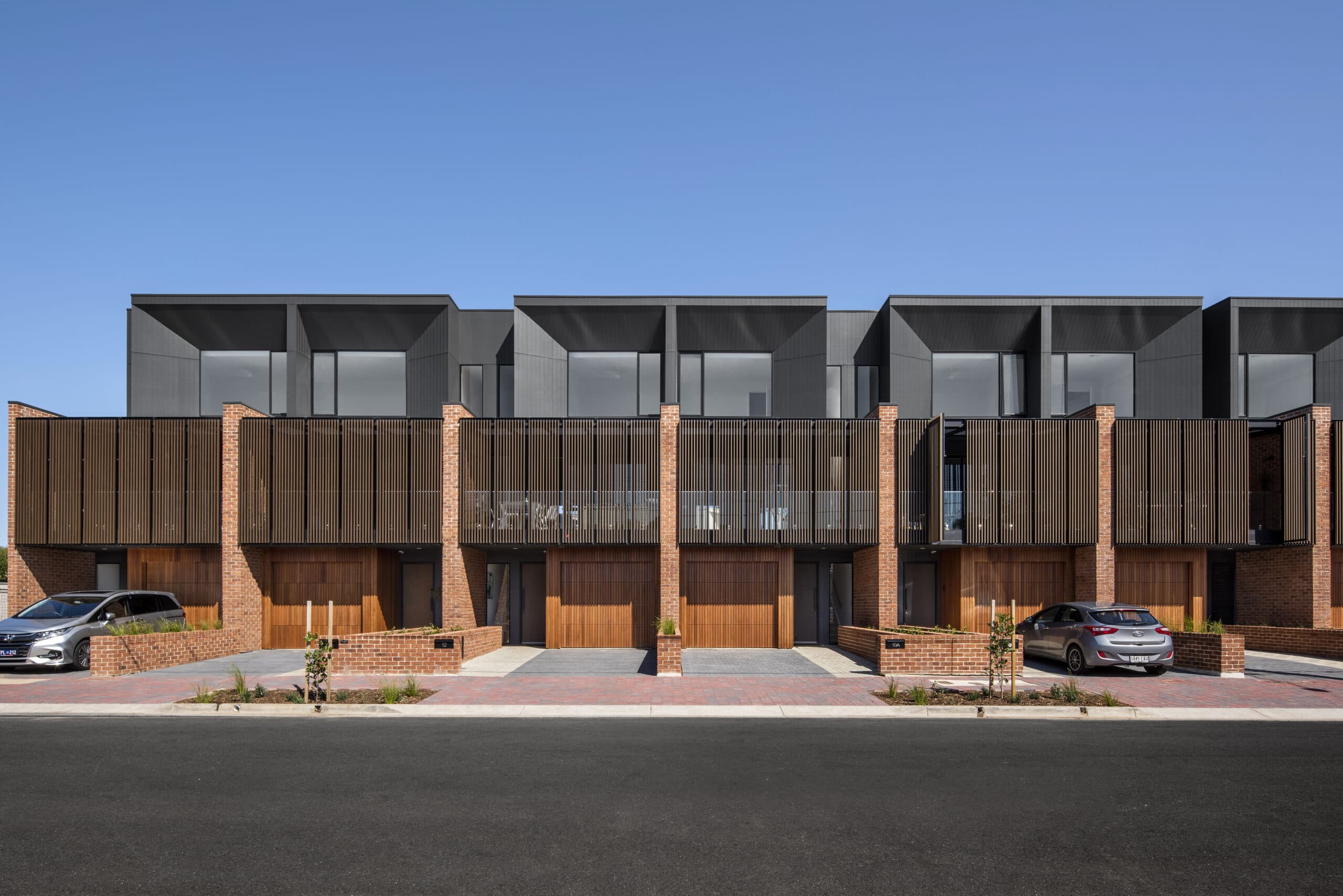
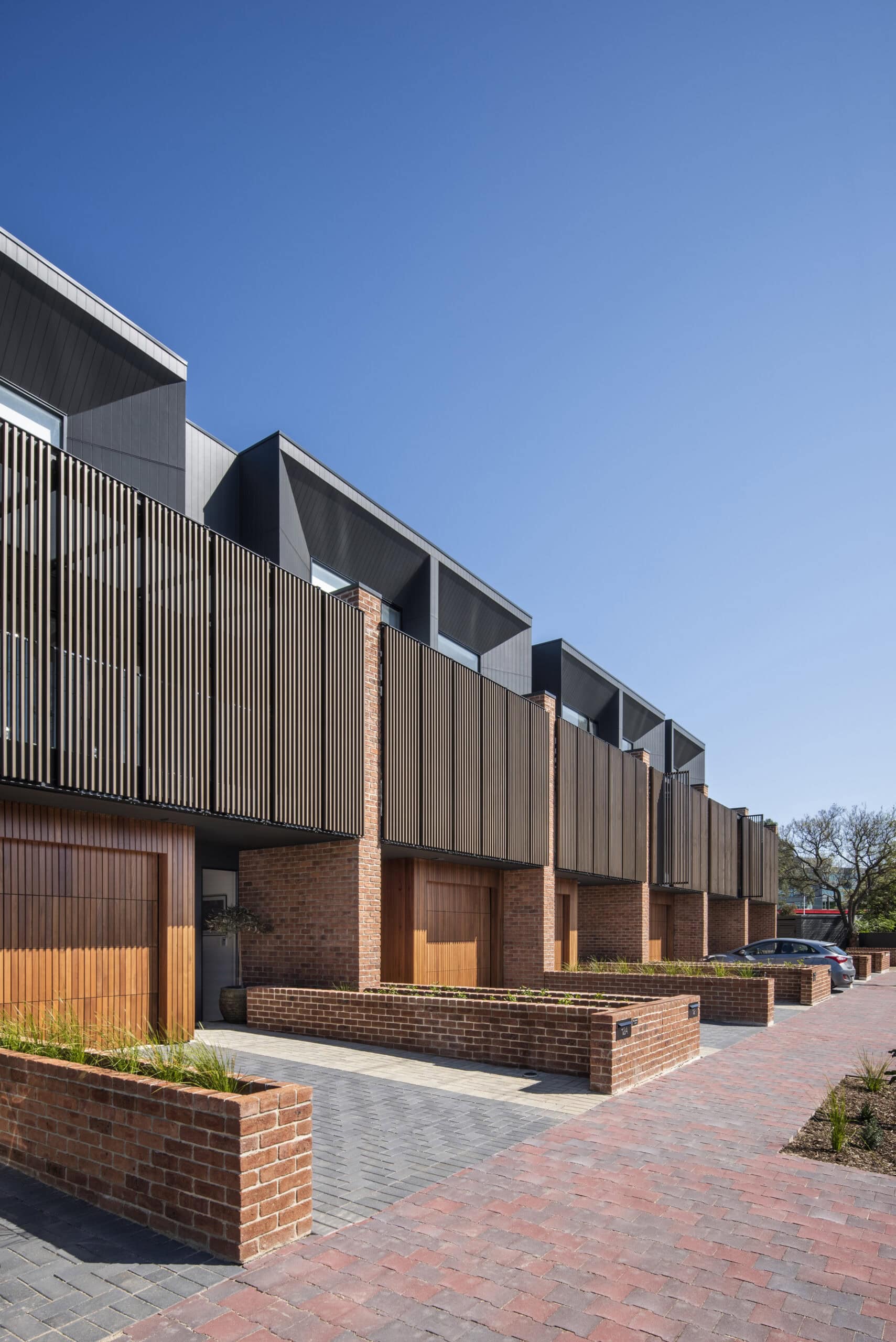
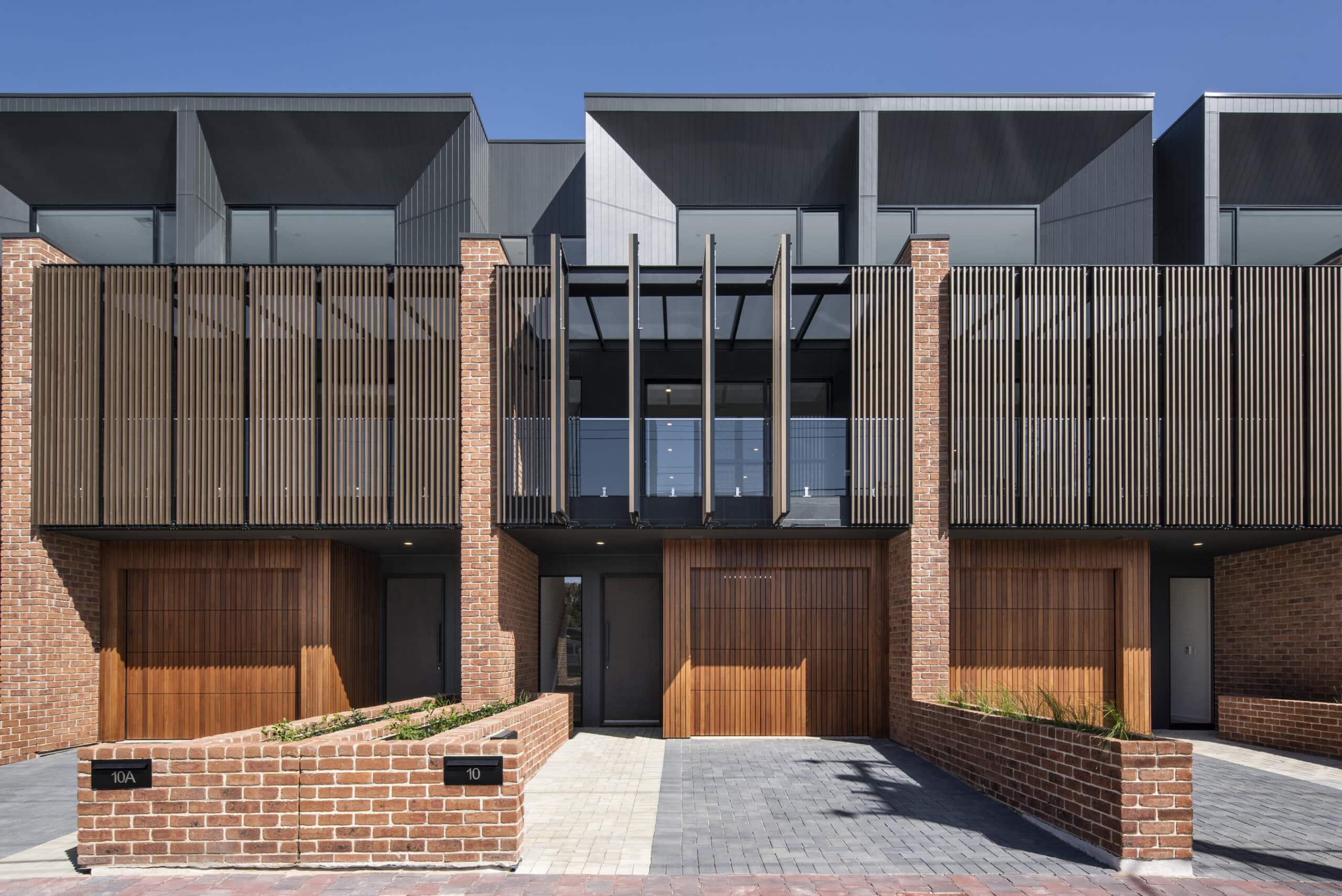
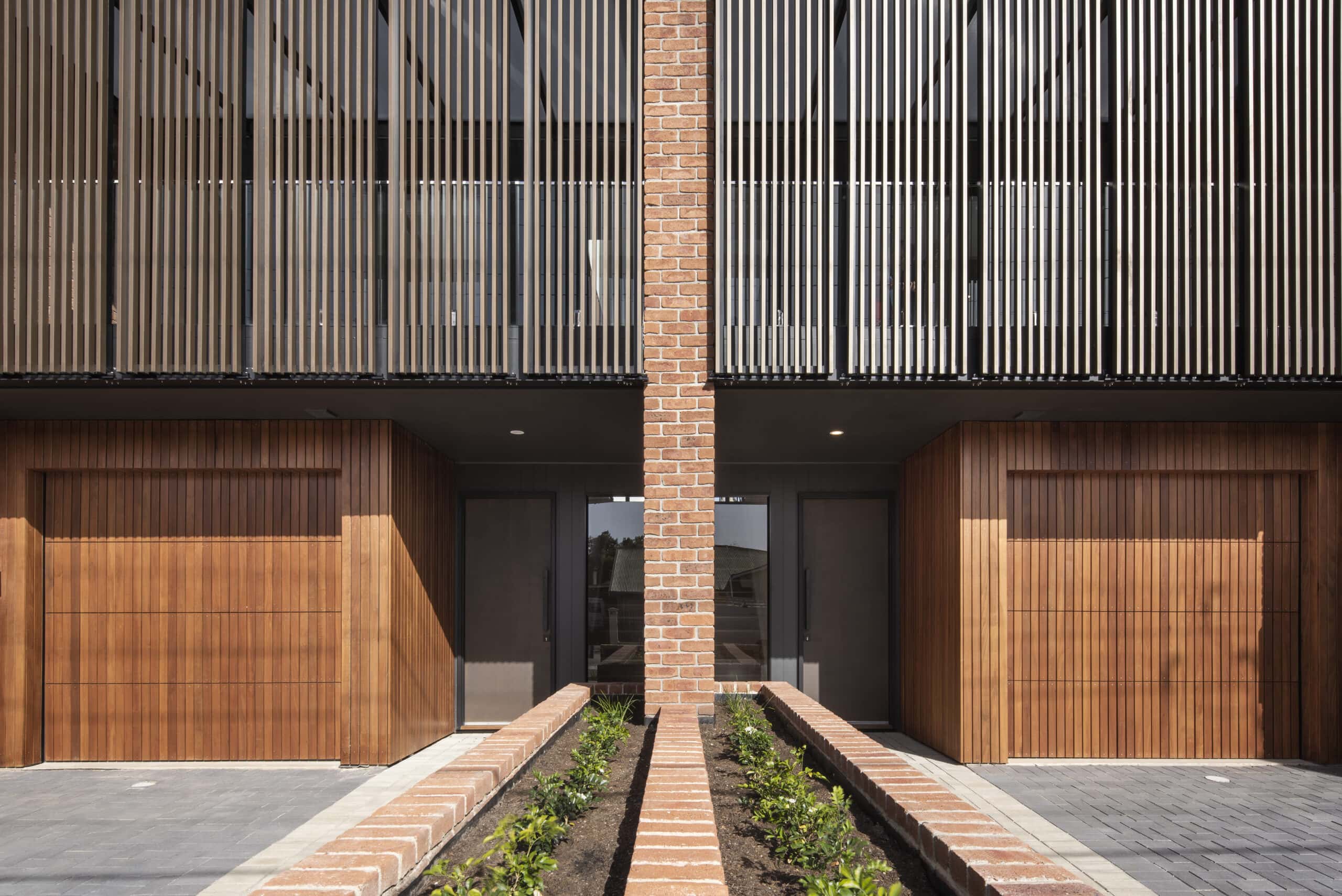
These moves produced three distinct character zones and a family of buildings that read as related yet individual. The palette is deliberately restrained across every dwelling. Brickwork grounds the homes and gives a finer, tactile grain at street level, while lighter upper levels carry large areas of glazing accentuated by a shared splayed window detail. Timber screens and mesh balustrades add warmth and blur the line between public and private.
The masterplan links surrounding sites through pedestrian permeability rather than leaving the usual residual spaces. Brownhill Creek was placed underground to open a landscaped linear corridor and bikeway between Goodwood Road and Anzac Highway, water sensitive design was handled through rain gardens connected back to the creek, mature trees were retained, and every roof was designed to carry solar panels, taken up by 90 per cent of residents. Pocket parks are distributed through the development and clear routes connect residents to shops and public transport.
Early masterplan options could have yielded more dwellings, but client and architect chose to balance revenue against value, reducing the count to protect passive design, generous glazing, material quality, built-in joinery and competitive home sizes and prices. The builder, Centina, contributed buildability advice through design workshops during documentation, which protected the design intent and reduced variations. Four typologies, named Birch, Linden, Ash and Elm, offer legibly different forms of living that drew first home buyers, downsizers and families. The development sold fully off the plan six months before completion.
Project size 4,854 m2 on a 4,452 m2 site, three levels, completed 2020.
Architecture and interior design by Studio Nine Architects. Photography by David Sievers.
Gallery
Company

Industry
Sector
Details
- Project Size: 4854 m2
- Building Levels: 3
- Project Budget: USD 7,000,000
- Completion Date: 2020
- Photographer: David Sievers
Region
Discuss


