Description
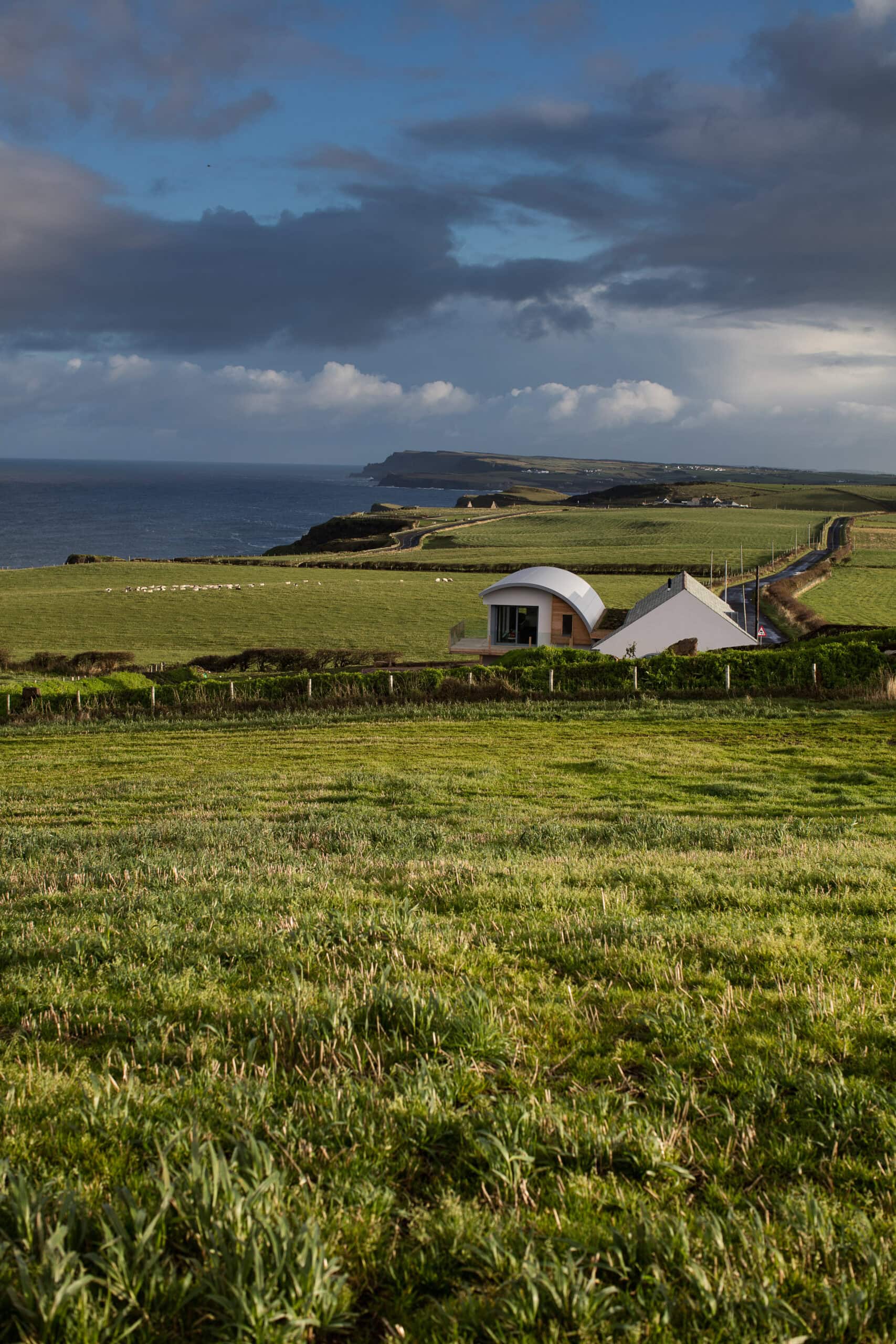
Ballymagarry House is a sustainable rebuild of a derelict blacksmith's forge and the ruins of its attached cottage, sitting on the edge of a country road on the North Antrim Coast. 2020 Architects retained as much of the original forge as possible and used the rebuilt ruined cottage as a visual barrier, with a modern, highly glazed, curved-roof living block tucked behind. The two gabled forms read as a pair of agricultural shapes familiar across the Irish countryside, anchored in the local vernacular.
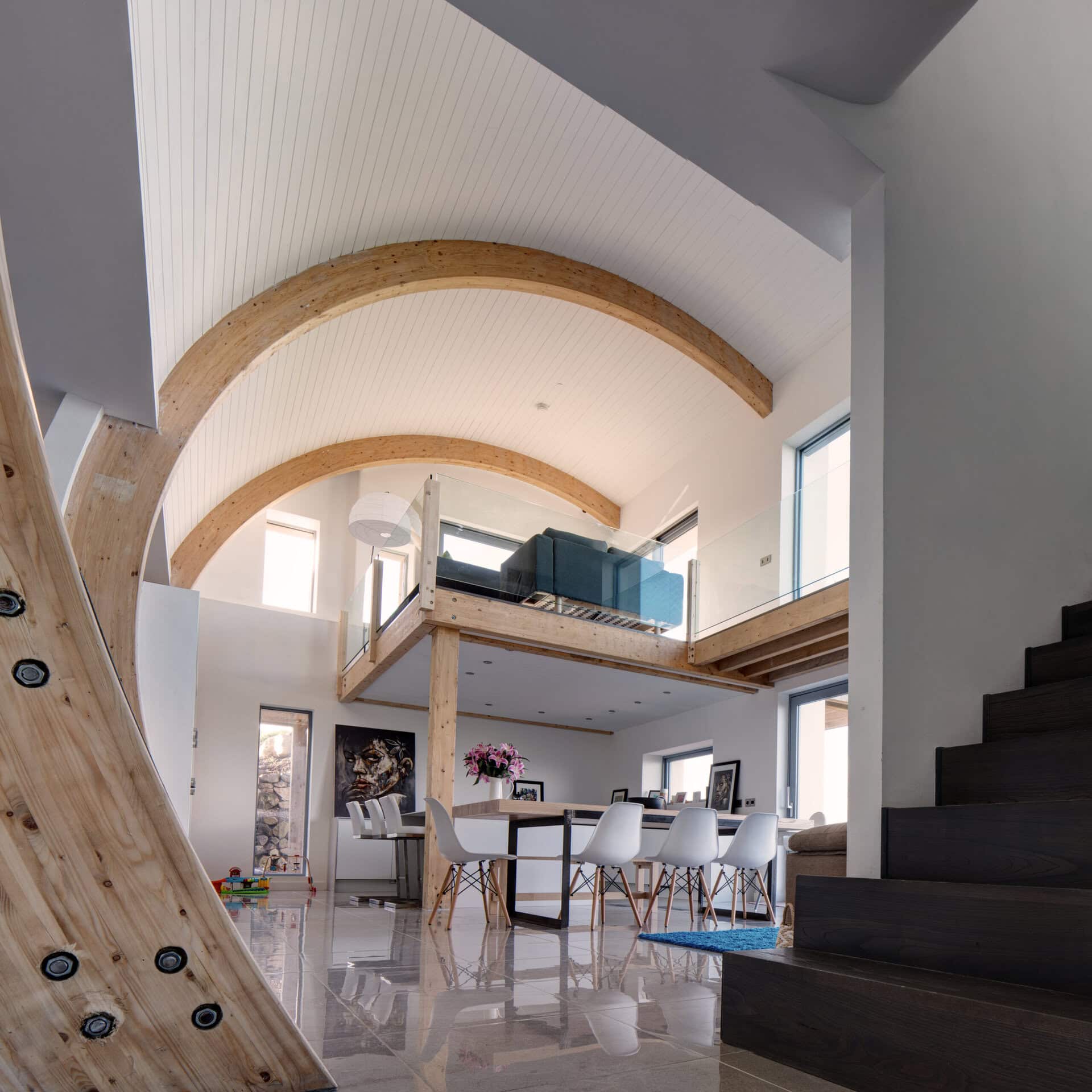
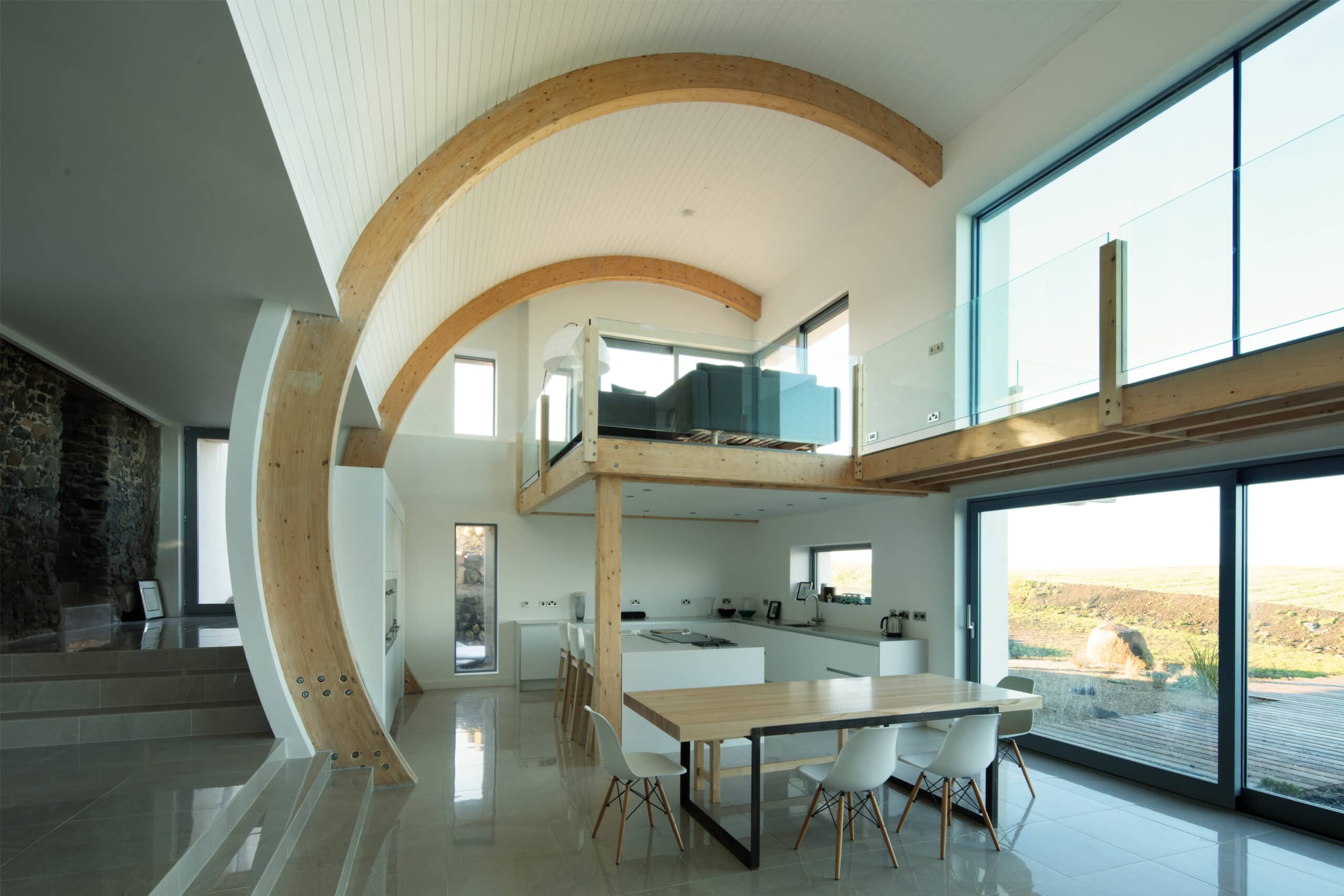
The site is in an Area of Outstanding Natural Beauty, with uninterrupted panoramic views from Donegal across to Scotland. The curved roof was the solution for fitting two storeys behind the forge without rising above the original ridge. A flat-roofed section between the two strong forms is planted as a wild flower meadow.
Because the ground slopes from west to east, the house grows in height as you drive along the road. The approach is from the lower western gable: the flat roof of the dividing section sits at eye level, the two forms frame a long view over the meadow towards the sea, and a stepped path leads to a human-scale front door between the two extruded forms.
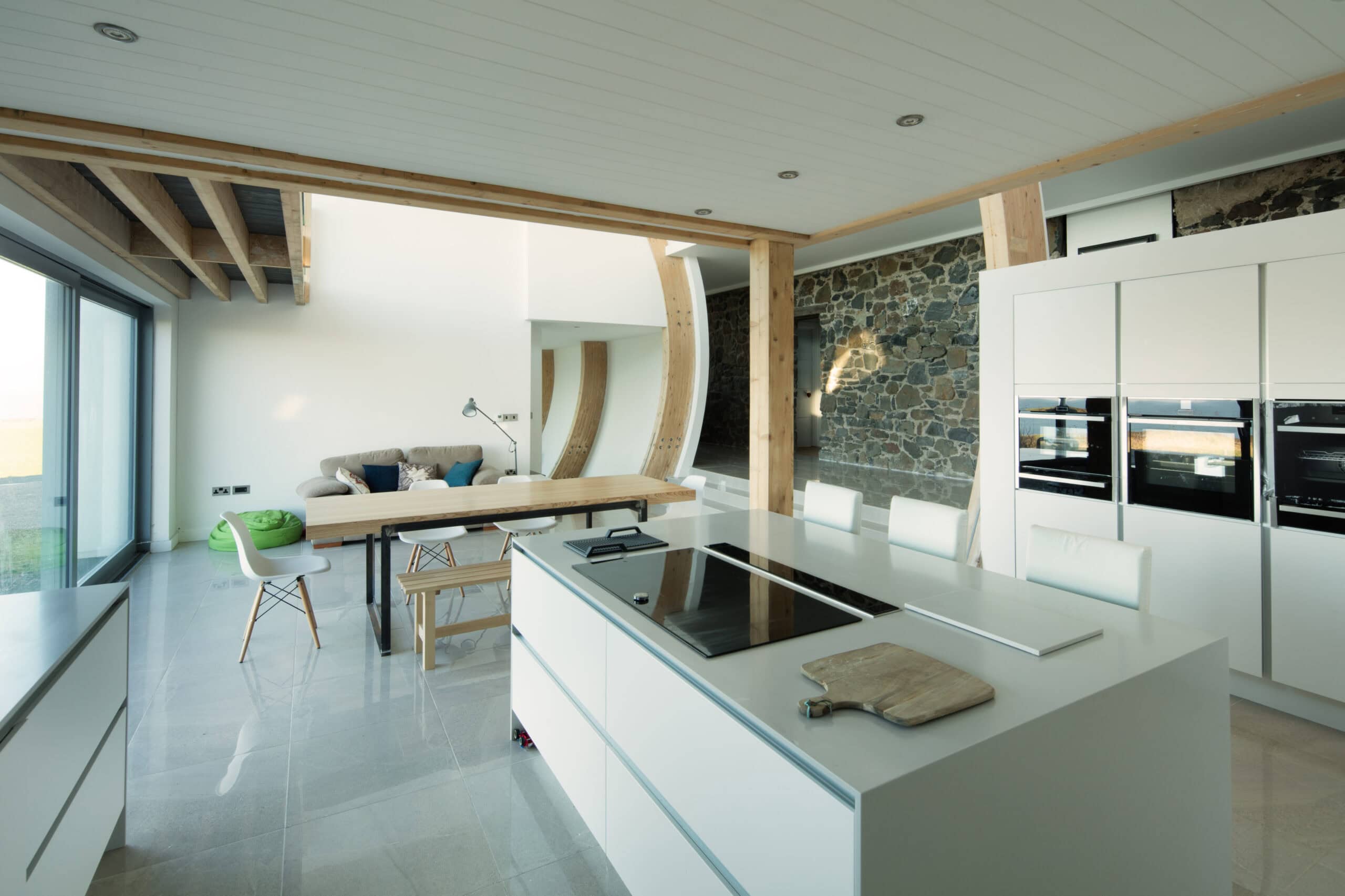
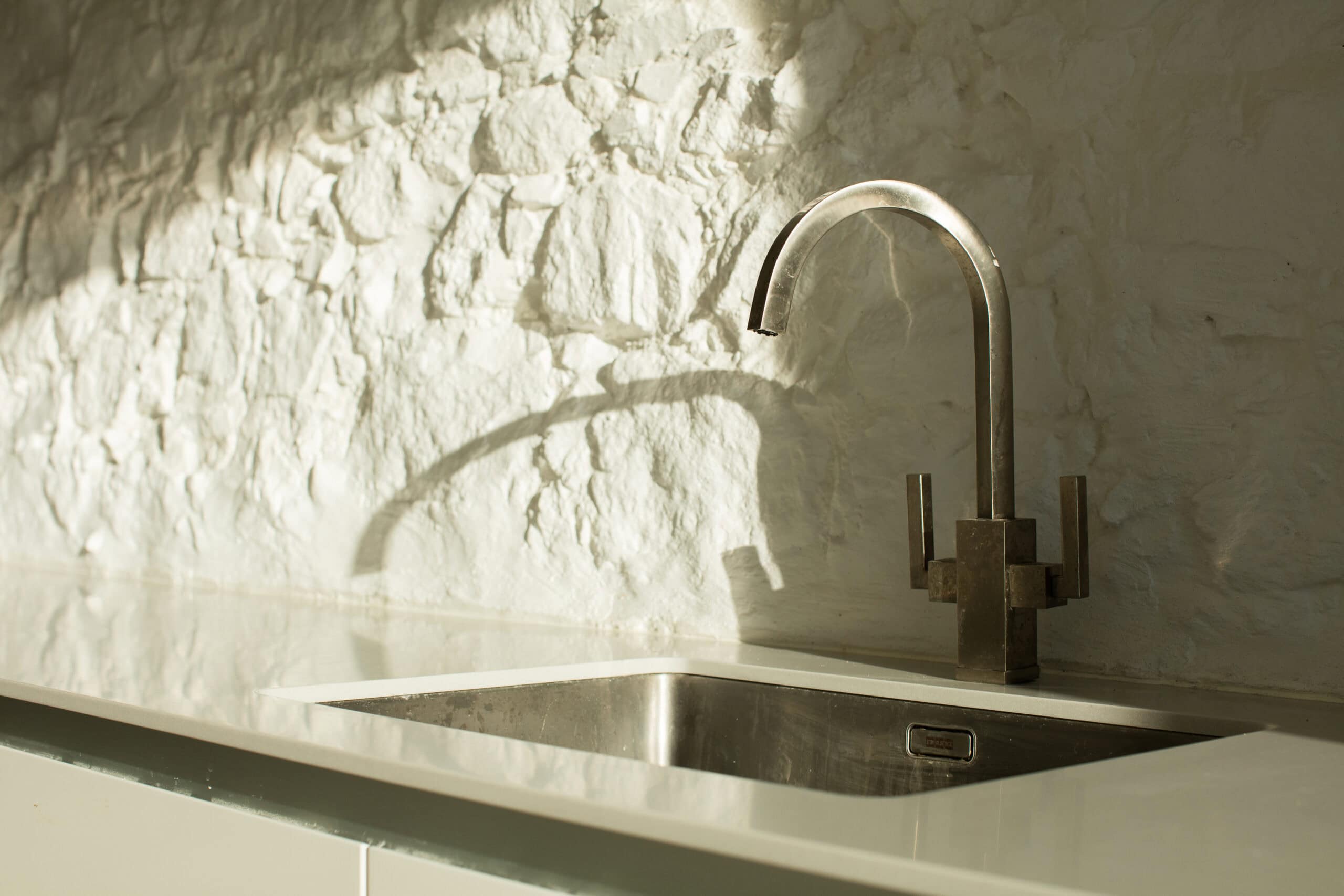
Open the door and a 16 m long wall of natural, unpainted stone draws the eye into the depth of the house. The 500 mm thick wall was partially rebuilt using the original stone from the site, using traditional masonry skills. It is visible from every room bar one and ties the modern interior back to the history of the site. The wall grows in scale as you walk the corridor created between the wild flower roof above and the two competing forms of the building. Punctures in the wall are kept to a minimum, opening only to bedrooms and utility spaces beyond.
Internally the house sits across 7 split-levels, integrating discreetly into the undulating fields beyond. Construction uses a super-insulated straw bale and timber frame extension nestled into the existing terrain.
Project size: 280 m². Completion: 2015. Building levels: 3.
Architect: 2020 Architects. Structural engineer: Michael McCurdy. Photographer: Aidan Monaghan.
Gallery
Industry
Sector
Details
- Project Size: 280 m² / 3,014 ft²
- Building Levels: 3
- Completion Date: 2015
- Photographer: Aidan Monaghan
Region
Discuss