
Description
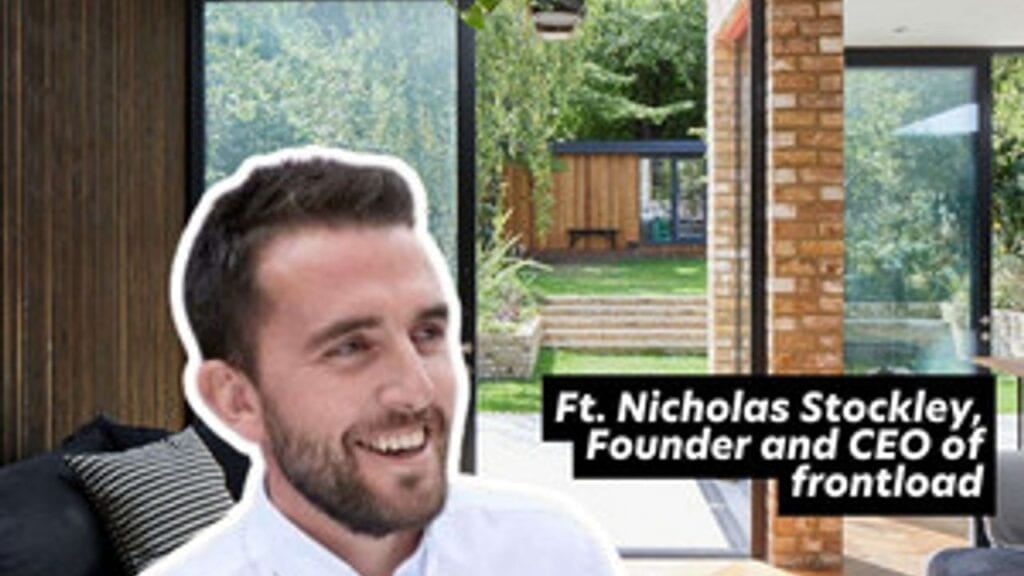
In this Architecture Social conversation (around 50 minutes), Stephen Drew talks with Nicholas Stockley, founder of Design Squared Architects, about building a career and a business in and around architecture. Nicholas started through an apprenticeship, set up his own residential practice, co-founded the homeowner platform RESI and now runs Front Load. He is an architectural technician rather than a chartered architect, and speaks plainly about what it actually takes to make a practice pay.
Who this is for
Part 1 and Part 2 graduates weighing up education against experience, architectural technicians and technologists, and anyone working in a practice who has thought about setting up on their own or turning a service into a product. It is also useful for small practice owners thinking about specialism, delivery and margin.
Learning outcomes
By the end of this lesson you will be able to:
- Describe the routes Nicholas took into the profession, including an apprenticeship and part-time study, and weigh experience against formal education.
- Explain how a small residential practice can be built and sustained through referrals, specialism and disciplined cost control.
- Outline how an architectural service can be turned into a scalable technology business, and the kind of investment that requires.
- Distinguish between providing architectural services as a technician and operating as an ARB and RIBA chartered practice.
- Identify the commercial levers, such as fixed costs, productivity and delivery model, that decide whether a practice makes money.
- Apply practical questions to your own decisions about specialising, starting up and managing risk.
Two routes in: apprenticeship and university
Nicholas left school at 16 and joined a Gloucester practice as a trainee architectural technologist, studying construction on day release through ONC and then HNC. He later read architecture at Leicester, funding his studies with part-time work. His view is that working in practice before and during study gave him a head start, because he could already draw, use CAD and understand how buildings go together.
Experience can outpace education early on
By his mid twenties Nicholas had several years of practice experience on his CV, which he says allowed him to take on responsibility earlier than his age would suggest, including a spell working in Sydney on a large development. His argument is not that education has no value, but that contribution and productivity are what practices pay for, and that learning on the job builds those faster.
Starting Design Squared: low cost, referrals, focus
Design Squared began in 2008 with freelance residential work for clients in south-east London, won largely through referrals and word of mouth. Nicholas kept overheads low at the start, built a reputation, and grew the studio steadily rather than chasing every opportunity. The practice now focuses on high-end residential work and employs a team that includes ARB and RIBA architects.
Specialise, then diversify
A recurring theme is the value of specialism. Nicholas specialises in residential design and the detail that surrounds it, from planning policy to the Party Wall Act, and argues that trying to do everything leaves you exposed. His advice is to become an expert in one area first, which then creates the credibility and cash flow to move into others.
Architect, technician and chartered practice
Nicholas is clear that he is not a chartered architect. He explains that he provides architectural services as an architectural technician, which is permitted, and that he employs ARB and RIBA architects so that the business can operate and describe itself as an architectural practice. For anyone thinking about setting up, this is a useful distinction between what an individual can offer and how a practice is structured and accredited.
RESI: turning a service into a technology platform
With co-founders from a technology background, Nicholas helped build a homeowner platform, first known as Build Path and later RESI. The idea was to educate homeowners about what they could do to their property, starting with low-cost concept work, then scale through technology and marketing. The business raised angel and then venture capital investment and grew quickly. Nicholas is now a shareholder rather than an operator.
Front Load: streamlining delivery and unlocking potential
Front Load is Nicholas's current venture and has two strands. The first is streamlining delivery, using an experienced client-facing team supported by an overseas drafting team, a model he also offers to other practices. The second is unlocking development potential, producing planning-referenced reports that help homeowners, buyers and estate agents understand what could be done to a property, with the aim of scaling through machine learning.
Running the numbers: fixed costs, productivity and margin
Nicholas talks openly about money, which he sees as the heart of running a business. He describes controlling fixed costs so that a quiet month does not force panic decisions, hiring experienced people who deliver, and protecting gross profit margin. His experience of Covid reinforced the value of a delivery model that can flex without large fixed overheads.
Hiring, and starting young
When hiring, Nicholas looks for specialism relevant to his work and for hunger, and advises candidates to tailor a CV to the specific practice rather than relying on where they studied. He also makes the case for starting a business young, when responsibilities and risk are lower, and points to the RIBA route that allows people to work towards qualification while in practice.
Key terms
- Architectural technician and technologist: roles focused on the technical delivery of architecture; you can provide architectural services without being a chartered architect.
- ARB and RIBA: the Architects Registration Board, which protects the title "architect", and the Royal Institute of British Architects.
- Part 1, Part 2 and Part 3: the stages of UK architectural education and qualification.
- Permitted development and the Party Wall Act: planning rights and neighbour-related legislation common in residential projects.
- Fixed costs and gross profit margin: the regular overheads a business carries, and the profit left after the cost of delivery.
- Angel and venture capital investment: early funding from individuals, then from funds backing high-growth businesses.
- Proptech: property technology, applying software and data to the property and design process.
Reflective prompts for your CPD record
- Where could you specialise to stand out, and what would you stop doing in order to focus?
- If you ran your studio's numbers today, which fixed costs carry the most risk, and how would you protect margin in a slow month?
- Is there a repeatable service in your work that could become a product or platform, and what would a first low-cost test look like?
About the guest
Nicholas Stockley is the founder of Design Squared Architects, a London practice specialising in high-end residential design that he established in 2008. He began his career through an apprenticeship as an architectural technologist before studying architecture, and has since founded and co-founded businesses spanning practice and technology, including the homeowner platform RESI, which he co-founded, and Front Load, his current venture. He describes himself as an architectural technician rather than a chartered architect, and employs ARB and RIBA architects within his practice.
Audio
Industry
Topics
Company

People


