Description
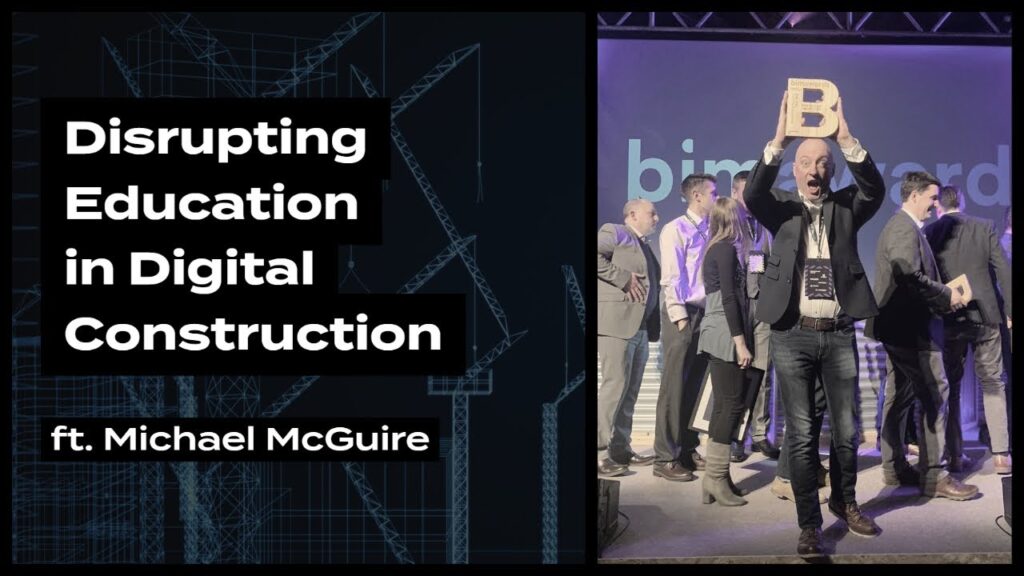
A CPD lesson with Michael McGuire, lecturer at New College Lanarkshire and Training Manager for the WorldSkills UK digital construction team. Approx. 60 minutes. Watch the video below or listen to the audio.
Who this is for
Architectural technologists, BIM coordinators and managers, educators, and students weighing up how to enter architecture and digital construction. It is also useful for practice leaders and hiring managers who recruit early-career technical talent.
Learning outcomes
By the end of this lesson you will be able to:
- Describe alternative routes into architecture and digital construction beyond the traditional five-year architecture degree.
- Explain what employers actually mean when they ask for Revit skills, including common data environment and BIM execution plan knowledge.
- Identify the digital construction tools students should be fluent in, from Revit to Autodesk Construction Cloud and Navisworks.
- Outline how the WorldSkills UK digital construction competition is structured and how to enter it.
- Use competition results and Autodesk certification as employability benchmarks on a CV.
- Recognise how a college curriculum can be designed to keep pace with a fast-changing industry.
1. A non-linear route into digital construction
McGuire spent his early career as a structural steel fabricator before deciding to move into a design office. He put himself through a part-time HNC in CAD over two evenings a week for two years, then joined the college that had trained him. Twenty years on, he leads the teaching of computer-aided architectural design and technology. The through-line is a technical, hands-on route into the built environment that does not depend on the traditional architecture degree.
2. Breaking the "architect or nothing" mindset
Schools often steer anyone interested in buildings towards becoming an architect, and towards a single university path. McGuire argues that careers guidance rarely covers the breadth of technical disciplines: architectural technology, structural and MEP design, building services, civil engineering and facade design. Many students try the architecture route, find the more technical side suits them better, and switch. Making those options visible earlier would help more students find the right fit.
3. A curriculum that keeps pace with industry
The college deliberately writes flexible units rather than locking the curriculum to a single software product or standard, so it can adapt as tools and standards change. Past students who now run or manage companies feed back into curriculum design, which keeps the teaching current. The result is a two-year HNC and HND that can lead either straight into industry or on to a university degree.
4. What employers actually want from Revit
Employers no longer simply ask whether a graduate can use Revit. They increasingly ask whether the graduate can use Revit the way the practice needs: working to a BIM execution plan, following project numbering and naming conventions, using work sets, and operating inside a common data environment such as BIM 360 or the Autodesk Construction Cloud. Process fluency and an understanding of ISO 19650 now matter as much as raw software skill.
5. WorldSkills UK digital construction competitions
McGuire helped launch the digital construction competition within WorldSkills UK in 2018. It runs annually and is open to students at level six or below in England, Wales and Northern Ireland, with an equivalent level in Scotland. The structure moves from an online passport round, through a timed national qualifier run simultaneously across colleges and universities, to a national final where the top competitors build a stage-two BIM project over two days using Revit, Navisworks for clash detection and the Autodesk Construction Cloud. The strongest competitors can go on to represent the UK at WorldSkills International.
6. Why competitions signal employability
Employers involved in judging value competition performance highly. Reaching a national final demonstrates that a student can hit the ground running on a live model, which a degree alone does not evidence. Competition results, alongside Autodesk certification, give a clear benchmark of a candidate's practical ability that is more reliable than a short interview.
7. Designing employability into the course
The college builds industry links directly into the programme through exhibition evenings where practices meet students before they graduate, paid summer internships for top performers, and close relationships with local practices and contractors. McGuire reports that the majority of graduating students move straight into employment as architectural technologists as a direct result.
8. Cost, access and putting yourself out there
McGuire is candid about the cost of the traditional architecture route and the value of earn-while-you-learn apprenticeships, which is closer to his own path. His advice to students is practical: use the free WorldSkills video and dataset playlist to build skills, register for the competition, and put yourself out there rather than waiting to be found.
Key terms
- Architectural Technologist (AT): a built-environment role focused on the technical design and delivery of buildings, distinct from the ARB-protected role of architect.
- Common Data Environment (CDE): the shared platform, such as BIM 360 or the Autodesk Construction Cloud, where project information is stored and coordinated.
- BIM Execution Plan (BEP): the document that sets out how a project team will deliver information, including numbering, naming conventions and work sets.
- ISO 19650: the international standard for managing information across the life cycle of a built asset using BIM.
- WorldSkills UK: a skills competition network covering many trades and disciplines, including digital construction.
Reflective prompts for your CPD record
- Where in your team are digital construction skills picked up informally rather than benchmarked, and how would you evidence them?
- If you were hiring an entry-level BIM technician, what would you look for beyond familiarity with the software?
- How could a competition, certification or live-project experience strengthen your own or your students' employability?
About the guest
Michael McGuire is a lecturer at New College Lanarkshire and the Training Manager for the WorldSkills UK digital construction team. Episode recorded 2022. Explore Michael's profile on the Architecture Social directory.
Audio
Video
Industry
Topics
Company

People