
Description
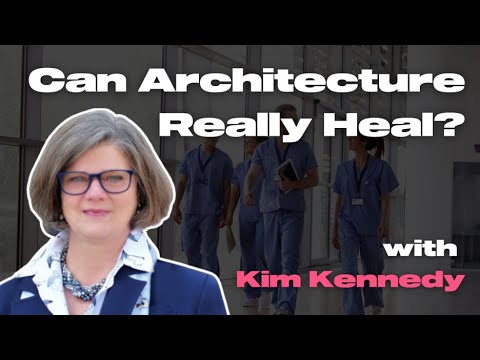
In this Architecture Social lesson (approximately 37 minutes), Kim Kennedy, Principal at Parkin Architects in Ottawa, talks through a career spent in healthcare architecture and the growing role of design in mental health care. It is a practical introduction for anyone curious about the healthcare specialism, from students to experienced architects considering a change of direction.
Who this is for
Students and Part 1 or Part 2 architectural assistants weighing up a healthcare path; qualified architects considering a move into the specialism; and anyone interested in how the built environment shapes patient care, mental health and staff wellbeing.
Learning outcomes
After working through this lesson you will be able to:
- Explain how an architect can move into healthcare architecture and what draws people to the specialism.
- Describe how healthcare procurement and delivery have shifted towards collaborative, design-build style models.
- Outline the role of architecture in mental health care, including the emergency psychiatric assessment model.
- Identify the traits and skills practices look for when hiring into healthcare teams.
- Discuss how technology and AI are starting to support healthcare design without replacing core knowledge.
- Summarise the likely direction of healthcare architecture over the coming years.
Finding a specialism in healthcare
Kim trained at the Technical University of Nova Scotia and spent her early career across corporate, interior fit-out and residential work. She expected corporate architecture to be her passion, but it was through smaller healthcare projects, clinic and dental renovations to begin with, that she found the work most meaningful. Moving between firms, she took on more healthcare projects and the learning curve was steep but rewarding.
How healthcare delivery has evolved
Healthcare projects in Canada have traditionally been government funded and procured as lump-sum schemes, with contractors bidding to build a completed design. Kim describes a shift towards public-private partnership (P3) models intended to deliver the built environment more quickly. In practice this has made projects far more collaborative, closer to a design-build approach where architects, contractors, investors, stakeholders and the community work as one team. Sustainability and carbon reduction are constant pressures, though hospitals run around the clock, which makes a low-carbon footprint hard to achieve in full.
Designing for mental health
Mental health care was historically delivered away from the community, often in asylums or facilities outside the city. Kim explains that the worldwide mental health crisis has made this a more prominent part of the hospital environment, with people arriving through emergency departments. Her focus is on what is described as an EmPATH lounge: an emergency psychiatric assessment, treatment and healing environment that gives patients quicker access to assessment in a calmer setting.
Inside an EmPATH unit
Kim describes a recently opened renovation at an Ottawa hospital serving the French-speaking community, where part of an existing emergency department was reworked to create this environment. The small unit includes two bedrooms where people can sleep, two consult rooms and a quiet room, along with a central lounge with soft seating where patients can sit, talk and calm down while being observed by staff. The aim is to triage mental health patients into a comforting space, speed up assessment, reduce overcrowding in the emergency department and avoid unnecessary admissions.
Traits that suit healthcare architects
Parkin's stated value is designing with care, and Kim returns to empathy as the central trait: putting yourself in the patient's shoes and asking how you would want to be treated. The work demands research, including evidence-based design, and constant coordination with colleagues and consultants, because healthcare projects are always a team effort. She encourages students to think big first, then bring ideas back to a realistic, regulation-aware design.
Catching an employer's eye
With Parkin growing quickly, Kim has been interviewing regularly. She looks for confidence in what candidates want from their careers, a clear sense of direction, and basic technical skills such as Revit, which she now regards as essential rather than a nice-to-have. Beyond software, she values curiosity, people who question the intent behind the rules, a willingness to keep learning at any level of experience, and the ability to work as part of a strong team culture.
Technology and AI in healthcare design
Parkin is actively exploring how to integrate AI into its work. Kim sees value in research and informing design, for example generating multiple layout options for an inpatient unit to evaluate, and in helping produce and embellish reporting and documentation, alongside automation within the Revit environment. Her caution for younger architects is to treat AI as a basis to learn from rather than a substitute for understanding the underlying principles of why a detail is drawn the way it is.
The future of healthcare architecture
Kim is optimistic. Healthcare design never goes away because hospitals are needed around the clock, and constant change in technology and new modalities such as mental health keeps the work evolving. In Canada, ageing infrastructure has driven a shift towards larger greenfield projects to replace facilities that were left underfunded. There is also a move to keep critical care within tertiary hospitals while relocating community-based services, such as family physician offices, clinics and diagnostics, closer to the communities they serve.
Key terms
EmPATH lounge / unit: an emergency psychiatric assessment, treatment and healing environment within or alongside a hospital emergency department.
P3 (public-private partnership): a procurement model combining public and private involvement, used here to speed up delivery of healthcare facilities.
Lump-sum (stipulated sum) procurement: a traditional model where contractors bid to build a completed design for a fixed price.
Design-build: a collaborative delivery model where design and construction teams work together from early in the project.
Greenfield project: a brand-new facility built on an undeveloped or cleared site, rather than a renovation.
Tertiary care: specialised, often critical, hospital care, as distinct from community-based services.
Triage: the process of assessing and prioritising patients by the urgency of their needs.
Reflective prompts for your CPD record
- How could empathy and a patient's perspective change one decision in a project you are working on now?
- Where in your current workflow could AI support research or documentation without eroding your core design knowledge?
- What would it take for you to build genuine specialist knowledge in a sector such as healthcare?
About the guest
Kim Kennedy is a Principal at Parkin Architects, based in the firm's Ottawa office. A graduate of the Technical University of Nova Scotia, she specialises in healthcare architecture with a particular focus on mental health facilities, and mentors emerging architects alongside her project work. Parkin Architects works from offices in Toronto, Ottawa and Vancouver, delivering healthcare and other projects across Canada. Find out more at parkin.ca.
Audio
Video
Industry
Topics
People


