Logo of Architecture Social with bold, white, capitalized text on a dark background.
    • Forum
    • Directory
      • Browse All
      • Jobs
      • Companies
      • Events
      • Projects
      • People
      • Universities
      • Upload to Directory
    • Jobs
      • Browse All
      • Architecture
        • Architectural Apprentice
        • Architectural Assistant – Part I
        • Architectural Assistant – Part II
        • Architect
        • Project Architect
        • Senior Architect
        • Architectural Technician
        • Architectural Technologist
        • Architectural Visualiser
      • BIM & Computational Design
        • BIM Coordinator
        • BIM Consultant
        • BIM Director
        • BIM Manager
        • BIM Modeller
        • BIM Technician
        • Computational Design
        • Digital Information Manager
      • Business Support
        • Bid Coordination
        • Business Development
        • Document Controller
        • Executive Assistant
        • Facilities Manager
        • Finance
        • Graphic Designer
        • Human Resources
        • Marketing
        • Operation Manager & Director
        • Practice Manager
        • Project Administrator
        • Receptionist
        • Studio Coordinator
        • Studio Manager
      • CAD & IT
        • CAD Manager
        • Head of IT
        • IT Technician
        • IT Manager
      • Development & Real Estate
        • Design Coordinator
        • Design Manager
        • Development Management
        • Project Manager
        • Technical Coordinator
      • Interior Design
        • Graduate Interior Designer
        • Interior Architect
        • Interior Designer
        • Midweight Interior Designer
        • Senior Interior Architect
        • Senior Interior Designer
      • Landscape Design
        • Junior Landscape Architect
        • Landscape Architect
        • Senior Landscape Architect
        • Landscape Designer
        • Landscape Planner
      • Recruitment Consultant
        • Join Our Team
      • Strategic Appointments
        • Associate
        • Associate Director
        • Director
      • Urban Design
        • Junior Urban Designer
        • Urban Designer
        • Senior Urban Designer
      • Upload your CV + Portfolio
    • Resources
      • Browse All
      • Career Guides
      • Benefits Guides
        • Career Development
        • Financial
        • Health and Wellbeing
        • Work-Life Balance
      • Salary Guides
        • Architecture
          • Architectural Apprentice
          • Architectural Assistant Part I
          • Architectural Assistant Part II
          • Architect
          • Project Architect
          • Senior Architect
          • Architectural Technician
          • Architectural Technologist
          • Architectural Visualiser
        • BIM & Computational Design
          • BIM Coordinator
          • BIM Consultant
          • BIM Director & Head of BIM
          • BIM Modeller
          • BIM Manager
          • BIM Technician
          • Computational Design
        • Business Support
          • Bid Coordination
          • Business Development
          • Document Controller
          • Executive Assistant
          • Facilities Management
          • Finance
          • Marketing
          • Operations Manager
          • Practice Manager
          • Project Administrator
          • Receptionist
          • Studio Coordinator
          • Studio Manager
        • CAD & IT
          • CAD Manager
          • Head of IT
          • IT Manager
          • IT Technician
        • Development and Real Estate
          • Asset Manager
          • Design Manager
        • Interior Design
          • Graduate Interior Designer
          • Junior Interior Designer
          • Interior Designer
          • Midweight Interior Designer
          • Senior Interior Designer
        • Landscape Design
          • Junior Landscape Architect
          • Landscape Architect
          • Senior Landscape Architect
        • Strategic Appointments
          • Associate
          • Associate Director
          • Director
        • Urban Design
          • Urban Designer
          • Senior Urban Designer
          • Junior Urban Designer
      • Newsletter
      • Podcast
        • Audio
        • Livestreams
        • Reels
        • Videos
      • Tools
        • All Tools
        • Notice Period Calculator
        • Pay Rise Calculator
        • Unpaid Overtime Calculator
    • Our Services
      • Browse All
      • Advertising
      • Coaching
        • Career Coaching
        • Business Coaching
      • CV + Portfolio
        • Review and Feedback Sessions
        • Publish via our Social Media to Employers
      • Marketing
        • For Designers
        • For Practices & Studios
      • Recruitment
        • I’m looking for a job
        • I’m looking to Hire
          • Traditional Recruitment Service
          • In-House Recruitment Service
        • Recruitment Referral Scheme
    • Contact Us
      • Meet our Team
        • Join Our Team
      • Get in Touch
    Upload
    Sign in or Register
    0
    Upload
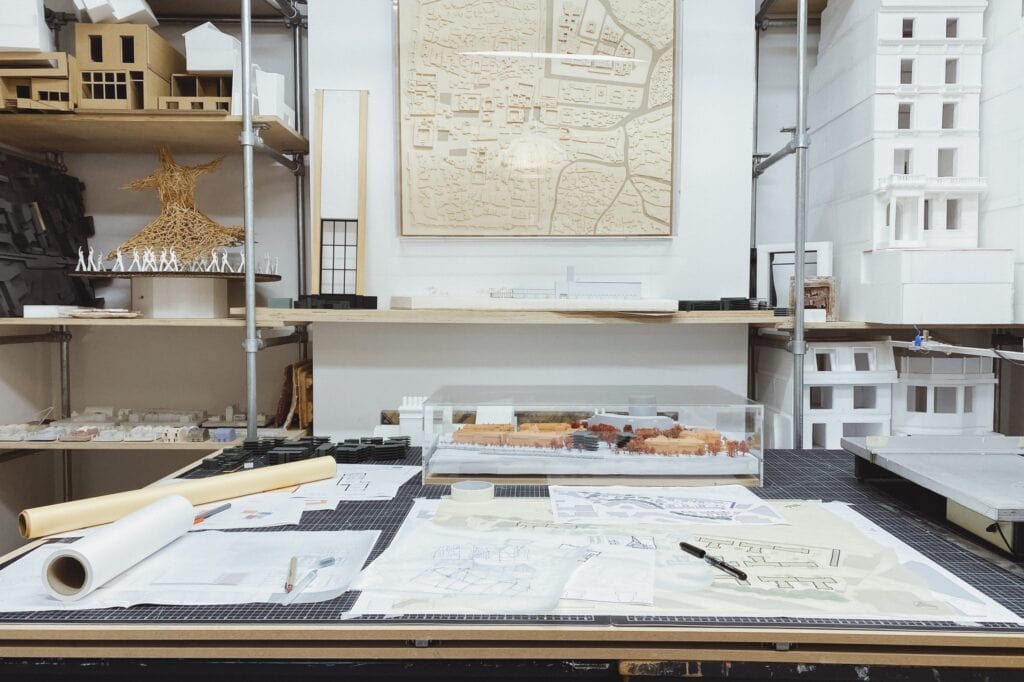
    Physical architectural models in the Atomik Architecture studio model shop in East London

    Why Architects Still Make Physical Models, ft. Atomik Architecture

    • Browse for more CPDs
    • Overview
    • Course
    • Discuss
    • prev
    • next
    • Bookmark
    • Share
    • prev
    • next

    Description

    Why do physical models in architecture still matter when AI, VR and photorealistic rendering can produce a finished image in seconds? In this Architecture Social conversation, Stephen Drew is joined by Sophie McCarthy, Design Director, and Max Fraser, Delivery Director, of Atomik Architecture, an East London studio with its own in-house model shop, for a roughly 53-minute discussion recorded as a live stream in 2024.

    Listen to the full conversation: on Spotify or via Transistor.

    Who this is for

    Architecture students building Part I and Part II portfolios, practising architects and architectural technologists, and anyone weighing up where physical modelmaking sits alongside digital tools. It is equally useful for studio leaders thinking about how models support design, delivery and client communication.

    Learning outcomes

    By the end of this lesson you will be able to:

    1. Explain why physical models remain a working design tool rather than only a marketing object.
    2. Use rough and working models to test junctions, interfaces and services coordination before they reach site.
    3. Select appropriate model types, scales and materials for different stages, from concept massing to 1:25 detail.
    4. Apply modelmaking and sketching to communicate ideas to clients, planners, contractors and communities.
    5. Position physical models and sketches effectively in a portfolio and an interview.
    6. Judge where physical models add value alongside BIM, 3D printing and digital visualisation.

    A design tool, not a marketing prop

    Atomik treat modelmaking as part of the design process, not just the polished showpiece you want everyone to see. Rough, quick models let you step away from the screen and think more freely, where software often presents something that already looks resolved. Even the way light from a single bulb falls across a model gives an instant new perspective on a scheme.

    Catching what 2D drawings miss

    From the delivery side, a great deal of risk sits in interface details. You can draw a plan, section and elevation quickly and correctly, yet still miss a junction. Building that junction physically as you go surfaces the problem early. As Sophie and Max put it, the same information that might take 50 to 60 drawings to convey can often be read in seconds from a single model.

    Communicating with people who do not read drawings

    Not everyone, including some people in the industry, reads drawings comfortably, but almost everyone understands a model. Models make clients, contractors, consultants and community members part of the same conversation. Atomik describe watching a client observe a model to understand how they read a space and what matters to them, which then feeds back into the brief and gives the client a sense of ownership.

    Working models for coordination and detailing

    The studio uses large 1:25 sectional models with removable floor plates to place switches, sockets, furniture and layouts so a client can respond directly. Working models also resolve services coordination and facade movement joints, where pushing and pulling a physical build reveals the weak points. On the Royal Academy of Dance headquarters in Battersea, where Atomik acted as delivery architect, bringing the whole team around one model helped resolve tight ceiling heights and clashes that are hard to settle in BIM alone while structure and services are still moving.

    Materiality, light and finish

    Models let the team test render finishes, framing junctions and how timber, concrete and flooring meet, often alongside detailed sketches. Orienting a model in real daylight shows how natural light moves through a space across the seasons without having to simulate physics on a computer.

    3D printing and making in-house

    A 3D printer speeds up optioneering, letting the team try balustrades, shutters and facade ideas quickly without becoming too attached to any one option. Atomik value making in-house for the kinetic connection it gives to a project, and because understanding a model from beginning to end means you can explain your thinking when questioned. A practical tip from the conversation: hollow your prints to keep costs down.

    Transporting and protecting models

    A model represents real time and money, so getting it to a presentation intact matters. The studio builds protective boxes, affectionately called coffins, and plans the reveal, because lifting the lid is part of how a model lands in the room.

    Models, sketching and your portfolio

    For hiring, physical models and sketches are a strong signal. The advice for candidates is to keep a digital portfolio but print your key images and bring a sketchpad, so an interviewer can see how you think. Being able to sketch in a meeting, and simply being responsive and easy to reach, wins more work than glossy images alone.

    Should students still make models?

    Yes. Models reveal how things stand up and go together, knowledge that is easy to skip when everything is virtual. They also lower the stress of study and practice and reconnect you with playful, hands-on exploration. Both guests credit tutors who pushed them to make models with changing their outlook for the better.

    Key terms

    • Working model: a rough, often quick model used to test and resolve design problems, as opposed to a finished presentation model.
    • Delivery or executive architect: a role focused on coordinating the design team and supply chain to build a scheme, sometimes alongside a separate lead designer.
    • Services coordination: resolving how mechanical, electrical and plumbing services fit with structure and architecture.
    • Movement joint: a deliberate gap that allows parts of a building or facade to move without cracking.
    • Optioneering: rapidly generating and testing design options to compare them.
    • BIM clash detection: using a digital model to flag where elements collide, useful but limited while the design is still changing.

    Reflective prompts for your CPD record

    1. Where in your current project could a quick physical or working model resolve a junction or interface faster than another set of drawings?
    2. How do you communicate design intent to clients or stakeholders who do not read drawings, and could a model improve that exchange?
    3. What balance of physical and digital tools suits your stage of career, and what one habit will you change as a result?

    About the guests

    Sophie McCarthy is Design Director at Atomik Architecture, which she joined in 2020. A graduate of the Mackintosh School of Architecture, she began her career on cultural and heritage projects in Scotland before moving to London in 2007, has worked on international schemes with Aedas and Woods Bagot, and co-founded the practice Kirkwood McCarthy in 2013. Sketching and modelmaking remain central to her design process. Max Fraser took part as Delivery Director at Atomik Architecture, leading the studio's delivery and executive-architect work with other architects, developers, clients and contractors.

    Atomik Architecture is a London-based practice working primarily with existing and long-held buildings across design and delivery, with sectors spanning residential, education, heritage, cultural and commercial work. Find out more at atomikarchitecture.com.

    Audio

    Industry

    • Architecture

    Topics

    • Design, construction and technology
    • Personal & Professional Development
    • Careers

    Engage in career growth through networking and coaching in a modern community platform.

    Join the Architecture Social Club

    A private and exclusive forum for Architecture & Design professionals and students.

    Backed by industry specialists, it’s where you can engage in meaningful conversation, make connections, showcase your work, gain expert insights, and tap into curated opportunities to advance your career or strengthen your studio.

    Register or Login Here

    Engage in career growth through networking and coaching in a modern community platform.

    Join the Architecture Social Club

    A private and exclusive forum for Architecture & Design professionals and students.

    Backed by industry specialists, it’s where you can engage in meaningful conversation, make connections, showcase your work, gain expert insights, and tap into curated opportunities to advance your career or strengthen your studio.

    Register or Login Here

    You May Also Be Interested In

    Understanding Your Worth in Architecture: A Guide to Navigating Salaries

    Architecture Social
    Architecture Social
    • Bookmark

    What do you do after an Architecture Interview?

    Architecture Social
    Architecture Social
    • Bookmark

    Mastering Communication in Architecture: Lessons from Industry Experts

    Architecture Social
    Architecture Social
    • Bookmark
    Click Here For Accessibility Options
    Update Your Privacy Preferences
    • Mission
    • Team
    • Join Us
    • Partnerships
    • Mission
    • Team
    • Join Us
    • Partnerships
    • Philanthropy
    • Marketplace
    • Showcase
    • Blog
    • Philanthropy
    • Marketplace
    • Showcase
    • Blog
    • Privacy
    • Recruitment
    • Website
    • Privacy
    • Recruitment
    • Website

    Architecture Social Limited © 2026

    1 Fore St Ave, Barbican, London EC2Y 9DT

    +44 (0)20 7770 9572

      • Facebook
      • X
      • WhatsApp
      • LinkedIn
      • Mail
      • Copy link
      • Share via...
      Cleantalk Pixel