Description
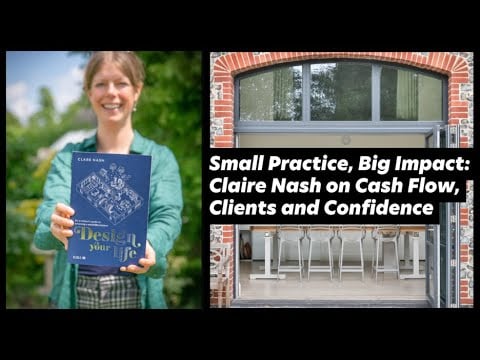
In this Architecture Social Podcast CPD, Stephen Drew talks with Clare Nash, founder of Clare Nash Architecture, about the realities of running a small UK architecture practice. Over roughly 56 minutes they cover cash flow, fees, marketing, niching, growing a team, writing books and the role of AI.
Who this is for
Architects, Part 1 and Part 2 architectural assistants, and designers who are thinking about starting their own practice, already run a small studio, or want to make their existing practice calmer and more profitable. It is equally useful for anyone curious about the business side of architecture rather than only the design side.
Learning outcomes
- You will be able to explain why charging a deposit upfront for each stage reduces cash flow risk in a small practice.
- You will be able to set out practical ways to manage client payments and chase overdue invoices with more confidence.
- You will be able to describe low cost marketing tactics, such as blogging, an email list and a fixed weekly marketing slot, that attract the right clients.
- You will be able to evaluate the case for choosing a niche and how it can strengthen a brand rather than narrow it.
- You will be able to recognise when and why a practice should diversify or pivot in response to market changes.
- You will be able to reflect on how tools like AI can remove repetitive tasks while leaving room for the human skills learned in architecture.
Starting a practice with no clients
Clare set up her practice during the last recession with no clients in place, starting with postcards in shops and a blog. In the early days she took part time work, including teaching at Oxford Brookes and a stint as a dinner lady, to cover the bills while she built the business in the background. Her first hire was a part time Part 2 student, which worked better than expected and set the pattern for the team growing to six.
Cash flow and charging upfront
Clare describes cash flow as the issue that never fully goes away, because payroll is fixed each month while project income rises and falls. Her main mitigation is to charge 50 per cent upfront for every work stage. That means the practice is not funding work out of its own pocket, and it establishes early that the client will pay, which removes a lot of the anxiety of being a business owner.
Getting comfortable talking about money
Both speakers discuss the mental barriers around fees and invoicing, from imposter syndrome on the very first invoice to the awkwardness of chasing late payers. Clare's point is that the cost of not asking is more stress and worry, while the worst case of asking is a slightly awkward conversation. Reminding clients that you are a small business, she finds, often prompts prompt payment.
Marketing that attracts the right clients
Clare enjoys marketing and treats it as a way to attract aligned clients rather than chase work. Blogging about barn conversions positioned her as a specialist, and an ebook download builds an email list of ideal clients she can stay in touch with. To keep it consistent she runs Marketing Mondays, a quieter day with fewer interruptions, and finds the time spent has not reduced profit.
Public speaking and real life networking
Despite describing herself as shy and introverted, Clare argues that being on the stage is far more effective than working a networking room, because the whole audience sees you and remembers you later. She also stresses real life connection: some of her best client relationships have come from interests like a gardening club, where people get to know her over time and think of her first when a project comes up.
The case for a niche
Clare is a strong advocate for niching, in her case barn conversions with eco design close behind. A clear niche helps a client recognise they are in the right place, builds confidence that shows through, and lets a small marketing budget reach exactly the right people rather than spreading thin like mass market brands. She finds niching has not lost her general work; it has strengthened the brand and still attracts extensions, self builds and developers.
Diversifying and knowing when to pivot
To balance the more fickle domestic market, Clare diversified into garden design, which reinforces what the practice already does, appeals to existing clients and developers, and fills gaps in the schedule. She is clear that practices must be willing to pivot, listening to what ideal clients want and using tools like a PESTLE analysis to plan for future trends and keep plan Bs ready.
Writing and publishing two books
Clare's first book grew from her master's dissertation and was published by RIBA Publishing; the process raised her profile, fed research back into her own work and helped her charge higher fees. Her second book is more personal, written because she could not find honest guidance on running a small practice, including the cash flow, fees, systems and the emotional side, while rejecting the idea that architecture must mean long hours and low pay.
AI and the future of practice
Clare is not worried about AI replacing creative work, but welcomes it as a tool. She uses it to repurpose content, such as turning a post into a blog in her own style, which saves time on routine tasks. She looks forward to AI removing tedious work in the way technology already retired manual door schedules, while the higher level skills of creativity, empathy and questioning assumptions remain valuable.
Key terms
- Vernacular architecture: design that draws on how and why people built in a place before architects, responding to local site, climate, context and materials.
- Barn conversion: the reuse and adaptation of an existing agricultural building into a home, often involving heritage and planning considerations.
- Cash flow: the timing of money coming into and going out of a business; a recurring challenge when fixed costs like payroll meet variable project income.
- Niche: a focused specialism that makes marketing more efficient and builds recognised expertise.
- PESTLE analysis: a planning tool that scans political, economic, social, technological, legal and environmental factors that may affect a business.
Reflective prompts for your CPD record
- How is your practice or future practice managing cash flow, and could a staged upfront fee reduce your financial risk?
- What niche or specialism best reflects your strengths and ideal clients, and how clearly does your marketing communicate it?
- Which repetitive tasks in your work could be supported by technology, freeing time for the design and client skills only you can offer?
About the guest
Clare Nash is the founder and director of Clare Nash Architecture, a small practice based in Oxfordshire working across Oxfordshire, South Northamptonshire, North Buckinghamshire and South Warwickshire. A RIBA chartered architect with a master's in vernacular architecture and regeneration, she is known for barn conversions, eco homes and listed building work. She is the author of two books, including Contemporary Vernacular Design: How British Housing Can Rediscover its Soul (RIBA Publishing), and runs The Business Space, a peer mentoring group for architectural business owners.
Audio
Video
Industry
Topics
People