Description
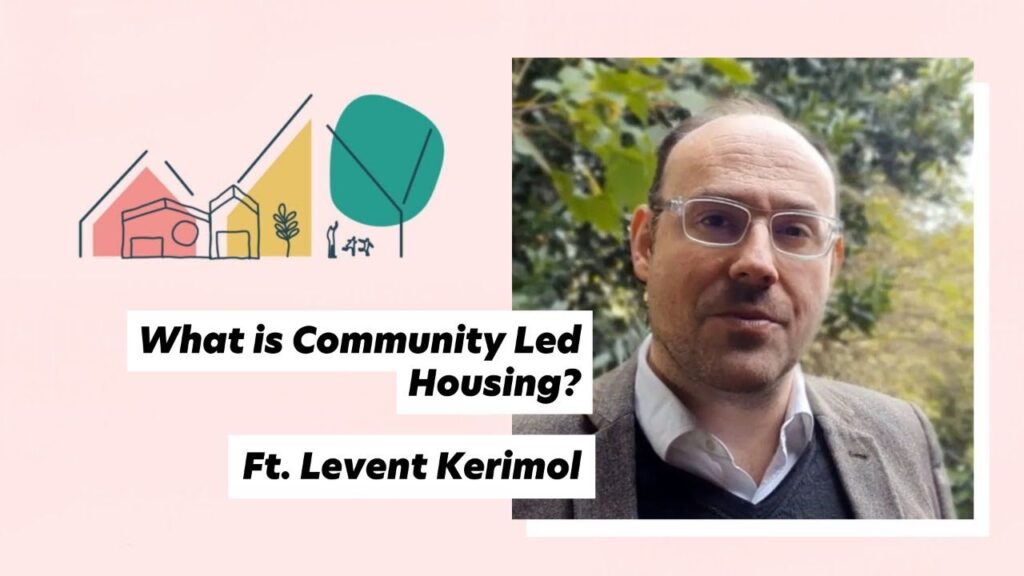
In this CPD conversation, Stephen Drew talks to Levent Kerimol, Director of Community Led Housing London, about how communities can take control of providing their own homes, and where architects fit in. The episode runs to roughly 52 minutes.
Who this is for
Architects, architectural assistants, planners and built environment professionals who want to understand community led housing, advise community groups, or get involved in cohousing, community land trust and housing co-operative projects in London and beyond.
Learning outcomes
- You will be able to define community led housing and distinguish between housing co-operatives, community land trusts and cohousing.
- You will be able to describe the advisory and mentoring journey a start-up community group goes through, from incorporation to finding sites and appointing consultants.
- You will be able to explain the funding challenges of the pre-planning stage and why early feasibility work is hard to finance.
- You will be able to outline how large membership organisations make decisions through boards, subgroups and agreed decision-making rules.
- You will be able to identify where architects add value to community projects and how to set clear boundaries on the advice you give.
- You will be able to discuss the wider debates around housing supply, under-occupation, retrofit and the distribution of power in housing.
What community led housing actually is
Community led housing is an umbrella term covering housing co-operatives, community land trusts, cohousing and related approaches. What unites them is that residents or wider communities control their own housing, both during the development phase and in the long-term management of the homes. Levent describes it as a collective equivalent of self build: a group of households coming together to build their own homes or to work with a professional developer, then taking ownership in a collective form and keeping decisions about how homes are run, allocated and managed close to residents.
How the advisory and mentoring process works
Community Led Housing London sits alongside groups as a mentor. Most start-up groups arrive with no built environment or housing knowledge at all. Advisers help them incorporate as a legal entity, find sites, engage landowners, shape an overarching business plan and bring the right consultants on board, from architects and engineers to quantity surveyors, legal advisers and financial modellers. The team also works with councils and others to create opportunities for community led housing in the first place.
Funding the early stages
Early-stage work is the hardest to fund because lenders will not lend before planning permission. Grant funding has covered feasibility work, helping groups incorporate, approach landowners and reach a pre-application stage with a viable scheme. Funding from the Greater London Authority supported groups through to planning permission, though at the time of recording that pot was largely used up, making the early-stage funding environment uncertain.
Case study: RUSS in Ladywell, Lewisham
The Rural Urban Synthesis Society (RUSS) is a community land trust in Lewisham founded over a decade ago by people involved in the borough's Walter Segal timber-frame self build projects. It set out to create community led, self build homes that are affordable in perpetuity and environmentally sustainable. As a CLT it has open membership: more than 1,000 members can join for one pound each, vote for the board and stand for election. Levent worked with Lewisham Council in the early days on how a site could be transferred to a newly incorporated community group. The group went on to secure social investment, bank lending and contractors, ran co-design sessions with prospective residents, included self-finish flats, and reached practical completion, with low-cost ownership homes sold to resident members and CDS Co-operatives acting as housing association partner for the rented homes.
Making decisions with hundreds of members
A 1,000-member organisation does not mean 1,000 people deciding every detail. Annual general meetings elect a board, usually capped at around 12 people with maximum terms so the board refreshes over time. Subgroups, committees and working groups handle particular tasks, and members contribute as much as their time and skills allow. Where smaller groups intend to live in the scheme themselves, conflict is more personal, so the team now includes an adviser specialising in communication styles, facilitation and approaches such as nonviolent communication. Groups also need to agree how decisions get made, whether by consensus or democratic vote.
What makes a community group succeed
There is no guaranteed recipe, but a small core group tends to make decisions more quickly and stay agile. Professional skills help and can be co-opted onto committees, while advisers fill the gaps. The harder ingredient is sustained enthusiasm: projects take years, so groups need succession planning to bring in the next wave of members. Levent cites a community land trust in Waltham Forest that kept renewing its membership and board through repeated setbacks where most groups would have given up.
Where architects add value
Most community groups still need architects, particularly at the early stage when no developer or housing association will spend money on design work. Being able to judge whether a site is viable and what could fit on it is hugely valuable to a group with no built environment skills. Architects can get involved as prospective residents, as members of their own communities, as board members or as consultants. Levent's advice is to be clear about the limits of your expertise: architects know a bit about development and legals, but should flag where specialist advice is needed, and be honest about whether work is paid or pro bono.
Technology, power and social justice
Levent is sceptical that new tools, including AI, will be the thing that makes more community housing happen. They are labour-saving tools that everyone can use, and more capability can simply mean more detail and more work, as planning applications show. The deeper questions are about social justice and where power sits: ever larger councils and housing associations gain economic efficiencies but add layers of governance that distance residents from decisions. Community led housing answers questions about control and belonging that pure affordability measures miss, including in the private rented sector.
The housing market and future outlook
On the wider market, Levent points to a misalignment between construction costs, what homes can sell for and what people can afford, with banks reluctant to lend amid uncertainty. He also raises under-occupation: there is a decent amount of housing stock already, and cohousing communities with built-in neighbourliness could make downsizing attractive for people who currently stay put because they fear moving somewhere anonymous. That links community led housing to the retrofit debate and to building the right homes rather than simply more units.
Key terms
Community led housing: an umbrella term for housing where residents or communities control development and long-term management. Community land trust (CLT): a membership organisation holding land and homes for community benefit, often affordable in perpetuity. Housing co-operative: housing owned and democratically controlled by its members. Cohousing: intentional communities of private homes with shared spaces and mutual support. Self-finish: homes structurally completed by a contractor and fitted out by residents. Registered Provider: an organisation registered to provide social housing, such as a housing association.
Reflective prompts for your CPD record
- Where could your practice offer early-stage feasibility advice to a community group, and how would you define the scope and limits of that advice?
- How would you approach co-design with a large membership organisation differently from a conventional client, particularly around decision making?
- What role could cohousing or community land trust models play in projects you work on, for example in addressing under-occupation or long-term affordability?
About the guest
Levent Kerimol is Director of Community Led Housing London, now operating as communityled.homes and formally part of CDS Co-operatives. He has advised and mentored a wide range of community led housing groups and projects. He was previously at the Greater London Authority, where he established the Small Sites x Small Builders programme, contributed to the London Plan and managed regeneration projects, and he worked with the London Borough of Lewisham on the early stages of the RUSS project. Lev studied architecture and real estate and has taught design and planning at London Metropolitan University.
Audio
Video
Industry
Topics
Company

People