
Description
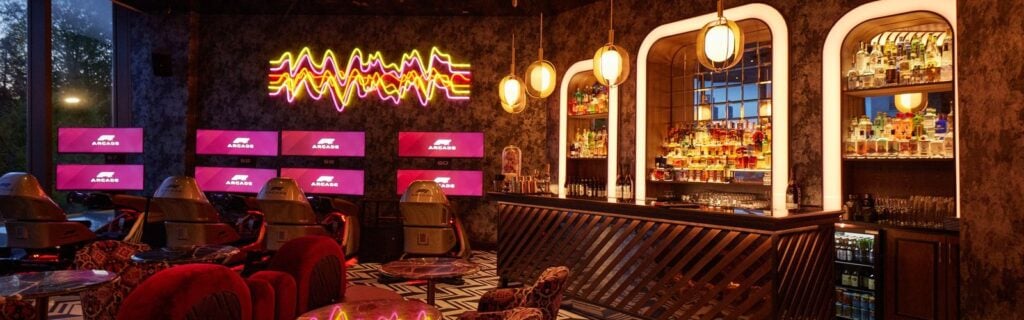
In this Architecture Social conversation (approximately 48 minutes), Stephen Drew speaks with Ana Moisin, Creative Director and Founder of Anamo Design Studio, about experiential hospitality design: how bars, restaurants, hotels and immersive venues are conceived, detailed and delivered to shape the way guests feel in a space. Ana draws on the studio's work, including the F1 Arcade venues in London and Birmingham, to explain how concept, lighting, materiality and collaboration come together on real projects.
Who this is for
This lesson is for interior designers, architects, architectural assistants and students who want to understand hospitality and F&B design, as well as anyone curious about how experiential spaces are created and what it takes to move a scheme from early concept to a finished, guest-facing venue.
Learning outcomes
By the end of this lesson you will be able to:
- Explain what hospitality and experiential hospitality design cover, and how interior and architectural design relate within them.
- Describe the typical stages of a hospitality project, from feasibility and concept through technical design, FF&E and on-site delivery.
- Discuss how lighting is used as a primary design tool to create atmosphere rather than as an afterthought.
- Identify the practical considerations that keep a hospitality space durable and compliant in high-footfall, real-world use.
- Outline how interior designers and architects collaborate, and where each discipline leads.
- Reflect on how a studio can balance client briefs with creative ambition while keeping each scheme fresh.
What experiential hospitality design means
Ana defines hospitality design broadly: everything that is guest facing and offers food, beverage, dining or leisure, from restaurants, bars and nightclubs through to hotels, leisure parks and large resorts. Experiential hospitality builds on this by designing spaces that engage and connect with guests on a personal level, so that people remember the warmth and feeling of a place rather than any single element.
Working across the project stages
Anamo Design Studio works closely to the RIBA stages and likes to take projects all the way through: feasibility, initial pitch and abstract concept, concept design development, technical design, FF&E, specifications and scheduling, then site monitoring through to handover and post-handover. Ana notes that staying involved across the stages helps knowledge transfer, while the studio can also be brought in for individual stages where that suits a project.
Designing with light
Lighting is treated as a central design tool at Anamo, never an afterthought. On F1 Arcade Birmingham the team focused heavily on how to design with light, using elements such as a backlit onyx panel and a bar that reads almost like a large wall light. Getting the balance right takes trial and error, collaboration with specialist lighting designers, and testing of samples and distances in the studio to achieve indirect glow alongside forward-facing light.
Detail, materiality and a fresh approach
Ana describes the studio as obsessed with detail, which she sees as what makes a project genuinely good. The team deliberately avoids a fixed house style, taking on very different briefs and styles so that ideas stay fresh and knowledge keeps expanding across materiality, geometry and texture.
Designing for durability and real-world use
Hospitality venues face heavy footfall and lively guests, so finishes are selected for robustness and longevity. Ana explains that a bar top or table needs to last well beyond opening week, which makes material specification especially important in hospitality compared with some other design fields.
Safety, regulations and keeping the space beautiful
Fire safety and exit signage have rightly become more stringent. Rather than treating these as obstacles, the studio plans for them from the feasibility stage, studying sightlines through a space so that exit signs stand out where they must while still working with the surrounding design, in coordination with the architect of record.
Collaborating with architects and consultants
On larger schemes the architect usually holds overarching coordination, dealing with regulations, fire strategy and building control, while Anamo leads the interior design and contributes to structure, space planning and coordination with M&E and lighting consultants. Ana values these partnerships and notes the studio increasingly has architecture capability in-house as it grows.
Client relationships and the brief
Ana's approach to clients is to put everything on the table at schematic stage, often presenting multiple options, then gauge each client's appetite and tailor the design from there. Keeping clients engaged in the design conversation, she suggests, helps them get genuinely excited about the work.
Technology and the future of hospitality
On tools such as AI, Ana sees value in handling mundane tasks and getting past the blank page, while cautioning that current image tools work at a surface level and struggle with genuinely new products or precise reality. Looking ahead, she is optimistic about experiential hospitality, pointing to concepts that start in London or the UK and travel internationally, and to the studio's growth across hospitality, residential and hotel work.
Key terms
- Experiential hospitality: guest-facing food, beverage and leisure spaces designed to create a memorable, personal experience.
- FF&E: furniture, fixtures and equipment specified and scheduled as part of an interior scheme.
- RIBA stages: the framework of work stages that structures a project from feasibility to completion.
- Feasibility stage: early assessment of a brief and site before concept design begins.
- Architect of record: the architect holding overall coordination and regulatory responsibility on a project.
Reflective prompts for your CPD record
- On a current or recent project, is lighting being used as a primary design tool or treated as an afterthought, and what would change if you led with it?
- How robust are your material specifications for the real-world use your space will see, and where might durability need more attention?
- How do you balance a client's brief with creative ambition, and what could you do to keep clients engaged in the design conversation?
About the guest
Ana Moisin is the Creative Director and Founder of Anamo Design Studio, a London-based interior design practice specialising in hospitality, food and beverage, and residential projects, with work including the F1 Arcade venues in London and Birmingham.
Audio
Industry
Topics
Company

People


