Description
Lansdowne Residence is a renovation of a Brisbane Queenslander shaped by a familiar set of local constraints: a growing family, an existing house, a very steep slope and a modest budget. The owners had lived on the site for ten years and now had four children, so the brief called for clearer spatial hierarchy and a generous place for the family to gather.
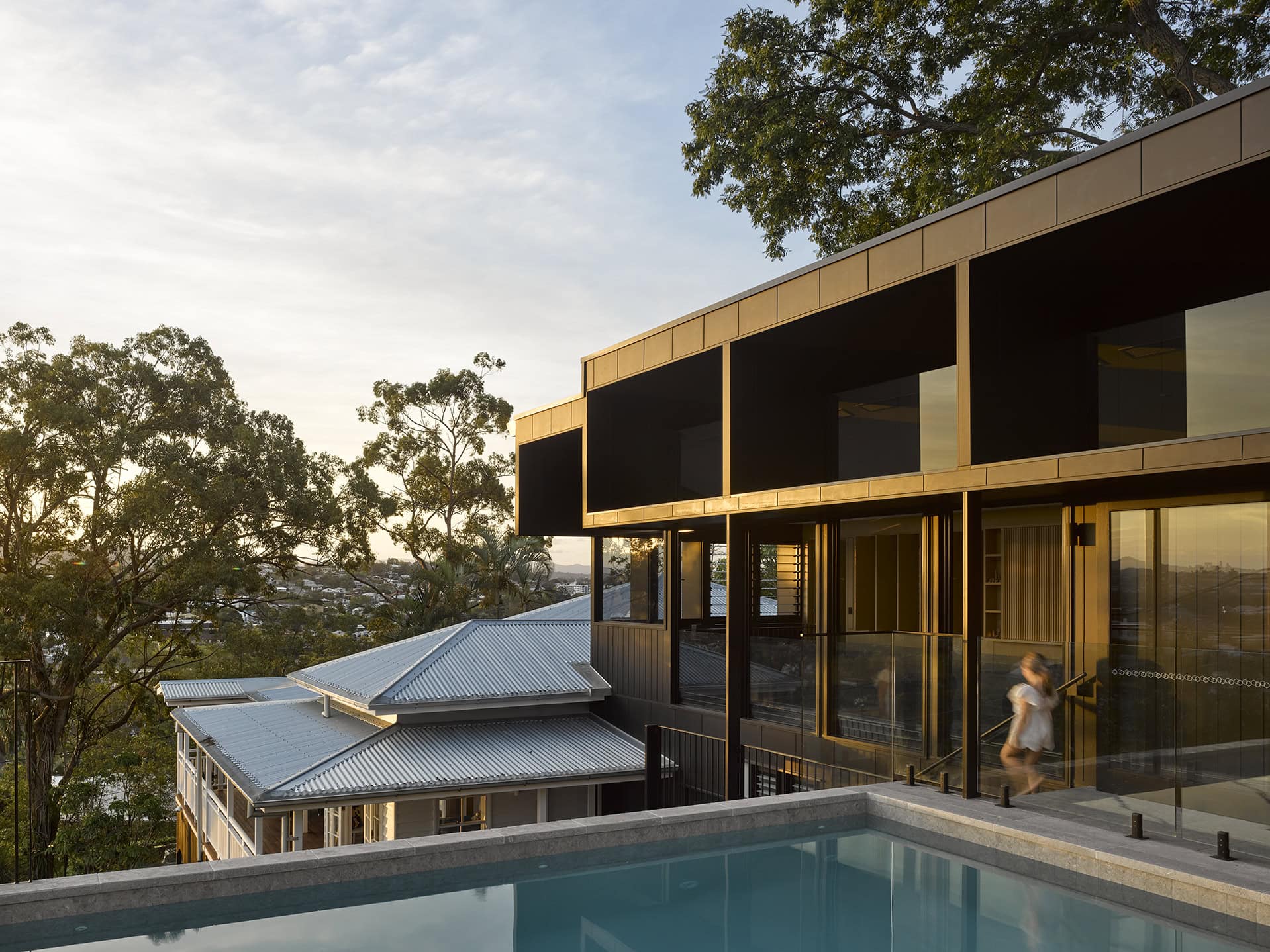
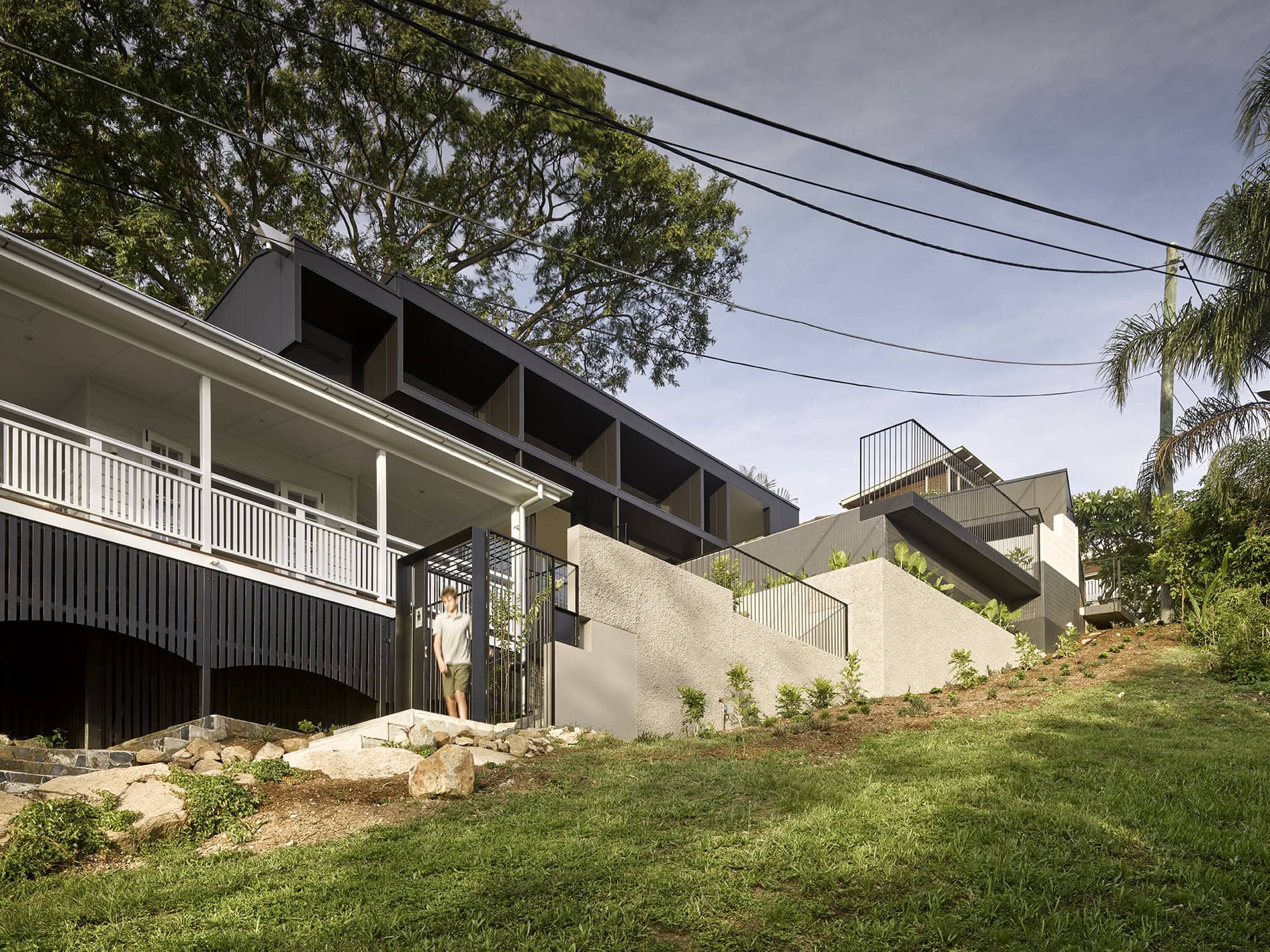
The original house combined a highset Queenslander on the low side of the site with an ordinary box-like addition on the high side, set a full level above. Kitchen and living sat within the Queenslander, leaving no clear order to the plan. What made staying and renovating compelling was the elevated position, looking south to the city, around to Mt Coot-tha and on to the ranges beyond the border.
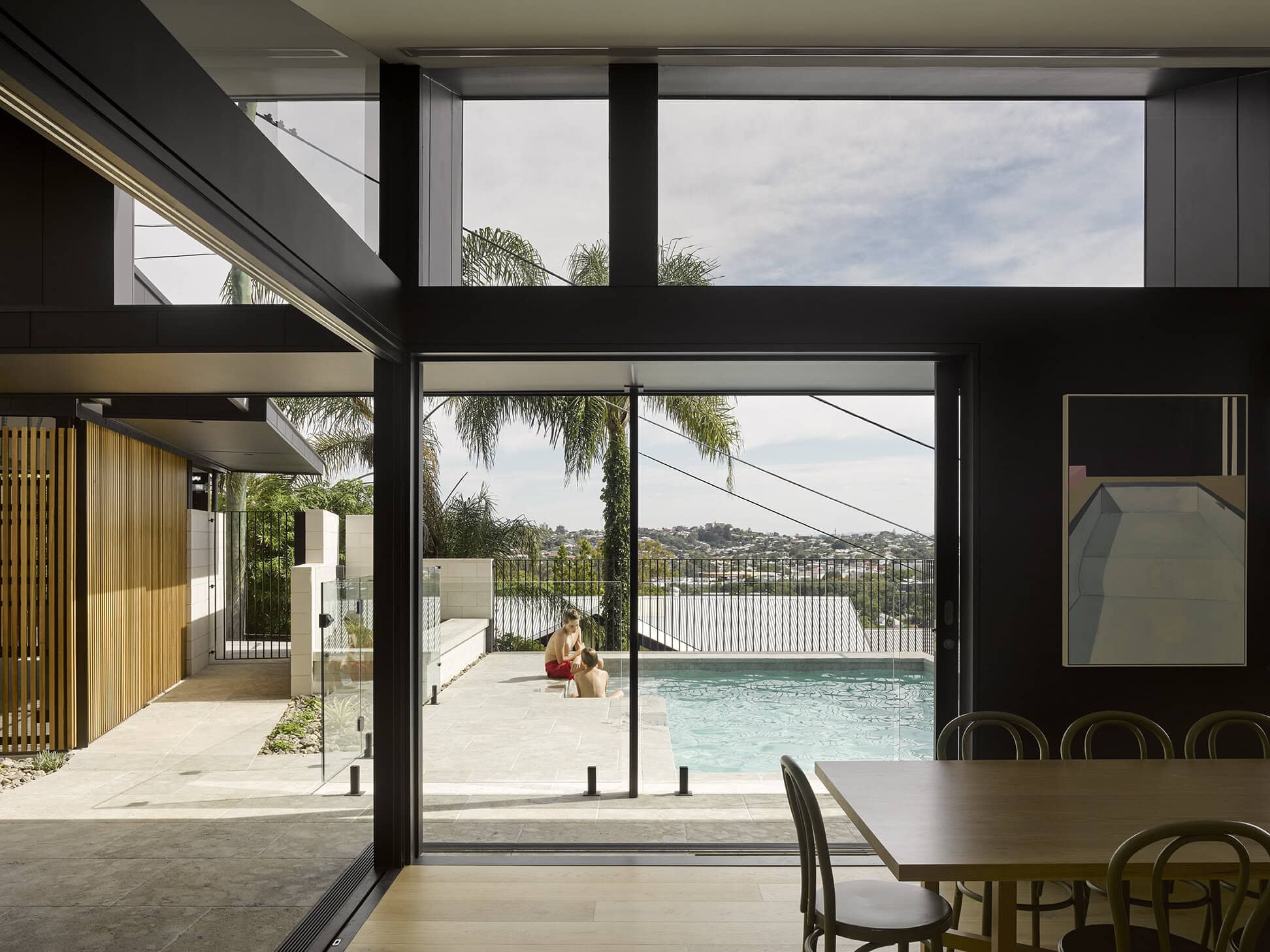
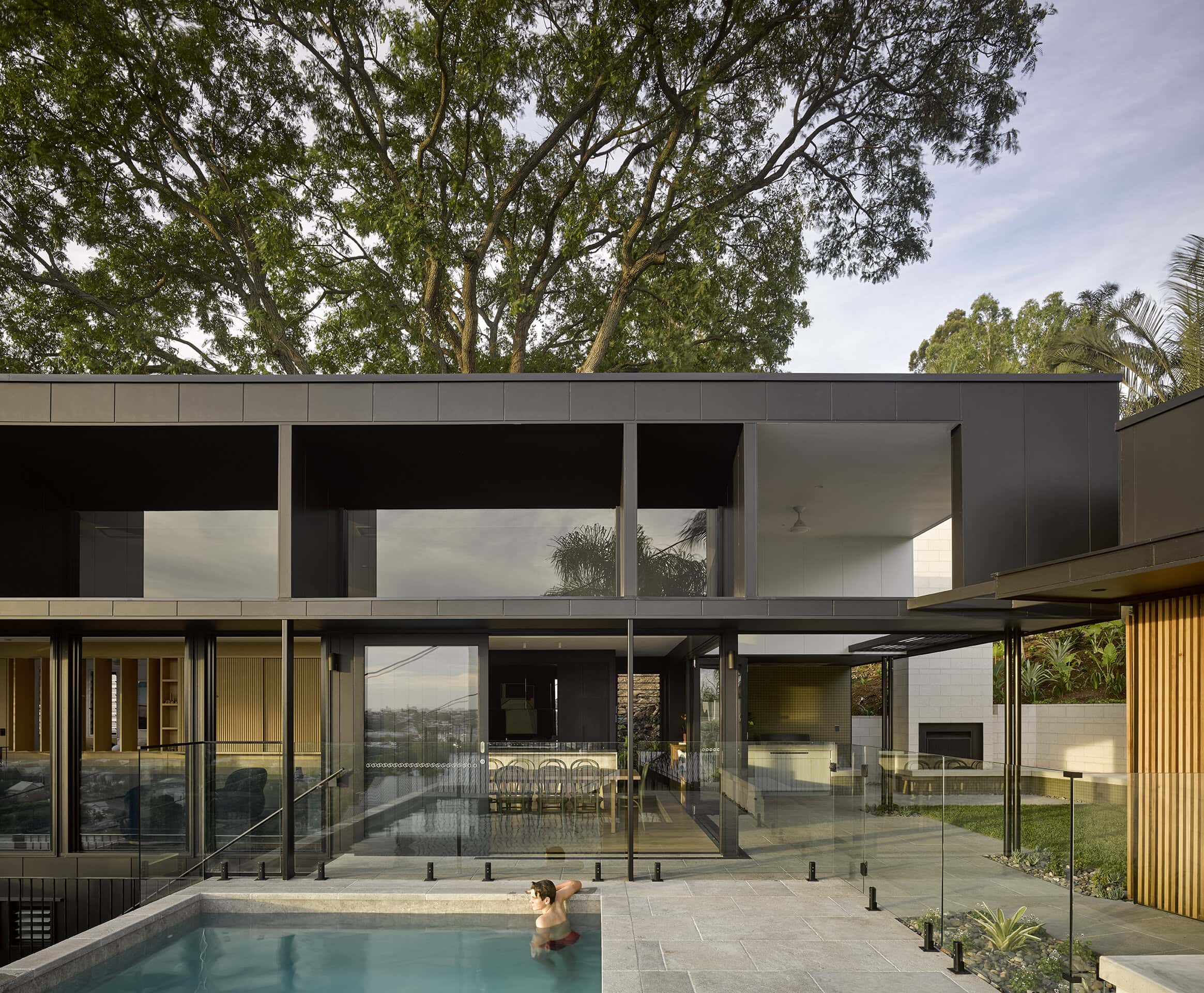
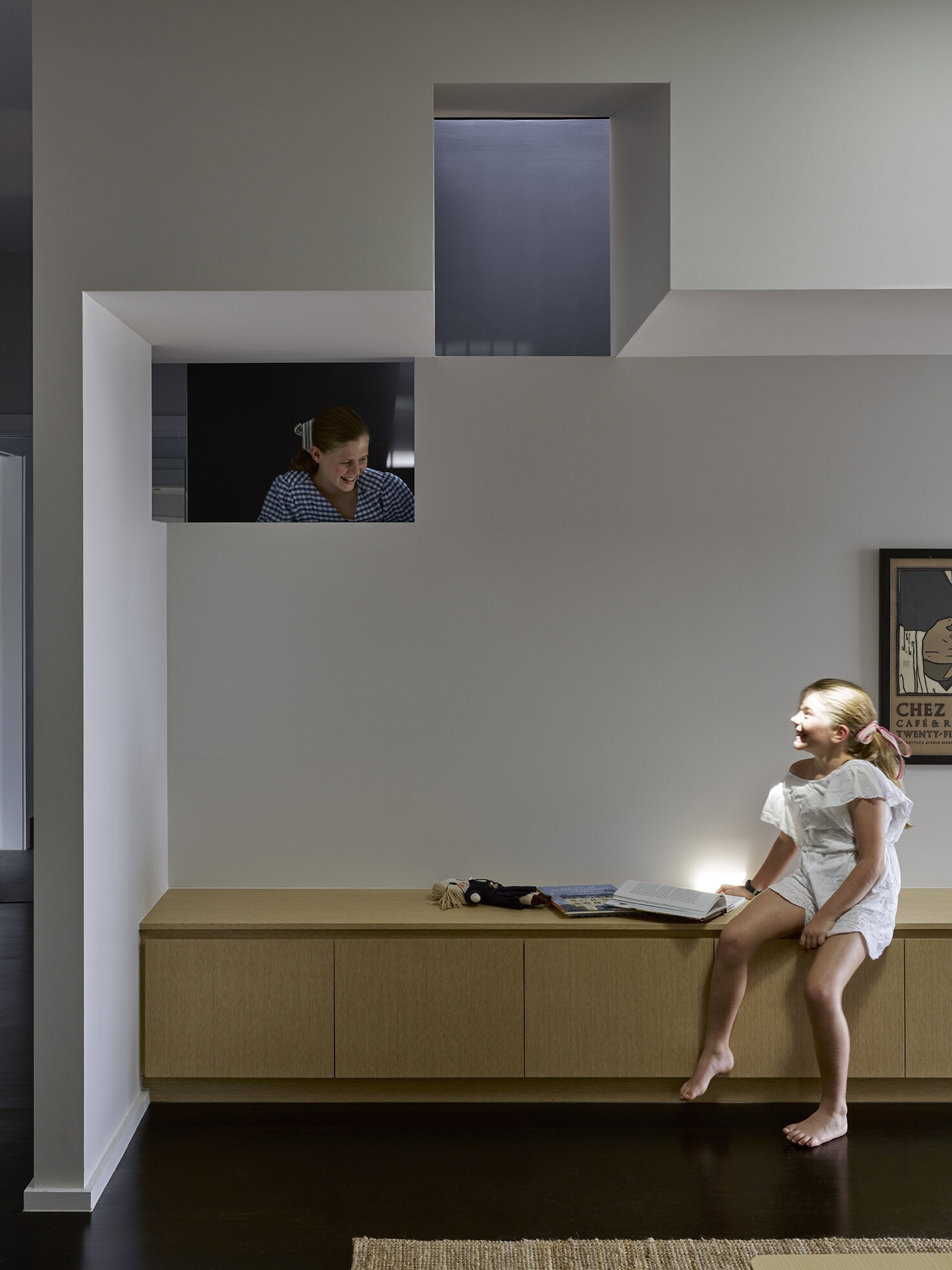
Cox Architecture reorganised the home around that outlook. Kitchen, living and the main bedroom moved to the upper level, while the children's bedrooms, bathroom, laundry and a shared children's space were located in the Queenslander below. The floor and substructure of the addition were retained, with all new work built above floor level. The upper level reads as a linear living and dining space that extends into a south-facing garden courtyard, with the kitchen placed to survey both. The main bedroom sits directly alongside the living space, separated by solid pivoting panels that open the bedroom to the southern view.
An inverted roof truss gives the living space a sloping soffit that rises and opens toward the south. Along the southern face, frameless sash double-hung windows act as a combined balustrade and ventilation system, allowing the room to work as a securable verandah for the house. Projecting gables and window heads shield the interior from the western sun, define the building's identity and create a zone for movement between the two levels.
The living space resolves into a double-height outdoor room beside the courtyard, which is cut further into the hill to form a flat gathering zone, its retaining walls doubling as seating. An external fireplace anchors the courtyard and helps screen an overscaled neighbouring dwelling on the northern boundary. A new two-car carport with overhead battened panels works with the courtyard as an extended space for gatherings, and a new gate and entry sequence separate the carport from the pool. Sitting at the level of the living space and elevated above the falling ground, the pool draws on the unformed street alongside the site, and the connection between house, pool and the views beyond recalls the mid-century modernist arrangements of California and why they remain so effective.
Completed in 2020 across two levels in Brisbane, Queensland.
Architecture by Cox Architecture (Tahlia Svingos). Photography by Christopher Frederick Jones.
Gallery
Company

Industry
Sector
Details
- Building Levels: 2
- Completion Date: 2020
- Photographer: Christopher Frederick Jones
Discuss