
Description
The ANU Pop-Up Reunion Village served as the temporary heart of the Australian National University campus for 18 months while the new Union Court development was built. Craig Tan Architects designed the village in association with OCULUS Landscape Architecture, conceiving it as a connective day-and-night environment that relocated the university's retail core, including student services, student organisations, common spaces, and food and beverage.
Set alongside the tree-lined University Avenue to draw in both the university community and the wider Canberra public, the village offers 2,400 square metres of enclosed space and 1,600 square metres of decking, working as a bridge between ANU and the city. Its plan is composed around four interrelated sections that meet at the confluence of a primary north-south path and University Avenue. For economy, these combine new-build, fitout, and even site-shed accommodation.
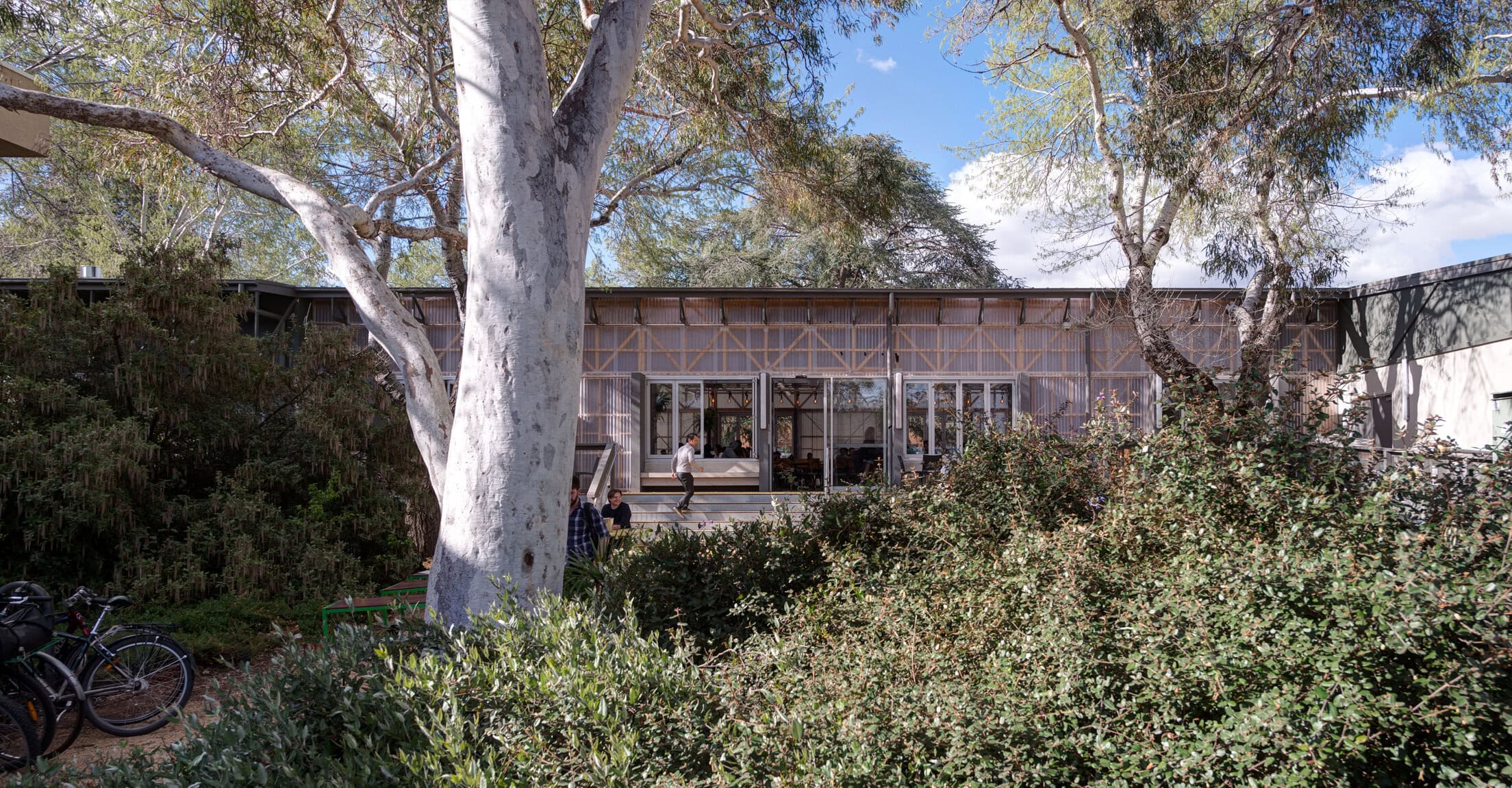
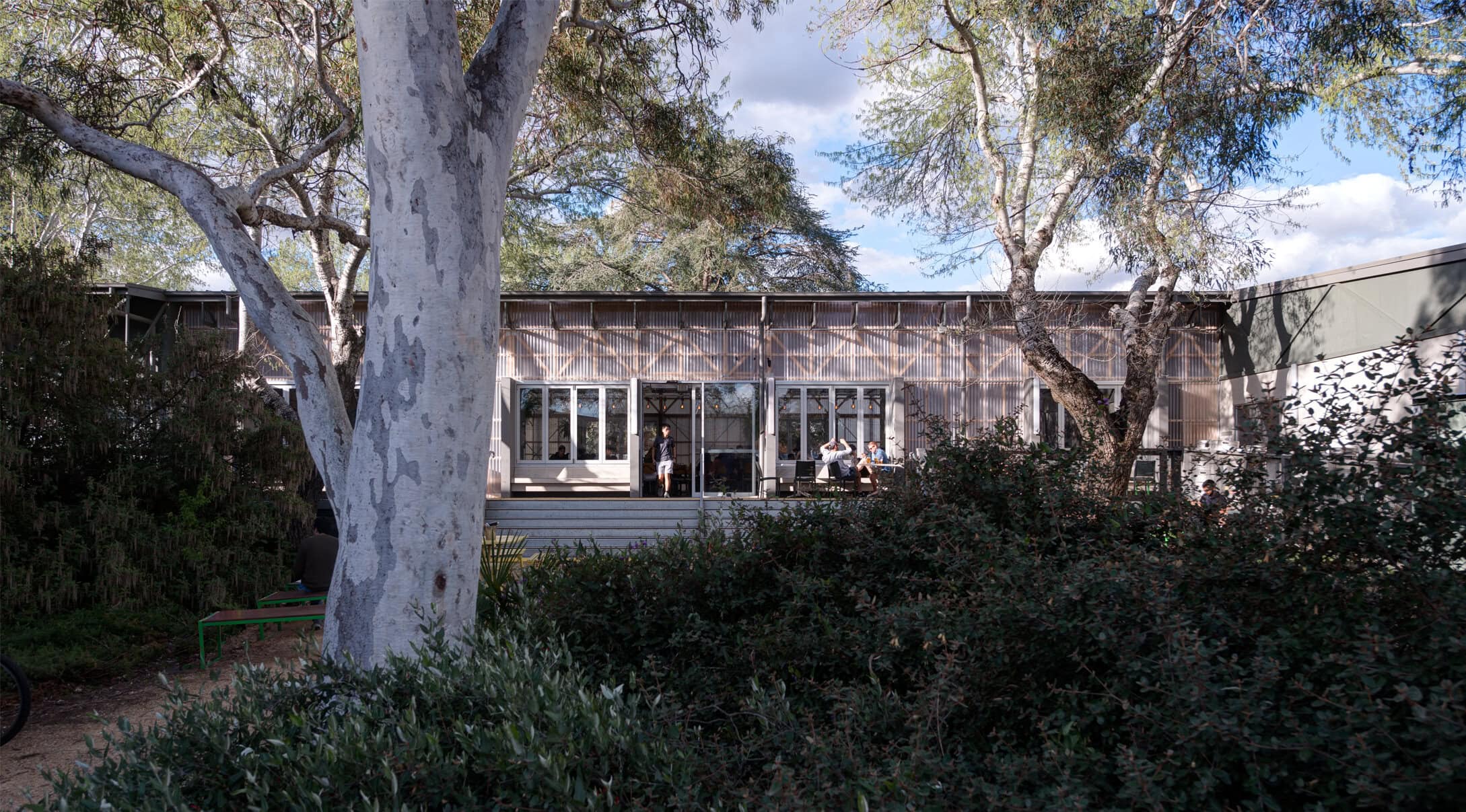
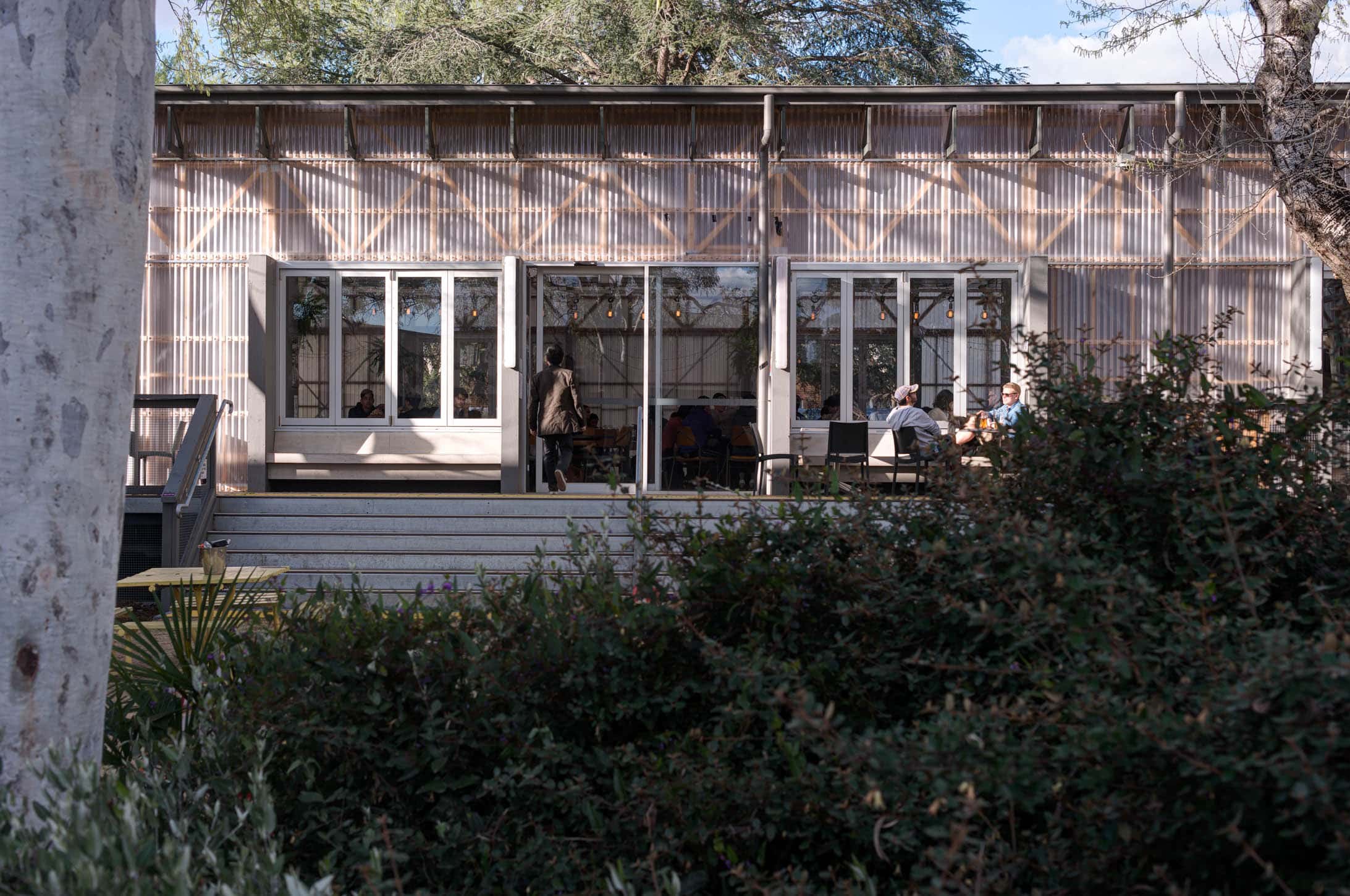
The Commons zone houses a large enclosed multi-purpose space with associated tenancies and amenities. Clad in diaphanous polycarbonate, it registers the changing light through the day and glows as a beacon during evening events, while wing walls to the facade encourage occupation of the edge and the spaces beside it. Linked by an implied east-west axis and nestled among the trees, the East Deck gathers four pavilions of retail and food, configured to preserve the existing trees and to invite a looser atmosphere. Four permanent food trucks define the northern deck edge and, with the cafe to the south, frame an energised public space beneath the tree canopy. Bench clusters animate the deck and prompt chance social encounters through subtle shifts in proximity.
To the south, the adaptive re-use of Melville Hall accommodates undergraduate and postgraduate student organisations alongside a quiet study area. To the north, the Copland Courtyard site sheds are arranged around a square that holds additional student services.
The Commons and East Deck are an exercise in domestic prefabricated timber stud technology. Raised on an elevated Modwood deck that carries services above grade, the timber-framed pavilions are clad in stained structural-grade plywood. Economical spans let expressed timber truss roof frames double as a key design feature: exposed within the Commons, at the eaves, and projected off the gables, they evoke a visual moire akin to the tree canopies, feathering and activating the pavilion edges. A painted plinth integrates the apertures and encourages occupation, while a green-grey colour gradient applied across the truss zones unifies the pavilions like the aerial perspective of a Chinese painting. The recessive tonal palette leaves room for the layers of student notices, artwork, and furniture, offering an inclusive public space that interweaves in-between spaces to encourage social connectivity across the university and the greater Canberra population.
Architecture by Craig Tan Architects in association with OCULUS Landscape Architecture. Photography by Craig Tan.
Gallery


Company

Industry
Sector
Details
- Project Size: 2,400 sqm enclosed, 1,600 sqm decking
- Completion Date: 2017
- Photographer: Craig Tan
Region
Discuss


