Description
Set on a narrow 160 square metre site between a former factory and its kitchen, in a densely urbanised inner-city Melbourne context, Kensington Lighthouse confronts a severely shaded plot. A neighbouring 4 metre wall runs cliff-like along the northern boundary, overshadowing the site, while the southern neighbour relies on existing north-facing windows for daylight. Passive solar and thermal principles drive the spatial and formal resolution.
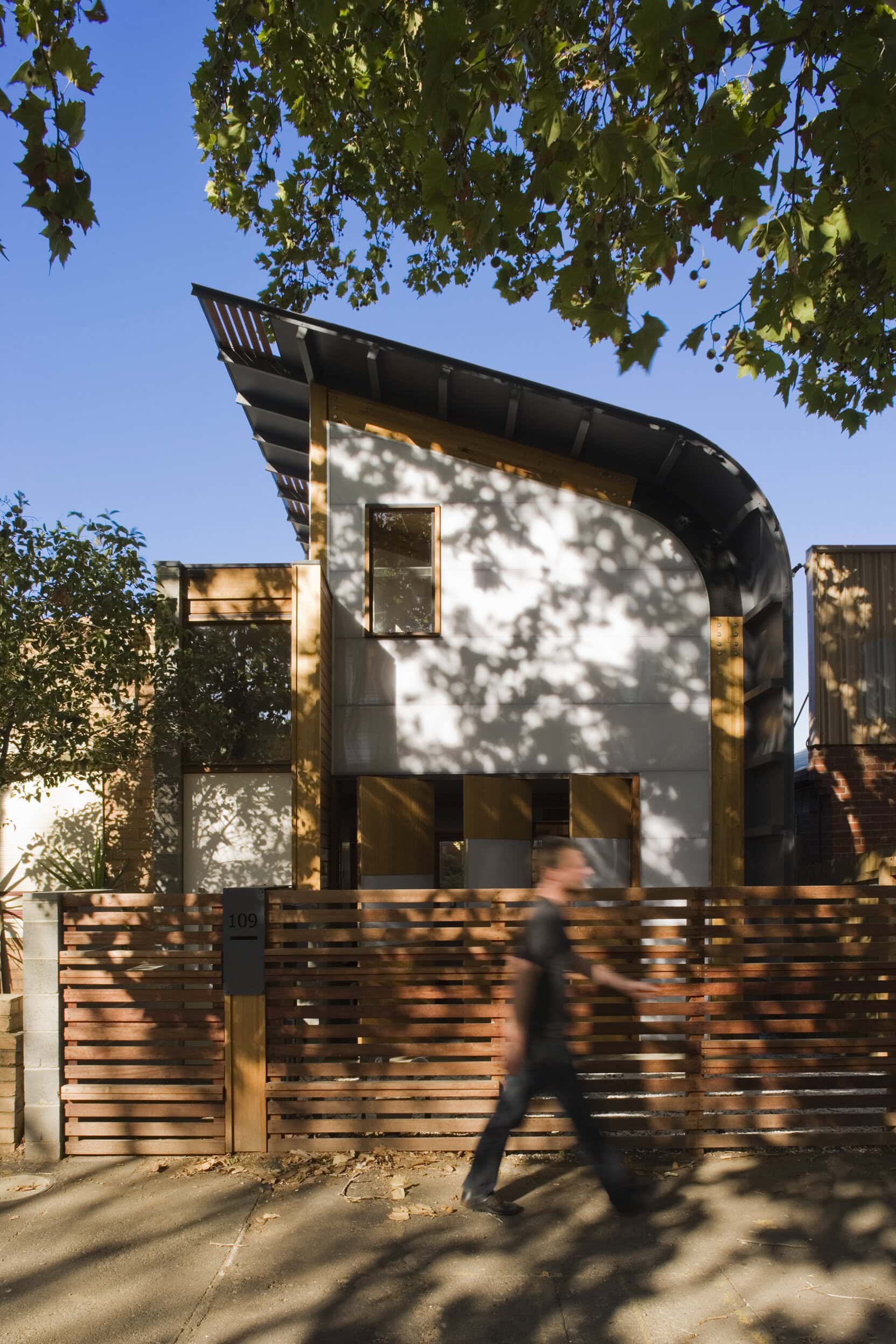
A linear "link" volume runs the length of the northern boundary, exaggerating the cliff-like quality of that edge and containing circulation and services. Platforms sit against this link, some anchored on the ground and others floating, and two north-facing sun shells enclose them. The sun shells peep over the link to capture sunlight and reflect it inside, creating the temperature differential that drives cross-ventilation. They form both the roof and the southern facade.
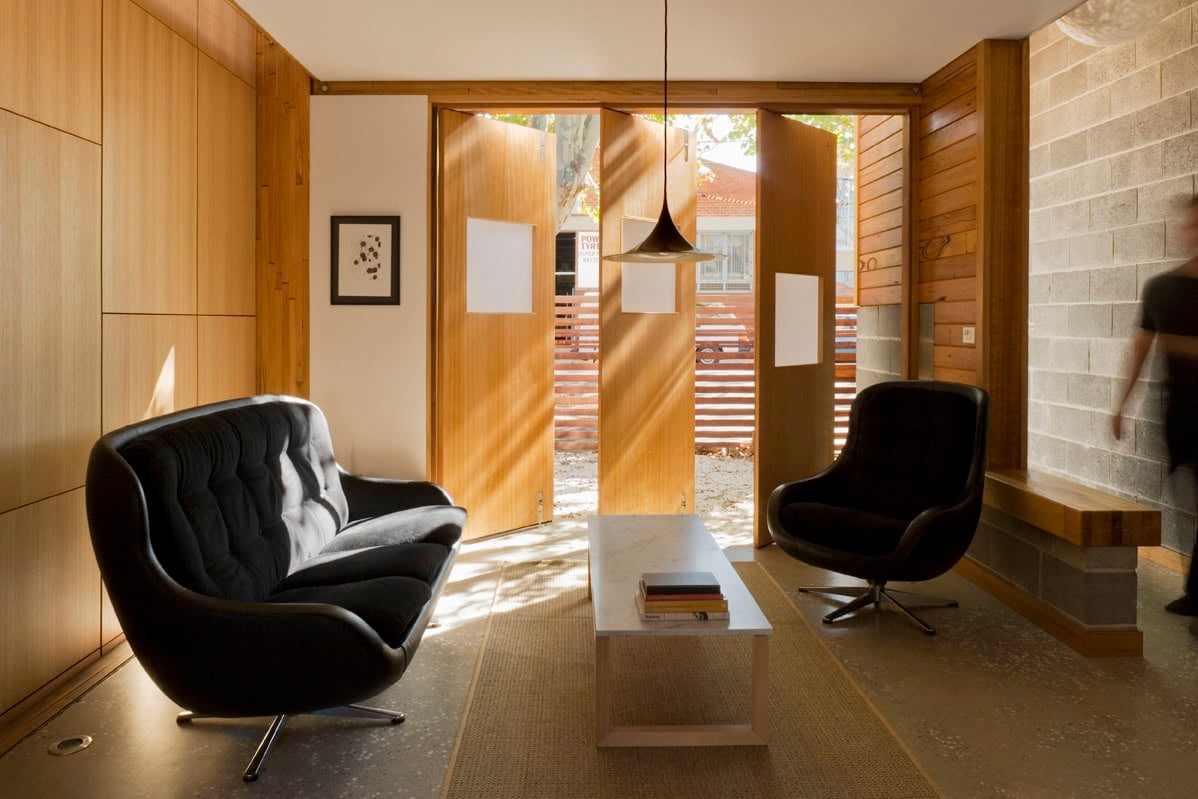
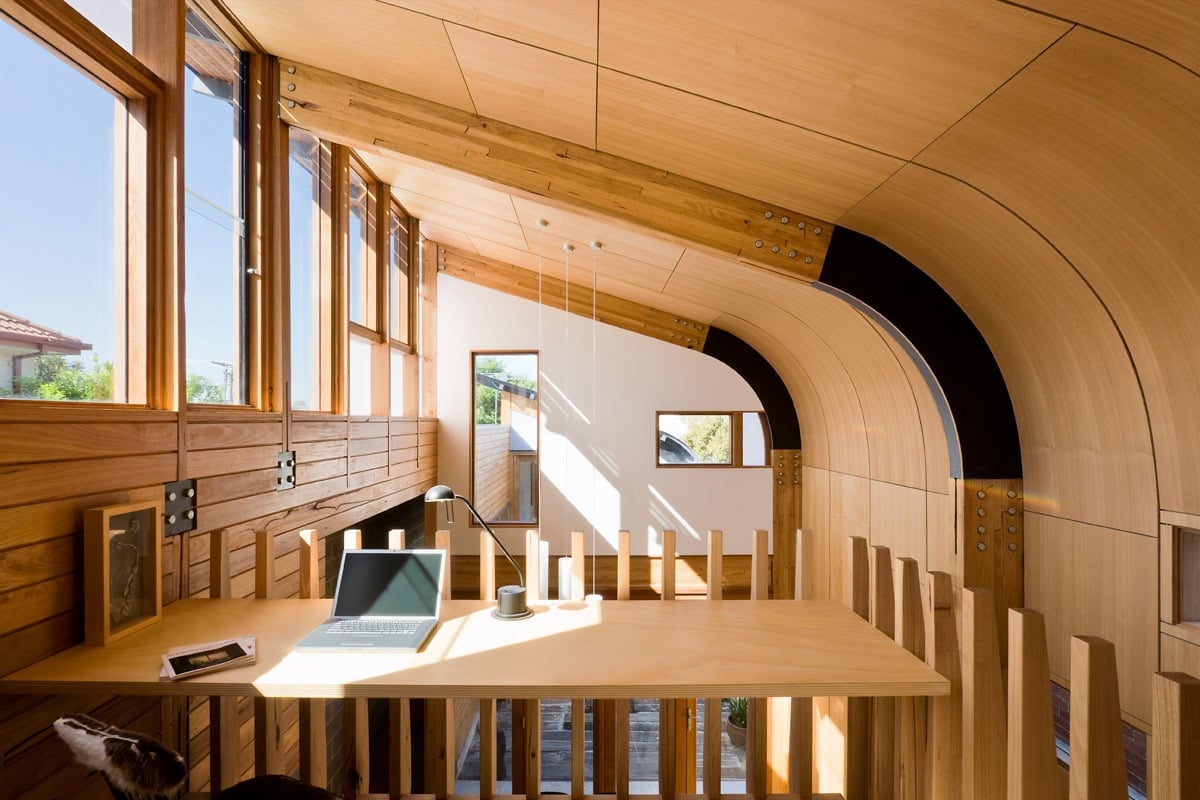
Each sun shell defines a section of the house. The west sun shell, closest to the street, contains entry, lounge, kitchen and double-height dining at lower level, with a mezzanine for study, guest bedroom and bathroom. The east sun shell, set across an open courtyard at the rear of the site, holds the master bedroom and ensuite at mid-level, above a double carport accessed from the rear laneway. The 148 square metre floor area runs across two storeys.
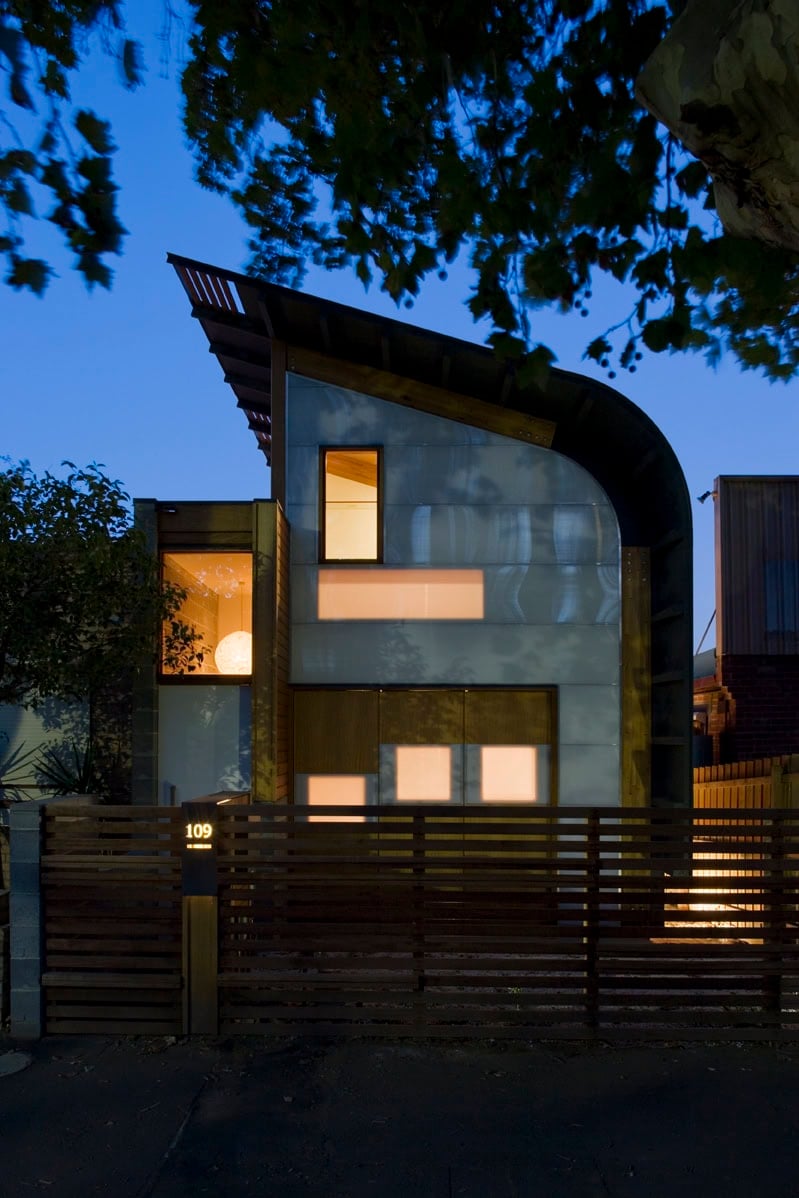
Timber-framed glass and translucent polycarbonate clad the north, east and west walls, framing views and admitting light while preserving privacy. The translucent skin catches the shadows of neighbouring trees and passing clouds, filtering soft light into the interior. Inside, intimate low-ceilinged spaces for the lounge and kitchen contrast with a soaring volume above the dining table, which encloses the mezzanine study and leads out to the courtyard. Large openings draw the outside in: the courtyard doubles as al fresco dining, the streetside garden can be opened to the lounge, the master bedroom's courtyard doors form a Juliette balcony, and southern windows pull in a fence-side garden lane.
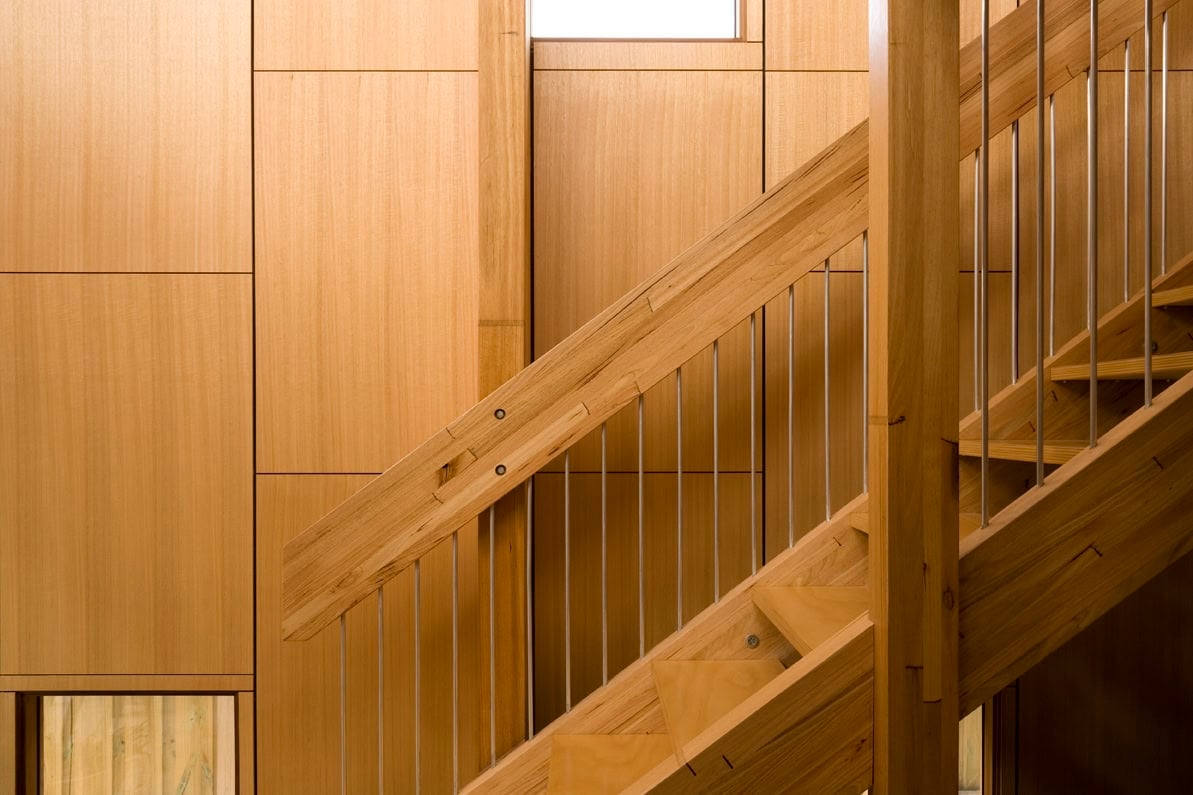
Construction follows the width of a single roof sheet as a module. The spacing of timber portal frames, window widths and interior timber panels all align with that unit, but heights of windows, lengths of veneered panel and the colours of the roof sheet are deliberately varied to break the unity of larger surfaces. The decorative impulse of the surrounding workers' cottages and their fretwork is reinterpreted within this disciplined framework. The exposed steelwork and primary timber portal frame are sized as manhandle-able elements, eliminating the need for a crane, with t-joints, v-joints and curved brackets bolted into position. Natural materials are chosen for texture and graceful ageing: hardwood timber frames, timber panelling, honed concrete, timber-framed glazing and translucent polycarbonate.
Credits: Tim Hill, Tandem Design Studio. Photographs by Sonia Mangiapane.
Gallery
Company

Industry
Sector
Details
- Project Size: 148 m2
- Building Levels: 2
- Completion Date: 2008
- Photographer: Sonia Mangiapane
Region
Discuss