Description
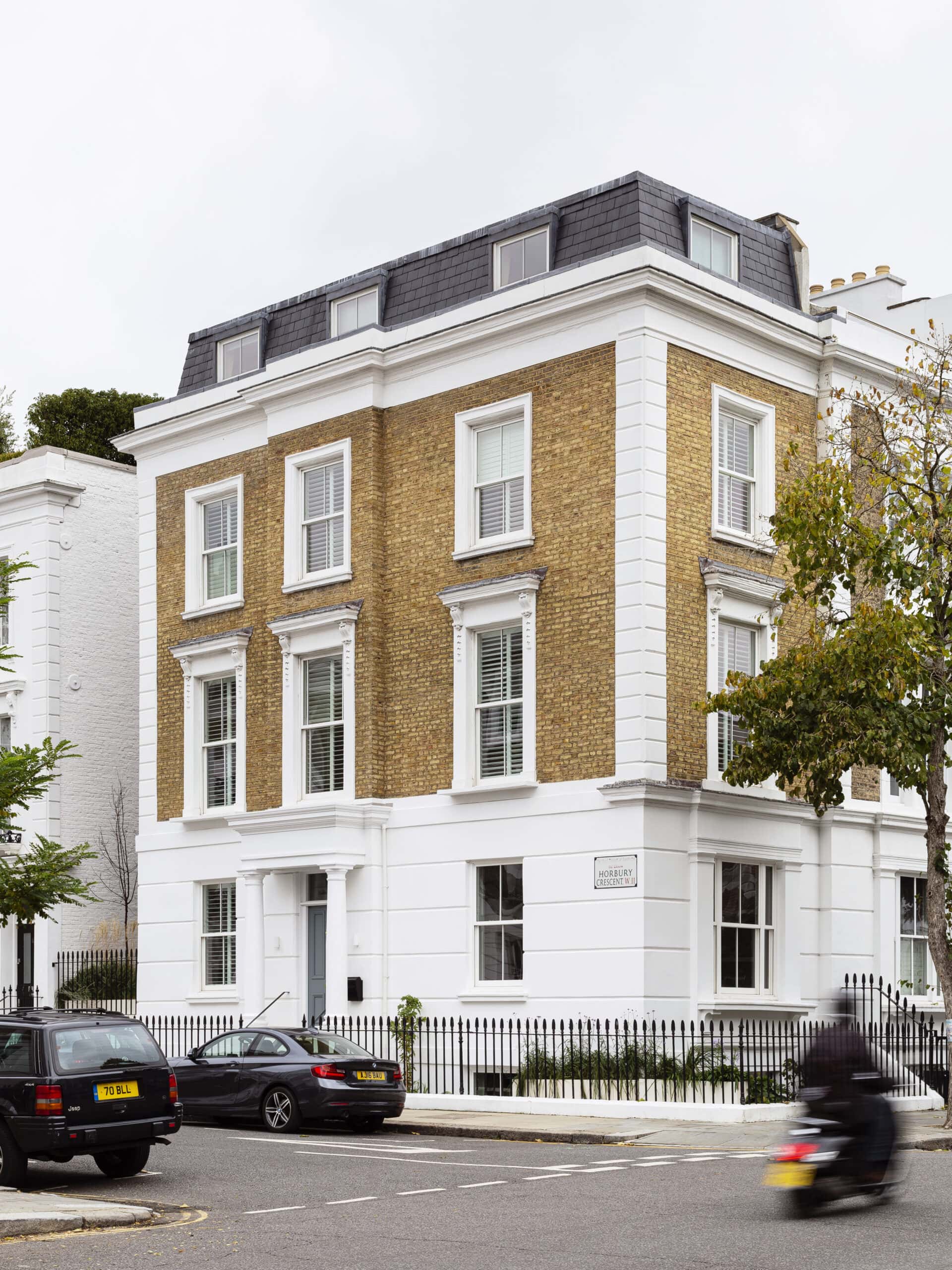
An Early Victorian end-of-terrace house in Notting Hill that had not been touched since the 1980s, brought back to life with period charm and modern comfort across four floors. Brosh Architects took a property heavy on plain finishes and light on character, then layered in detail that nods to the Georgian designers who first set out this Victorian street.
The floors are distressed oak treated with an Old English finish stain so they read as though they have been there for two centuries. Wall colours sit in Farrow & Ball blues and greens chosen to match the Georgian palette. Underfloor heating warms the lower and upper ground floors; the upper floors keep period style radiators. Concealed strip lighting hidden inside furniture, walls and ceilings does most of the work, supported by pendants and wall lights, with spotlights almost entirely avoided.
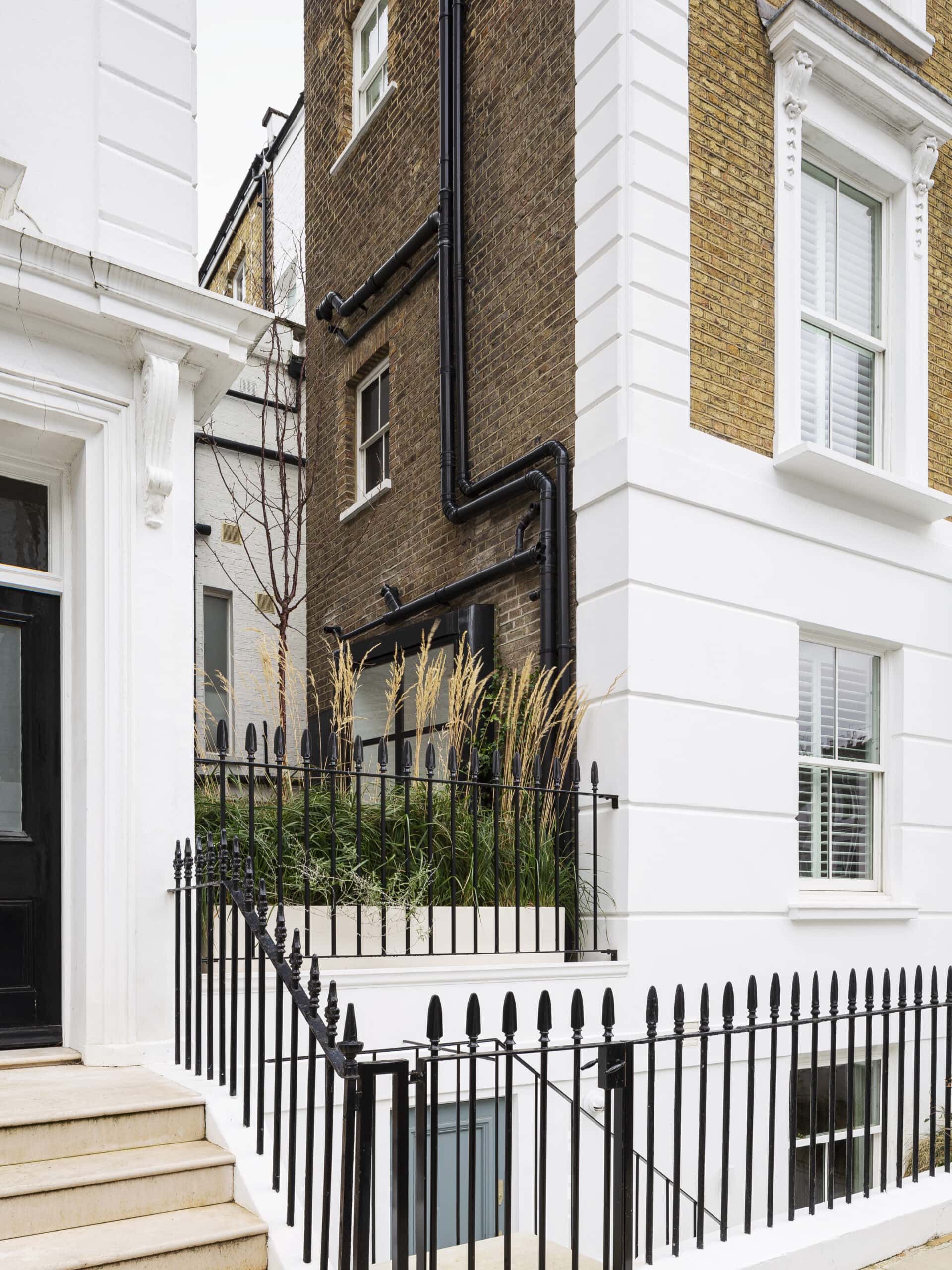
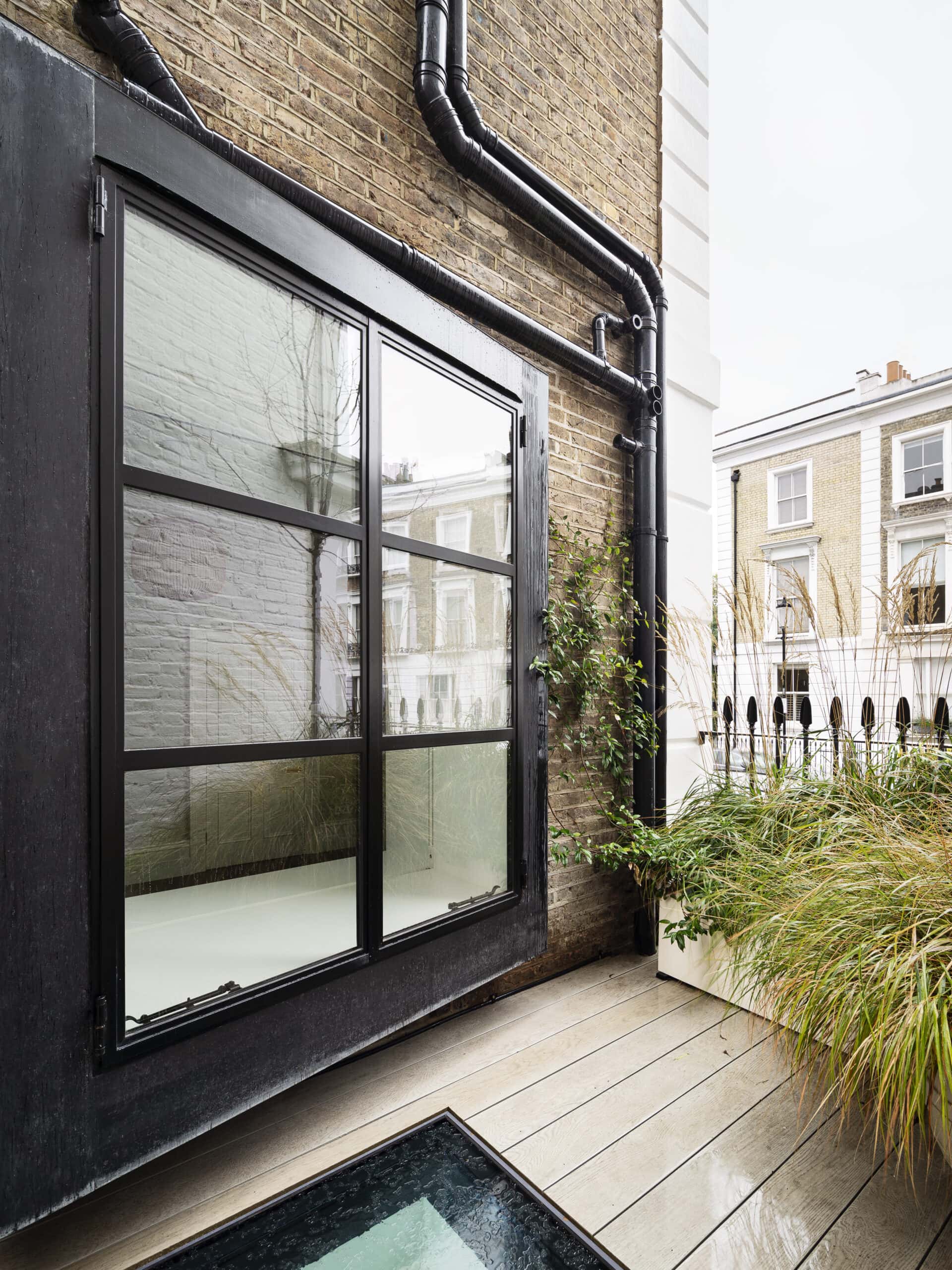
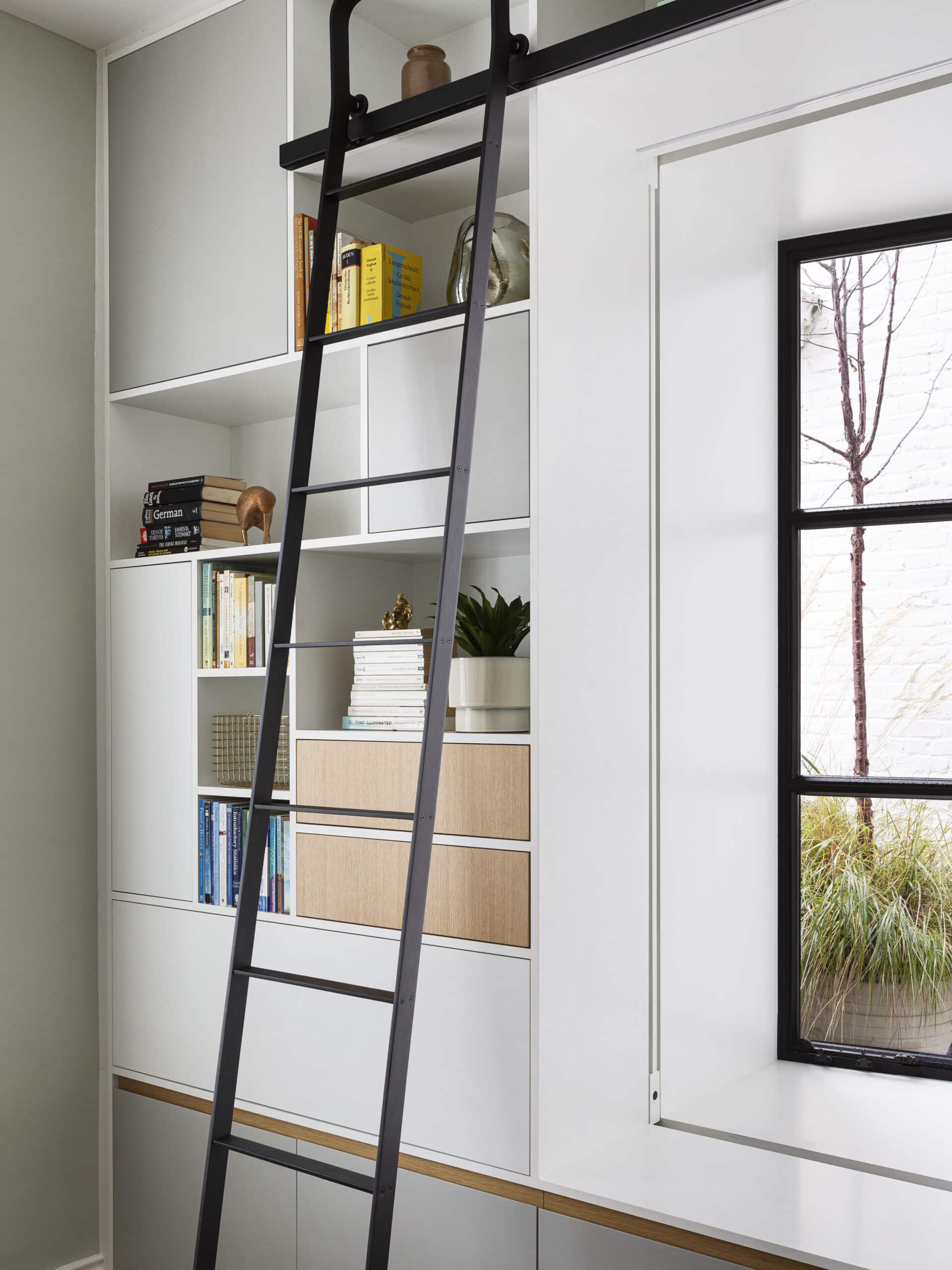
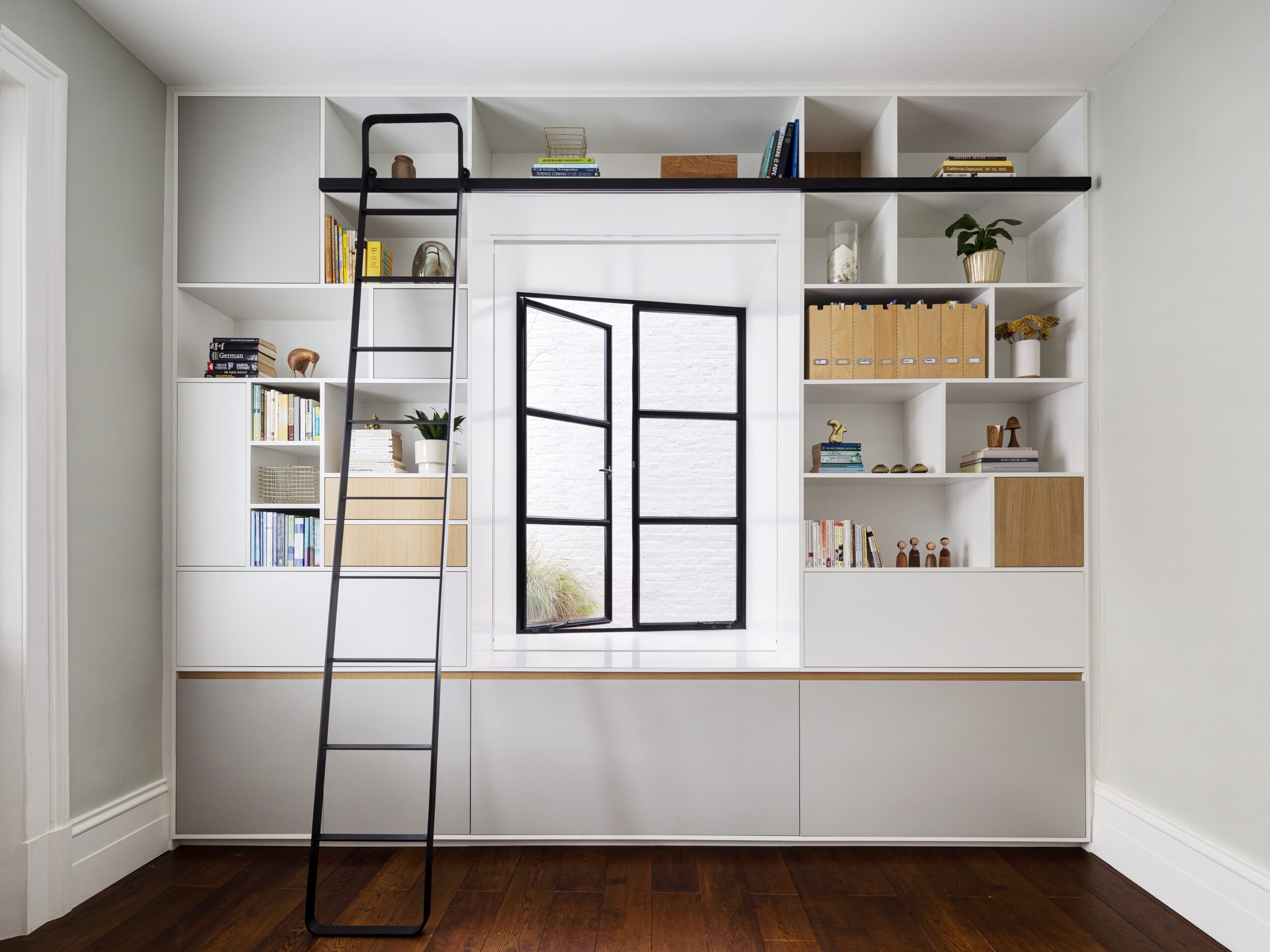
The front elevation gained a portico to match the street profile, and the 1980s step tiles were replaced with Portland stone stairs. The side extension roof terrace, previously only reachable from the street, was disconnected from the pavement and re-entered through a window nook integrated into a new office library on the first floor.
On the lower ground floor, a soft wood staircase was removed and replaced with a piece that matches the original Victorian run elsewhere in the house. The kitchen was redesigned around a large skylight looking up to the office terrace above. The family room opens through a wide gesture onto the courtyard, which itself was reworked from a plastic toy store into a planted garden with decking, flower beds and a covered bench. A WC stays where it was but is now concealed behind a secret door at the landing.
The whole first floor is set up as the clients' retreat: a bedroom with only a double bed and no wardrobes, alongside a divided suite holding a free standing bath, a separate shower and full height wardrobes. The formal living room had its layers of paint stripped back to the original timber features, with new joinery flanking the fire place and Venetian mirrors widening the room.
Sustainability sat in the demolition strategy rather than in a list of imported materials. Apart from one new window and two widened openings the layout was reworked with so little demolition that no skip was needed. Insulation went into the lower ground floor, between floors and at the main roof. A Thermodynamic Water Heating System with externally fixed solar collectors runs hot water, cooking and heating on almost entirely renewable energy, with a gas boiler held back only for the coldest days.
Project size 195 m² on an 88 m² site. Completed 2020.
Credits: Brosh Architects (architect), Lior Brosh (project architect), Ollie Hammick (photographer), Sanja Buncic and Entuitive (structural engineers), IQ Glass (fire glass).
Gallery
Company

Industry
Sector
Details
- Client: Private
- Project Size: 195 m² (site 88 m²)
- Building Levels: 4
- Completion Date: 2020
- Photographer: Ollie Hammick
Region
Discuss