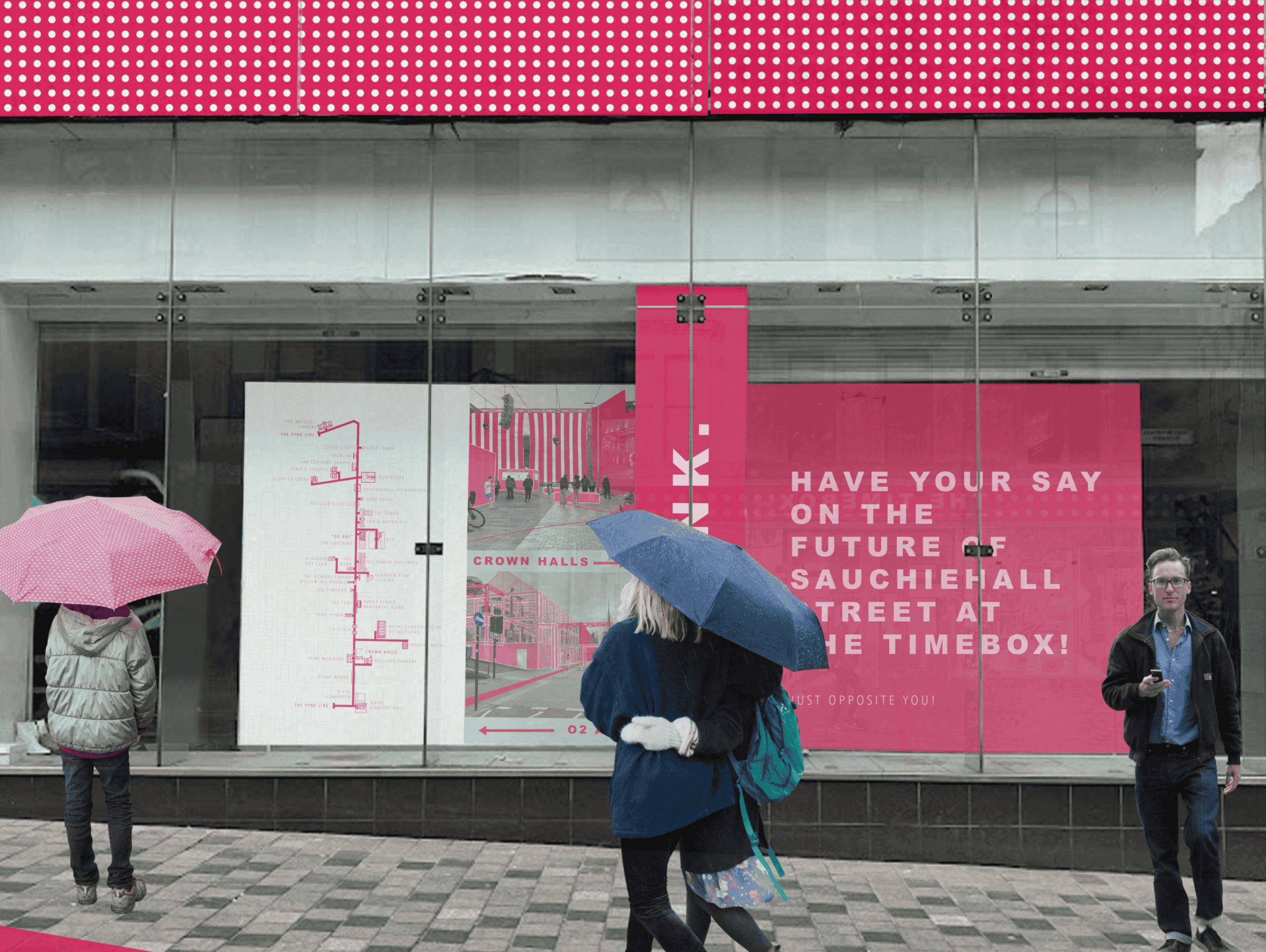
Nathan's fifth year design thesis project titled “PYNK: Drawing
Back the Curtain on the ‘Uncanny’ in Glasgow” tackled themes of dystopia, decline and development within the city, aiming to communicate reasons behind problems with the city's planning system and create better community involvement within
it. Read the abstract below:
“Glasgow has been through one major decline and change before in the 20th century; now, a quarter of the way through the 21st, we are seeing a decline again. In particular, Sauchiehall Street – despite the best efforts of the Council – continues to have an increasing number of empty shop units and numerous gap sites along its length.
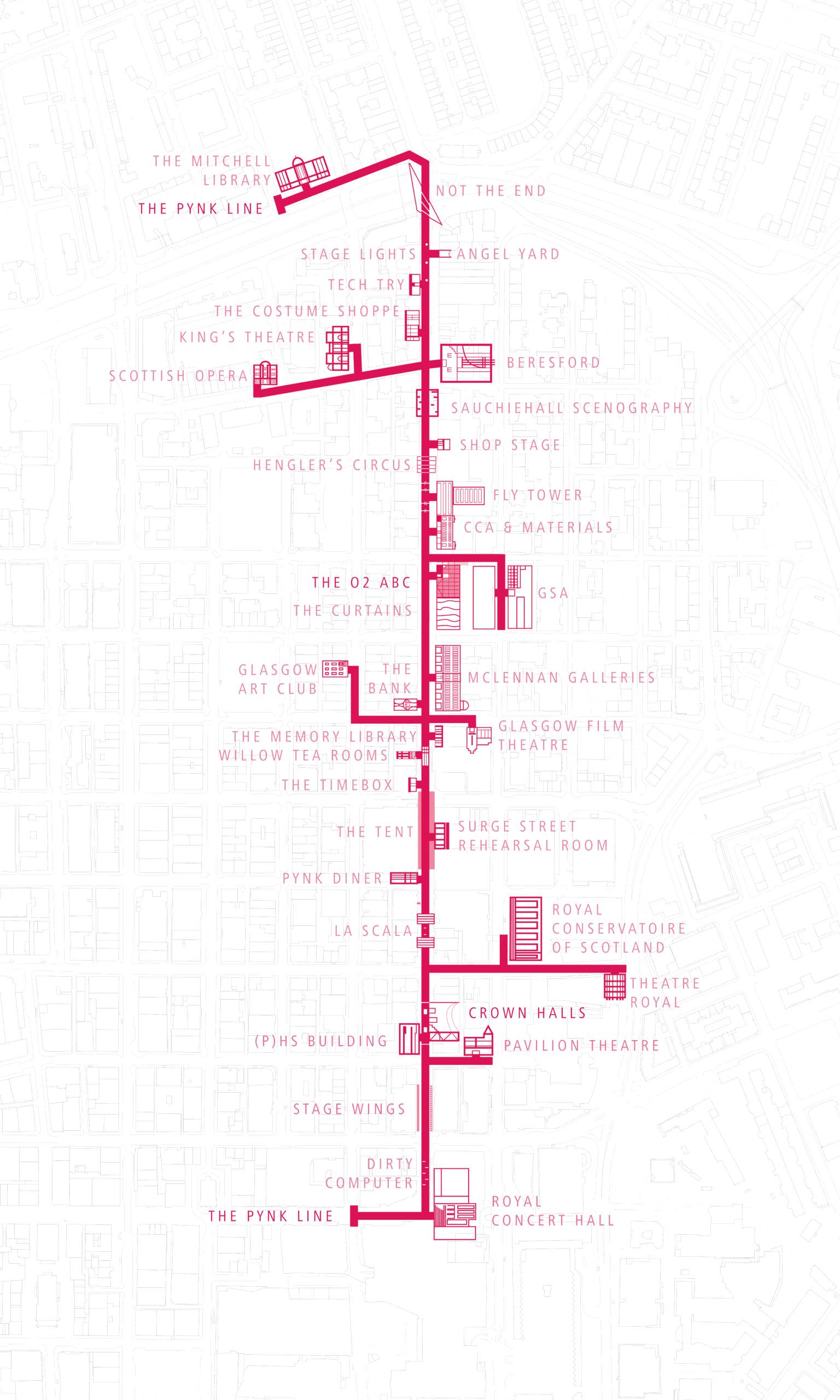
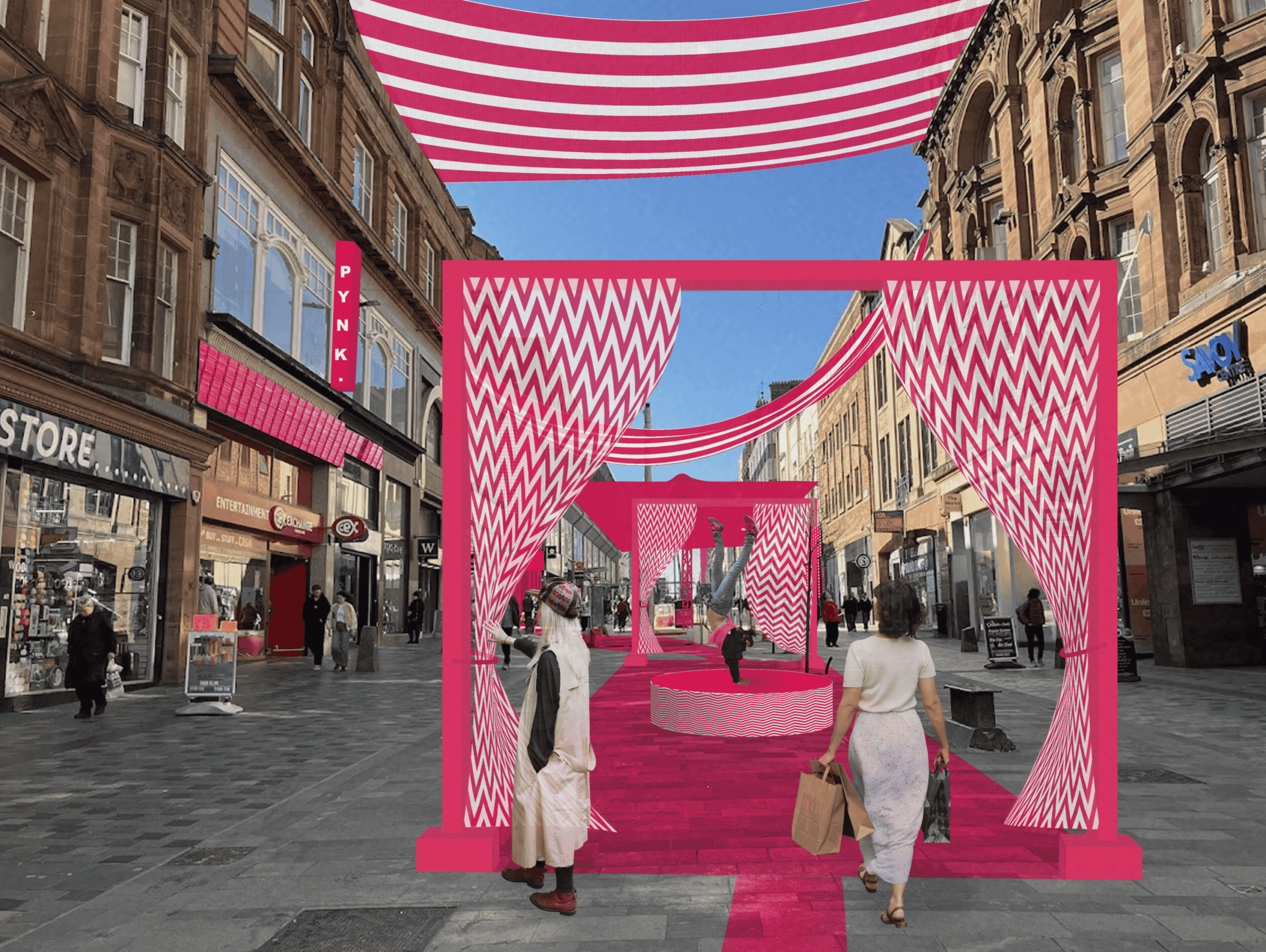
PYNK aims to solve this and prevent a furthering of the “unheimlich ” feeling sweeping over the city by communicating the unseen reasons behind its odd development through performances – art, music, theatre and architecture all helping to do so. These mediums will tell a detailed story of the place, performed by Glasgow ’s artistic collectives, which would otherwise be ignored and eventually lost on the long stretch from the Mitchell Library to the Royal Concert Hall. The use of an overarching colour and theme will obliterate the ‘bittiness ’
of the street and connect those experiencing it to its cultural heritage, both physically and cognitively, due to its tectonic scale and mono-graphic style.
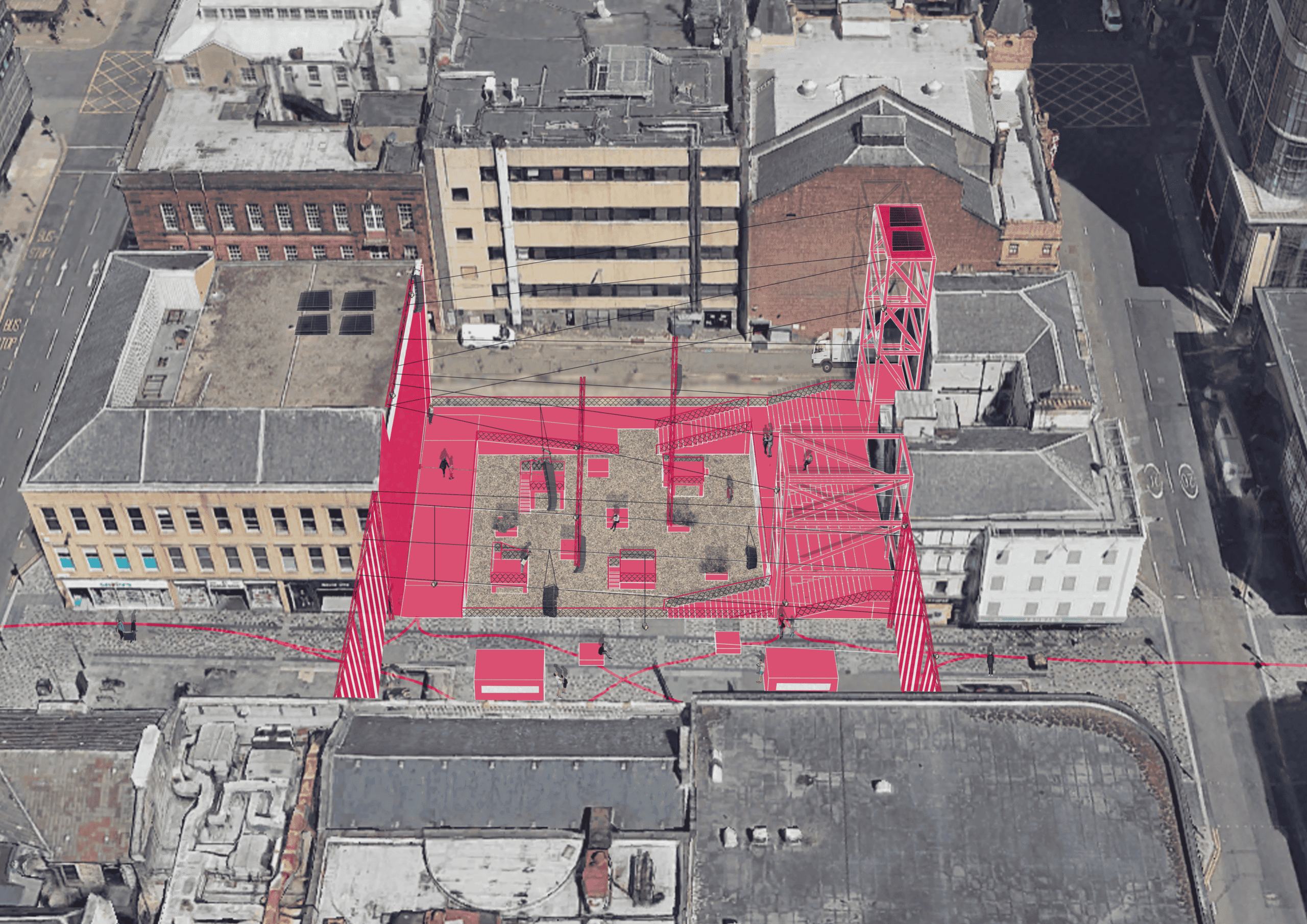
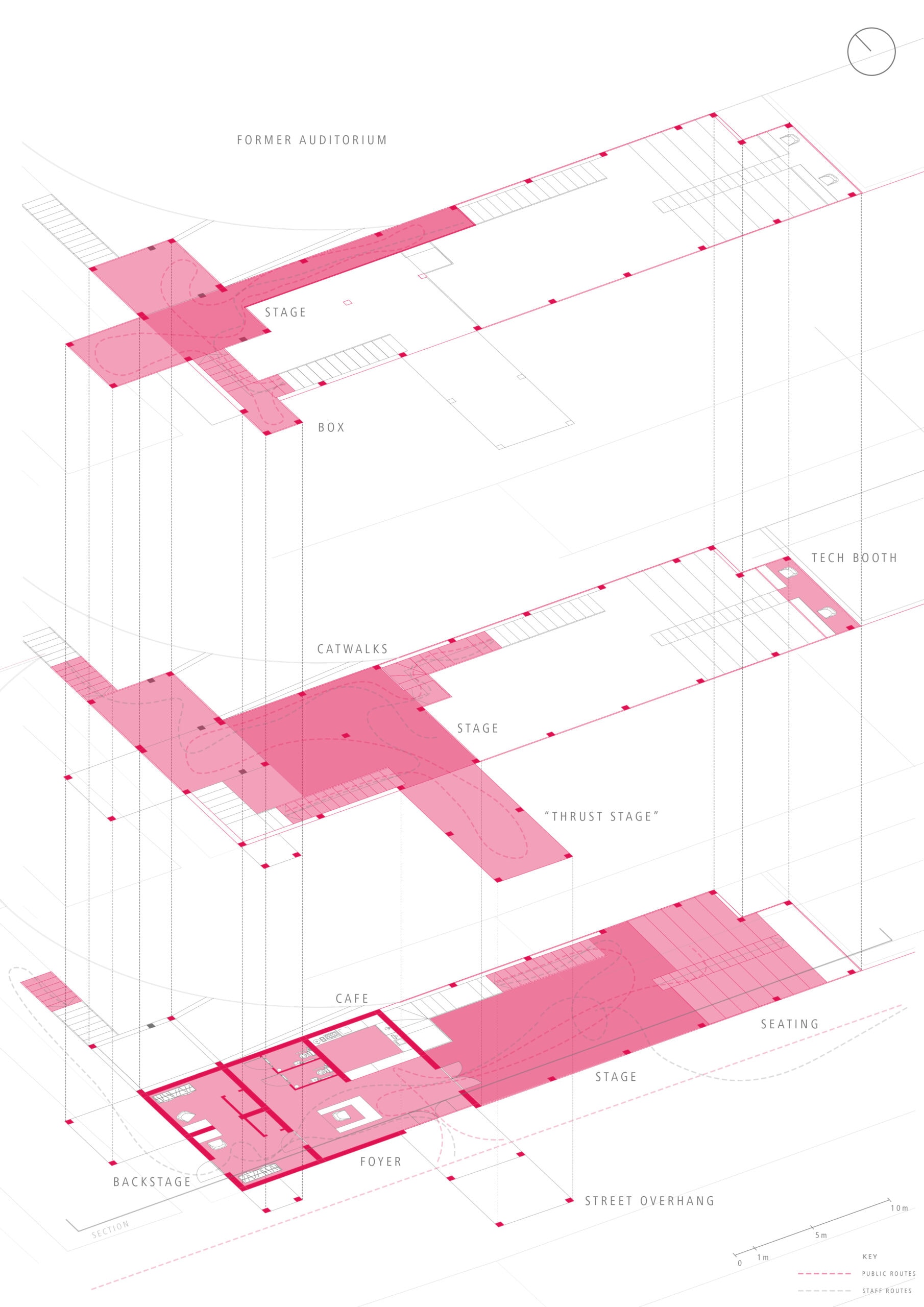
The aim of all of this is to immerse citizens in the city in ways they otherwise would not, making them aware of the issues affecting such gap sites from being developed – the two focussed on here are the O2 ABC and Crown Halls sites at each end of the street - and inviting emotion, response and engagement with them. These performances, a “meanwhile ” use of the sites, aim to spark discussion around the future of them, confronting the nature of Glasgow ’s destructive development cycle and allowing people agency to imprint themselves on the future architecture of the city.
PYNK will act against the current tide creating a new
“uncanny” dystopia, by making the forces that shape
Glasgow visible to its people through theatricality,
spectacle and performance art. ”